5 Low-Energy Hobbies for an Overstimulated Brain
Discover 5 low-energy hobbies for an overstimulated brain. Gentle, relaxing activities that help you slow down, reduce stress, and enjoy life again.
Your Hobbies Are Not Supposed to Become Another Job
Hi Besties, A few years ago, I realized something uncomfortable. I had somehow turned almost everything I loved into work. Reading wasn’t just reading anymore, it was content. Writing wasn’t just writing anymore, it was productivity. Creative projects weren’t just fun anymore. They needed goals, outcomes, metrics, growth, or some measurable result. My list things to do, and even hobbies I had originally started because they brought me joy slowly became tangled up in performance. And honestly? I think a lot of us are living there now. The attention economy has a way of convincing us that every interest should become a side hustle, every creative outlet should become content, and every hobby should somehow justify its existence by producing something useful. We’re encouraged to optimize everything. Track everything, share everything, and onetize everything. No wonder so many of us feel exhausted, our brains feel overstimulated, and most importanly we’ve forgotten how to play. One of the biggest gifts I’ve given myself recently is not just changing my lifestyle, but reclaiming hobbies that exist for absolutely no reason other than making my life feel better. So not everything needs to be productive, make money, or become a personal brand. Sometimes a hobby can simply be something you enjoy. Imagine that. So if your brain feels fried, your attention span feels scattered, and you’re craving activities that ask very little while giving a lot in return, these are the low-energy hobbies I recommend most.
What Makes a Hobby Good for an Overstimulated Brain?
When I’m overwhelmed, I don’t want hobbies that feel like another project.
- I don’t want more goals.
- I don’t want more pressure.
- I don’t want another thing to achieve.
The hobbies that help me most usually have three things in common:

- They don’t require constant decision-making.
- They don’t involve endless scrolling.
- They create a feeling of calm instead of performance.
These aren’t hobbies designed to impress anyone. They’re designed to help you reconnect with yourself.
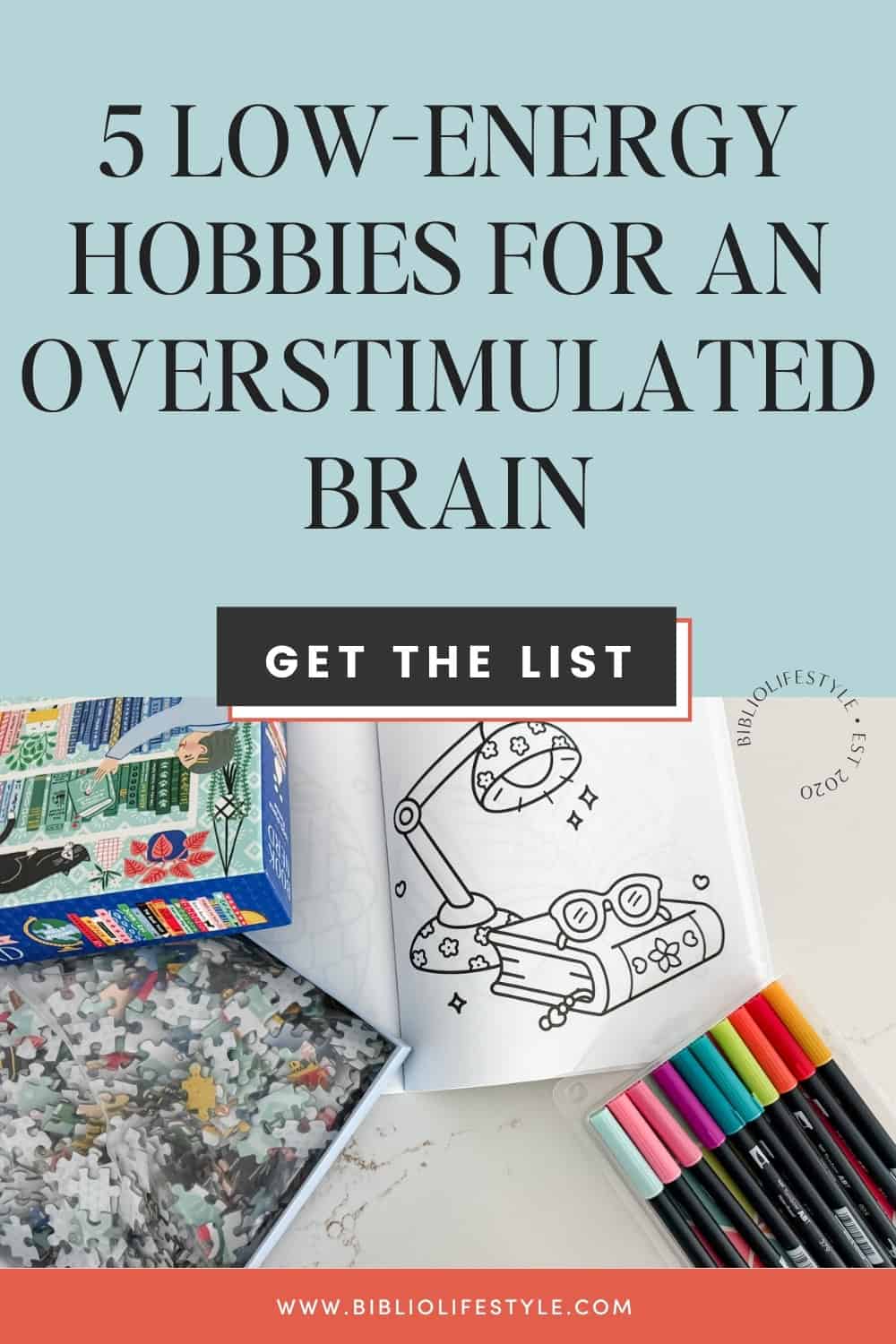
1. Adult Coloring
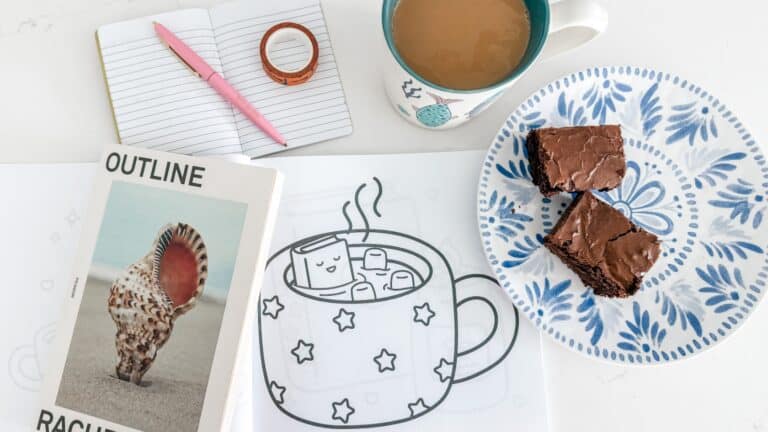
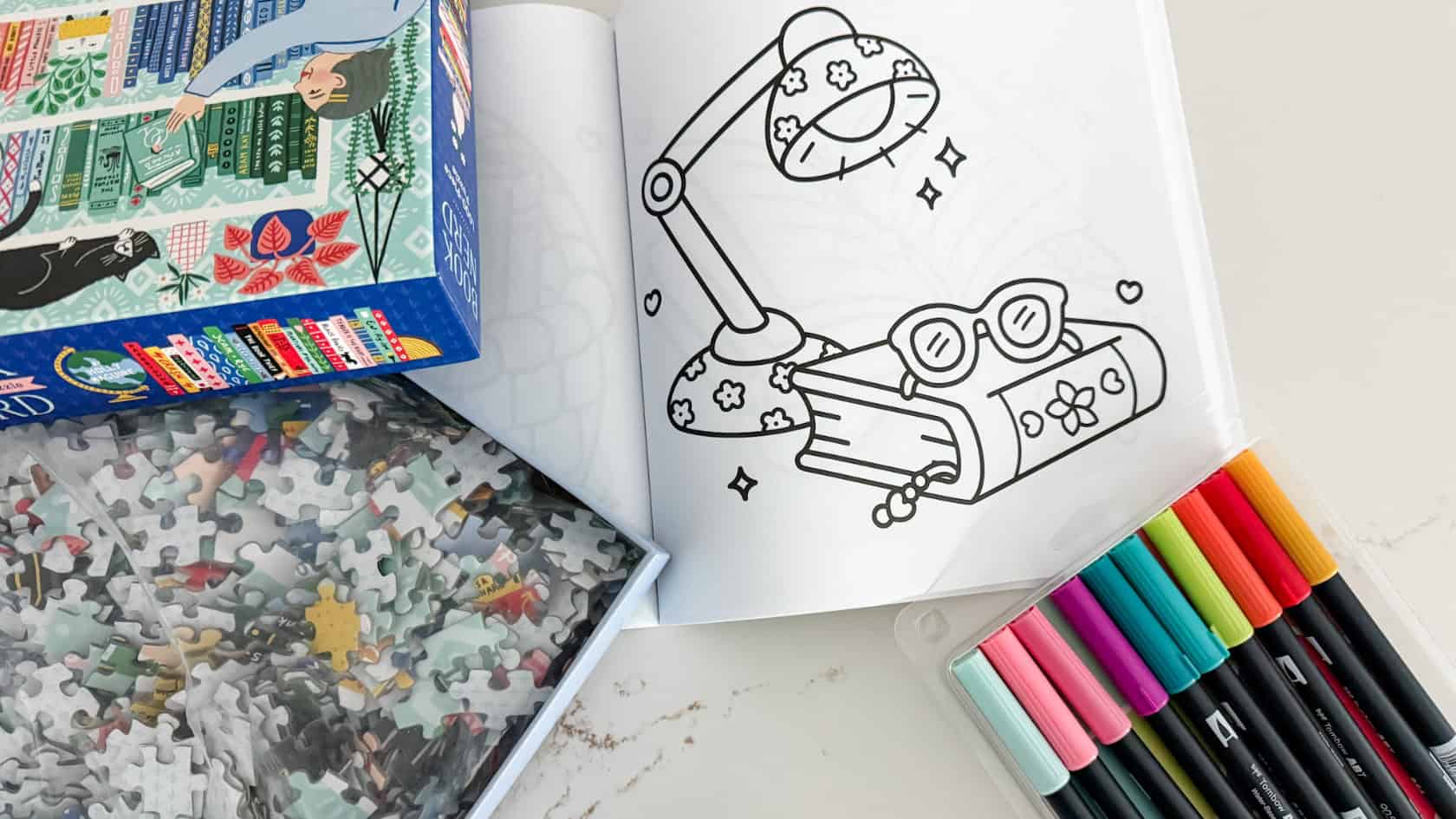
If you had told me a few years ago that I would become obsessed with coloring books again, I probably would have laughed. And yet here we are. Coloring is one of the few hobbies I’ve found that completely bypasses perfectionism. You don’t have to be talented, and you don’t need special skills. There are no rules, deadlines, or expectations. You simply choose colors and fill in spaces. That’s it. And honestly, that simplicity feels revolutionary sometimes. Because when my brain feels overstimulated, coloring gives my hands something gentle to do while allowing my thoughts to slow down. I especially love bold and easy coloring pages because they feel relaxing rather than complicated. The goal isn’t creating a masterpiece, it is giving your nervous system somewhere soft to land.
Why It Works
- Minimal mental effort
- No pressure to be good at it
- Creates a calming, repetitive rhythm
- Easy to pair with music, podcasts, or audiobooks
2. Reading for Pleasure
Notice I said reading for pleasure. Not reading for self-improvement, or because social media told you everyone else is reading twenty books a month. And not reading because you feel guilty about your unread shelves. Just reading because you’re curious, and because you want to disappear into a story for a while.
As someone whose entire career revolves around books, I know firsthand how easy it is to accidentally turn reading into work. I’ve done it. Many times. How I avoid the trap, is to always have books on hand just for me, that have nothing to do with content. It also helps that for those books, I return to reading the way I did when I was younger. Those books I read slower, and more intuitively. I’m less focused on achievement and urgency to read for a guide, and I’m more focused on enjoyment. I also allow my books to vary, some days its classic, some literary fiction, another day its cozy mysteries. Some days it means rereading a favorite book instead of chasing the newest release. I’ve also realized reading becomes restorative again when you stop treating it like homework.
Why It Works
- Reduces screen time
- Encourages focus in a gentle way
- Creates mental distance from stress
- Can be adapted to any energy level
3. Jigsaw Puzzles
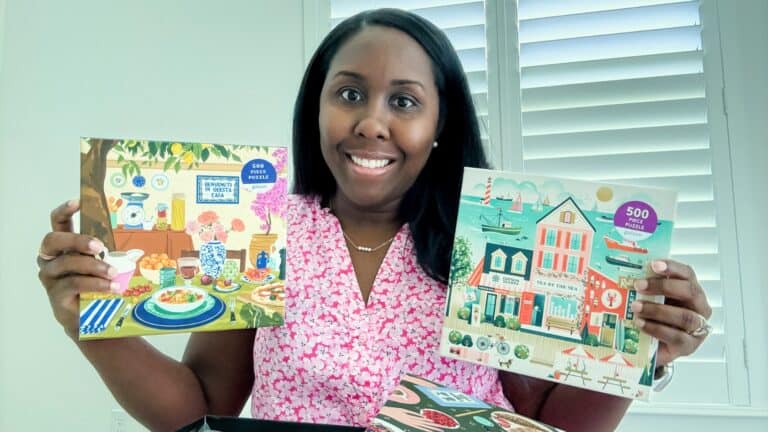
There is something wonderfully old-fashioned about sitting down with puzzles. There are no notifications, no algorithms, and no urgency. Just tiny pieces and the slow satisfaction of watching something come together. I think puzzles work particularly well for overstimulated brains because they provide structure without pressure. You always know what you’re supposed to be doing: find pieces, fit pieces, and repeat. It’s simple enough that your brain can relax but engaging enough that it doesn’t immediately wander back to your stress. Some of my favorite evenings lately have involved a cup of tea, a puzzle, and absolutely nowhere to be.
Why It Works
- Encourages focus without intensity
- Creates a sense of progress
- Reduces mental clutter
- Offers a break from screens
4. Journaling Without a Purpose
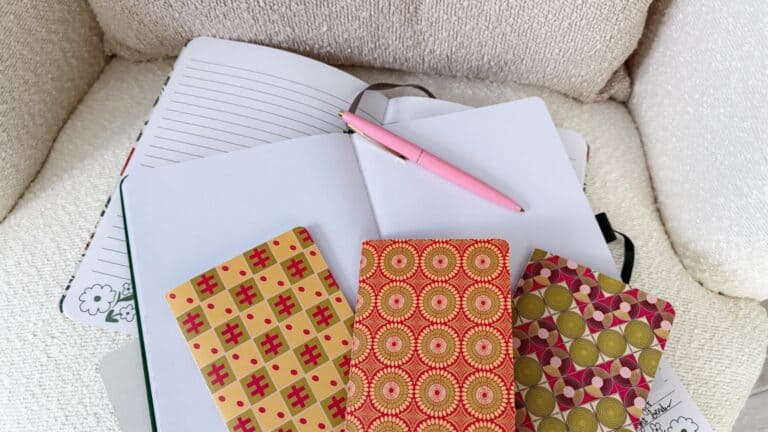
I think journaling gets marketed incorrectly sometimes. People talk about manifestation, goal setting, productivity planning, life optimization, and writing in all the things you’re tracking. And while those things have their place, that’s not the kind of journaling that helps me most. The journaling I love is messy, unstructured, and private. The kind where nobody will ever read it. Sometimes I write about my day, make lists, complain, or write one sentence and call it done (check our my One Sentence Journaling Method for Overwhelmed People if you haven’t already). The beauty of journaling is that it creates space for thoughts that otherwise stay trapped inside your head. And when you’re overstimulated, that release can feel surprisingly powerful.
Why It Works
- Helps process mental clutter
- Creates emotional breathing room
- Requires very little energy
- Can take five minutes or an hour
Want To Save This Post?
5. Slow Baking
I know baking sounds like work to some people. Trust me, I understand. But I’m not talking about elaborate layer cakes or complicated recipes. I’m talking about simple baking: banana bread, brownies, or a box-mix cake on a random Tuesday. The kind of baking where the process matters more than the result. One thing I love about baking is how sensory it is: measuring, mixing, smelling, and watching something transform in the oven. It gently pulls you into the present moment. And when your brain has spent all day bouncing between notifications, emails, and responsibilities, that feels incredibly grounding. Plus, your house smells amazing afterward and you have a treat you can sit and savor.
Why It Works
- Engages your senses
- Encourages mindfulness
- Creates a comforting environment
- Gives you something enjoyable to share or savor
The Hobby That Helped Me Most
If I’m being completely honest, coloring surprised me the most. I picked it up initially because I wanted something screen-free to do between work meetings and work breaks. What I didn’t expect was how quickly it quieted the constant urge to be productive. For thirty minutes, I wasn’t trying to accomplish anything. I wasn’t building something, growing something, or optimizing anything. I was simply coloring, and that felt weirdly comforting and healing. I think many of us are carrying around the belief that rest must be earned. That hobbies need outcomes, and enjoyment needs justification. I’m learning that’s not true.
Signs You Might Need a Low-Energy Hobby
You might benefit from a slower hobby if:
- You feel mentally exhausted most evenings
- You spend most of your free time scrolling
- Every hobby starts feeling like work
- You struggle to relax without feeling guilty
- You can’t remember the last time you did something purely for fun
- Your attention span feels fragmented
If that sounds familiar, you’re not alone. I’ve been there too.
FAQs About Low-Energy Hobbies
What are the best low-energy hobbies for adults?
Some of the best low-energy hobbies include reading, coloring, puzzles, journaling, knitting, baking, gardening, and listening to audiobooks.
Why do hobbies feel exhausting sometimes?
Often because we’ve unintentionally attached expectations to them. When hobbies become focused on productivity, improvement, or monetization, they stop feeling restorative.
Can hobbies help with overstimulation?
Yes. Gentle hobbies can reduce stress, encourage focus, lower screen time, and help calm an overstimulated nervous system.
What if I don’t have much free time?
Start small. Even ten minutes of reading, coloring, journaling, or puzzle-solving can make a noticeable difference.
Final Thoughts
I think one of the saddest things the social media and attention economy stole from us is permission to do things badly. To enjoy things without sharing them, create things without monetizing them, and to have hobbies simply because they make our lives better. The older I get, the more protective I become of activities that exist purely for joy. Not because they’re productive, profitable, or because they’re impressive. Just because they make me happy. And honestly, I think we need more of that. So if your brain feels overstimulated right now, maybe don’t look for another self-improvement project. Maybe look for a hobby that asks nothing from you except your presence. So tell me, Besties: what’s a hobby you’ve reclaimed purely for enjoyment lately?