25 Affordable Hobbies for Relaxation That Feel Good
Discover 25 affordable hobbies for relaxation that help you slow down, unwind, and enjoy your free time without spending a lot of money.
25 Relaxing Hobbies to Try When You Need a Break, Not Another Goal
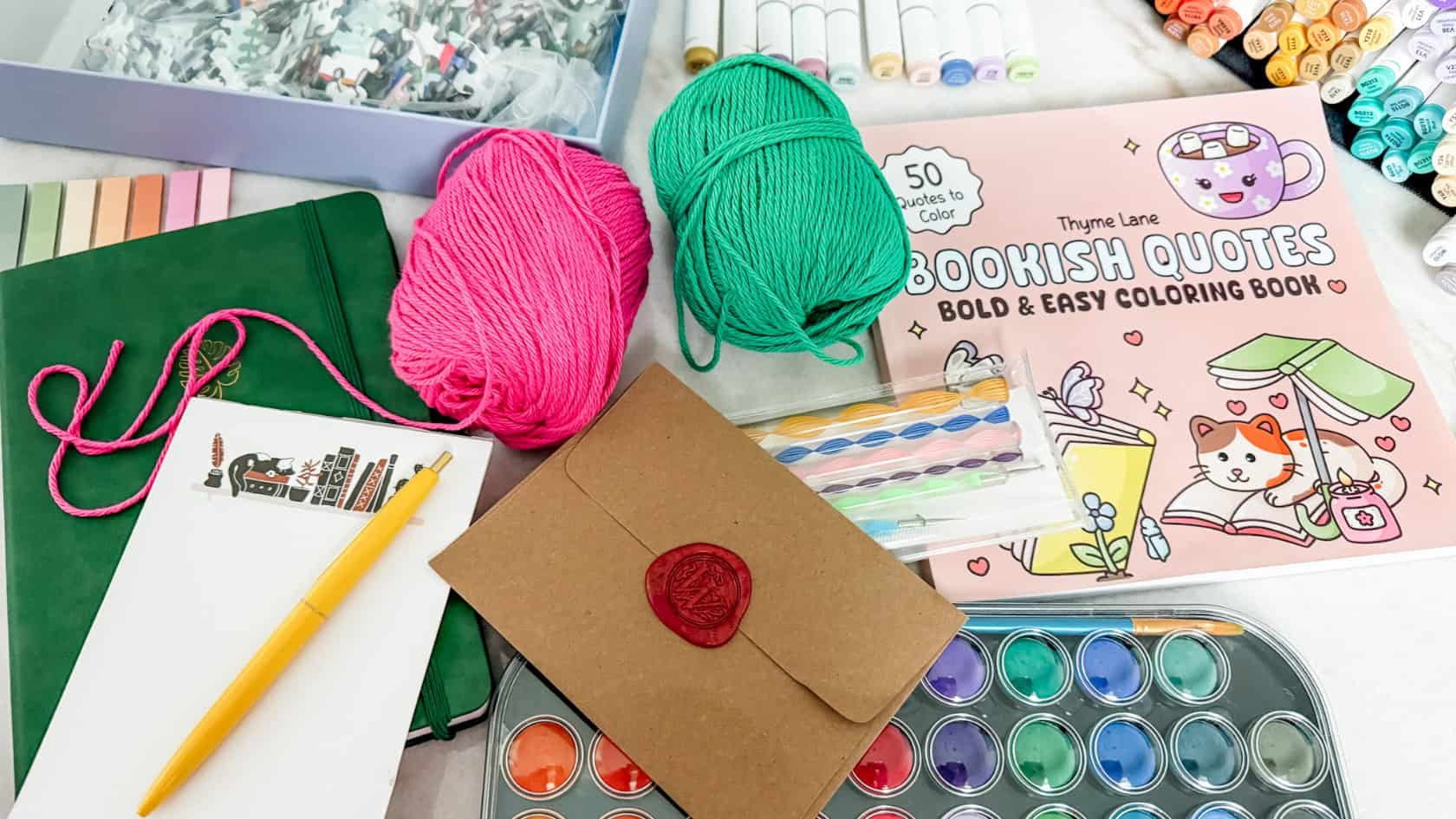
Hi Besties, I used to have a really bad habit of turning hobbies into projects. Even reading, the thing I genuinely love doing and have done for the longest, can start feeling like something to accomplish if I’m paying too much attention to reading goals, lists, numbers, and keeping up with all the latest and greatest, instead of simply sitting down with a good book. But I’ve had to remind myself that a hobby does not have to lead anywhere. I don’t have to become particularly good at it, and I don’t have to monetize it. You don’t have to buy the expensive beginner kit, post your progress online, or have something impressive to show for the hours you spent doing it. Sometimes I want a hobby because I have an hour to myself and would rather do something that leaves me feeling settled than spend that hour scrolling on my phone. That’s what this list of affordable hobbies for relaxation is really about. These are inexpensive, approachable things you can do because you enjoy doing them. Some are creative. Some get you outside. Some keep your hands busy. And some are wonderfully quiet. Most importantly, none of them need to become your new personality.
The Best Affordable Hobbies for Relaxation at a Glance
If you don’t want to read all 25 before deciding what to try, I’d start here:
- If you love books: reading or visiting the library.
- If your mind feels busy: journaling, coloring, puzzles, or walking.
- If you want to make something: baking, collage, crochet, or card making.
- If you’ve been staring at screens all day: gardening, birdwatching, walking, or sketching.
- If you want something cozy at home: reading, puzzles, baking, solitaire, or a tea ritual.
- If you have almost no energy: coloring, listening to music, cloud watching, or tending to a few plants.
My personal rule is to choose the activity that sounds easiest to begin today. Not the hobby belonging to the imaginary version of me who apparently has unlimited time, storage space, and craft supplies.

What Makes a Hobby Actually Relaxing?
I’ve realized that the hobby itself is only half of it, because the way I approach it matters too. I can make almost anything stressful if I attach enough rules to it. For me, a relaxing hobby usually has three qualities: I can do it at my own pace, I don’t need to perform it for anyone else, and stopping halfway through doesn’t feel like failure. That last one is especially important. For example, you should be able to color for fifteen minutes, read three pages, pull a few weeds, write half a letter, or put the puzzle away and come back tomorrow. We’re looking for things that create a little breathing room in ordinary life, not another unfinished task silently judging us from the corner.
25 Affordable Hobbies for Relaxation
1. Reading Whatever You Actually Want to Read
Obviously, we’re starting here. Reading has been part of my life for so long that I sometimes forget it counts as a hobby. But sitting somewhere comfortable with a book and disappearing into another world for a while is still one of my favorite ways to spend quiet time. The important part is giving yourself permission to read recreationally. Not the book you think you should read. Not necessarily the buzziest book everyone else is discussing. Pick something you genuinely want to open. And reading doesn’t have to become an expensive hobby. Use your library, reread books you already own, swap books with friends, or finally start shopping your own shelves.
Try it for less: Get a library card and make browsing the shelves part of the hobby itself.
2. Journaling Without Making It Pretty
I love the idea of journaling much more when I remove the expectation that my notebook needs to look like something I’d photograph. Sometimes journaling is a lovely notebook and thoughtful reflection. Sometimes it’s a cheap pen and three chaotic sentences about why I’m irritated. Both count. If staring at a blank page makes you freeze, I’ve shared my low-pressure journaling prompts for instant clarity specifically for those days when you want to write but don’t know where to begin.
Try it for less: Any notebook you already have works. So does the back of an unused page.
3. Adult Coloring
Adult coloring is one of my favorite examples of an activity that does not need a purpose. You choose a color. You fill in the space. That’s basically the assignment. And sometimes that is exactly the amount of decision-making I have left in me. You don’t need an enormous marker collection either. A small box of colored pencils or crayons is plenty. I also have free bold and easy bookish coloring pages for adults if you want something uncomplicated to start with. Want one book or three that you can reliably crack open and have something ready to color, check out the Thyme Lane collection of bookish bold and easy coloring books too.
Try it for less: Print free coloring pages and use whatever pencils, markers, or crayons are already in the house.
4. Walking Without Turning It Into a Workout
I love a walk that isn’t secretly exercise wearing a disguise. No pace goal, mileage requirement, counting steps, or checking whether I closed a ring. Just walking. One of my favorite variations is what I think of as a listening walk: no podcast, audiobook, or playlist. I pay attention to birds, conversations in the distance, leaves moving, traffic, my own footsteps, all the ordinary sounds I usually cover up with headphones. It feels completely different.
Try it for less: Walk your neighborhood, a local park, or a free nature trail.
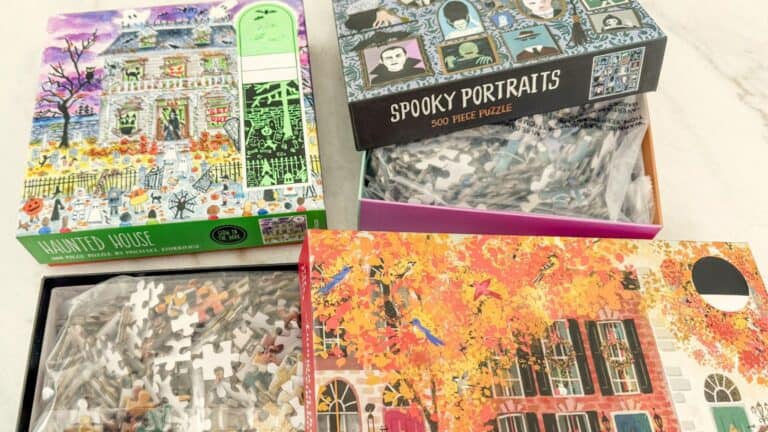
5. Doing Jigsaw Puzzles
Puzzles give my brain something specific to concentrate on without requiring me to produce anything. There’s something wonderfully satisfying about finding one tiny piece after staring at the same patch of blue for ten minutes. You can do a whole puzzle over a weekend or leave one out and add a few pieces whenever you pass it. And if you’re trying to keep this hobby inexpensive, puzzles are the perfect things to borrow and swap.
Try it for less: Check thrift stores, library lending collections, neighborhood swaps, and friends’ closets before buying new ones.
6. Baking
Baking is one of my personal defaults. There’s something about following a recipe, measuring ingredients, mixing everything together, and waiting for the kitchen to smell good that changes the pace of an afternoon for me. I don’t mean elaborate pastry projects requiring equipment you’ve never heard of. Banana bread counts. Cookies count. A boxed cake mix absolutely counts. This isn’t The Great British Bake Off, and nobody is coming to judge the crumb.
Try it for less: Choose recipes built around pantry ingredients you already keep at home.
7. Learning to Crochet or Knit
This one has a slightly higher learning curve, but once you’ve learned a few basic stitches, crochet or knitting can become a wonderfully repetitive hands-busy hobby. And you don’t need to begin by making an entire sweater. Please don’t do that to yourself. A basic square, scarf, dishcloth, or granny square is enough to learn whether you actually enjoy the process.
Try it for less: Start with one hook or pair of needles and one inexpensive ball of yarn rather than buying a complete kit.
8. Letter Writing
I have a particular soft spot for letter writing. We communicate so quickly now that sitting down to write an actual letter feels almost rebellious. I like that it makes me slow down and think about what I want to say instead of firing off another message between tasks. And receiving something personal in the mail still feels special. If you’re not sure what to write, my letter-writing hub has plenty of ideas, including my guide to the art of letter writing.
Try it for less: Paper, a pen, an envelope, and a stamp are enough. It doesn’t need to be fancy stationery.
9. Making Handmade Cards
This is the creative cousin of letter writing. I like making simple cards because there’s a reason for the thing I’m creating, but there isn’t much pressure involved. Fold cardstock or heavier paper. Add a drawing, collage, stamp, or handwritten message. Done. Birthdays, thank-yous, encouragement, congratulations, or a random “I was thinking about you” are all good excuses.
Try it for less: Save scraps of wrapping paper, ribbon, magazines, and pretty packaging for card-making supplies.
10. Collaging
Collage is perfect if drawing intimidates you, but you still want to make something. Old magazines, catalogs, packaging, ticket stubs, scraps of paper, and printed images can become mood boards, journal pages, bookmarks, or pieces you make for absolutely no reason whatsoever. I particularly like that there is no correct way for a collage to look. You cut, arrange, and glue. Change your mind? That’s ok, and that’s the hobby.
Try it for less: Use magazines and paper already headed for recycling.
11. Doodling or Sketching
You are allowed to draw badly. I feel like that needs to be said more often. The amount of beautiful art we see online can make picking up a pencil feel strangely intimidating. But sketching can simply mean noticing something and attempting to put it on paper. Draw your coffee cup. Your bookshelf. A flower. Your hand. A deeply questionable cat. The point is the act of looking and drawing, not producing frame-worthy art.
Try it for less: Start with a pencil and ordinary paper.
12. Making Playlists
This is such an easy one to overlook. Instead of creating one giant playlist of songs you like, make tiny playlists around very specific moods.
- Songs for rainy mornings.
- Songs for cleaning the kitchen.
- Songs that feel like driving with the windows down.
- Songs that make you feel like the main character in a movie where almost nothing happens.
Half the fun is deciding what belongs.
Try it for less: Use whatever music service or personal music library you already have access to.
13. Listening to an Album From Beginning to End
When was the last time you listened to an entire album without doing twelve other things? I realized at some point that I was consuming music in fragments: one song here, a playlist there, always in the background. Choosing an album and actually listening to it makes music feel like an activity again. Read the lyrics if you have them. Notice which songs connect. Pick a favorite.
Try it for less: Revisit albums you already own or can access through your existing music service or library.
14. Playing Solitaire and Other Card Games
A regular deck of cards contains an impressive amount of entertainment for something so inexpensive. I particularly like solitaire as a quiet alternative when my hand keeps automatically reaching for my phone. There is also a personal story of why I do this too. Growing up, my grandmother played solitaire, and that’s how I learned by sitting next to her.
Learn different versions. Play with another person. Teach yourself a game you haven’t played since childhood. It’s simple, tactile, and wonderfully offline.
Try it for less: One basic deck of cards can last for years.
15. Doing Crosswords, Sudoku, and Word Puzzles
Sometimes I don’t want to empty my brain. I want to give it something completely unrelated to think about. That’s where puzzles come in. Crosswords, Sudoku, word searches, logic puzzles, and other little brain games can create a nice break from whatever has been occupying your thoughts. I’m especially fond of activities that I can do for ten minutes and then put down without needing to remember where I left off.
Try it for less: Look for free newspaper puzzles, library resources, inexpensive puzzle books, or free printable options.
16. Birdwatching
Birdwatching sounds like one of those hobbies requiring binoculars, guidebooks, and extensive knowledge until you realize you can begin by looking out the window. That’s it. Start noticing which birds regularly appear near your home. Learn the name of one. Then another. Suddenly you’ve spent twenty minutes paying attention to something outside yourself instead of scrolling.
Try it for less: Start with your eyes and a free bird-identification resource. Equipment can come later if you decide you love it.
17. Gardening With What You Have
Gardening can become very expensive very quickly if you let a garden center convince you that you need everything. You don’t. One pot counts as gardening. A few herbs on a windowsill count. Propagating a plant you already own counts. Growing something from seeds counts. I like hobbies that encourage me to notice small changes over time, and plants are very good at that.
Try it for less: Propagate existing plants, swap cuttings, reuse containers, or start with inexpensive seeds.
18. Pressing Flowers and Leaves
This is such a simple hobby, especially if you already enjoy walking. Collect fallen leaves or flowers where appropriate, press them between sheets of paper inside a heavy book, and use them later in cards, bookmarks, journals, or little framed arrangements. I love that the hobby begins outside and ends with making something.
Try it for less: You do not need a flower press. Heavy books work just fine.
19. Watching Sunsets or Clouds
I know calling cloud watching a hobby sounds almost comically simple. That’s why I like it. We are so accustomed to needing entertainment every second that intentionally sitting somewhere and looking at the sky can feel surprisingly unusual. I don’t photograph every sunset either. Sometimes I just watch it happen. Radical, I know.
Try it for less: Completely free, assuming the sky continues its current pricing model.
20. Learning Simple Origami
Origami gives your hands a specific task and turns an ordinary piece of paper into something recognizable. You can start with very simple folds (hearts, bookmarks, boxes, flowers) and progress only if you feel like it. I particularly like hobbies where the basic supplies are already sitting in my house.
Try it for less: Practice with scrap paper before buying specialty origami paper.
Want To Save This Post?
21. Keeping a Commonplace Book
This is one of my favorite hobbies for people who love reading and collecting little pieces of language. A commonplace book is essentially a personal collection of things you want to remember: quotations, passages from books, observations, recipes, poems, ideas, facts, recommendations, or anything else worth keeping. It doesn’t need to become an elaborate system. Mine doesn’t need color coding, twelve indexes, and its own administrative department. A notebook and things worth remembering are enough.
Try it for less: Repurpose a half-used notebook.
22. Learning Hand Lettering or Calligraphy
You don’t need beautiful handwriting to enjoy lettering. In fact, practicing individual letters can be the hobby. Pick a style. Write the alphabet. Practice your name. Copy a favorite quote. The repetition is part of what makes it appealing when you want something quiet and hands-on.
Try it for less: Begin with an ordinary pen or marker before investing in specialty supplies.
23. Cooking One New Recipe at a Time
I specifically don’t mean turning yourself into a meal-prep machine. Choose something you’ve always wanted to make and give yourself enough time to enjoy making it.
- Maybe it’s homemade soup.
- A pasta sauce.
- Bread.
- A dish from a cookbook that’s been sitting untouched on your shelf.
Cooking feels completely different to me when I’m not rushing to get dinner on the table.
Try it for less: Pick recipes that use ingredients you already have and add only one or two new items.
24. Rearranging and Styling Your Bookshelves
You knew I was going to find another way to get books onto this list. I genuinely enjoy rearranging a shelf.
- By author.
- By genre.
- By color.
- By books I’ve read versus books I’m pretending I’ll get to very soon.
It lets me rediscover what I own, and I inevitably find something I’d forgotten about and suddenly want to read. The important distinction is that I’m not redecorating the entire house. One shelf. That’s enough.
Try it for less: Shop your own home and rearrange what you already own.
25. Exploring Your Local Library
The library itself can become part of your hobby. I don’t always go in knowing exactly what I want. Sometimes I browse. I look at displays. I check the new releases. I wander into a section I normally ignore. Libraries are one of my favorite examples of a place where I can spend time without the expectation that I need to purchase something. And yes, I usually leave carrying more books than I intended. That’s between me and my library card.
Try it for less: This one is beautifully, gloriously free.
Affordable Hobbies for Relaxation When You’re Mentally Tired
There are days when I technically have free time but don’t have enough mental energy for something complicated. Those are not the days I decide to learn an intricate new crochet pattern. I go smaller.
- Color for ten minutes.
- Put together part of a puzzle.
- Water my plants.
- Listen to an album.
- Sit outside.
- Read a chapter of something easy.
The hobby should meet your energy level instead of demanding that your energy rise to meet the hobby. That shift has made leisure much more enjoyable for me.
Cheap Hobbies to Try When You Need Less Screen Time
This is one of the biggest reasons I’ve become more intentional about hobbies. If I don’t decide what I want to do with an empty half hour, my phone will happily decide for me. And I can always tell the difference afterward. Thirty minutes spent coloring, walking, reading, baking, writing a letter, or doing a puzzle feels different from thirty minutes of bouncing between apps. So I keep a few easy offline options visible.
- A book on the table.
- A puzzle in progress.
- A notebook within reach.
- A deck of cards in a drawer.
Reducing the friction matters. If I have to dig through a closet and assemble seventeen supplies before beginning, I’m probably going to scroll instead.
How to Start a Hobby Without Spending a Lot of Money
This is where hobbies can get sneaky. You decide you’d like to try watercolor painting. Twenty minutes later, you’re online researching professional brushes as if the Louvre has commissioned you. I have learned not to shop for the hobby before I know whether I enjoy the hobby. Start with the smallest version possible. Borrow supplies. Use what you have. Check the library. Buy secondhand. Swap with friends. Choose one beginner item instead of the complete collection.
Then actually do the activity a few times. If you love it and want better supplies later, great. Spending intentionally on something you genuinely use is very different from buying an entire hobby fantasy before you’ve started.
My $0, $5, and $10 Hobby Rule
When I want to try something new, I like giving myself a tiny budget before buying supplies.
Start With $0
First I ask what I can do with what I already have. Reading, walking, cloud watching, listening to music, rearranging bookshelves, visiting the library, journaling in an existing notebook, and propagating plants can all begin without purchasing anything.
Then Try $5
A deck of cards, secondhand puzzle, inexpensive yarn, notebook, seeds, or basic coloring supplies can open up plenty of options without much commitment.
Only Spend More Once You Know You Like It
If I’ve actually been doing the hobby and want to keep going, then upgrading makes sense. I would much rather buy nicer colored pencils after coloring for two months than buy them on day one and discover I don’t particularly like coloring.
How I Make Time for Hobbies Without Making Them Another Task
I don’t schedule every hobby. That would defeat the purpose for me. Instead, I’ve started thinking in little pockets of time. Ten minutes before bed can be journaling. Twenty minutes after dinner can be a walk. A quiet Sunday afternoon can become baking and music. A library visit can replace wandering around a store when I simply want to get out of the house. And reading fits into almost everything. What I don’t do is create an elaborate hobby routine that requires me to enjoy myself from precisely 7:00 to 7:45 p.m. I want leisure to have some room to breathe.
Try My One-Week Affordable Hobby Reset
If you’ve fallen into the work-scroll-sleep-repeat cycle, don’t pick ten hobbies from this list. Pick one. For seven days, give it ten to twenty minutes whenever you reasonably can.
- You could read every evening.
- Take a short walk after lunch.
- Work on the same puzzle.
- Write in a journal.
- Practice a crochet stitch.
The goal isn’t to create a lifelong habit in seven days. You’re answering one question: Do I enjoy spending my time this way? If yes, keep going. If no, choose something else. That’s not quitting. That’s how you find hobbies you actually like.
How to Know You’ve Found the Right Relaxing Hobby
I think the right hobby feels different from another obligation.
- I look forward to returning to it.
- I don’t spend the entire time wondering whether I’m doing it correctly.
- I can stop without feeling guilty.
- I usually feel glad I did it afterward.
Notice I didn’t say I’m good at it. Being good at your hobby is optional. Enjoying it is the important part.
Why I’ve Stopped Trying to Make My Hobbies Productive
I think this is the part I keep coming back to. There is so much pressure to use our time well. Learn something. Build something. Improve yourself. Make extra money. Turn your hobby into content. Even rest somehow gets presented as something we should perfect. I’ve become much more interested in protecting a few things in my life from that mindset.
- I can read a book without increasing my annual reading goal.
- I can bake something without learning advanced pastry techniques.
- I can journal without developing a perfect morning routine.
- I can go for a walk without tracking it.
- I can color something and never show another person.
There is something wonderfully freeing about having parts of your life that aren’t trying to become anything bigger.
Final Thoughts
The best affordable hobbies for relaxation aren’t necessarily the trendiest, prettiest, or most impressive ones. They’re the ones you actually want to return to. For me, that’s often reading, baking, journaling, walking, wandering through the library, or doing something small with my hands while the rest of the world can wait for a little while. For you, it might be a deck of cards and a quiet table. A half-finished puzzle. A garden pot. A sketchbook. A letter to someone you miss. Start with what you already have. Give yourself twenty minutes. And resist the urge to turn it into another thing you have to accomplish.
I’d love to know what you do when you want to unwind without spending much. Tell me in the comments: what inexpensive hobby makes you lose track of time in the best possible way?