2026 Spring Reading Guide: Best New Nonfiction Books to Read This Spring
Looking for the best new nonfiction books for spring 2026? This 2026 Spring Reading Guide nonfiction list covers memoir, history, nature writing, philosophy, music, and cultural criticism—smart, immersive reads for your spring TBR.

Best New Nonfiction Books for Spring 2026
Spring always makes me want to read outward—books that widen the world, sharpen how I see it, and remind me how strange and storied real life is. This year’s Spring 2026 nonfiction books are exactly that: vivid memoirs, ambitious cultural histories, gorgeous nature writing, and deeply readable reporting. If you’re here searching for the 2026 Spring Reading Guide nonfiction books list or best new nonfiction books spring 2026, you’re in the right place.
Quick Picks If You’re in a Hurry
If you just want a few instant adds for your Spring 2026 TBR:
- For hip-hop history from an iconic insider: Everybody’s Fly
- For motherhood’s radical history across centuries: A Woman’s Work
- For a brain-expanding nature read about evolution and beauty: How Flowers Made Our World
- For elite wealth, danger, and immaculate investigative storytelling: London Falling
- For trees as philosophy, grief, history, and ecology all at once: In Trees
Now let’s curl up and dig into each one.
Best New Nonfiction Books for Spring 2026

Everybody’s Fly by Fred Brathwaite with Mark Rozzo
A rich, gritty memoir from Fab 5 Freddy, a crucial connector in early hip-hop culture—equal parts street-level scene history and art-world chronicle. This book shines in the late ’70s/early ’80s moment when New York felt like a creative open door: punk, jazz, graffiti, rap, galleries, downtown TV, and nightlife cross-pollinating constantly. Brathwaite’s social orbit reads like a cultural map—Basquiat, Debbie Harry, Grandmaster Flash, Warhol—and the storytelling carries the genial confidence of someone who truly lived at the center of it. If you love music memoirs that double as cultural time capsules, this one belongs on your spring stack.
You can get a copy on Amazon.

A Woman’s Work by Elinor Cleghorn
A sweeping, research-rich history of mothering—from ancient mythology and early medicine to modern politics, reproductive autonomy, and the stubborn myths still used to control women’s bodies. Cleghorn’s gift is making enormous history feel intimate: she threads archival detail through portraits of individual women and specific moments, illuminating the physical risks, emotional realities, social punishments, and rare acts of resistance that have shaped motherhood for centuries. This is the kind of nonfiction that feels both grounding and galvanizing—perfect for readers who want history with urgency.
You can get a copy on Amazon.
.

How Flowers Made Our World by David George Haskell
A celebratory, deeply readable exploration of flowering plants—and how they changed everything. Haskell centers eight plants (from magnolias to orchids to grasses and teas), using them to tell the story of evolutionary innovation, ecological partnership, and the way beauty and survival intertwine. There’s wonder here, but also real thought about the future: how flowers may adapt (or be forced to adapt) to climate change and human disruption. If you like nature writing that’s scientific without ever losing its lyric pulse, this is a standout spring read.
You can get a copy on Amazon.

Seven Sisters by Veronica Buckley
A richly detailed group biography of the seven daughters of Empress Maria Theresia—women raised to be political instruments, married off as pawns in a dynastic chess match. Buckley animates court life and high-stakes European politics while keeping the focus where it belongs: the emotional cost of being treated as strategy instead of a person. Rivalries, alliances, childbirth dangers, small rebellions, and the brutal pressures of appearance and obedience all pulse through the narrative. If you love royal history but want it to feel human (and complicated), this is a satisfying deep dive.
You can get a copy on Amazon.

Chasing Freedom by Simukai Chigudu
A compelling blend of memoir and political history from a political scientist reflecting on coming of age in newly independent Zimbabwe—and what “freedom” really means when empire ends but oppression persists. Chigudu moves between family stories (including his parents’ survival through different African regimes), elite schooling, racism, religion, medicine, and the long shadow of Mugabe’s rule. The throughline is identity: the weight of history, the burdens of perfectionism, and the slow work of freeing the self. For readers who want personal narrative braided tightly with national and global context.
You can get a copy on Amazon

In Trees by Robert Moor
Part travelogue, part philosophy, part cultural history, part ecological wonder—anchored by grief and recovery after Moor’s husband suffers a stroke. This is a book about “trees” in every sense: literal forests and literal fire, family trees and inherited trauma, evolutionary branching and human violence, myth and science, wonder and harm. Moor is exceptionally good at making ideas feel tactile, whether he’s in redwoods, bonsai workshops, or reckoning with the darker histories trees have witnessed. If you like nonfiction that thinks in spirals and still lands emotionally, add this immediately.
You can get a copy on Amazon.

The Dark Frontier by Jeffrey Marlow
An illuminating, adventurous journey into deep-sea exploration—and the looming controversy of exploiting an ecosystem we barely understand. Marlow’s rare strength is making the strange feel cinematic: submersibles, seafloor landscapes, whale-fall ecosystems, and the long, slow timescale of the deep ocean contrasted with human extraction and quarterly-profit thinking. The writing has romance and awe, but the argument is clear: we’re changing the deep sea before we truly know it. Perfect for readers who loved immersive science writing that also carries ethical weight.
You can get a copy on Amazon
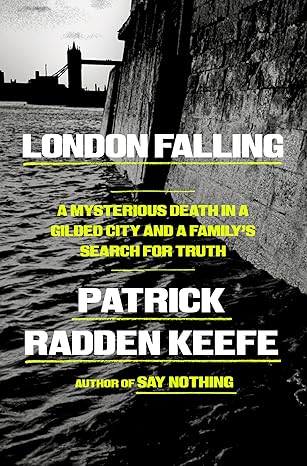
London Falling by Patrick Radden Keefe
A gripping work of investigative nonfiction about a young man’s death in London—and the darker ecosystem of money, status, criminal opportunism, and institutional failure surrounding it. Keefe is at the top of his form: sharp on systems, meticulous with detail, and sensitive in how grief fractures families differently. This is also a portrait of a city remade—glitzy, aspirational, increasingly dangerous in the spaces where wealth and impunity overlap. If you’re looking for the page-turning nonfiction pick on this list, this is it.
You can get a copy on Amazon.

How to Live Like a Stoic by Tom Hodgkinson
A clear, welcoming entry point into Stoicism as a practical philosophy—less “grit your teeth” and more “build a steadier inner life.” Hodgkinson moves through the history and core ideas with a breezy confidence, pulling in thinkers across centuries and translating their advice into modern emotional reality: what to do with stress, fear, uncertainty, ambition, and mortality. If spring has you craving a mental reset, this is a gentle but steadying companion.
You can get a copy on Amazon

If This Be Magic by Daniel Hahn
A joyful, intelligent tour of Shakespeare in translation—why the Bard is a translator’s ultimate test, and how language reshapes what we think we know. Hahn’s superpower is making translation feel like adventure: he compares versions across languages, unpacks the struggle of reproducing meter and meaning, and shows how cultural context changes emotional impact. The result is a book about Shakespeare, yes—but also about what language is, and why words matter. Ideal for literature lovers, word nerds, and readers who want nonfiction that feels playful and profound at the same time.
You can get a copy on Amazon.

The Rolling Stones by Bob Spitz
A sturdy, fan-pleasing biography packed with music history, business savvy, personality clashes, and the sheer improbable endurance of the Stones. Spitz balances the famous mythology with strong reporting, paying particular attention to the band’s early years and Brian Jones’ tragic unraveling. There’s also plenty here about why the Stones survived as a brand and a machine—discipline, calculation, reinvention, and stamina bordering on absurd. If you want a big, satisfying rock biography for spring, this is your brick of choice.
You can get a copy on Amazon.

Adulting for Amateurs by Jess H. Gutierrez
High-octane personal essays about being a queer, middle-aged “geriatric millennial” mother—messy, hilarious, sharp, and unexpectedly wise. Gutierrez writes with stand-up energy: fast pacing, big laughs, and emotional snap. The collection moves from nostalgia and career detours into parenting (including fostering and adoption), with jokes that often land like truth bombs. For readers who like their essays funny but not flimsy—comedy with real life underneath.
You can get a copy on Amazon.

The Emerson Circle by Bruce Nichols
An invigorating social and literary history of the Concord writers who shaped American literature—Emerson, Thoreau, Hawthorne, Melville, the Alcotts, and the broader radical culture orbiting them. Nichols wears his learning lightly, keeping the narrative lively while threading in sharp detail: the economic precarities, the ideological fights, the contradictions, and the way those books we now call “classics” were born from real people trying (and often failing) to live their philosophies. Perfect for readers who want literary history that feels like a story—not a lecture.
You can get a copy on Amazon.
How to Use This Nonfiction List in Your Spring 2026 Reading Guide
If you’re building your own Spring Reading Guide 2026, here’s one easy way to work these nonfiction picks in:
Want To Save This Post?
- Choose one cultural memoir/music history: Everybody’s Fly or The Rolling Stones
- Add one big-history lens on women, power, or politics: A Woman’s Work or Seven Sisters
- Include one nature/science immersion read: In Trees, The Dark Frontier, or How Flowers Made Our World
- Round it out with one page-turning investigative or idea-driven book: London Falling, Chasing Freedom, or If This Be Magic
- Optional mood reset: How to Live Like a Stoic (for the calmest corner of your stack)
Then mix these with your literary fiction, mysteries, romances, and family & friendship picks from the rest of the Spring Reading Guide 2026: 100 Must-Read Books, and you’ll have a reading season that feels curious, alive, and genuinely expanding.
Final Thoughts
That’s my 2026 Spring Reading Guide: Nonfiction list—big ideas, unforgettable true stories, and books that make you feel smarter without feeling like homework. Which one is going straight onto your spring TBR, and are you pairing your nonfiction with fiction this season or going all-in on real life? Let me know in the comments what you’re reading—I’m always ready to add another brilliant nonfiction title to my stack.