
Short Christmas Stories for Adults to Read in One Sitting
These short Christmas stories for adults include classic, bittersweet, funny, mysterious, and reflective reads you can finish in one cozy sitting.

12 Short Christmas Stories I’d Read When December Is Too Busy for a Novel
Hi Bookish Besties, every December, I make ambitious plans for my reading life as though gift wrapping, gatherings, errands, holiday cooking, decorating, and all the other things happening around me will politely step aside so I can finish a four-hundred-page novel by the tree.
They do not.
That is why short Christmas stories for adults have become one of my favorite ways to keep reading during the busiest part of the season. I can finish one before bed, during a slow morning with coffee, or in the quiet pocket of time between whatever I just finished doing and whatever December has apparently scheduled next.

I also think short Christmas fiction suits the season unusually well. Christmas naturally lends itself to compressed stories because the holiday gives a writer an immediate emotional setting. Family gathers. Old memories surface. Money becomes complicated. Loneliness feels sharper. Generosity matters more. Ghosts apparently become extremely active. A writer can enter that atmosphere quickly and leave you with something to think about long after the last page.
For this update, I wanted to make the list much more clearly for adult readers. Some of these stories are comforting. Some are sad. A few are genuinely dark. There is a Sherlock Holmes mystery, a Dickensian ghost tale, an unsettling Stevenson story, and enough complicated Christmas feelings to counteract any danger of excessive peppermint cheer.
The reading times below are intentionally approximate. Editions, translations, type size, and reading speed vary, and reading a story aloud will usually take longer. I use broad windows because the goal is to help you decide whether you have ten minutes, half an hour, or one uninterrupted hour tonight, not to turn Christmas reading into a timed event.
If you want the quickest place to start, I would choose The Gift of the Magi for tenderness, The Adventure of the Blue Carbuncle for a festive mystery, Markheim when you want Christmas considerably darker, and Christmas Day in the Morning when you need something gentle enough to restore your faith in humanity before bed.
The Best Short Christmas Stories for Adults

The Gift of the Magi by O. Henry
Approximate reading time: 8–12 minutes
Della and Jim are young, deeply in love, and almost completely without money. Each secretly sacrifices the possession they treasure most in order to buy the other a meaningful Christmas present, creating one of the most famous ironic endings in short fiction.
I have reread this enough times that the ending can no longer surprise me, yet the story still works because the twist was never really the reason to read it. What gets me now is the mismatch between the practical usefulness of the gifts and the emotional meaning behind them. The presents become almost absurdly useless, while the love expressed through choosing them becomes even more valuable.
That lands particularly hard in December. It is incredibly easy to start worrying whether a gift is big enough, expensive enough, impressive enough, or surrounded by enough supporting gifts to look substantial under the tree. O. Henry dismantles all of that in a few pages.
I return to this story because it resets my thinking about giving faster than almost anything else I read at Christmas.
You can get a copy of The Gift of the Magi by O. Henry on Amazon or Bookshop.

Christmas Day in the Morning by Pearl S. Buck
Approximate reading time: 8–12 minutes
Pearl S. Buck’s Christmas Day in the Morning begins with an older man remembering a Christmas from his childhood when he wanted to give his hardworking father something meaningful but had almost no money. The solution he finds is beautifully simple. He gets up early and completes the exhausting morning farm chores before his father wakes, giving him something much more valuable than an object: rest.
I love this story because the gesture is so ordinary. There is no enormous Christmas miracle, no supernatural visitor, no elaborate gift. A child simply understands what would make someone else’s life easier and quietly does it.
That feels increasingly meaningful to me. Some of the most loving gifts are not things we can wrap. They are taking something off another person’s plate, noticing what someone needs before they ask, or making a difficult day lighter.
I always finish this one wanting to become slightly better at paying attention.
You can get a copy of Christmas Day in the Morning by Pearl S. Buck on Amazon or Bookshop.

The Fir-Tree by Hans Christian Andersen
Approximate reading time: 15–20 minutes
In The Fir-Tree, a young tree is so obsessed with what comes next that it barely experiences its own life. It wants to grow taller. Then it wants to leave the forest. Then it wants the excitement other trees have described. Even when the longed-for moment finally arrives and the tree becomes part of a Christmas celebration, its attention immediately moves toward whatever might happen afterward.
Andersen is not subtle about where this is going, but that does not make the story any less effective. In fact, I think it has become more effective on me with age.
December makes it incredibly easy to live like that tree. We spend the beginning of the month anticipating Christmas. Then we anticipate Christmas Eve. Then Christmas morning. Then dinner. Then whatever comes next. Eventually the decorations come down and we wonder why the season felt so fast.
I reread this story because I apparently require an annual literary reminder to stop wishing December forward.
You can get a copy of The Fir-Tree by Hans Christian Andersen on Amazon or Bookshop.

The Little Match Girl by Hans Christian Andersen
Approximate reading time: about 5 minutes
The Little Match Girl is one of the shortest stories here and one of the hardest. A poor child tries to survive bitter cold while people around her continue with their own lives. As she lights individual matches for warmth, she experiences brief visions of food, comfort, celebration, and love.
This is not the story I choose when I want to feel cozy. It is the story I choose when I want Christmas literature to challenge the comfortable version of the holiday.
That distinction matters to me. Christmas is surrounded by language about generosity and goodwill, but Andersen places suffering directly beside celebration and refuses to let the reader pretend the two worlds are unrelated.
I would not read it every December night, but I do think it belongs on an adult Christmas reading list precisely because it disrupts the sweetness. Some stories are supposed to comfort us. Some are supposed to make comfort impossible for a few minutes.
You can get a copy of The Little Match Girl by Hans Christian Andersen on Amazon or Bookshop.
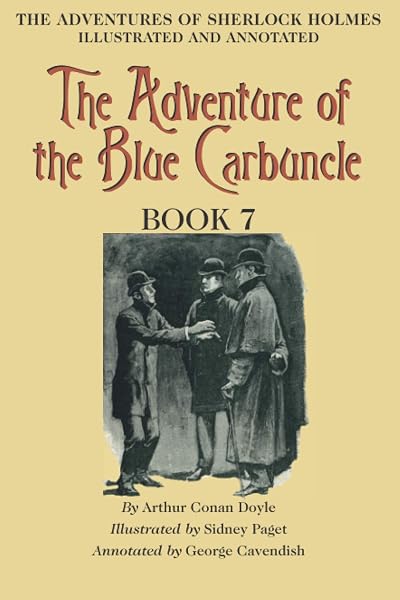
The Adventure of the Blue Carbuncle by Arthur Conan Doyle
Approximate reading time: 30–40 minutes
If Christmas has become too sentimental, Sherlock Holmes can usually fix that. The Adventure of the Blue Carbuncle begins with a battered hat and a Christmas goose and gradually turns into a mystery involving a stolen jewel, mistaken ownership, and Holmes doing what Holmes does best: noticing things everyone else has ignored.
I love including this because it feels properly festive without being a Christmas morality tale. London is wintry, Christmas dinner matters to the plot, and the season is present everywhere, but the story remains unmistakably a Sherlock Holmes mystery.
There is also more compassion in the ending than readers may expect, and that is the part that makes it especially appropriate for Christmas to me. Holmes is capable of solving the crime. The more interesting question becomes what he chooses to do once he knows the truth.
When I want one evening of mystery rather than romance or sentiment, this is probably my first choice from the list.
You can get a copy of The Adventure of the Blue Carbuncle by Arthur Conan Doyle on Amazon.
Markheim by Robert Louis Stevenson
Approximate reading time: 25–30 minutes
Markheim is for readers who heard “short Christmas story” and immediately wished the list were more disturbing. The story begins in a shop on Christmas Day, where a man named Markheim has come under the pretense of buying a gift. Very quickly, we discover that Christmas shopping is not actually his primary objective.
What follows is a dark psychological story about murder, conscience, temptation, moral choice, and whether a person can still make one meaningful decision after a life has moved badly off course.
This is not cozy. I repeat: not cozy.
I find it fascinating at Christmas, though, because Stevenson uses the season’s associations with morality, judgment, renewal, and redemption in a much darker register than Dickens. If A Christmas Carol gives us a man transformed through supernatural intervention and joy, Markheim asks similar questions in a room where almost none of the Christmas lights are on.
This is my recommendation for the reader who wants literary darkness with their December.
You can get a copy of Markheim by Robert Louis Stevenson on Amazon.
The Burglar’s Christmas by Willa Cather
Approximate reading time: 20–25 minutes
Willa Cather’s The Burglar’s Christmas begins with a young man who has fallen into desperate circumstances and finds himself considering theft on Christmas Eve. What follows becomes a story about homecoming, shame, family, and the possibility that someone may still be welcomed after believing he has ruined everything.
I like this one because the emotional transformation is quieter than Scrooge’s. Nobody needs three ghosts, and nobody wakes up shouting out windows. Instead, Cather works with the ache of believing you can no longer return to the place (or people) you once belonged to.
Christmas stories often revolve around home, but this one makes home emotionally complicated. What does it mean to return when you are embarrassed by who you have become? Will the people who knew you before still make room for you now? That is much more interesting to me than simply getting someone back through the front door.
You can get a copy of The Burglar’s Christmas by Willa Cather on Amazon.
Christmas Every Day by William Dean Howells
Approximate reading time: 10–15 minutes
Christmas Every Day begins with the kind of wish that sounds wonderful for approximately thirty seconds: what if Christmas happened every single day? William Dean Howells takes that fantasy and follows it to its logical conclusion.
Eventually, constant Christmas becomes exhausting. The feasts become too much. The gifts become too much. The celebration itself becomes meaningless because nothing ordinary exists around it anymore.
I love the premise because it is funny and surprisingly sharp. We spend December wishing we could stretch the season, make more time, do more festive things, and somehow squeeze additional Christmas into Christmas. Howells asks what happens when special becomes constant. The answer is that it stops being special.
I return to this one because it reminds me that limits are part of pleasure. Christmas works partly because it ends. That may not be the most romantic holiday sentiment, but I think it is true.
You can get a copy of Christmas Every Day by William Dean Howells on Amazon.
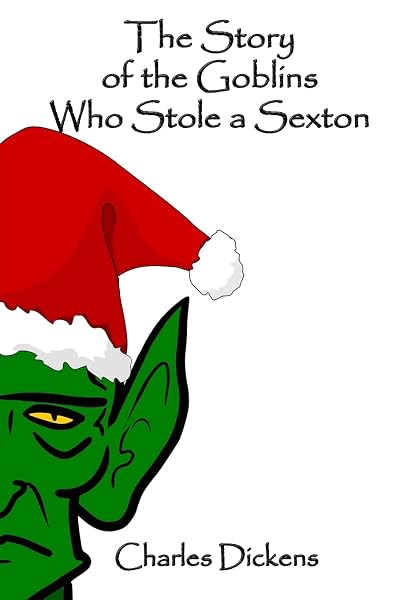
The Story of the Goblins Who Stole a Sexton by Charles Dickens
Approximate reading time: 15–20 minutes
Before Ebenezer Scrooge met his ghosts, Dickens gave us Gabriel Grub. The Story of the Goblins Who Stole a Sexton appears in The Pickwick Papers and follows a miserable, misanthropic gravedigger who dislikes other people’s happiness and finds himself confronted by supernatural beings during Christmas.
Does that sound slightly familiar? Yes. That is part of why I like reading it.
You can see Dickens working with ideas he would later develop much more fully in A Christmas Carol: a sour man, Christmas, supernatural intervention, visions of human life, and moral transformation. It feels almost like finding an early sketch for a painting you already know.
The story is also darker and stranger in its own way, which makes it worth reading rather than treating it merely as a historical curiosity. For Dickens readers, this is one of my favorite little Christmas rabbit holes.
You can get a copy of The Story of the Goblins Who Stole a Sexton by Charles Dickens on Amazon.
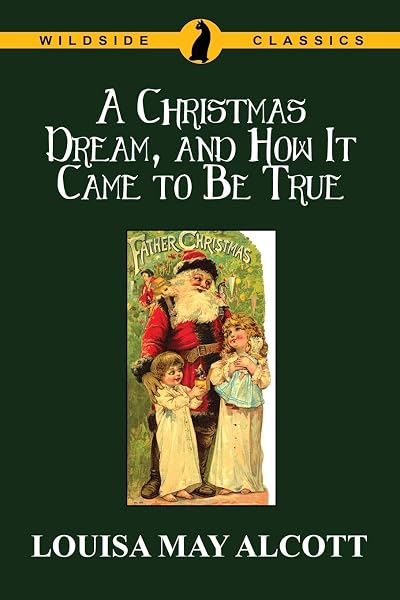
A Christmas Dream, and How It Came to Be True by Louisa May Alcott
Approximate reading time: 20–25 minutes
Louisa May Alcott’s A Christmas Dream, and How It Came to Be True begins with a child who has grown tired of Christmas because she already has everything she wants. Then comes a dream and, eventually, a different understanding of what Christmas can be when abundance is redirected toward someone else.
The moral is clear, but I do not mind clear morals in nineteenth-century Christmas stories. They are not pretending otherwise.
What interests me is how frequently older Christmas fiction worries about excess. We sometimes talk about overconsumption as though it were invented by online shopping, yet writers have been using Christmas stories to ask what wealth, gifts, charity, and generosity mean for a very long time.
I like reading Alcott beside stories such as The Gift of the Magi because the economic circumstances are completely different, but both are ultimately interested in what giving reveals about the giver.
You can get a copy of A Christmas Dream, and How It Came to Be True by Louisa May Alcott on Amazon.
The Christmas Banquet by Nathaniel Hawthorne
Approximate reading time: 30–40 minutes
If you want Christmas dinner without anything resembling holiday cheer, Nathaniel Hawthorne has you covered. The Christmas Banquet imagines an annual gathering for people defined by misery, alienation, and profound dissatisfaction.
It is an unusual premise and a very Hawthorne way to approach Christmas. Rather than surrounding the table with people who find joy through togetherness, he fills it with characters who struggle to feel what everyone else seems capable of feeling.
I include it because adult holiday reading benefits from stories that acknowledge Christmas can amplify unhappiness as easily as happiness. The season carries expectations: be joyful, be grateful, be connected, have somewhere to belong. When someone cannot access those feelings, the contrast becomes sharper.
Hawthorne’s story is not an easy read emotionally, but it opens up a side of Christmas literature that gets lost when every recommendation is described as heartwarming.
You can get a copy of The Christmas Banquet by Nathaniel Hawthorne on Amazon.

The Dead by James Joyce
Approximate reading time: 60–75 minutes
The Dead is the longest story on this list and the one I would choose when I have a full uninterrupted evening and want something genuinely literary. Set during a holiday-season gathering in Dublin, the story follows Gabriel Conroy through dinner, conversation, music, social discomfort, marriage, memory, and eventually a revelation that changes the way he understands both his wife and himself.
I would not call this a conventional Christmas story, and that is partly why I wanted it here. The holiday gathering creates the social container, but Joyce is interested in much larger things: intimacy, memory, ego, mortality, the past’s hold over the present, and the limits of how completely we can ever know another person.
The ending is one of those passages that changes the temperature of a room for me. I finish it feeling as though the story has widened from a dinner party to encompass something enormous and almost impossible to name.
When I want my holiday reading to be contemplative rather than comforting, this is where I go.
You can find The Dead in Dubliners by James Joyce on Amazon.
Which Short Christmas Story Should You Read Tonight?
If you only have ten minutes, choose The Gift of the Magi, The Little Match Girl, or Christmas Day in the Morning. They are completely different emotional experiences. The Gift of the Magi gives you bittersweet love. Andersen gives you compassion without comfort. Pearl S. Buck gives you quiet family tenderness.
If you have closer to fifteen minutes, Christmas Every Day is the one I would pick when you want humor, and The Story of the Goblins Who Stole a Sexton works when you want a shorter dose of Dickens.
If you have around half an hour, I would pick The Adventure of the Blue Carbuncle if you want mystery, The Burglar’s Christmas if you want redemption, or Markheim if you want something dark enough to make your Christmas candle suddenly seem inadequate.
With a full hour, choose The Dead. That is the one I would save for a genuinely quiet night, because it deserves attention.
Dark and Melancholy Short Christmas Stories for Adults
This category deserves its own section because not everyone comes to Christmas fiction looking for cocoa in literary form.
If you want darkness, Markheim is easily my first recommendation. It gives you crime, conscience, and moral struggle without much interest in making the season comfortable. The Christmas Banquet is more philosophical and melancholy, particularly if you are interested in stories about alienation and the strange emotional expectations Christmas creates. The Little Match Girl is devastating in a very different way because its darkness is social rather than psychological.
And The Dead offers neither horror nor traditional Christmas sadness. Its melancholy comes from realizing how much of another person’s emotional life can remain inaccessible even inside an intimate relationship.
These are the stories I reach for when I have consumed enough holiday sweetness and want a reminder that Christmas literature has always had shadows.
Hopeful and Heartwarming Short Christmas Stories for Adults
When I want the opposite, I choose Christmas Day in the Morning. There is something wonderfully restorative about reading a story where love appears as useful action. The Gift of the Magi gives me a similar emotional reset, even though its famous irony adds a bittersweet edge.
The Burglar’s Christmas offers the possibility of return and forgiveness, while A Christmas Dream, and How It Came to Be True leans directly into generosity as an antidote to excess.
None of these stories requires everything in life to be perfect before something good can happen. That is the kind of hope I prefer.
A Short Christmas Mystery for One Cozy Night
If you are already one of the people who eventually needs murder and mystery mixed into Christmas, begin with The Adventure of the Blue Carbuncle. It is festive enough to belong on a Christmas list but still recognizably Sherlock Holmes.
That balance matters. I would not choose a mystery merely because someone placed a wreath in the background; the holiday should affect the atmosphere or plot. Here, the Christmas goose is literally part of the mystery, which is difficult to argue with.
If that turns out to be exactly your December mood, I would move from here into longer Christmas murder mysteries rather than forcing this short-story page to become an entire crime shelf.
Why I Prefer Short Stories During the Busiest Part of December
My December reading problem is rarely that I do not want to read. It is that I keep waiting for ideal reading conditions. I tell myself I will start the book when I have an hour. Then the hour does not arrive.
A short story changes the bargain. Ten minutes is enough. Twenty minutes is enough. One cup of tea is enough. I can begin and finish something without creating another unfinished project in a month that already contains plenty of those.
There is also something deeply satisfying about completing an entire emotional arc before bed. A novel asks me to leave part of my attention inside the story overnight. A short story can open a door, rearrange the room, and close it again before I turn out the light. That compactness feels particularly right at Christmas.
How I Turn Short Christmas Stories Into a December Reading Ritual
I would not try to read all twelve in twelve consecutive nights unless that genuinely sounds enjoyable. I know myself too well to turn reading into another seasonal challenge. Instead, I like choosing a handful according to the mood of the week.
Maybe The Gift of the Magi early in December when I am thinking about gifts. The Fir-Tree once I catch myself rushing the month forward. Sherlock Holmes on a cold night when I want something entertaining. Christmas Day in the Morning close to Christmas itself. And The Dead sometime during that strange quieter stretch when the year is almost over and reflective reading suddenly feels exactly right.
That is enough to turn the stories into a ritual without making them homework.
How This List Fits With My Other Christmas Story Guides
I am keeping this page deliberately focused on short Christmas stories for adults. If you want the broadest starting point, my main Christmas Stories guide moves across classics, contemporary fiction, children’s stories, mysteries, and ghost stories. If you specifically want the older works I personally reread year after year, that is what my Classic Christmas Stories list is for.
For longer stories you can share with older children and mixed-age families across several December nights, my Christmas Stories to Read Aloud guide focuses more on Dickens, Tolkien, Hoffmann, and the chapter-a-night tradition. And if your eyes lit up specifically at Sherlock Holmes, Markheim, and Dickens’s goblins, your next stop may be the darker Christmas mystery and Victorian story side of my holiday bookshelf.
I would rather give each page one clear job than repeat the same twelve books everywhere with slightly different introductions.
Frequently Asked Questions About Short Christmas Stories for Adults
What are the best short Christmas stories for adults?
My strongest starting points are The Gift of the Magi by O. Henry, Christmas Day in the Morning by Pearl S. Buck, The Adventure of the Blue Carbuncle by Arthur Conan Doyle, Markheim by Robert Louis Stevenson, The Fir-Tree by Hans Christian Andersen, and The Dead by James Joyce. Together they give you romance, tenderness, mystery, darkness, reflection, and literary depth.
What Christmas stories can I read in under 15 minutes?
The Gift of the Magi, The Little Match Girl, and Christmas Day in the Morning are all good choices when you only have a short reading window. Exact reading time varies by edition and reader, but each can generally be finished comfortably in one brief sitting.
What is a good short Christmas mystery for adults?
The Adventure of the Blue Carbuncle by Arthur Conan Doyle is my first choice. Sherlock Holmes investigates a stolen jewel through a wonderfully strange trail involving a hat and a Christmas goose, making the holiday setting part of the mystery rather than simple decoration.
Are there scary short Christmas stories for adults?
Yes. Markheim by Robert Louis Stevenson is a dark psychological Christmas story involving murder, conscience, and temptation. Dickens’s The Story of the Goblins Who Stole a Sexton offers a more supernatural route into darker Christmas reading, while Victorian Christmas literature has an even larger ghost-story tradition.
What are some sad Christmas short stories?
The Little Match Girl is one of the saddest classic Christmas stories, while The Dead is much more complex and melancholy in its treatment of memory, intimacy, and mortality. The Fir-Tree is bittersweet rather than tragic, but its message about failing to appreciate the present can hit particularly hard in December.
What are some heartwarming short Christmas stories for adults?
Christmas Day in the Morning is probably my warmest recommendation. The Gift of the Magi is also deeply loving, though bittersweet, while The Burglar’s Christmas brings a hopeful theme of homecoming and forgiveness.
Are these short Christmas stories good for reading aloud?
Several are, especially The Gift of the Magi, Christmas Day in the Morning, and some of the Dickens selections. For family reading with older children, though, I would use my dedicated Christmas Read-Aloud guide because that list is built specifically around mixed ages and stories that sound particularly good when shared.
Why are so many classic Christmas stories sad or spooky?
Christmas literature has never been exclusively cheerful. Winter darkness, year-end reflection, poverty, family memory, mortality, religious themes, and the contrast between celebration and suffering all make the season natural territory for ghost stories, melancholy tales, and moral fiction. That darker tradition is one of the things I find most interesting about older Christmas writing.
Final Thoughts
Short stories may actually be my ideal December format. They do not ask me to pretend I have more time than I do. I can read O. Henry with morning coffee, Sherlock Holmes before bed, Andersen while the tree is lit, or Joyce when I finally have the kind of quiet evening where I can give a story my full attention.
And because the form is so compressed, there is very little room for Christmas to function as meaningless decoration. The good stories have to decide quickly what the season means.
For Della and Jim, Christmas becomes sacrifice. For Pearl S. Buck’s narrator, it becomes useful love. For Andersen’s fir tree, it becomes a lesson about presence. For Holmes, it becomes the setting for an unusual act of mercy. For Stevenson, it becomes a confrontation with conscience. For Joyce, the holiday gathering opens into memory, marriage, mortality, and everything we cannot fully know about the people closest to us.
That variety is what I wanted this updated list to capture. I do not always want my Christmas stories heartwarming. Sometimes I want them strange. Sometimes sad. Sometimes funny. Sometimes haunted. Sometimes I want a story to comfort me, and sometimes I would prefer it leave me staring at the Christmas tree thinking about my entire life.
That still counts as festive reading in my house.
Tell me which short Christmas story you would choose for tonight, and whether your ideal December reading is tender, mysterious, literary, or slightly haunted. I am always looking for another story short enough to squeeze between the wrapping and the cocoa.


