Where to Start With Nancy Mitford: 5 Books to Read First
Wondering where to start with Nancy Mitford? Begin with The Pursuit of Love, then follow this reading order through her novels, biographies, letters, and more.

The Nancy Mitford Reading Order I Would Give a New Reader
Hi Bookish Besties, If the true story of the Mitford sisters is what brought you here, I have very good news: Nancy Mitford wrote almost exactly the kind of books you hope someone from that family would write. They’re funny. They’re sharp. They’re full of absurd relatives, disastrous romances, impossible people, beautiful houses, social rules nobody sensible should take seriously, and the particular kind of family affection that allows you to mock someone mercilessly while still loving them. But I don’t think Nancy is an author you need to read chronologically. If someone handed me her entire bibliography and asked me where to start with Nancy Mitford, I would build the reading order around her voice instead. You want to meet Nancy at the point where everything she does best is already there: the comedy, the warmth, the social observation, the family mythology, and that almost effortless way she can make one sentence both affectionate and brutal. That means we’re starting with The Pursuit of Love. Not because it’s simply her most famous novel. It’s the book that teaches you how to read Nancy. And if you love it, I know exactly where I’d send you next.
1. Start With The Pursuit of Love

The Pursuit of Love is the Nancy Mitford book I would put into the hands of almost every new reader. Published in 1945, it follows Fanny Logan and the wonderfully chaotic Radlett family, with particular attention to Fanny’s cousin Linda and her increasingly dramatic pursuit of romantic happiness. On the surface, it has everything I want when I’m in the mood for a cozy classic: eccentric relatives, English country-house life, family jokes, disastrous love affairs, and people behaving outrageously while everyone around them acts as though this is perfectly ordinary.
But the real reason I think you should begin here is Nancy’s voice. She is so funny without seeming like she’s working very hard to be funny. A character says something appalling, somebody else responds as though nothing unusual happened, and Nancy simply moves on while you’re still laughing. That rhythm is the pleasure of reading her. The Radlett family was also deeply informed by Nancy’s own upbringing. Her fictional Uncle Matthew owes plenty to her father, Lord Redesdale, while the family nicknames, strange traditions, private jokes, and intense sibling world all draw energy from the real Mitfords.

I wouldn’t call the book a literal family transcript, because Nancy transforms too much for that. But once you know something about the extraordinary Mitford sisters, the novel gets another layer. You start recognizing that Nancy isn’t simply inventing eccentrics. She knows these people. That is why I think The Pursuit of Love works so well as the doorway. You can read it with absolutely no Mitford knowledge and have a wonderful time, then learn about the family afterward and suddenly want to read the whole thing again. That is exactly what happened to me. It’s short, funny, warm, and much sadder beneath the surface than its reputation sometimes suggests. If you only ever read one Nancy Mitford novel, make it this one.
2. Read Love in a Cold Climate Next

Once you’ve finished The Pursuit of Love, don’t wander off yet. Go directly to Love in a Cold Climate. This companion novel returns to the same social world and is again narrated by Fanny, but this time the attention shifts toward Polly Hampton and her formidable family. If The Pursuit of Love is the book that made me fall for Nancy’s warmth, Love in a Cold Climate is where I think her social satire becomes even sharper. The Hamptons are exactly the kind of people Nancy writes brilliantly: wealthy, convinced they understand how the world works, and therefore especially vulnerable when someone refuses to follow the plan. Polly is expected to marry appropriately. Naturally, things do not proceed appropriately.
That’s one reason I like reading these two books together. They feel related without being repetitive. The Pursuit of Love is more emotionally invested in romantic longing and family mythology, while Love in a Cold Climate takes even greater pleasure in exposing the ridiculous machinery surrounding class, marriage, inheritance, and respectability. Together, they’re the two Nancy Mitford novels I think give you the clearest answer to the question: Do I like Nancy Mitford? If you finish both and find yourself wanting more of her people, her jokes, and her ability to make bad behavior enormously entertaining, congratulations. You’re in.
3. Move to The Blessing When You Want to See Her Range

After those two, I would leave the Radlett world for a little while and read The Blessing. This is where I think you begin seeing Nancy as more than simply the great comic novelist of English aristocratic family life. The Blessing turns its attention toward an Anglo-French marriage between Grace, who is English, and Charles-Édouard, who is very French in precisely the ways that make married life difficult. Their marriage becomes a comedy of cultural misunderstanding, infidelity, family expectations, and competing ideas about what husbands and wives are apparently allowed to get away with. And then there is their son, Sigismond, who discovers that having separated parents can work very nicely in his favor if he manages the situation correctly. Children in Nancy Mitford novels are often alarmingly competent.
What I enjoy about The Blessing is that it lets Nancy use many of the things she does best—marriage, class, social rules, ridiculous people; but in a different setting. By this point in her life, France had become enormously important to her. Her love of French culture and her years spent living in Paris give the book a different flavor from the Radlett novels. It’s still unmistakably Nancy. It’s just Nancy looking across the Channel. I wouldn’t begin with this one because I think The Pursuit of Love gives you a better introduction to her emotional world. But as a third Nancy Mitford book, The Blessing is exactly where I’d go.
4. Then Discover That Nancy Mitford Was Also a Historian
This is where Nancy surprises people. Once you’ve read the novels, I would move into her biographies, particularly Madame de Pompadour and The Sun King. Because Nancy Mitford did not only write novels about aristocrats behaving badly. She also wrote history about aristocrats behaving badly. Clearly she understood her strengths.
Start With Madame de Pompadour

Madame de Pompadour, published in 1954, follows Jeanne Antoinette Poisson, better known as Madame de Pompadour, the influential mistress of Louis XV. And if the phrase “biography of an eighteenth-century royal mistress” makes you imagine something dry and scholarly, Nancy is about to correct that impression.
What I enjoy about her historical writing is that she never loses her instinct for people. There are politics and court maneuvering, certainly, but there are also personalities, clothes, relationships, rivalries, rooms, habits, gossip, and all those social details that make history feel inhabited. She writes the French court with the same fascination she brings to a drawing room. So if you’re a reader who likes history but prefers it with personality, this is the biography I’d start with.
Then Read The Sun King
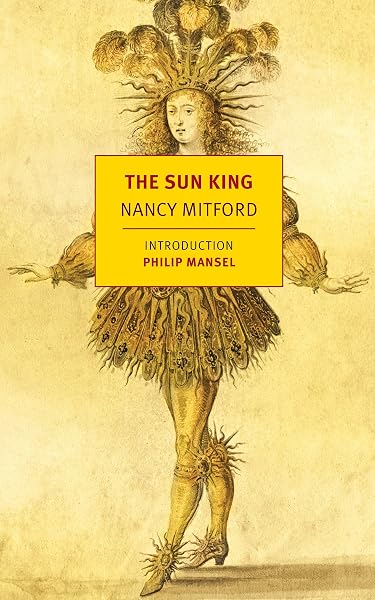
If Madame de Pompadour works for you, move on to The Sun King, Nancy’s book about Louis XIV and Versailles. Again, what makes it enjoyable for me is the feeling that Nancy understands court life not merely as political history but as an entire social ecosystem. Who sits where matters. Who is sleeping with whom matters. Who has access to the king matters. What someone wears can matter far more than any reasonable person would expect. It’s history, but it also makes perfect sense that the woman explaining it to you wrote Love in a Cold Climate. The setting has changed. The social observation hasn’t.
5. Finally, Read The Mitfords: Letters Between Six Sisters
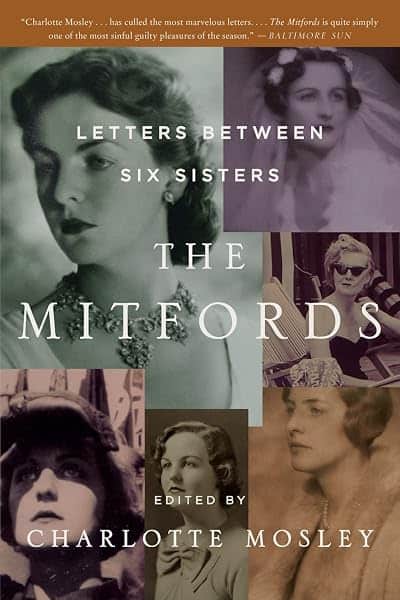
Once you’ve read Nancy’s fiction and know the basic story of the six Mitford sisters, I think you should do something slightly dangerous. Read their letters. The Mitfords: Letters Between Six Sisters, edited by Charlotte Mosley, collects decades of correspondence between Nancy, Pamela, Diana, Unity, Jessica, and Deborah. And this is where the carefully written novels meet the actual family. The letters are funny, affectionate, petty, political, intimate, infuriating, ordinary, and occasionally startling because you know where history is moving even when the women writing to one another do not. You’re watching six sisters move through marriages, political extremism, war, grief, estrangement, celebrity, children, books, illness, and old age while still sounding, at times, exactly like sisters. That is what makes the collection so extraordinary.
The communist and the fascist were once girls in the same house. The duchess and the novelist shared family jokes. The political figures we now summarize in biographies wrote letters about ordinary things too. I would not start your Nancy Mitford journey here because I think the letters become much more powerful once you know who everyone is. But once you’re invested? This is the deep end. And if you want the full context before diving in, my essay on how Nancy Mitford transformed one of England’s most scandalous families into warm, funny fiction is where I would go next.
Where Does Don’t Tell Alfred Fit?

If you’ve gone through the core reading path and still want more Nancy, this is when I’d circle back to Don’t Tell Alfred. It brings Fanny back, now older and suddenly thrown into diplomatic life in Paris when her husband becomes the British ambassador to France. I enjoy it most as a book for readers who already know Nancy. The pleasure isn’t simply the premise. It’s spending more time inside her comic universe and watching Fanny navigate a completely different stage of life. That is why I wouldn’t put it ahead of The Pursuit of Love, Love in a Cold Climate, or The Blessing for a beginner. It’s dessert. You don’t need dessert first. Although I am aware that some of us would strongly disagree with this philosophy.
And What About Christmas Pudding?
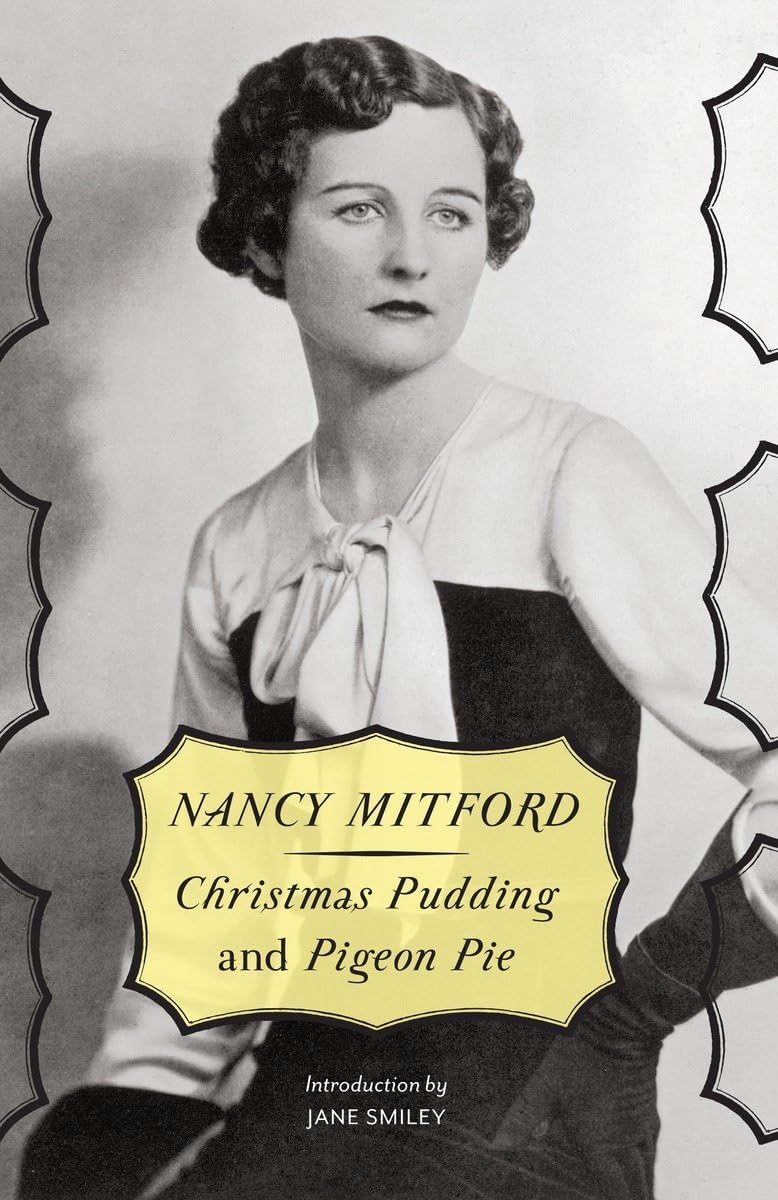
If you’re reading Nancy seasonally, Christmas Pudding is another one worth saving. Despite the title, I wouldn’t approach it expecting a traditional Christmas novel. It’s early Nancy: silly, sharp, socially observant, and full of the kind of romantic and aristocratic chaos she would later refine into her best-known books. I like it particularly once you’ve already read peak Nancy, because then you can see the writer she is becoming. And yes, the title makes it extremely easy for me to justify reading it in December. I accept these small gifts from literature.
Don’t Read Nancy Mitford for Plot First
This is probably the most useful advice I can give a new Nancy reader. If you come to her expecting intricately engineered plots, you may wonder what everyone is so excited about. I don’t read Nancy primarily for plot. I read her for voice.
I read her for the sentence that suddenly makes me laugh. For the character who says something so socially inappropriate that nobody else seems to notice. For the way she can tell you everything you need to know about a person with one perfectly chosen observation. For families who are completely absurd and yet recognizably families. For romantic women making terrible romantic choices. For the peculiar combination of warmth and ruthlessness that lets Nancy adore people while also seeing exactly how ridiculous they are. That is the magic.
She isn’t cozy because nothing unpleasant happens. Her novels contain abandonment, unhappy marriages, selfishness, war, infidelity, grief, and all kinds of people behaving badly. The coziness comes from the storytelling voice.
Nancy makes you feel as though you’re sitting beside someone very funny who knows all the family secrets and has finally decided you’re trustworthy enough to hear them. That is what I go back for.
My Nancy Mitford Reading Order
If I were physically handing you books from my shelf, this is the path I would give you: start with The Pursuit of Love, continue immediately into Love in a Cold Climate, then move to The Blessing. After that, try Madame de Pompadour and The Sun King if you want her historical writing, and save The Mitfords: Letters Between Six Sisters for when you’ve become invested enough in the family to appreciate how extraordinary the real correspondence is.
Then you can wander. Read Don’t Tell Alfred. Pick up Christmas Pudding. Explore more of Nancy’s historical writing. Fall down the Mitford-sisters rabbit hole and emerge three hours later with strong opinions about people born more than a century ago. I know nothing about that experience.
Final Thoughts
If you’re wondering where to start with Nancy Mitford, I don’t think you need to make this complicated. Read The Pursuit of Love. That’s the door. It gives you the family madness, the romance, the satire, the warmth, and most importantly, Nancy’s voice.
If you love that voice, the rest of the reading journey becomes incredibly easy. Go next to Love in a Cold Climate for more of the world you already love. Move into The Blessing when you’re ready to see her turn that same comic eye toward France and marriage. Then let her take you into French history before finally reading the real Mitford sisters writing to one another.
And this is probably the thing I wish someone had told me before I started reading her: Nancy’s books become more interesting the more you know about Nancy. Learning about the family doesn’t destroy the charm. It gives the charm weight.
Once you know the political divisions, romantic disappointments, ridiculous upbringing, and enormous personalities sitting behind the fiction, you understand that the warmth wasn’t there because Nancy had lived an uncomplicated life. She was simply extraordinarily good at turning complicated lives into funny books. That is why I keep returning to her.
And if you’re standing in front of a shelf wondering which Nancy Mitford book to take home first, you already know my answer. The Pursuit of Love. Then come back when you’re ready for the sisters.