12 Best New Nonfiction Books for Fall Reading 2026
Looking for the best new nonfiction books fall 2026? I read and loved these 12 smart, moving books about history, AI, grief, science, culture, and more.
Fall 2026 Nonfiction Reading Guide: 12 Books I Loved
Hi Bookish Besties, My favorite nonfiction books are the ones that make me immediately want to tell someone what I just learned or understood. I want the kind of book that sends me down a rabbit hole, changes the way I look at something familiar, introduces me to a person history overlooked, or gives me language for something I have been thinking about without quite knowing how to articulate it. That is exactly what this Fall 2026 nonfiction list gave me. There are books here about artificial intelligence and human connection, Black women who used education as resistance, the emotional aftermath of losing a sister, ancient literature and translation, the creation of our planet, forgotten women in Irish psychiatric institutions, and even the strange cultural history surrounding the Loch Ness monster. Basically, my notes were all over the place in the best possible way. What made these books stand out to me was not simply how much information they contained. It was the perspective behind that information. The strongest nonfiction makes me feel like I am being guided through a subject by someone who has thought deeply about why it matters, and that is what I found again and again in these books. If you are looking for the best new nonfiction books for Fall 2026, these are the 12 I would put at the top of your reading list. This guide is also part of my larger Fall Reading Guide 2026: Best New Books, where I am sharing the books I loved across even more genres and categories.
Best New Nonfiction Books for Fall 2026
One of the things I love most about nonfiction is that reading one great book can suddenly make me interested in a subject I never expected to care about. That absolutely happened here. You do not have to arrive already obsessed with ancient poetry, European rivers, artificial intelligence, earth science, telecommunications, or the Loch Ness monster. These writers make a case for why their subjects are worth your attention. And then there are the deeply personal books, where history, memoir, grief, faith, family, and identity become impossible to separate. That mix is why this Fall 2026 nonfiction season feels especially strong to me.
Quick Picks If You’re in a Hurry
If you just want a few immediate additions to your Fall 2026 TBR:
- For the big book about AI and where we may be headed: The AGI Chronicles
- For overlooked Black women’s history: Freedom’s Daughters
- For grief, sisters, and an unforgettable memoir: Dear Dealer
- For ancient literature and the art of translation: Crossing the Wine-Dark Sea
- For a haunting blend of memoir, history, and forgotten women: Said the Dead
- For faith, sobriety, philosophy, and a deeply personal reckoning: Will and Attention
- For huge questions about Earth and life itself: The Co-Creation
- For technology, culture, and the object that changed how we communicate: The Telephone
Now let’s get into the 12 nonfiction books that made me want to underline things, tell people facts they did not ask for, and keep thinking long after I finished reading.
12 Fall 2026 Nonfiction Books I Read and Loved
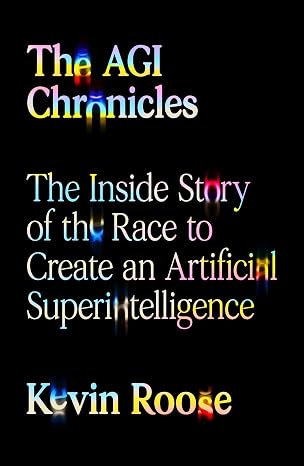
The AGI Chronicles by Kevin Roose
If you have been trying to understand how artificial intelligence went from something that felt relatively niche to something suddenly embedded in conversations about work, creativity, politics, security, and the future of humanity, The AGI Chronicles is the book I would start with. Roose traces the development of modern AI from systems trained for narrow tasks to increasingly sophisticated models capable of behavior that would have sounded like science fiction not that long ago. What I appreciated most was getting both the technological history and the bigger questions surrounding it. This is not simply a celebration of innovation, and it is not interested in easy panic either. It looks at the people building these systems, the enormous incentives pushing development forward, and the very real concerns about military use, autonomous technology, alignment, and what happens if capability advances faster than our ability to establish boundaries around it. I came away feeling much better informed and, admittedly, with about twelve new things to worry about.
You can get a copy of this book on Amazon.
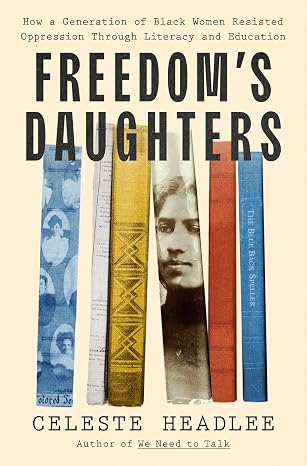
Freedom’s Daughters by Celeste Headlee
Freedom’s Daughters is exactly the kind of history book I love because it takes people who should have occupied a much larger place in our historical narratives and puts them back where they belong. Headlee began by investigating gaps in her own family history and discovered generations of Black women who saw literacy and education as forms of resistance. Her great-grandmother Carrie Still Shepperson becomes a central figure, but the book expands far beyond one woman’s story. Formerly enslaved women helped establish schools, libraries, organizations, and networks that strengthened Black communities while directly challenging systems built to keep knowledge and power inaccessible. I was especially struck by the scale of what these women accomplished and how easily their work has been minimized or forgotten. Headlee connects biography, family history, and the larger history of Black education in a way that makes everything feel personal without losing the bigger picture. This is the nonfiction I want more of: rigorous history that also changes whose stories we understand as essential to American history.
You can get a copy of this book on Amazon.
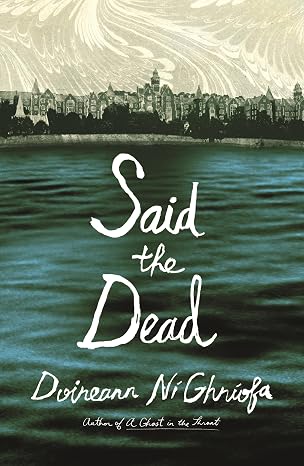
Said the Dead by Doireann Ni Ghriofa
Said the Dead is one of those books where I almost hesitate to reduce it to a single category because memoir, biography, history, archival research, and imagination are all woven together. Ni Ghriofa becomes fascinated by the remains of a former psychiatric hospital in Cork and begins investigating the women who were confined and treated there. Her research eventually leads her deep into archives, case histories, newspapers, maps, photographs, and the work of Lucia Strangman, one of the first women doctors to enter Ireland’s asylum system. But this is not detached historical research. The author’s own experiences with psychological darkness create a deeply personal connection to the women whose stories she uncovers. I loved the way the book keeps asking what it means to read the traces of someone’s life when that person had so little control over how her story was recorded. It is haunting, compassionate, and beautifully attentive to women whose voices were often reduced to medical notes written by somebody else.
You can get a copy of this book on Amazon.
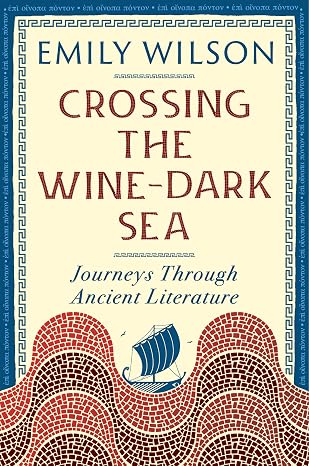
Crossing the Wine-Dark Sea by Emily Wilson
Crossing the Wine-Dark Sea is for anyone who thinks ancient literature sounds intimidating, because Emily Wilson has a way of making the classics feel incredibly alive. These essays move through ancient texts, modern translations, mythology, language, gender, humor, and the endless decisions translators make when bringing a work from one language and cultural context into another. What I loved most is Wilson’s insistence that translation is never simply swapping one word for another. Every choice carries assumptions, interpretations, cultural baggage, and possibilities. She can move from Helen of Troy and misogyny to contemporary music references without making the connection feel forced, and she treats other translators with curiosity rather than acting as though one perfect translation exists. As a reader, I found myself thinking differently about every translated book on my shelf. This is such a good pick if you love books about books and want a smart but genuinely enjoyable entry point into thinking about classics, language, and the art of translation.
You can get a copy of this book on Amazon.
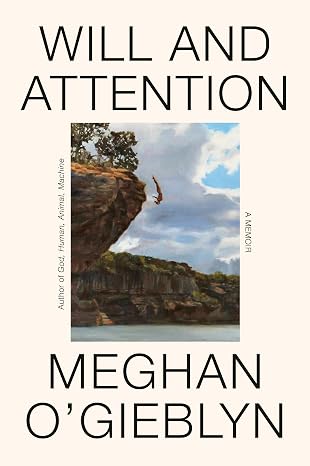
Will and Attention by Meghan O’Gieblyn
Will and Attention is the memoir I would recommend to someone who loves personal writing that is willing to follow an uncomfortable question as far as it goes. O’Gieblyn grew up in an intensely religious environment, attended Bible college, lost her faith, struggled with alcohol, became sober, and built an intellectual life around questions involving religion, technology, philosophy, and culture. Years later, she finds herself facing another spiritual crisis that leads her toward Catholicism and eventually back into drinking. What makes the book so compelling is how clearly she examines her own contradictions. She is not offering a tidy story about leaving religion, getting sober, and reaching enlightenment. She is much more interested in why old needs and questions return even after we think we have moved beyond them. Her engagement with Simone Weil and the idea that attention may sometimes matter more than willpower gives the book another fascinating layer. I loved how personal and intellectually restless this is.
You can get a copy of this book on Amazon.
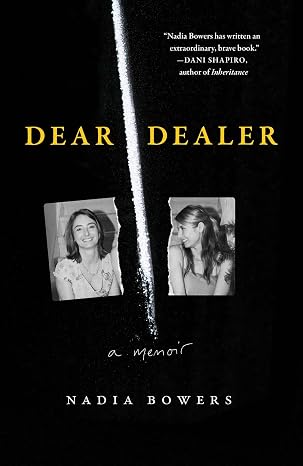
Dear Dealer by Nadia Bowers
Dear Dealer is an incredibly intimate memoir about grief, addiction, sisters, and the almost impossible desire to make sense of a death that refuses to make sense. Bowers’ older sister Sasha died from a fentanyl overdose, and the book follows the author’s efforts to reconstruct the circumstances surrounding her final days. Sasha’s phone becomes part of that obsessive search, with texts offering fragments of the people and choices surrounding her death. Bowers also addresses a series of letters to the unidentified dealer she believes sold her sister the drugs that killed her. What made this so moving for me is that underneath the anger and investigation is a sister trying to understand someone she loved intensely but did not always fully understand. Their relationship contained closeness, distance, rituals, jokes, disappointment, and the kind of knowledge that only comes from growing up beside another person. This is not a neat grief narrative. It is about trying to create a version of loss you can somehow continue living alongside.
You can get a copy of this book on Amazon.
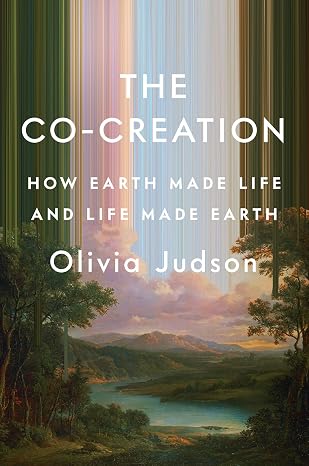
The Co-Creation by Olivia Judson
The Co-Creation made me think about Earth less as a stage where life happens and more as something life has been actively shaping for billions of years. Judson moves from the planet’s earliest history through massive transformations involving rock, light, oxygen, complex organisms, and eventually humans, arguing that biology and geology cannot really be separated. Life changes the planet, and the planet changes what kinds of life can exist. That sounds like it could become extremely dense extremely quickly, and sometimes the book does ask a lot from the reader, but I loved the enormous perspective it gives you. Judson takes us into versions of Earth that barely resemble the planet we know today and shows how living organisms helped create everything from the atmosphere to mineral formations and altered rivers. This is the kind of science writing that makes me briefly stare at the ground, sky, and plants around me like I have never seen any of them before. If you enjoy big science books full of wonder, this is one to prioritize.
You can get a copy of this book on Amazon.
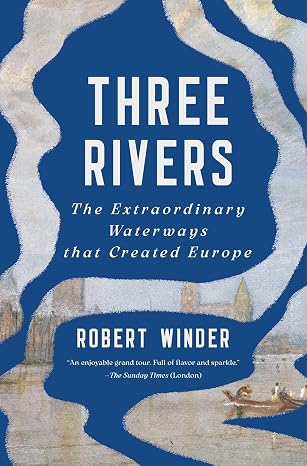
Three Rivers by Robert Winder
Three Rivers is exactly what I want from popular history because it takes a seemingly simple premise and reveals how enormous the story actually is. Winder follows the Rhine, Rhone, and Po and looks at the ways these waterways helped shape the civilizations that developed around them. Geography becomes inseparable from politics, culture, agriculture, architecture, warfare, intellectual history, religion, and economics. What fascinated me is the idea that rivers do not simply run through history. In many cases, they help determine what history can happen around them. The book moves across enormous stretches of European history while continually bringing the story back to physical landscapes and the people living beside the water. I loved the connections between place and event, especially when familiar historical periods suddenly looked different because I was seeing them geographically rather than simply chronologically. This is a great pick if you enjoy expansive history books that make the map itself part of the story.
You can get a copy of this book on Amazon.
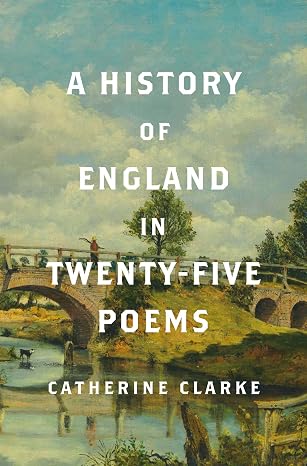
A History of England in Twenty-Five Poems by Catherine Clarke
I love a nonfiction structure that immediately gives me a new way into a familiar subject, and A History of England in Twenty-Five Poems does exactly that. Clarke uses poems spanning roughly 1,300 years to explore moments of political turmoil, invasion, plague, religion, class, gender, cultural change, and national identity. Some of the writers are immediately recognizable, while others were completely new to me, which is part of what made the book so interesting. Instead of treating poems as decorative historical artifacts, Clarke asks what they reveal about the anxieties, power structures, myths, and conflicts of the period in which they were written. A heroic poem can also be political propaganda. A familiar literary work can tell us something about the lives of women. A poem written during one national crisis can suddenly feel relevant centuries later. If you love history and literature, this is basically the perfect intersection of the two, and I especially enjoyed seeing how creative writing becomes historical evidence when someone knows how to read it closely.
You can get a copy of this book on Amazon.
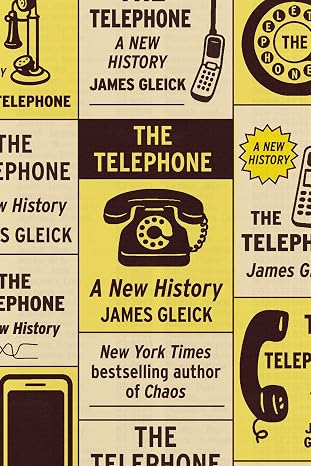
The Telephone by James Gleick
I never expected the history of the telephone to contain quite this many rabbit holes, which is probably exactly why I enjoyed The Telephone so much. Gleick traces the inventions and discoveries that had to happen before humans could transmit voices across distance, from electricity and telegraphy through the development of telephone networks and eventually the mobile world we live in now. The fascinating part is that there is no single clean moment when the telephone suddenly appears. Technologies build on earlier technologies, multiple inventors contribute different pieces, industries develop around them, and then society itself changes because of what becomes possible. I loved the cultural history woven into the technological one, including questions about race and employment within the telephone industry, changing social behavior, advertising, literature, phone books, area codes, answering machines, and all the everyday things we barely think about anymore. This is exactly the kind of nonfiction that takes an ordinary object and makes you realize how strange and revolutionary it once was.
You can get a copy of this book on Amazon.
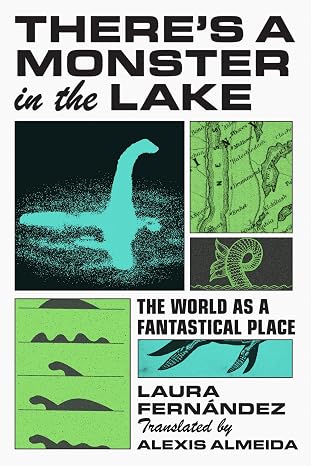
There’s a Monster in the Lake by Laura Fernandez, translated by Alexis Almeida
There’s a Monster in the Lake might be the most delightfully unexpected book on this list. Fernandez investigates the history of the Loch Ness monster, but this is really a book about belief, imagination, tourism, media, misinformation, wonder, and our willingness to accept a beautiful possibility even when we know it probably is not true. The modern Nessie myth begins taking shape through reported sightings and newspaper attention before becoming an entire cultural and commercial ecosystem. Fernandez follows that history while also visiting the area herself and confronting what the legend looks like after decades of photographs, headlines, merchandise, tourists, skeptics, and believers. I loved that the book never simply asks, is Nessie real? That is almost the least interesting question available. What matters is why people want a monster to be there in the first place. This is smart, strange, funny nonfiction for anyone fascinated by folklore and the stories people collectively decide they want to believe.
You can get a copy of this book on Amazon.
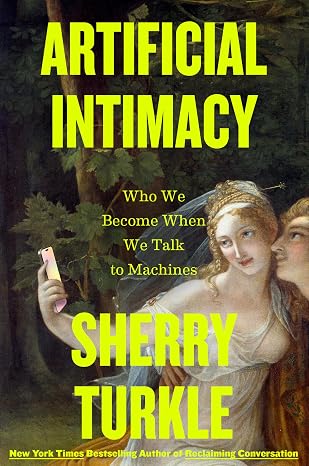
Artificial Intimacy by Sherry Turkle
Artificial Intimacy is probably the book on this list that made me think most immediately about my own everyday life. Turkle looks at what happens when people stop using artificial intelligence simply as a tool and begin relying on it for emotional connection. Her examples span different ages and situations, including children turning to chatbots for comfort and adults using AI simulations while grieving people they have lost. What I appreciated is that Turkle’s concern is not based on pretending technology has no value. Her argument is much more specific. Human relationships require vulnerability, frustration, compromise, misunderstanding, reciprocity, and change. An artificial companion can imitate care without actually participating in that mutual process. That distinction stayed with me. The easier substitute may feel emotionally satisfying in the moment while quietly removing the experiences through which we learn how to relate to other people. If you are interested in AI but less interested in technical models than in what this technology could do to human relationships, I would read this alongside The AGI Chronicles.
You can get a copy of this book on Amazon.
How to Build the Perfect Fall 2026 Nonfiction TBR
If you are building your own Fall Reading Guide 2026 nonfiction stack, here is how I would personally mix these books together:
Want To Save This Post?
- Choose one big current technology book: The AGI Chronicles or Artificial Intimacy
- Add one deeply personal memoir: Dear Dealer or Will and Attention
- Pick one overlooked history that deserves more attention: Freedom’s Daughters or Said the Dead
- Include one book about literature and language: Crossing the Wine-Dark Sea or A History of England in Twenty-Five Poems
- Add one huge science or natural history book: The Co-Creation
- Choose one sweeping history built around an unexpected subject: Three Rivers or The Telephone
- Then give yourself one wonderfully strange cultural rabbit hole: There’s a Monster in the Lake
That stack would give you a little bit of everything I want from nonfiction. You would have a book helping you understand something happening right now, another recovering a piece of history we should already know, something personal and emotionally intense, something intellectually ambitious, and at least one book that sends you into dinner conversations armed with extremely specific facts nobody expected you to know. That last category is very important to me.
Which Fall 2026 Nonfiction Book Should You Read First?
- If you want to understand the current AI moment, start with The AGI Chronicles.
- If you are more interested in how AI might change relationships and emotional life, choose Artificial Intimacy.
- If you want a moving piece of Black history, read Freedom’s Daughters.
- If you want memoir and grief, Dear Dealer would be my first pick.
- If you love literature, translation, and books about books, go straight to Crossing the Wine-Dark Sea.
- If you want something haunting and genre-blending, pick Said the Dead.
- If you are craving huge science and even bigger questions, The Co-Creation is the one.
- If you want the book, you can describe it to someone and immediately hear, “Wait, there is an entire book about that?” I would absolutely hand you There’s a Monster in the Lake.
Final Thoughts
This Fall 2026 nonfiction list is exactly why I never want to read only one kind of book. I can spend one week thinking about artificial superintelligence and the next learning how Black women built schools after slavery. Then suddenly I am reading about Homer, Irish psychiatric archives, Earth’s earliest life, European rivers, grief, sobriety, telephones, or why generations of people remain determined to believe there might be a monster swimming around a Scottish lake. That is such a fun way to read. The best nonfiction expands my curiosity instead of simply answering a question. I finish knowing more, but I also finish wanting to know more. These 12 books did that for me again and again, which is why they earned their place in this fall reading guide. Have you read any of these books yet, or are you adding any of them to your TBR? Tell me which one immediately caught your attention, because I would love to know which nonfiction rabbit hole we are all falling into this fall.