How Nancy Mitford Turned Family Scandal Into Cozy Fiction
Meet the Mitford sisters and discover how Nancy Mitford turned family scandal, political extremism, heartbreak, and aristocratic chaos into witty, cozy novels.

The Six Sisters Behind Nancy Mitford’s Warmest, Sharpest Novels
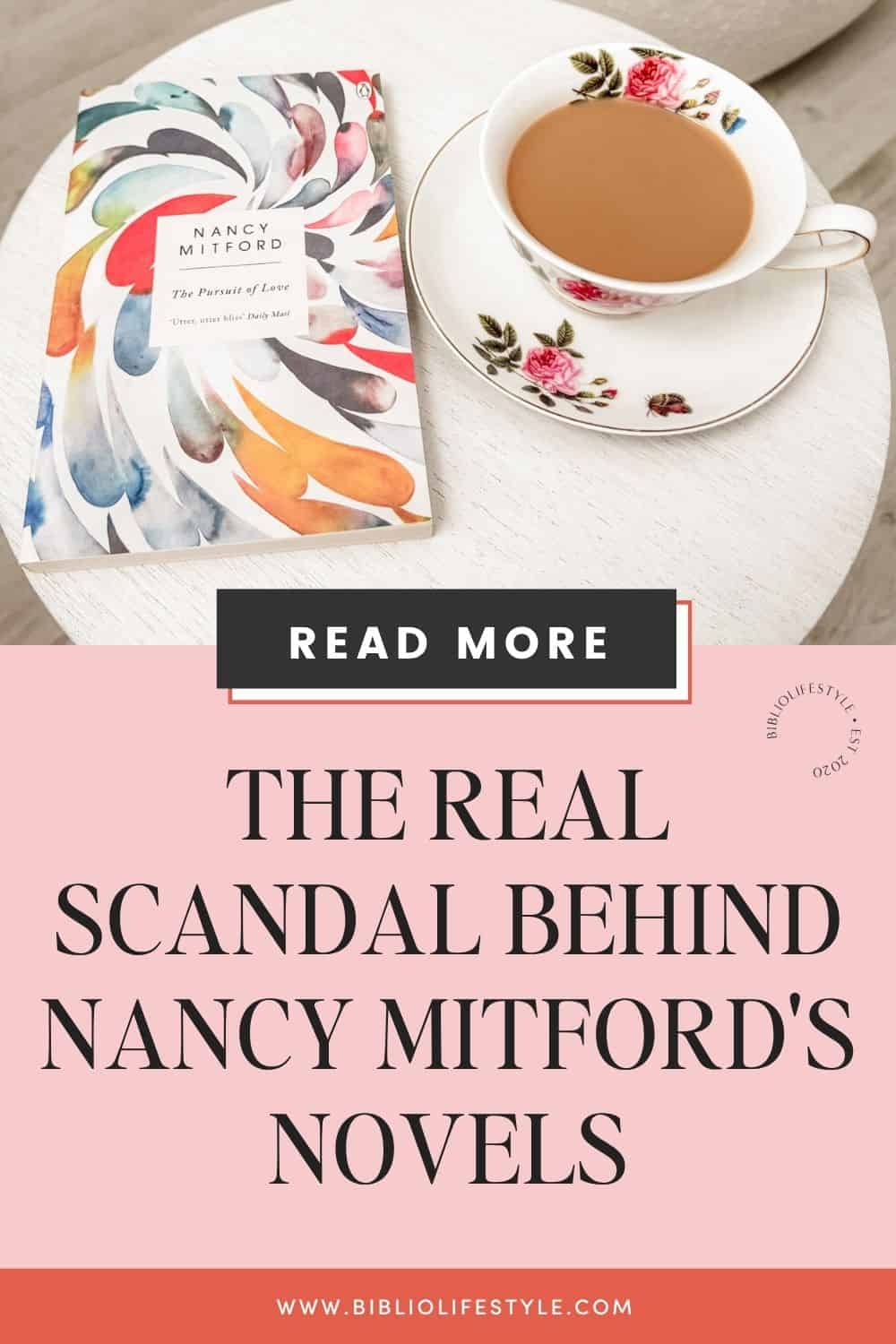
Hi Bookish Besties, Here is a sentence that should sound like I made it up: one of the warmest, funniest English novels I return to for comfort was written by a woman whose immediate family included a devoted Nazi, the wife of Britain’s leading fascist, a committed communist, and a future duchess. That woman was Nancy Mitford, and the novel is The Pursuit of Love.
Once I learned more about the Mitford sisters, I couldn’t read Nancy’s fiction in quite the same way again. Not because the family history ruined the books for me. It did the opposite. It made the warmth stranger, the jokes sharper, and the affection underneath them much more moving.
Because Nancy was not writing about eccentric families from a safe distance. She grew up inside one of the most politically divided, emotionally combustible, and publicly scrutinized families in twentieth-century Britain. She knew exactly how absurd a family could be. She also knew how dangerous those divisions could become. And somehow she turned that material into novels that feel like sitting near a fire while someone very funny tells you terrible family stories.

That contradiction is what fascinates me. I don’t think Nancy Mitford’s coziness came from innocence about the darkness around her. I think she knew the darkness intimately and developed a way of transforming it. She didn’t simply reproduce the Mitfords on the page. She changed their emotional temperature. That, to me, is the real story.
The Pursuit of Love Feels Cozy Until You Know What Was Underneath It

If you’ve never read Nancy Mitford, The Pursuit of Love is the book I would put in your hands first. Published in 1945, it follows the eccentric Radlett family through childhood, adulthood, unsuitable marriages, romantic disasters, and the constant chaos of belonging to a family that loves one another while making that love extremely difficult.
The Radlett children gather in the linen cupboard for meetings of their private Society of Hons. Their terrifying father, Uncle Matthew, rants about foreigners, education, and almost everything else. The family home is freezing, the adults are ridiculous, and the children treat all of it as completely normal because children generally do. It is funny in that very specific Nancy Mitford way where affection and mockery are happening simultaneously.
And that is because so much of the emotional texture came from home. The fictional Radletts were not literal copies of the Mitfords, but Nancy borrowed freely from family stories, personalities, language, habits, and the strange little mythology families build around themselves. Uncle Matthew owed plenty to Nancy’s father, David Freeman-Mitford, Lord Redesdale, known within the family as Farve. The private language, eccentric upbringing, family nicknames, and sense that the children inhabited a world ordinary rules did not quite reach all came from somewhere real.
What looks wonderfully comic in fiction becomes much more complicated when you step outside the novel. Because the real Mitford children did not remain safely eccentric. The 1930s arrived. And the sisters began choosing sides.
Six Sisters Grew Up Together and Somehow Chose Almost Every Possible Life
Nancy was the eldest of six daughters born to David and Sydney Mitford. There was also one brother, Tom. The sisters grew up in considerable privilege but not always abundant cash, in the peculiar world of the English aristocracy between the wars. Their formal education was limited, especially compared with their brother’s, and much of their intellectual life developed through voracious reading, family conversation, private jokes, letters, and their own intense interest in the outside world.
Then they grew up and became almost impossibly different women. Nancy became the novelist and social observer. Pamela preferred the countryside, animals, domestic life, and considerably less public drama than her sisters seemed determined to generate. Diana became involved with Sir Oswald Mosley and British fascism. Unity became an obsessive supporter of Adolf Hitler and Nazi Germany. Jessica, known as Decca, went violently in the opposite political direction and became a communist before later building a career as a campaigning writer and investigative journalist in the United States. Deborah, the youngest, eventually became Duchess of Devonshire and helped shape the modern story of Chatsworth.
If I put those six fictional characters into one novel, I would be told to make the family more believable. Nancy didn’t have that option. They were her sisters.
Unity Took Family Eccentricity Somewhere Horrifying
The story of Unity Mitford is the point where I think we have to stop treating the Mitfords as merely glamorous, eccentric society girls. There is nothing charming about what Unity chose.
As a young woman, she became intensely committed to Nazism and obsessed with Adolf Hitler. She moved to Germany, deliberately placed herself in places where she knew Hitler spent time, and eventually succeeded in entering his social circle. She attended Nazi events, publicly expressed antisemitic beliefs, and cultivated a genuine relationship with Hitler.
This wasn’t a fashionable flirtation with dangerous ideas that can be softened by distance. Unity was an active admirer of a murderous political movement, and she made that allegiance part of her identity. That is important to say plainly, because the Mitford story sometimes becomes so wrapped in beautiful photographs, country houses, outrageous anecdotes, and famous names that the moral reality starts slipping into the background. It shouldn’t.
On September 3, 1939, when Britain declared war on Germany, Unity attempted suicide in Munich by shooting herself in the head. She survived with severe injuries and eventually returned to Britain. The bullet remained lodged in her brain, and she died in 1948 from complications associated with the injury.
To the public, she was Unity Mitford, the English aristocrat who became infatuated with Hitler. To Nancy, she was also her younger sister. Both facts existed at the same time. That tension matters enormously when we talk about the way Nancy later wrote about family.
Diana Chose Fascism and Nancy Eventually Chose Against Her
Diana’s story was different but no less politically serious. Already famous for her beauty and society marriage, Diana left her first husband and became involved with Sir Oswald Mosley, who would become leader of the British Union of Fascists. Diana and Mosley married in 1936 in the Berlin home of Joseph Goebbels, with Hitler among the guests.
During the Second World War, the British government regarded Mosley and Diana as potential security threats. Both were detained under Defence Regulation 18B and spent several years interned. And this is where Nancy enters the story in a way that feels almost impossible to reconcile with the woman writing affectionate family comedy.
Nancy provided information to British authorities about her sister. She described Diana as a committed fascist and admirer of Hitler and expressed the belief that Diana wanted Germany to defeat Britain. Nancy’s assessment became part of the information authorities held while determining whether Diana should remain detained.
I think it is easy to flatten this into a dramatic line—Nancy betrayed her sister—and move on. But the reality is more painful than that. These women had grown up together. They had shared nicknames, jokes, houses, parents, siblings, and the private mythology of childhood.
Then politics stopped being an argument at the dinner table. Europe was at war. Nancy believed her own sister represented a genuine danger. So she acted accordingly.
That doesn’t fit neatly inside the kind of sentimental story we like to tell about family loyalty, where blood somehow outranks everything else. Nancy chose differently. And Diana did not initially know the extent of Nancy’s involvement.
Jessica Ran in the Opposite Direction
If Unity and Diana moved toward fascism, Jessica ran almost as far left as it was possible to go. Decca became committed to communism while still young and eventually eloped with Esmond Romilly, her cousin and a nephew of Winston Churchill. They went to Spain during the Spanish Civil War and later moved to the United States. Jessica eventually joined the Communist Party USA, although she later left it, and built a formidable career as an investigative writer.
Her 1963 book The American Way of Death exposed practices within the American funeral industry and became the kind of nonfiction bestseller that actually entered public conversation and challenged an entire business.
What fascinates me about Jessica and Diana isn’t merely that one became a communist and one a fascist. They were sisters who became political enemies. The personal split between them lasted for decades.
I cannot imagine growing up speaking the same private childhood language as someone and then arriving in adulthood so ideologically opposed that meaningful family intimacy becomes almost impossible. But that is the Mitfords. Every political argument somehow becomes a family argument too.
Pamela and Deborah Are Part of the Story Precisely Because They Chose Different Lives
Pamela and Deborah often receive less attention because their lives don’t lend themselves as easily to sensational headlines. That actually makes them useful reminders that there wasn’t one inevitable Mitford path.
Pamela largely preferred rural life, farming, animals, and a degree of privacy that must have seemed almost radical in this particular family. Deborah married Andrew Cavendish, who later became Duke of Devonshire, and became closely associated with Chatsworth. She approached the enormous house not simply as an aristocratic inheritance but as something that needed to function, adapt, and survive.
I like having Pamela and Deborah in the family picture because otherwise the Mitfords start to sound like six symbolic figures invented to represent competing political ideologies. They weren’t. They were sisters who happened to lead extraordinarily divergent lives. And Nancy had a front-row seat.
Nancy Was the Sister Who Turned Everybody Into Material
This is the point where my interest shifts from Mitford gossip to Nancy as a writer. Because Nancy’s real gift wasn’t simply that her family was interesting. Plenty of people come from strange families. Very few turn them into The Pursuit of Love.
Nancy understood something about comedy that I think is much harder than it looks: the people who make us funniest are often the people capable of hurting us most. She could see the absurdity in the people she loved without entirely giving up her love for them. That is why her novels don’t read like revenge.
She exaggerates. She teases. She exposes snobbery and hypocrisy. She lets characters say outrageous things and then moves on before the reader has quite recovered. But underneath the jokes is enormous attachment. That mixture is what makes her work feel so alive to me.
She did not sanitize her family into lovely English eccentrics. She also did not flatten them into villains. She turned contradiction into tone.
I Think Nancy’s Coziness Was a Kind of Armor
This is my theory about Nancy Mitford, and it’s the reason I find her more moving the more I read about her. I don’t think she wrote warm, funny books because her life was warm and funny. I think she wrote them partly because it wasn’t.
Her marriage to Peter Rodd was deeply unhappy. Her great romantic attachment was to the French politician and diplomat Gaston Palewski, a man she loved for years without ever receiving the secure, uncomplicated love she wanted from him. She eventually moved to France, where she built much of her adult life.
Palewski became the inspiration for Fabrice, the irresistible French lover in The Pursuit of Love. Fiction gave romantic shape to something Nancy herself could never quite possess. That detail changes the novel for me.
Because Nancy could take longing and make it glamorous. She could take an exhausting family and make it charming. She could take the terrifying absurdity of class and politics and family loyalty and turn it into sentences that make you laugh. That wasn’t ignorance. It was technique. Maybe even survival.
She couldn’t control what her sisters believed. She couldn’t make the man she loved choose her in the way she wanted. She couldn’t stop war or repair every fracture inside the family. But she could control the page. She could decide where the joke landed. She could decide which memory became funny. She could turn chaos into structure. And I think there is something quietly powerful about that.
Cozy Does Not Mean Innocent
This is probably the biggest reason I wanted to write this piece. We sometimes talk about comfort books as though comfort means nothing terrible can exist anywhere near them. But that isn’t why certain books become comforting to me.
Sometimes a comfort book understands exactly how ridiculous and painful life can be and creates a little room where we can laugh at it. That is what I think Nancy does.
The Pursuit of Love contains selfishness, war, failed marriages, abandonment, bad parents, social cruelty, and heartbreak. And yet I still experience it as warm. The warmth doesn’t come from pretending nothing painful exists. It comes from the narrator’s affection for people despite their absurdities. That distinction matters.
Once I knew more about Nancy’s real family, the novel stopped feeling like a cozy fantasy of aristocratic English life and started feeling like something more complicated: a writer deliberately choosing the version of her family she wanted to preserve. Not the fascism. Not the estrangement. Not the security files. The childhood language. The ridiculous father. The sisters crowding together. The jokes. The strange intimacy of being raised among people who know exactly where you came from.
The warmth was real too. That’s what makes the Mitford story sad.
The Darker the Family Story Gets, the More Impressive Nancy’s Comedy Becomes
There is a temptation with writers like Nancy Mitford to separate the delightful novels from the uncomfortable history. I don’t want to do that. I think they become more interesting together.
When I know what political division eventually did to the Mitford family, Nancy’s obsession with family belonging feels different. When I know how unsuccessful her own great love affair ultimately was, Linda’s romantic hunger in The Pursuit of Love becomes more poignant. When I know Nancy could privately make brutal moral judgments about people she loved, her social satire stops feeling merely clever.
She knew affection did not require blindness. She knew loving someone didn’t mean approving of them. She knew families could be both refuge and disaster. And she knew humor could hold two incompatible truths in the same sentence. That’s why the books last.
The Mitfords Were Not Cozy. Nancy Made Them Read That Way.
This is where I land after reading the novels beside the family history. The Mitfords themselves were not cozy. They were funny, privileged, brilliant, politically extreme, loving, cruel, loyal, disloyal, glamorous, ridiculous, and occasionally horrifying.
Nancy’s achievement was not faithfully reproducing them. It was transforming them. She took the raw material of an extraordinary family and changed its shape on the page.
The ideological battles become comic social differences. The frightening father becomes an unforgettable fictional patriarch. The childhood intimacy becomes the Society of Hons. Romantic disappointment becomes dazzling romantic comedy.
Nancy didn’t make darkness disappear. She gave it another form. And that is why I resist the idea that The Pursuit of Love is somehow lightweight because it is funny, charming, or comforting. It takes enormous intelligence to make painful material feel effortless.
Why I’m Reading Nancy Mitford This November
There is something about November that makes me want this exact kind of book. Not relentlessly cheerful. Not devastating. Something warm with teeth. A book that lets me sit under a blanket while still giving me people to think about long after I’ve closed it. That is Nancy Mitford for me.
If you’ve never read her before, I would start with The Pursuit of Love and let yourself enjoy it before worrying about the entire Mitford family tree. Laugh at Uncle Matthew. Join the Hons in the cupboard. Follow Linda through every terrible romantic decision.
Then, when you’re finished, come back to the real family. Because knowing what existed underneath the fiction doesn’t spoil the comfort. For me, it makes the comfort more meaningful. Nancy knew how fractured families could become. She chose to remember the jokes too.
Final Thoughts
The sentence I keep returning to is this: cozy does not mean untouched by darkness. Sometimes the books that comfort us most were written by people who understood darkness very well.
Nancy Mitford grew up among six sisters who would eventually occupy almost every imaginable corner of British public life. Unity embraced Hitler. Diana embraced fascism. Jessica embraced communism. Deborah became a duchess. Pamela largely stepped away from the spectacle. And Nancy watched. Then she wrote.
What came out was not a political family chronicle filled with bitterness. It was The Pursuit of Love. Funny, affectionate, absurd, romantic, sharp, and strangely comforting. I don’t think that means Nancy ignored what happened to her family. I think writing comedy was one of the ways she understood it. She could not make the Mitfords less contradictory. She could make them legible. She could turn them into art.
And maybe that is why I find The Pursuit of Love even warmer now that I know what sat underneath it. The warmth wasn’t accidental. It was chosen.