Early Stephen King Books Ranked: 1974–1982 Classics
Early Stephen King books ranked from Carrie through 1982, with my take on which became modern classics, which aged best, and where new readers should start.
Ranking Stephen King’s Early Books as Modern Classics
Hi Bookish Besties, There is a point when a bestselling book stops feeling merely popular and starts feeling like part of the literary furniture. I think several of Stephen King’s earliest novels have crossed that line.
Carrie, The Shining, The Stand, ‘Salem’s Lot—these are no longer simply successful horror novels from the 1970s. They’ve survived decades of changing tastes, adaptations, rereadings, critical reassessment, and generations of new readers discovering them long after the cultural moment that produced them. To me, that makes them modern classics.
And because I am leaning much harder into classics and classic authors around here, I wanted to look at early Stephen King books through that lens rather than making another generic “best Stephen King books” list. Which books from King’s first great publishing run have aged best? Which ones already feel canonical? Which book shows his talent most clearly before the enormous later career? And which early King title do I respect more than I actually love?
For this ranking, I’m looking at the ten major books published under the Stephen King name between Carrie in 1974 and Different Seasons in 1982. I’m treating the Richard Bachman novels separately, because I think they make more sense as their own early-King conversation rather than quietly mixing two publishing identities into one ranking. And yes, I fully expect someone to disagree with where I put The Stand. This is what rankings are for.
Why 1974 to 1982 Is Stephen King’s First Great Era
One of the strangest things about looking back at King’s career is realizing how quickly the books we now consider foundational arrived. Carrie appeared in 1974. ‘Salem’s Lot came one year later. Then The Shining. Then The Stand and Night Shift. Then The Dead Zone, Firestarter, Cujo, The Gunslinger, and Different Seasons. That is an absurdly strong stretch. Most writers would be delighted to produce one career-defining book in that amount of time. King was apparently collecting them.
What I find especially interesting now is how many of the obsessions we associate with Stephen King were already fully visible during these years: outsiders, damaged families, small towns, supernatural power, childhood fear, addiction, political anxiety, ordinary people making catastrophic decisions, and communities discovering that the monster is rarely the only problem.
That is why I don’t think these books are interesting merely because they came first. This is where King builds the vocabulary he will spend the rest of his career expanding.
What Makes an Early Stephen King Book a Modern Classic?
I am not using “classic” here to mean old. A book does not become a classic simply because enough dust accumulates around it. For me, the strongest classic Stephen King books are the ones that still feel alive when a new reader opens them decades later.
The cultural details may date. The technology definitely dates. Some language and attitudes belong very clearly to their original period. But the emotional engine still starts. The fear still works. The characters still invite argument. And the book still has something to say beyond the moment when it became famous.
That is the standard I’m using here. Not simply which one scared me most, but which one has lasted best.
10. The Gunslinger
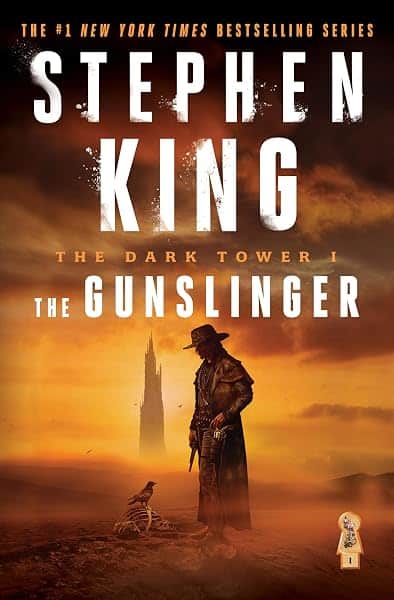
I know. We are beginning dangerously. But if I’m ranking these books as individual reading experiences rather than by their eventual importance, The Gunslinger lands at the bottom for me. That does not mean the Dark Tower belongs at the bottom of King’s work. Far from it. The problem is that The Gunslinger is less satisfying to me as a standalone book than almost everything else in this period.
Roland Deschain pursuing the Man in Black across a dying landscape is immediately intriguing, and the mixture of Western, fantasy, horror, mythology, and strange dream logic proves King was already stretching beyond what people expected from him. But the book feels deliberately spare, elusive, and occasionally distant. I understand readers who finish it wondering what exactly they have just agreed to. Then The Drawing of the Three arrives and suddenly the entire thing comes alive.
That is why I respect The Gunslinger more than I love it. As the first stone in the Dark Tower, it is enormously important. As the one early King book I would hand someone and say, “This is why you need to read Stephen King”? Not even close.
Has The Gunslinger Aged Well?
Mostly, yes, because its strangeness protects it from feeling overly tied to its publication era. What has changed more than the book is our understanding of what it begins. Once you know the scale of the Dark Tower, The Gunslinger feels like an artifact from the start of something enormous. But I still wouldn’t call it one of King’s strongest standalone modern classics.
You can get a copy of The Gunslinger on Amazon.
9. Firestarter
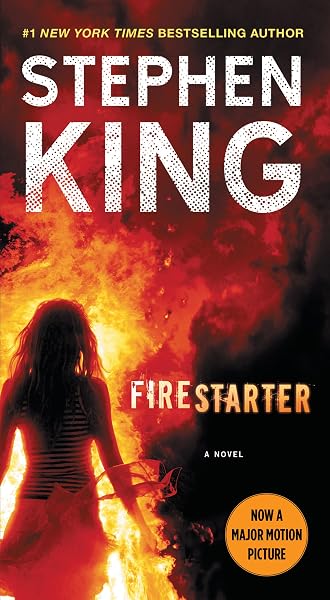
I enjoy Firestarter, but this is one of the early King novels where I feel the period around the story more strongly. Charlie McGee has pyrokinetic abilities and is pursued alongside her father by a secret government organization that wants to understand and control her power.
There is plenty here that feels recognizably King. A child with extraordinary abilities. Adults attempting to exploit that child. Government secrecy. Family love under extreme pressure. The fear that possessing power does not automatically mean having control over your own life. I find Charlie interesting, and there is something satisfying about King taking the supernatural-child idea he explored in Carrie and approaching it from an entirely different direction. But the conspiracy machinery feels more dated to me than the central emotional story.
Does Firestarter Still Hold Up?
Yes, although not quite as effortlessly as the books higher on my list. The parent-child relationship is what keeps it alive for me. The government-thriller elements feel more rooted in their moment, while Charlie’s struggle over who gets to control her body and abilities still lands. It is good early King. I just don’t think it is essential early King.
You can get a copy of Firestarter on Amazon.
8. Night Shift
Ranking a story collection against novels is always slightly unfair, but Night Shift belongs in this conversation because it shows how quickly King’s imagination was spreading in multiple directions. This collection includes stories that would become deeply embedded in King culture and in horror culture more broadly.
What I love about early King short stories is how little time he needs. A strange premise arrives. An ordinary situation bends slightly. Then suddenly the floor underneath the story isn’t where you thought it was. Not every story works equally well for me, which is why the collection sits lower than the strongest novels. But as a document of King becoming King? It is fantastic.
Why Night Shift Matters
King’s longer novels can sometimes make people assume his greatest strength is scale. Night Shift proves otherwise. He can build dread quickly. He can make a simple image stick. And he can create that specific King sensation where something sounds faintly ridiculous when summarized and becomes genuinely upsetting once you’re inside the story. That talent has aged extremely well.
You can get a copy of Night Shift on Amazon.
7. Cujo
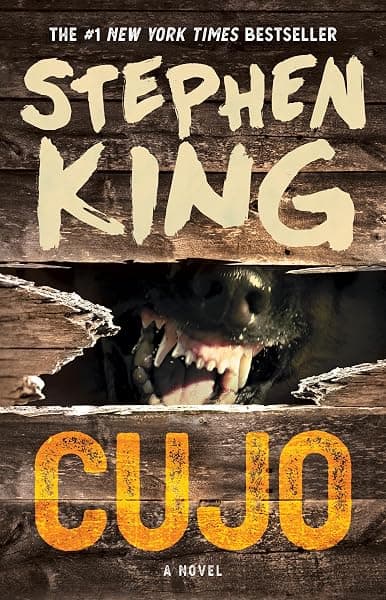
I think Cujo is better than its cultural shorthand. Mention the title and most people immediately think: rabid dog. Accurate. Not sufficient. The book is much more interested in trapped people, bad timing, domestic strain, fear, guilt, and the terrible consequences of several ordinary problems colliding at exactly the wrong moment. That is what makes it work for me.
The horror is not elaborate. It is horribly practical. Heat. Isolation. A broken car. A sick animal. A child in danger. The situation keeps narrowing until the normal world feels impossibly far away.
Has Cujo Aged Better Than Its Reputation?
I think so. If you approach it expecting only “the killer dog book,” you’ll find more psychological and domestic unease than that reputation suggests. It is not the King book I think about most often, but I respect it more every time I revisit what the story is actually doing. And the tragedy at its center remains brutal.
You can get a copy of Cujo on Amazon.
6. The Dead Zone
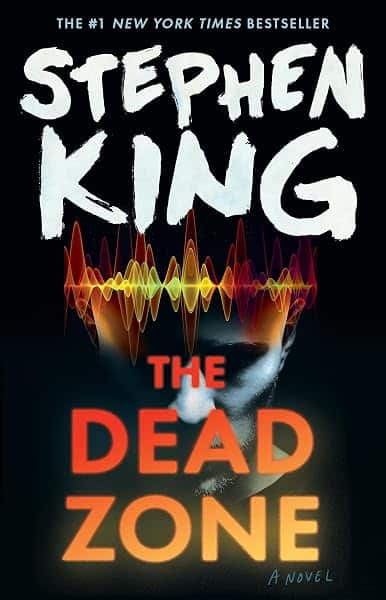
The Dead Zone is one of those books that becomes more interesting to me when I stop thinking about it simply as a supernatural thriller. Johnny Smith wakes from a coma with the ability to perceive information about people and events through touch. The obvious question is what he can do with that power. The more interesting question is what responsibility comes with knowing something other people do not.
That gives the novel a moral weight I like. King is asking what someone owes the future when preventing disaster may require doing something terrible in the present. That problem gives the book its staying power.
What Has Aged and What Hasn’t?
Some political and cultural elements very clearly belong to the book’s original period. But the larger moral question has aged extremely well. What do you do with knowledge nobody else believes? How far can you go to stop something you believe will happen? And what does that certainty do to the person carrying it? Those questions keep The Dead Zone from feeling like a simple period thriller to me.
You can get a copy of The Dead Zone on Amazon.
5. Carrie

I have become more interested in Carrie the longer King’s career gets. Not because I suddenly think it is his best book—I don’t. But reading it now is like seeing the blueprint before the building exists.
Carrie White is bullied, isolated, controlled by her mother, and discovering telekinetic power while trying to survive ordinary adolescence. What makes the book work more than fifty years later is that the supernatural element is not actually the most upsetting part. The cruelty is. Carrie’s humiliation still feels immediate. Her mother’s control still feels oppressive. The group behavior still feels painfully recognizable. The mechanisms of bullying have changed, but the instinct behind bullying has not.
Why Carrie Is Already a Modern Classic
Its place in King’s career matters, obviously. But historical importance alone would not keep people reading it. The emotional machinery still works. Carrie wants what most teenagers want: dignity, belonging, independence, and a chance not to become entertainment for everyone else. That makes the disaster feel tragic long before it feels spectacular.
And all of King’s interest in outsiders, communities, cruelty, and supernatural power is already there. The book feels young. The writer does not.
You can get a copy of Carrie on Amazon.
4. Different Seasons
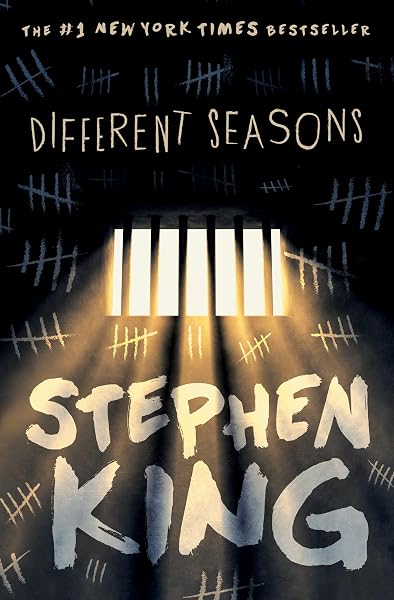
This is the book I would use in court if somebody insisted Stephen King is only a horror writer. Different Seasons includes four novellas, but two in particular escaped the book and became cultural landmarks in their own right: Rita Hayworth and Shawshank Redemption and The Body, which became The Shawshank Redemption and Stand by Me. That alone tells you something about King’s range.
What I love about this collection is that it reveals the storyteller underneath the genre label. Friendship. Hope. Corruption. Memory. Coming of age. Obsession. King does not need a monster in the room, because people provide more than enough material.
Why Different Seasons Has Aged So Well
The strongest stories feel almost liberated from the moment when they were published. The Body still understands the strange mixture of loyalty, cruelty, fear, and intensity that makes childhood friendship feel enormous. Rita Hayworth and Shawshank Redemption still understands hope without turning it into something easy or sentimental. If I were building a modern-classics syllabus around Stephen King, Different Seasons would absolutely be on it.
You can get a copy of Different Seasons on Amazon.
3. The Stand

This may be the ranking that gets me in trouble. I love The Stand; it is one of my favorite King books. But I’m putting it at number three because I think the two books above it are tighter examples of what King does at his very best.
The Stand is King going enormous. A superflu devastates the population, survivors begin finding one another, and the story expands into a huge conflict around community, morality, leadership, faith, and Randall Flagg. What stays with me is not actually the pandemic. It is what comes afterward. Who do people become when familiar structures disappear? What do they rebuild? Who gets followed? What kind of society starts forming after the old one collapses? Those questions are why the book remains interesting beyond its disaster premise.
Does The Stand Still Feel Like a Classic?
Absolutely. The size can be intimidating, and parts of it show their age more than others. But the ambition remains enormous. King takes horror and turns it into an American epic. That is the phrase I keep coming back to. Not simply a horror novel. An epic. And once you’ve lived inside it for that many pages, finishing feels less like closing a book and more like leaving somewhere.
You can get a copy of The Stand on Amazon.
2. ’Salem’s Lot

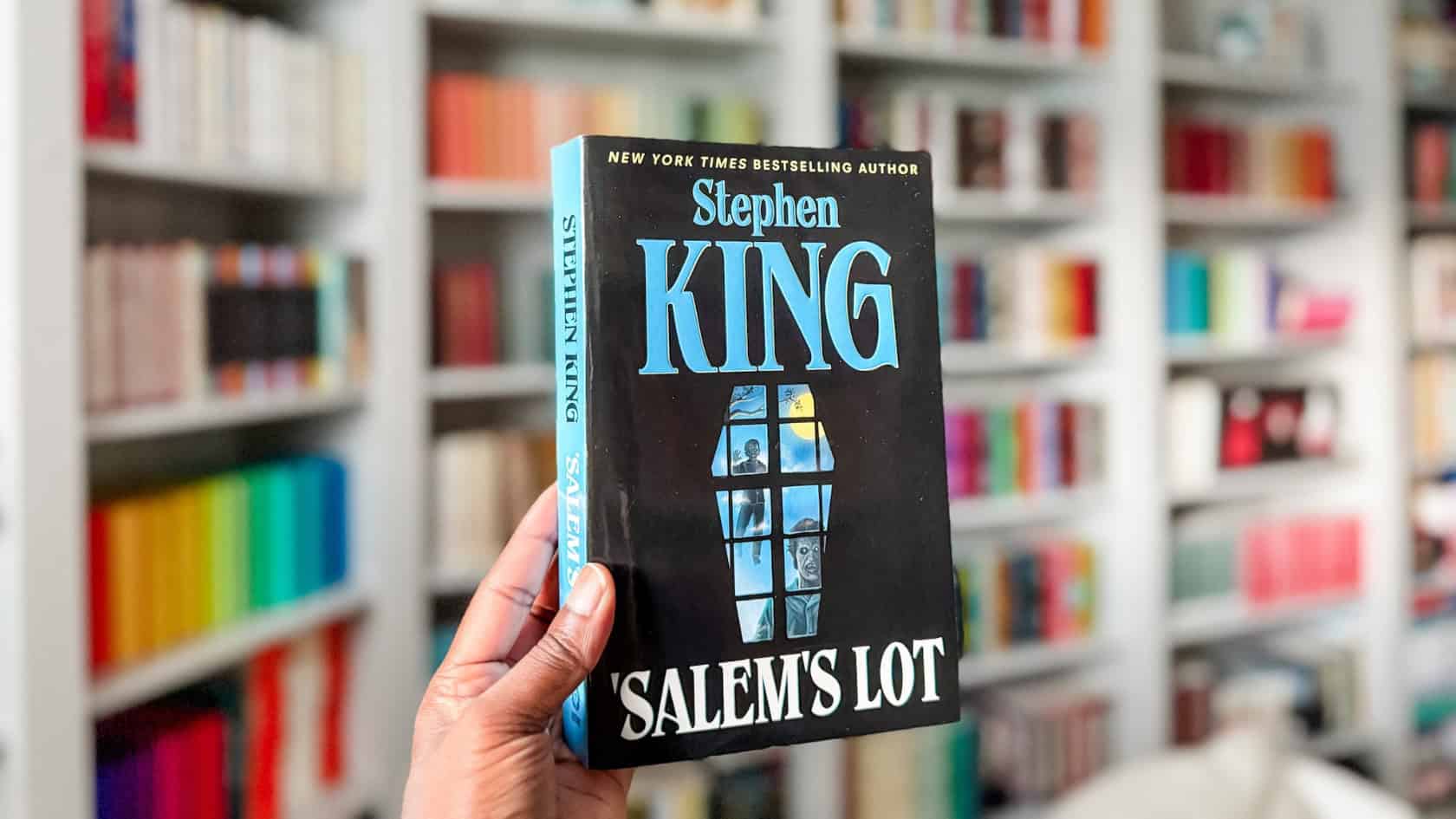
If you ask me which early Stephen King book I most often recommend to a new horror reader, this is probably still the one. ‘Salem’s Lot takes something extremely old—vampires—and makes the terror feel local. Writer Ben Mears returns to Jerusalem’s Lot and slowly realizes the town is being consumed.
What I love is how patiently King builds the place before dismantling it. You meet people. You notice routines. You understand enough about the community that the supernatural corruption actually means something. The town is not scenery. The town is the victim. That becomes one of King’s greatest strengths later, and I think ‘Salem’s Lot is where you can watch him understand just how powerful it is.
Why ’Salem’s Lot Has Aged So Well
The basic vampire mythology is old enough that the book was never dependent on novelty. What matters is atmosphere, and atmosphere ages beautifully when it is this good. The idea of familiar people becoming unfamiliar remains frightening. The idea of an entire town changing before anyone fully understands what is happening remains frightening. And King’s interest in evil spreading through an ordinary community will show up in many different forms after this.
I think Carrie announces Stephen King. ‘Salem’s Lot tells you he wasn’t a fluke.
You can get a copy of ‘Salem’s Lot on Amazon.
1. The Shining

If I have to choose the early Stephen King book that feels most completely like a modern classic, I choose The Shining. Not because it is his longest. Not because it has the largest world. Not even because it is the scariest. I choose it because the supernatural and human elements fit together so tightly that I cannot really separate them.
Jack Torrance takes a winter caretaker job at the Overlook Hotel with Wendy and Danny. The hotel is haunted, but the family has problems before the ghosts begin working on them. Jack’s addiction, anger, shame, frustration, and desire to become someone better are already inside the building with him. The Overlook simply knows where to press. That is brilliant horror.
Why The Shining Is My Number One Early King Book
The hotel works as a haunted place. The family works as a family. Danny works as a child character rather than simply a supernatural device. Jack works because the book gives us enough humanity to understand what is being lost. That is what King does at his strongest: the horror matters because the people matter first.
And if we are talking about which of these books deserves to stand beside other twentieth-century American classics, The Shining is the easiest argument for me to make. It is a horror classic. It is a family tragedy. It is an addiction novel. It is a haunted-house story. It is also simply a very good book.
You can get a copy of The Shining on Amazon.
My Ranking of Early Stephen King Books, From 10 to 1
If you want the ranking without all my arguing with myself, my order from ten to one is The Gunslinger, Firestarter, Night Shift, Cujo, The Dead Zone, Carrie, Different Seasons, The Stand, ‘Salem’s Lot, and The Shining.
I don’t think the books at the bottom are bad, and that is important. This is a ranking of an unusually strong period. Somebody has to come tenth, even when tenth place is still a book I’d happily discuss for an hour.
Which Early Stephen King Books Have Aged Best?
For me, The Shining, ‘Salem’s Lot, Different Seasons, Carrie, and The Stand have made the transition into modern classics most convincingly. They still attract readers who were not alive when they were published. They continue generating adaptations, discussions, rereads, and reinterpretations. Most importantly, their central ideas still feel emotionally legible.
Carrie still understands humiliation. The Shining still understands addiction and family fear. ‘Salem’s Lot still understands what happens when something corrupts a community. Different Seasons still understands friendship and hope. The Stand still understands the fear and possibility involved in rebuilding after collapse. The details age. The questions don’t.
Which Early Stephen King Books Feel Most Dated?
Firestarter feels the most tied to its era for me, particularly in its conspiracy-thriller machinery. I still like the book, but I feel the period around it more than I do when reading The Shining or Carrie. Parts of The Dead Zone also carry the unmistakable texture of the political and cultural moment in which King wrote it, although I think the central moral dilemma keeps the novel relevant.
The Gunslinger is a different problem entirely. It doesn’t feel dated so much as embryonic. You can feel King building something he does not yet fully understand the scale of. That makes it fascinating in retrospect, but not necessarily his smoothest reading experience.
What About Stephen King’s Early Richard Bachman Books?
You can’t really talk about early King without mentioning Richard Bachman. During this same period, King published Rage, The Long Walk, Roadwork, and The Running Man under the Bachman name. I’m not folding them into the main ranking because the pseudonym was part of how those books originally entered the world, and I think they deserve their own comparison.
But if I were choosing one essential early Bachman book? The Long Walk. Easily. King wrote it before Carrie, even though it was published later, and it fascinates me because you can see how early his interest in young people under unbearable pressure already existed. It is stripped down, bleak, and incredibly effective. If this ranking is the early Stephen King shelf, The Long Walk is sitting immediately beside it.
Are Stephen King’s Early Books Better Than His Later Books?
I would not say early King is automatically better. I think later King is often better at emotional complexity, aging, grief, regret, and quieter forms of character work. 11/22/63 gives me something different from Carrie. Holly belongs to a writer with decades of life and writing behind him. Doctor Sleep could only exist because King returned to Danny Torrance as an older man.
But the early period has an energy that is difficult to reproduce. The ideas feel hungry. There is a sense that King is discovering what he can get away with while he is doing it. He writes a bullied telekinetic teenager. Then vampires. Then a haunted hotel. Then the apocalypse. It is a ridiculous run. And I do think the very best early books—especially The Shining, ‘Salem’s Lot, The Stand, and Carrie—stand comfortably beside anything he wrote later.
Where Should You Start With Early Stephen King?
If you’re reading this because you want one early King book rather than an entire project, I would choose based on what you already enjoy. For the strongest overall novel, I would choose The Shining. For classic supernatural horror, ‘Salem’s Lot. For a huge immersive epic, The Stand. For historical importance and a short introduction, Carrie. For readers who think King only writes horror, Different Seasons.
And if you want to read King as a developing writer rather than simply picking the “best” book, start with Carrie and go chronologically. That is a genuinely fascinating reading project. Watching Carrie become ‘Salem’s Lot, then The Shining, then The Stand in the space of only a few years makes you understand how extraordinary this early run actually was. My Stephen King books in order guide has the full chronology if you want to keep going past 1982.
Why I Think Stephen King Belongs in the Modern Classics Conversation
This is the piece I find most interesting now. For a long time, massively popular authors could get treated as though popularity somehow disqualified them from serious literary consideration. Then enough time passes. New generations keep reading them. Their stories continue shaping other writers. Characters and places become cultural reference points. Adaptations keep arriving. The work survives the moment that originally made it successful. At some point, we should probably admit what has happened.
Stephen King has books that are modern classics. That does not mean every King novel belongs in the canon—no author’s entire bibliography does. It means works like The Shining, Carrie, The Stand, and ‘Salem’s Lot have demonstrated the one thing classics ultimately need most: readers keep coming back, and they find something there when they do. That matters more to me than whether somebody once decided horror was too popular to count.
Final Thoughts
Ranking early Stephen King books turned out to be harder than I expected, because this period contains remarkably few books I would call weak. My number ten book begins the Dark Tower. That is an absurd problem to have.
But if I’m looking at King’s 1974–1982 run through my new modern-classics lens, The Shining wins. It is the book where I think his supernatural horror, psychological insight, family dynamics, atmosphere, and character work come together most completely. ‘Salem’s Lot is right behind it, because the town-building is so fundamental to the writer King becomes. The Stand is the epic. Different Seasons proves the horror label was always too small. And Carrie remains one of the most fascinating debuts in modern popular fiction, because you can already see the writer waiting inside it.
That is the part I love most about going back to early books. You are not only reading what the author wrote then. You are reading with everything you know came later. And with King, what came later is more than fifty years of books.
So tell me in the comments: which early Stephen King book would you put at number one? And is there one from this era you think has actually gotten better with age?