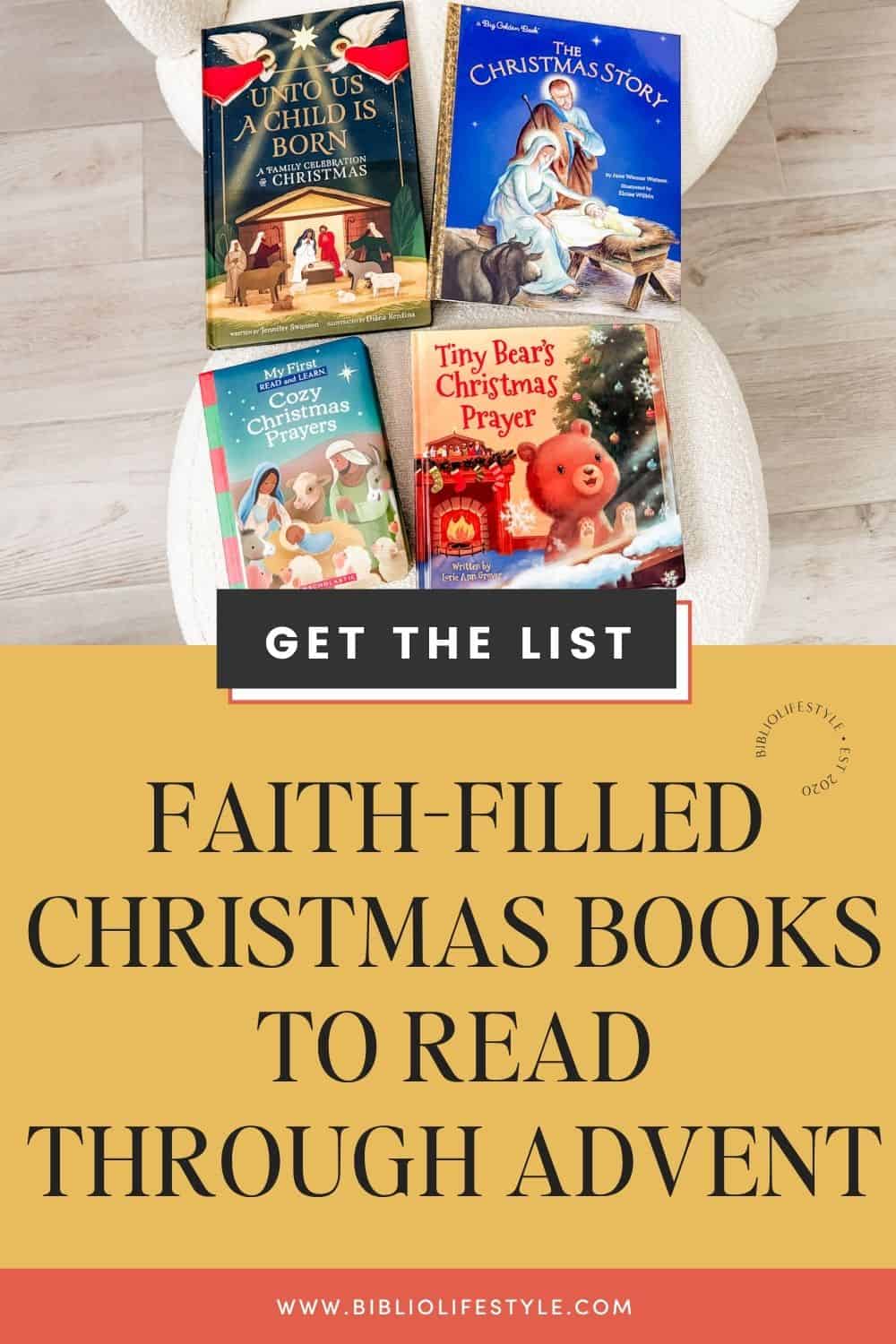
Christian Christmas Books for Kids: 8 Faith-Filled Picks
These Christian Christmas books for kids share the Nativity, prayer, hymns, and the birth of Jesus, plus a four-Sunday Advent reading plan for families.
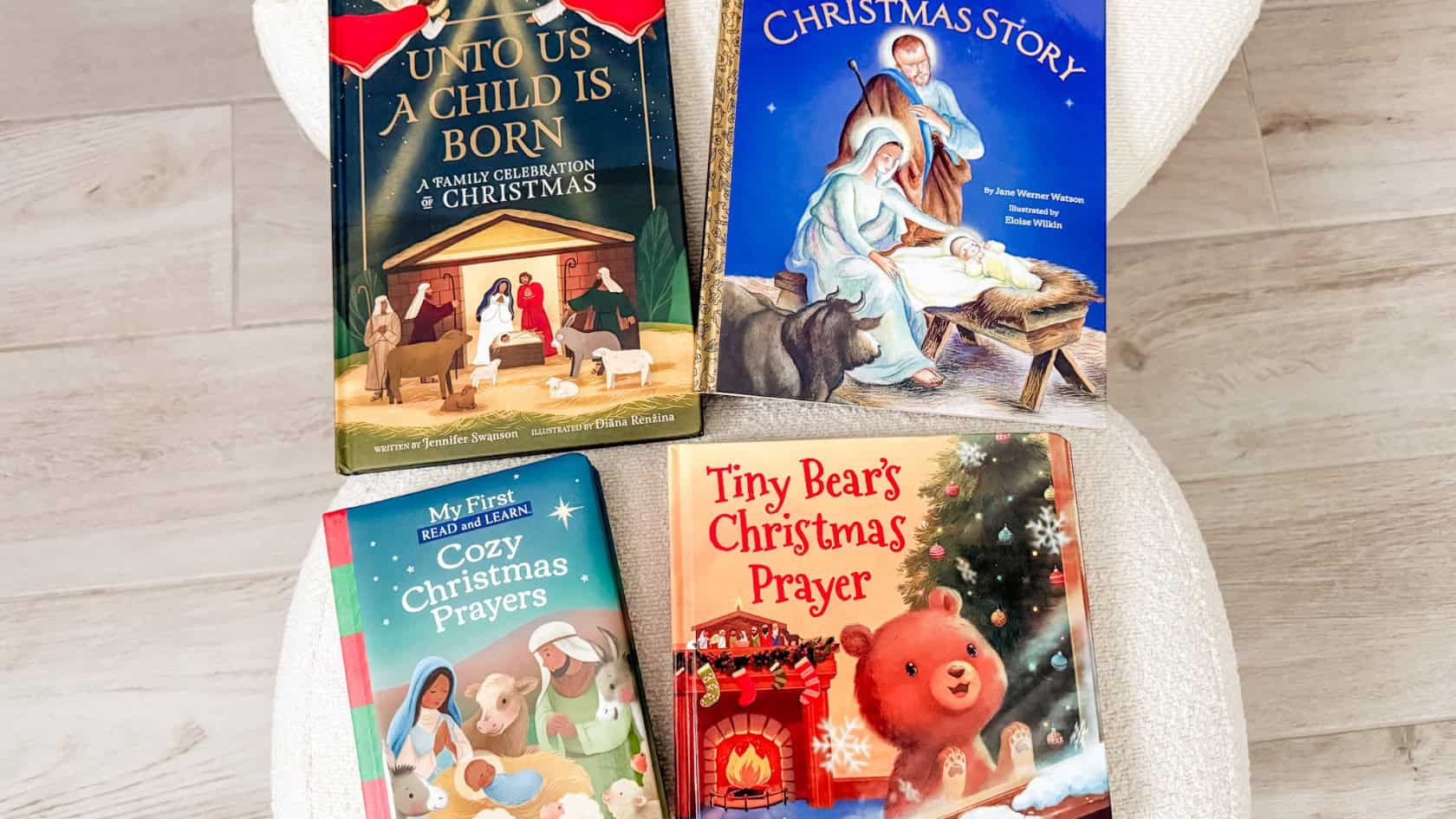
The Christian Christmas Books I’d Read With Kids Throughout Advent
Hi Bookish Besties, Christmas children’s books can easily become an endless parade of Santa, presents, reindeer, cookies, snowmen, and increasingly complicated explanations for how one man gets down every chimney in a single night. I enjoy plenty of those books, but I also wanted a separate shelf for families looking specifically for Christian Christmas books for kids that keep the birth of Jesus at the center of the season.
I have read and loved all eight books in this guide, and what I appreciate is that they do not all tell the Christmas story in exactly the same way. Some are simple enough to share with a baby on your lap. Some use animals, rhyming language, flaps, prayers, or hymns to help little children connect with the Nativity. Others go deeper into Scripture, history, tradition, and the questions older children may begin asking once Mary, Joseph, shepherds, angels, and Wise Men are no longer completely new characters to them.
That variety matters to me because faith-based Christmas reading should be able to grow with a family. A toddler does not need a theological lecture about Bethlehem. A seven-year-old may be ready to ask why Jesus was born in a manger, what the prophets had said, or where the Wise Men came from. A good Christmas shelf can make room for both.

If you are choosing quickly, I would start with Christmas in the Manger for the youngest listeners, The First Christmas when you want an interactive first Nativity story, The Christmas Story by Jane Werner Watson for a classic family retelling, and Unto Us a Child Is Born when you want a beautiful keepsake book that can lead older children into deeper conversation. For prayer and worship rather than straight narrative, My First Read and Learn: Cozy Christmas Prayers and O Holy Night are the ones I would add.
Why I Wanted a Separate Christian Christmas Books for Kids Guide
I deliberately kept these books separate from my broader Christmas picture-book list because they serve a different purpose. A funny Santa book may be wonderful for December. A beautifully illustrated Christmas Eve story may become part of bedtime. But when I am specifically looking for a book that helps a child understand why Christians celebrate Christmas, I want to know that before I open it.
These eight books center the Nativity, Jesus’s birth, prayer, Christian worship, gratitude, or Scripture in meaningful ways. Some tell the biblical story directly, while others approach it through animals, hymns, or the experience of a child giving thanks.
That makes this list especially useful for family Advent reading, Sunday School, church classrooms, grandparents building a faith-centered Christmas shelf, or parents who simply want Jesus to remain visible among all the other wonderful Christmas stories their children are hearing.
8 Christian Christmas Books for Kids I Read and Loved
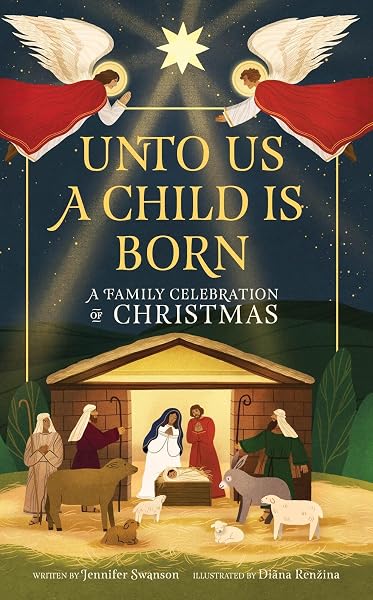
Unto Us a Child Is Born: A Family Celebration of Christmas by Jennifer Swanson, Illustrated by Diāna Renžina
Unto Us a Child Is Born is the book on this list I would choose when I want to go beyond simply retelling the Nativity and actually explore it with a child. Jennifer Swanson combines the biblical account of Jesus’s birth with historical and traditional context, reflections on different elements of the story, and the words to ten familiar Christmas hymns. Questions about prophecy, Mary, the manger, the Wise Men, and other parts of the Christmas story are given room rather than being rushed past because everyone already recognizes the Nativity scene.
That is what I loved about it. Children often reach an age when the Christmas story shifts from “I know what happens” to “but why did that happen?” This book gives families somewhere to go with those questions.
Diāna Renžina’s illustrations also make the book feel like a keepsake rather than a reference guide disguised as a children’s book. There is reverence to the artwork, but it still feels warm and inviting enough for family reading.
Because this is a richer book aimed at older children and families, I would not necessarily sit down and read the entire thing in one evening. I think it works better spread across Advent. Read a section, follow the questions that interest your child, sing one of the included carols, and return to it later.
For me, that makes it the strongest family Advent book of the eight. It is the one I would expect to keep using as children get older because there is enough substance here to notice something different each year.
You can get a copy of Unto Us a Child Is Born: A Family Celebration of Christmas by Jennifer Swanson, Illustrated by Diāna Renžina on Amazon.
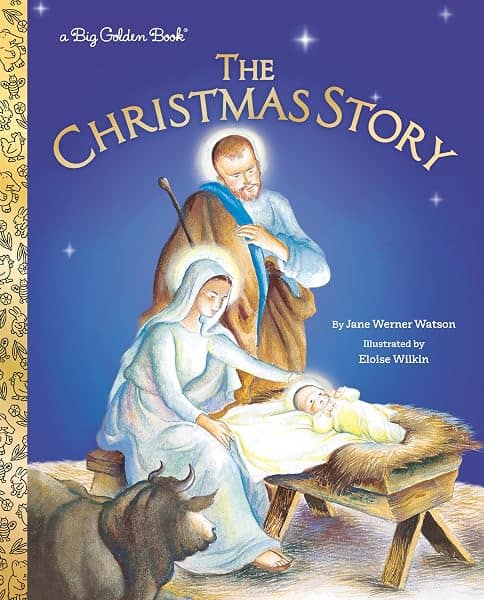
The Christmas Story by Jane Werner Watson, Illustrated by Eloise Wilkin
The Christmas Story is the classic on my list, and there is a reason this retelling has remained in print for generations. Jane Werner Watson tells the story of Mary and Joseph’s journey to Bethlehem and the birth of Jesus in simple, poetic language, while Eloise Wilkin’s illustrations give the book the gentle, reverent quality so many readers associate with classic Golden Books.
I love this one when I want the story itself to take center stage. There are no elaborate interactive elements and no attempt to reinvent the Nativity. It simply gives children a traditional retelling of the first Christmas in a form that feels accessible and familiar.
The new Big Golden Book edition makes the illustrations larger, which is especially nice for family reading because children can spend more time looking at the scenes while an adult reads aloud. It also makes the book feel more substantial as a Christmas gift or something brought out year after year.
This is one of the books I would happily use on Christmas Eve itself. After weeks of Christmas activities, decorations, gifts, and anticipation, there is something grounding about returning to the basic story at the center of the Christian celebration. It does not need to do anything clever. The familiarity is part of its strength.
You can get a copy of The Christmas Story by Jane Werner Watson, Illustrated by Eloise Wilkin on Amazon.
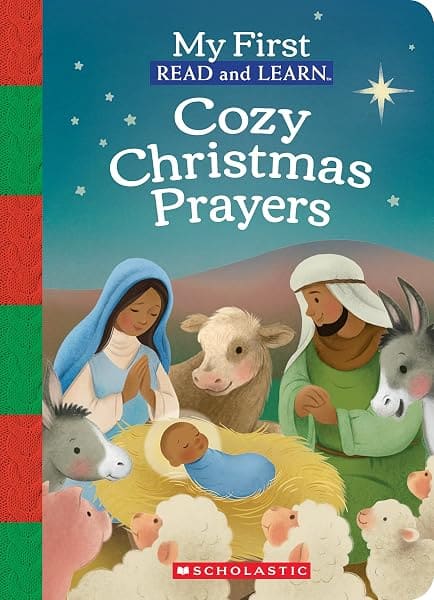
My First Read and Learn: Cozy Christmas Prayers by Scholastic, Illustrated by Virginia Allyn and Valentina Jaskina
My First Read and Learn: Cozy Christmas Prayers is the one I would choose when I want Christmas reading to become participation rather than simply listening. Designed for very young children, this padded board book introduces the Nativity alongside short prayers children can begin learning and repeating with an adult. It also includes simple family ideas for celebrating the season and familiar songs such as Away in a Manger, Silent Night, and We Three Kings.
I loved the gentleness of this one. Very young children do not need Christmas faith traditions to become complicated. A short prayer, a familiar song, and a simple story can be more than enough.
I also like that prayer is presented as something children can actually do. The book does not only tell them that prayer exists; it gives little ones words they can begin using themselves.
For babies, toddlers, and preschoolers, that makes this particularly useful during Advent. You could read one page before bed, say one of the prayers together, and let that become the entire family activity for the night. Not every Advent tradition needs craft supplies.
You can get a copy of My First Read and Learn: Cozy Christmas Prayers by Scholastic, Illustrated by Virginia Allyn and Valentina Jaskina on Amazon.
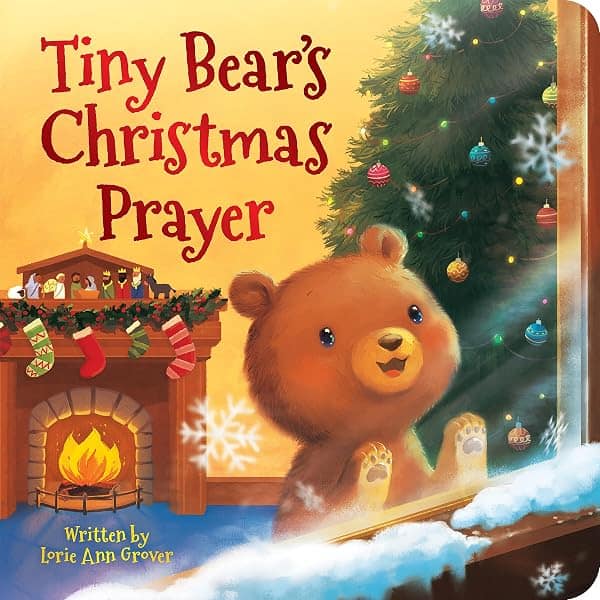
Tiny Bear’s Christmas Prayer by Lorie Ann Grover
Tiny Bear’s Christmas Prayer is the book I would choose when I want to connect Christmas faith with gratitude. Tiny Bear moves through a winter evening noticing the blessings around him, from family and shared meals to Christmas carols and the warmth of the season. The story ultimately returns to the birth of Jesus as the greatest gift of Christmas, making gratitude the bridge between a child’s immediate experience of the holiday and its Christian meaning.
That works beautifully for younger children because gratitude is concrete. A toddler may not understand every part of theology surrounding the Incarnation, but they understand family. They understand food, warmth, singing, lights, and people they love. Tiny Bear begins there and gently directs that thankfulness toward God.
I also enjoyed the rhyming text because this is exactly the sort of book I would want to read aloud at bedtime. It has enough Christmas atmosphere to feel seasonal without becoming overstimulating, and the prayerful tone makes it particularly nice once the day is winding down.
This is one of my favorites for families trying to establish a simple nightly December habit: read the story, name one thing you are thankful for, and say a short prayer together. That is enough to become a tradition.
You can get a copy of Tiny Bear’s Christmas Prayer by Lorie Ann Grover on Amazon.
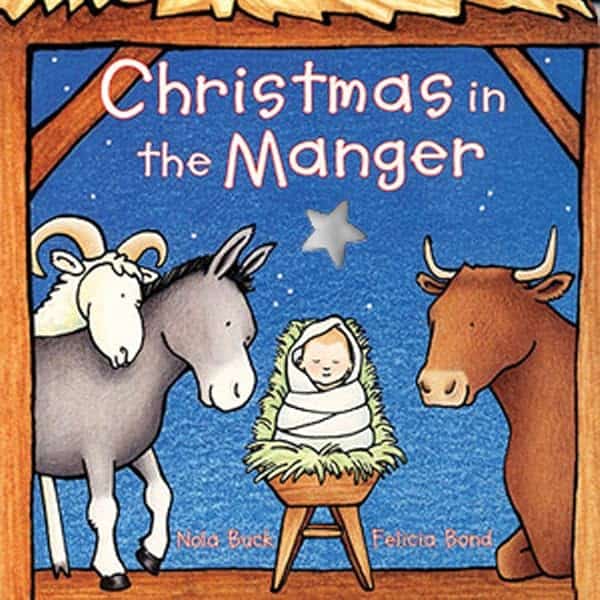
Christmas in the Manger by Nola Buck, Illustrated by Felicia Bond
Christmas in the Manger is my pick for the littlest readers because it strips the Nativity down to a gentle, lyrical introduction without losing its sense of wonder. Different figures and elements of the first Christmas are introduced through simple language and Felicia Bond’s warm illustrations, making the book easy to share with babies and toddlers who are only beginning to recognize the story.
What I loved most is that the simplicity feels intentional rather than empty. This is not trying to give a two-year-old every detail about Roman census practices. It is giving them a stable, a star, animals, Mary, Joseph, and baby Jesus. At that age, familiarity matters more than explanation.
Read the same little book throughout Advent and eventually the child begins pointing to the star before you mention it, recognizing the baby, or making an animal noise at a moment the author almost certainly did not request. That repeated recognition is part of how stories become known.
I think this is a wonderful first Nativity book because it gives young children enough to hold onto without asking for an attention span they do not yet have.
You can get a copy of Christmas in the Manger by Nola Buck, Illustrated by Felicia Bond on Amazon.
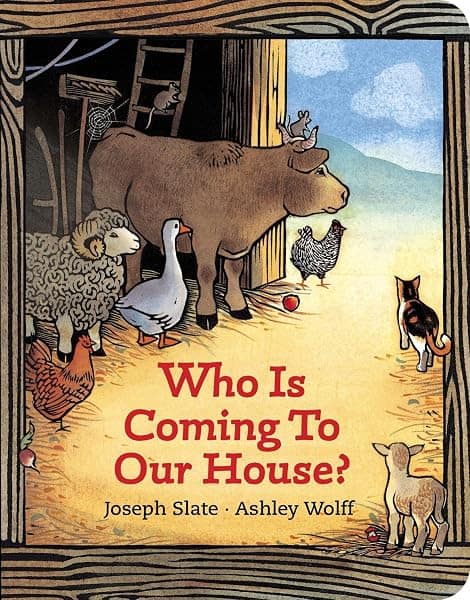
Who Is Coming to Our House? by Joseph Slate, Illustrated by Ashley Wolff
Who Is Coming to Our House? tells the Nativity from one of the gentlest perspectives possible: the animals preparing the stable for someone’s arrival. Mouse knows someone is coming, and the other animals begin getting everything ready. Pig makes room, Lamb cleans, Goose prepares the hay, and Duck helps make the manger comfortable while Mary and Joseph travel closer. Children know before long who the special visitor will be.
I loved this because anticipation is one of the emotions children understand best at Christmas. Much of December is about waiting for something, and this book redirects that familiar feeling toward waiting for Jesus.
The animal perspective also makes the Nativity immediately approachable for toddlers and preschoolers. The story is not explaining the significance of every biblical event. It is showing a household—or in this case, a stable—preparing to welcome someone important.
That makes this an especially lovely Advent book. Instead of jumping straight to Christmas morning, the whole story is about making ready.
For me, that gives families a very natural way to talk about Advent itself: if the animals are preparing their home to welcome Jesus, how might we prepare our hearts, our home, or the way we treat other people? That conversation can remain incredibly simple for young children and become deeper as they grow.
You can get a copy of Who Is Coming to Our House? by Joseph Slate, Illustrated by Ashley Wolff on Amazon.
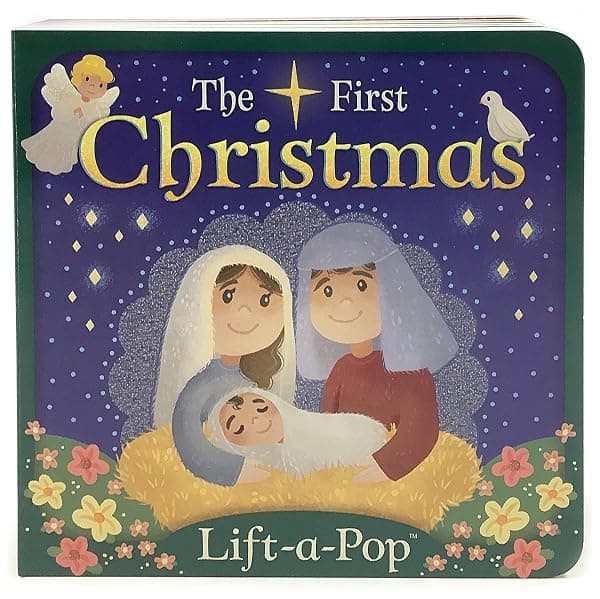
The First Christmas: Lift-a-Pop Pop-Up Nativity Board Book by Holly Berry-Byrd, Illustrated by Morgan Huff
The First Christmas from the Little Sunbeams line is the interactive Nativity book I would choose for babies and toddlers who need their hands involved in the reading process. The board-book format follows Mary and Joseph to Bethlehem and introduces the birth of Jesus through a straightforward retelling, but the sturdy flaps and pop-up elements give younger children something physical to discover as the story unfolds.
I like interactive books best when the interaction supports the story rather than distracting from it, and that is what works for me here. Opening a flap creates anticipation. A child is participating in discovering what comes next. That little bit of physical involvement can make an enormous difference when the listener is two and has recently decided sitting still is an unreasonable request.
The sturdier format also makes this feel approachable rather than precious. I want children’s faith books to be books they are actually allowed to touch, revisit, and explore.
For a toddler’s first Christmas Nativity shelf, I would pair this with something quieter such as Christmas in the Manger. One gives them interaction; the other gives them rhythm and simplicity. Together, they introduce the same story in two very different ways.
You can get a copy of The First Christmas: Lift-a-Pop Pop-Up Nativity Board Book by Holly Berry-Byrd, Illustrated by Morgan Huff on Amazon.
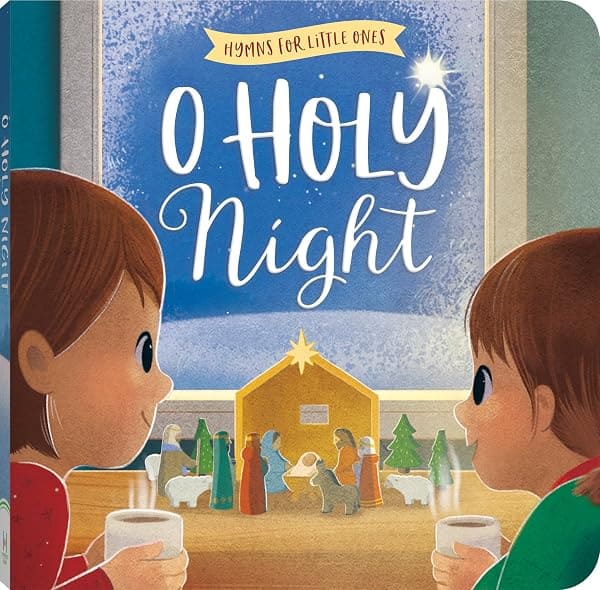
O Holy Night by Harvest House Publishers, Illustrated by Sydney Hanson
O Holy Night takes a different approach from everything else on this list because the text comes through the familiar Christian hymn rather than a conventional Nativity narrative. Created for babies through preschoolers, the board book pairs the words of O Holy Night with watercolor illustrations connected to a children’s Nativity play. The complete lyrics are included so families can read or sing the hymn together.
I loved this because music is one of the easiest ways for faith and memory to become connected. Children may forget the details of a conversation. They often remember a song.
If O Holy Night is already part of your family’s Christmas worship, this book gives young children a visual way into something they may hear at church, at home, or during a Christmas service. If the hymn is not already familiar, the book gives you an easy reason to begin singing it together.
I would not approach this like a traditional storybook where the goal is to reach the final page. Sing one verse. Look at the pictures. Talk about what the children see. Return to it another night.
For me, that slower use is what makes the book special. It turns reading into worship without making the experience formal or difficult for a small child.
You can get a copy of O Holy Night by Harvest House Publishers, Illustrated by Sydney Hanson on Amazon.
The Best Christian Christmas Books by Age
For babies and toddlers, I would keep things tactile, rhythmic, and short. Christmas in the Manger gives you the simplest lyrical introduction, while The First Christmas adds flaps and pop-ups for children who need to interact physically with the page. My First Read and Learn: Cozy Christmas Prayers and O Holy Night are also especially useful at this stage because prayers and songs can become familiar long before children are ready for longer explanations.
For preschool and early elementary children, Who Is Coming to Our House? and Tiny Bear’s Christmas Prayer give you stories built around ideas they can immediately understand: preparing, welcoming, family, gratitude, and giving thanks. The Christmas Story is the classic retelling I would add when children are ready to follow the Nativity as a fuller narrative.
For older elementary children and mixed-age family reading, Unto Us a Child Is Born is the clear standout for me. The additional biblical, historical, and traditional context gives children somewhere to take the questions that naturally start appearing once the basic Christmas story is already familiar.
A Four-Sundays Advent Reading Plan for Families
One reason I wanted enough books to build this as a standalone guide was that I did not want families to feel they had to race through eight Christmas books in eight nights. These work beautifully spread across Advent.
In 2026, the four Sundays of Advent fall on November 29, December 6, December 13, and December 20. You can use the plan below with an Advent wreath if that is part of your family’s tradition, but you do not need one. A candle, a book, and ten quiet minutes together are enough.
First Sunday of Advent: Prepare
For the first Sunday, I would read Who Is Coming to Our House? with younger children and begin Unto Us a Child Is Born with older ones. The theme is preparation. The animals in Who Is Coming to Our House? make the stable ready for someone they know is coming, while Unto Us a Child Is Born gives older children room to explore the prophecies and events leading toward Jesus’s birth.
After reading, I would keep the conversation simple: What does it mean to get ready for Christmas on the inside, not just decorate the outside? For a small child, the answer may be “help somebody” or “be kind.” That is plenty.
Second Sunday of Advent: Welcome
For the second Sunday, I would read The First Christmas with babies and toddlers and The Christmas Story with older children. This week moves into Mary and Joseph’s journey, Bethlehem, the manger, and the arrival of Jesus.
The interactive elements in The First Christmas make discovery part of the reading, while Jane Werner Watson’s classic retelling gives older children the story in a clear, traditional form.
This is also a lovely week to add figures to a Nativity set gradually if your family does that. Let the physical objects and the books reinforce one another rather than trying to create a separate activity for everything.
Third Sunday of Advent: Rejoice and Give Thanks
For the third Sunday, I would use Tiny Bear’s Christmas Prayer and My First Read and Learn: Cozy Christmas Prayers. Instead of introducing more story details, pause and focus on gratitude.
Tiny Bear notices the blessings around him and remembers Jesus as the greatest Christmas gift, while Cozy Christmas Prayers gives young children actual words they can use to respond.
Let everyone name one thing they are thankful for. If children are older, ask them to name one person they could encourage, help, or thank during the coming week.
This is where Advent reading becomes more than knowing what happened in Bethlehem. It begins asking how the story shapes what we do.
Fourth Sunday of Advent: Worship and Celebrate
For the final Sunday before Christmas, I would read or sing O Holy Night and return to favorite sections of Unto Us a Child Is Born. This is the week when anticipation is almost over.
The hymn shifts the focus from preparing for the story to responding to it with worship, while Swanson’s book gives families a chance to revisit whichever part of the Nativity has interested their children most.
You could sing one of the carols included in Unto Us a Child Is Born, read the biblical passage again, or simply talk about which Christmas story detail each person remembers best from the month.
The goal is not to cram in one final lesson. It is to arrive at Christmas knowing why you have been waiting.
How I’d Use These Books Without Turning Advent Into Homework
This matters to me because a beautiful family tradition can become an obligation remarkably fast once we decide we must execute it perfectly every night.
I would not read all eight books according to a rigid schedule. I would put them somewhere visible, choose one anchor reading for each Sunday, and let the others appear naturally throughout December.
Some nights that means a board book before bed. Some mornings it might mean singing O Holy Night while looking at the illustrations. An older child may spend more time with Unto Us a Child Is Born and ask questions you did not plan to discuss that evening.
Follow the question. That is more valuable than staying on schedule.
Children also learn through repetition, so there is absolutely nothing wrong with reading Christmas in the Manger twelve times instead of carefully rotating through the collection because you think every book deserves equal airtime. The favorite book is doing its job.
How I Choose a Nativity Book for a Child
The first thing I look at is age, but the second is how the child likes to experience books. Some children want rhythm. Some want details. Some want to lift every flap. Some want to sing. Some will sit quietly through a longer illustrated book and then ask fourteen questions. Those are different readers even if they are the same age.
For babies and toddlers, I prioritize durability, repetition, recognizable images, and language that sounds good aloud. That is why Christmas in the Manger, The First Christmas, O Holy Night, and Cozy Christmas Prayers work so well at that stage.
For older children, I want more room for thought. That is where The Christmas Story and especially Unto Us a Child Is Born become more useful.
The best faith-based Christmas book is not necessarily the one with the most information. It is the one the child is actually ready to receive.
Christian Christmas Books That Make Good Keepsake Gifts
If I were specifically buying a book as a Christmas gift from a grandparent, godparent, or family friend, Unto Us a Child Is Born would be my first choice for an older child or family. It has enough depth to keep being useful beyond a single Christmas, and the artwork gives it the feeling of something designed to remain on the shelf.
The new Big Golden Book edition of The Christmas Story is another lovely keepsake choice because it takes a retelling families may already know and gives Eloise Wilkin’s classic illustrations more room. This is the kind of book I can imagine writing a child’s name and the year inside and bringing back out every December.
For very young children, I would choose the keepsake differently. A sturdy board book that becomes beloved and slightly battered can be far more meaningful than something pristine. Christmas in the Manger or Who Is Coming to Our House? may eventually hold memories precisely because they were handled so much. A keepsake does not have to stay perfect. Sometimes the worn corners are the proof that the tradition worked.
Frequently Asked Questions About Christian Christmas Books for Kids
What are the best Christian Christmas books for kids?
My strongest overall picks are Unto Us a Child Is Born for deeper family Advent reading, The Christmas Story for a classic Nativity retelling, Christmas in the Manger for babies and toddlers, and Who Is Coming to Our House? for a gentle story about preparing to welcome Jesus. The best choice depends on the child’s age and whether you want story, prayer, music, interaction, or deeper biblical context.
What are good Nativity books for toddlers?
Christmas in the Manger is my favorite simple first Nativity book, while The First Christmas adds lift-a-flap and pop-up elements for toddlers who like interactive reading. Who Is Coming to Our House? is another lovely choice because the animals preparing the stable make the story of waiting for Jesus easy for young children to understand.
What Christian Christmas books are good for babies?
Board books such as Christmas in the Manger, My First Read and Learn: Cozy Christmas Prayers, The First Christmas, and O Holy Night are all designed in ways that work well for very young children. At this age, I would focus on simple repetition, songs, prayers, and recognizable Nativity images rather than trying to explain every part of the Christmas story at once.
What is a good Christian Christmas book for older kids?
Unto Us a Child Is Born is my first choice for older elementary children and family reading because it combines the Nativity story with Scripture, historical and traditional context, reflection, and familiar Christmas hymns. It gives curious children more to explore once they already know the basic story.
What is a good Advent book for families?
If you want one substantial book to carry across Advent, I would choose Unto Us a Child Is Born. For families with younger children, I would instead use several shorter books across the four Sundays, pairing a Nativity story with prayer or song as Christmas approaches.
How can I use children’s books with an Advent wreath?
Read a short section before or after lighting the week’s candle. Keep the ritual simple: light the candle, read the book or passage, ask one question, and end with a prayer or Christmas hymn. The books do not need to explain the Advent wreath itself to become part of the tradition.
What Christian Christmas books include prayers?
My First Read and Learn: Cozy Christmas Prayers is the strongest choice here because prayer is central to the book and the prayers are designed to be accessible to young children. Tiny Bear’s Christmas Prayer also uses gratitude and prayer as the heart of its Christmas story.
What Christian Christmas books include hymns?
Unto Us a Child Is Born includes the words to ten Christmas hymns alongside the Nativity material. O Holy Night is built entirely around the classic hymn and includes the complete lyrics, making it especially useful if singing is already part of your family’s Christmas tradition.
Final Thoughts
What I loved about reading these Christian Christmas books for kids is that together they show how many ways a child can enter the Nativity story. A baby can look at a star and a manger. A toddler can lift a flap and discover what happens next. A preschooler can watch animals prepare a place for Jesus. A family can say a prayer together. A child can learn a hymn and eventually recognize it when the congregation begins singing. An older reader can ask why Jesus was placed in a manger, what the prophets had said, or where the Wise Men came from and discover that the familiar Christmas story still has more to teach them.
That is the kind of Christmas shelf I want. I do not need every book to do everything. I would rather have a small collection where each book gives the family a different way to return to the same story.
Some nights that return will last three minutes before bedtime. Some Sunday afternoons it may open into a much longer conversation. Sometimes everyone will sing. Sometimes a toddler will close the book halfway through because there is apparently something urgent happening with a toy across the room. The tradition still counts.
For me, that is the point of using books throughout Advent. We are not trying to complete a curriculum before Christmas morning. We are giving children repeated opportunities to know the story, recognize its language, ask questions, sing its songs, and gradually understand why this particular baby in this particular manger is at the center of Christian Christmas.
If your family already has a Nativity book that comes out every December, I would love to know which one has become part of your tradition. I am especially interested in the books children keep asking for year after year, because those are usually the ones that end up carrying the most family memory.