Best Nonfiction Christmas Books for a Meaningful Season
These nonfiction Christmas books explore holiday history, traditions, humor, faith, and culture, plus picks for Hanukkah, Kwanzaa, Yule, and kids.

The Holiday Nonfiction Books That Make Me See the Season Differently
Hi Bookish Besties, I am absolutely a seasonal mood reader, but one thing I have noticed about my December reading is that I do not always want another fictional Christmas. Sometimes I want to know why we decorate trees, how certain traditions became traditions, why Dickens became so entwined with the way we imagine Christmas, or how celebrations like Hanukkah and Kwanzaa are experienced beyond the simplified versions we sometimes absorb from popular culture. That is when I start reaching for nonfiction.
The best nonfiction Christmas books do something I really love: they make familiar traditions feel interesting again. Suddenly the tree in the corner has a history, Santa has gone through centuries of cultural reinvention, and a tradition I assumed had existed forever turns out to be much newer (or much stranger) than I realized. Instead of taking the magic out of Christmas, learning where these things come from usually makes me notice the season more.
I also wanted this list to stay broader than Christmas alone. Christmas dominates holiday publishing, but winter celebrations are not one-size-fits-all, so I have kept the Hanukkah, Kwanzaa, and Yule books that help widen the shelf. And because I know readers also search for nonfiction Christmas books for children, I have added a short section near the end with a few age-appropriate books that make holiday history and traditions approachable for younger readers.

If you want my quickest recommendations, I would start with Christmas: A Biography for a broad cultural history, The Battle for Christmas if you want to understand how American Christmas traditions changed, The Man Who Invented Christmas for the bookish Dickens story, Holidays on Ice when you need humor, and How to Spell Chanukah when you want thoughtful personal essays about Jewish identity and holiday experience.
The Best Nonfiction Christmas and Holiday Books

Christmas: A Biography by Judith Flanders
Christmas: A Biography is the book I recommend when someone wants to know where our Christmas traditions actually came from. Judith Flanders traces the holiday across centuries, looking at everything from older winter celebrations to Christmas trees, cards, carols, food, Santa Claus, and the traditions that gradually became so familiar that we now treat them as inevitable.
What I like most is that learning the history does not make Christmas feel less magical. It has the opposite effect on me. Once I understand how traditions evolved, borrowed from one another, disappeared, returned, and changed with culture, the season feels richer rather than more manufactured.
If you enjoy cultural history but do not want something that reads like a textbook, this is my strongest all-around recommendation. It is the book I would hand someone who keeps interrupting the decorating to ask, “Wait, why do we do this?”

The Battle for Christmas by Stephen Nissenbaum
The Battle for Christmas takes a deeper look at the development of Christmas in nineteenth-century America, particularly the shift from rowdier public celebrations toward the family-centered, gift-focused holiday many people recognize today. It is one of those books that makes you realize how often we describe traditions as timeless when they were actually shaped by specific cultural and economic changes.
That is exactly why I find this book so interesting. I love old traditions, but I also like knowing when nostalgia is telling us a slightly prettier story than history does. Nissenbaum gives the season social context and shows that the Christmas we inherited was not simply waiting fully formed for us.
This is the denser history pick on my list, and I would recommend it to readers who genuinely enjoy cultural history, social history, and the question of how private family traditions connect with larger changes in society.

Dickens and Christmas by Lucinda Hawksley
Dickens and Christmas is one of my obvious choices because Charles Dickens and Christmas have become almost impossible for me to separate. The book looks at Dickens’s life alongside his relationship with the holiday, including the influence of A Christmas Carol and the broader Christmas traditions surrounding his work and world.
I especially like this as a companion read when I am rereading Dickens in December. I am already going to return to A Christmas Carol, so learning more about the man, the era, and the Christmas culture around him makes that reread more interesting.
This is also an accessible choice if you want nonfiction that feels visual and inviting rather than academically heavy. I would give it to a Dickens reader before I would give it to someone looking for a comprehensive history of Christmas itself.

The Man Who Invented Christmas by Les Standiford
The Man Who Invented Christmas gives me exactly the kind of nonfiction I almost always enjoy: literary history with enough publishing drama that it reads like a story. Les Standiford follows Dickens during the creation of A Christmas Carol, including the professional and financial pressures surrounding a book that would become one of the most enduring Christmas stories ever written.
The title deliberately overstates Dickens’s role (he did not literally invent Christmas), but the story of how A Christmas Carol came together is fascinating. I love seeing a classic before it became a Classic, when it was still a manuscript somebody was desperately trying to finish, publish, and persuade readers to buy.
If you enjoy behind-the-scenes stories about writers, publishing, and famous books, start here. This is one of the easiest nonfiction picks on the list for a primarily fiction reader because it has so much narrative momentum.

Santa Claus: A Biography by Gerry Bowler
Santa Claus: A Biography follows Santa across religion, folklore, art, advertising, popular culture, and the many different identities that gradually formed the figure we recognize now. I picked it because Santa is one of those cultural characters we all think we know until somebody asks where a particular detail actually came from. That is where this book gets fun.
You begin with Saint Nicholas and end up moving through centuries of cultural adaptation, which makes the modern red-suited figure feel much less straightforward than he appears on wrapping paper. This would be a great choice for a history lover, a Christmas trivia person, or anyone who enjoys chasing one familiar symbol through several different eras.

The Indisputable Existence of Santa Claus by Thomas Oléron Evans and Hannah Fry
The Indisputable Existence of Santa Claus approaches Christmas through mathematics, statistics, probability, and game theory, which is exactly the kind of premise I did not know I needed until I encountered it. Instead of explaining only where holiday traditions came from, the authors start asking wonderfully nerdy questions about the logistics of Christmas.
I love having something like this on the list because not every nonfiction holiday book needs to be solemn or historical. Sometimes I want to know what happens when mathematically inclined people look at Santa’s workload and decide it requires analysis.
This is the pick I would give to a puzzle lover, numbers person, STEM reader, or teenager who thinks Christmas history sounds boring but can absolutely be persuaded by an absurd mathematical problem.

Holidays on Ice by David Sedaris
Holidays on Ice is for the moment when I have absorbed enough earnest Christmas sentiment and need somebody to be slightly unhinged about the holidays with me. David Sedaris’s seasonal essays are sharp, strange, funny, occasionally uncomfortable, and very far from the glowing-cardigan version of Christmas. That contrast is why I keep it in my holiday rotation.
I love cozy Christmas reading, but I also love writers who understand that family gatherings, retail jobs, seasonal expectations, and forced cheer can become inherently ridiculous. Sedaris gives me the release valve.
Read this if you like your holiday nonfiction with sarcasm, observational humor, and enough bite to cut through an entire month of aggressively cheerful advertising.

The Jolliest Bunch by Danny Pellegrino
The Jolliest Bunch also gives us holiday humor, but the emotional temperature is different. Danny Pellegrino writes about family, pop culture, traditions, memories, and the kind of Christmas chaos that can be completely ridiculous and deeply meaningful at the same time.
That combination works for me because it feels closer to how real holidays often function. Something burns, somebody says something strange, everyone gets tired, and years later that becomes the story you cannot stop retelling.
If Sedaris is the book I choose when I want sharper comedy, Pellegrino is the one I choose when I want humor with more sentimental warmth underneath it. This would also be a fun audiobook choice while wrapping gifts or on a long holiday drive.

A Christmas Memory by Truman Capote
A Christmas Memory is the one piece of fiction I am letting onto this list. It is an autobiographical short story rather than nonfiction, but it is drawn so closely from Capote’s own childhood that it sits naturally beside the memoirs and essays here. It is also much smaller and quieter than most of the books on this list, and that is exactly why I keep returning to it. Capote looks back on a childhood Christmas tradition with his elderly cousin and their annual fruitcake-making, creating something that feels intimate, nostalgic, and almost suspended outside time.
I think this is one of those pieces that proves a holiday book does not need to explain an entire cultural tradition to tell us something meaningful about why traditions matter. Sometimes the meaning comes from repetition itself. You make the same thing with the same person year after year, and only later realize that the ritual became part of the architecture of your memory.
This is the one I would read when I want something beautiful and brief rather than informational.

Miracle on 10th Street by Madeleine L’Engle
Miracle on 10th Street collects poems, reflections, and other writing connected with the season from Advent through Epiphany. I chose it because I like having one book on my December shelf that encourages slower reading rather than asking to be consumed in a couple of sittings.
This is a book I would dip into rather than race through. A few pages in the evening can create exactly the kind of quiet pause I often need when December begins speeding up. L’Engle approaches faith with curiosity and reflection, which makes this especially appropriate for readers who want a more contemplative holiday book.
It is also a natural bridge toward the faith-centered Christmas reading I am expanding elsewhere, particularly for families looking for books that focus more specifically on Advent and the Nativity.

How to Spell Chanukah, Edited by Emily Franklin
How to Spell Chanukah brings together eighteen writers reflecting on Hanukkah through personal stories about family, food, culture, identity, memory, and Jewish life. I prefer books like this when I want to learn about a celebration because individual voices prevent the holiday from being flattened into a list of facts and symbols.
There is humor here, but there is also complexity, and that matters to me. If you are not Jewish and want to read beyond a basic explanation of menorahs, dreidels, and latkes, an essay collection gives you something history alone cannot: different people describing what the holiday actually means inside lived experience. For essay readers, this is an easy recommendation.
BUY FROM AMAZON

Kwanzaa by Maulana Karenga
Kwanzaa gives readers the history, principles, and practices of the holiday from Maulana Karenga, who created Kwanzaa in the 1960s. Because the book comes directly from the holiday’s founder, I like it as a starting point for readers who want context rather than relying on vague summaries.
The seven principles, or Nguzo Saba, are central to understanding Kwanzaa, and this book gives readers the framework to see how they connect with family, community, culture, and the celebration itself.
I included it because a holiday nonfiction list should help us understand celebrations on their own terms rather than treating everything outside Christmas as a footnote. This is particularly useful for educators, families, and readers beginning with the fundamentals.
BUY FROM AMAZON

Yule: Rituals, Recipes & Lore for the Winter Solstice by Susan Pesznecker
Yule widens the seasonal lens again by exploring winter-solstice traditions through folklore, ritual, recipes, crafts, and nature-centered practices. I like ending the main list here because the winter season is much larger than any single December holiday.
This is the book I would choose when I am in a seasonal-living mood and want to think about darkness, light, nature, food, and ritual rather than Christmas specifically. It makes me want to light candles, bake something, and pay more attention to what winter itself is doing outside.
For folklore readers, seasonal-living readers, and anyone curious about solstice traditions, this offers a completely different route into holiday nonfiction.
Nonfiction Christmas Books for Children
I wanted to add a small children’s section because younger readers can be just as curious about the “why” behind Christmas as adults are. The difference is that I look for books with strong illustrations, short explanations, concrete facts, and enough visual interest that learning about traditions still feels like holiday reading rather than homework.
I am keeping this section intentionally small because faith-based Christmas and Nativity books for children deserve their own deeper guide. Here, I am focusing on nonfiction Christmas children’s books about traditions, history, nature, and festive facts.
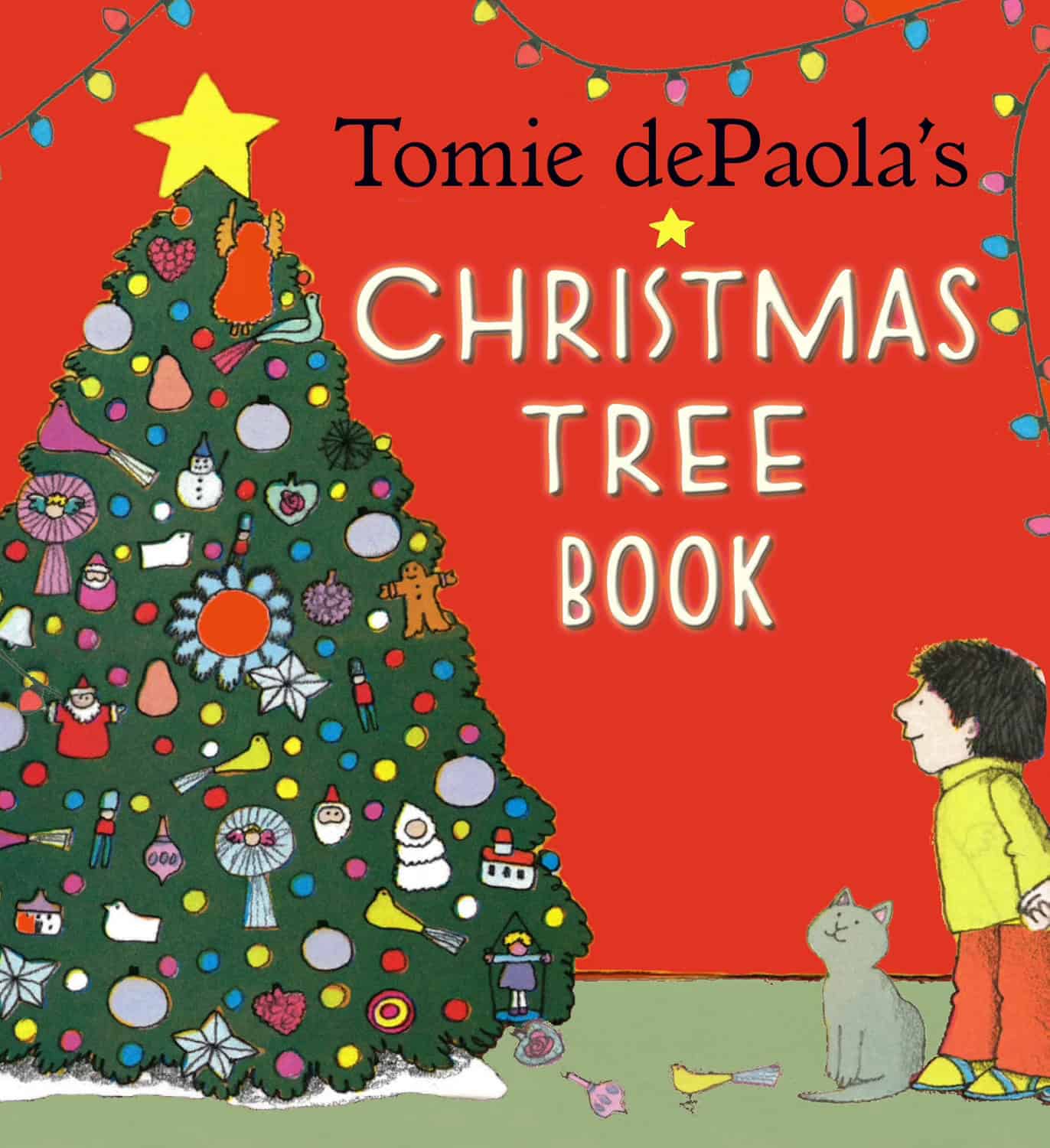
Tomie dePaola’s Christmas Tree Book
Tomie dePaola’s Christmas Tree Book is the children’s pick I would start with for kids who want to know why we put a tree in the house every December. It mixes kid-friendly information about Christmas trees, lights, ornaments, history, and legends with dePaola’s familiar illustration style, making the facts feel like part of the celebration rather than a lesson interrupting it.
I especially like this for curious elementary-age readers because the subject is so immediately recognizable. Children can look at their own tree and connect what they are learning with something already sitting in the room. It also includes a simple ornament activity, which gives the reading somewhere to go afterward.
You can get a copy of Tomie dePaola’s Christmas Tree Book on Amazon.
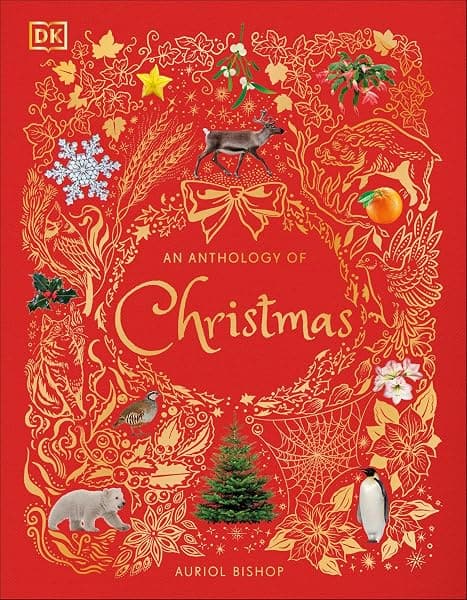
An Anthology of Christmas by Auriol Bishop
An Anthology of Christmas takes a nature-focused approach, exploring Christmas facts through winter plants, animals, seasonal customs, and other details from the natural world. I like this addition because it expands children’s understanding of Christmas beyond Santa and presents and gives them a reason to look closely at things like evergreen trees and seasonal symbols.
This would be my choice for the child who loves big illustrated fact books and wants to browse rather than necessarily read straight through. It also works beautifully as a family coffee-table book because children can choose whatever catches their attention and learn one little thing at a time.
You can get a copy of An Anthology of Christmas by Auriol Bishop on Amazon.
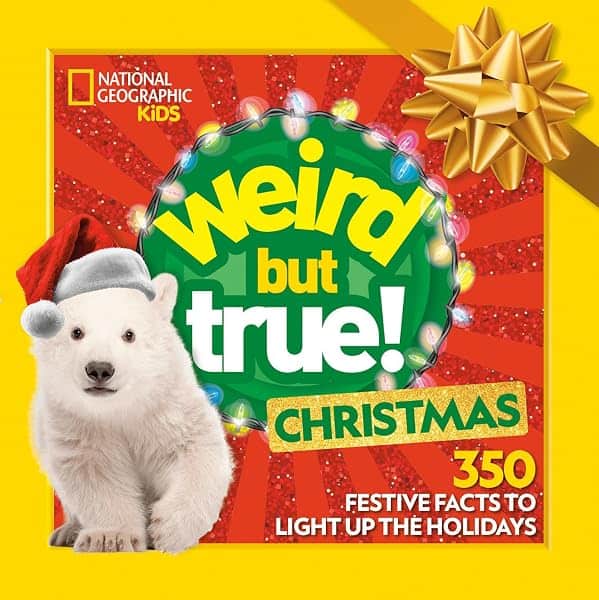
Weird But True! Christmas: Expanded Edition by National Geographic Kids
Weird But True! Christmas is the pick for children who prefer their nonfiction delivered as fascinating little facts rather than long explanations. The expanded edition contains hundreds of Christmas facts, statistics, traditions, and strange bits of holiday trivia, which makes it especially good for kids who love telling the family something nobody else at the table knew.
I would use this one for older elementary readers, trivia lovers, reluctant readers, or the kid who wants to know the weirdest possible detail about everything. It is also the kind of book that can live on the coffee table through December because nobody has to begin on page one.
For families specifically looking for the biblical Christmas story, Advent, and the Nativity, I would treat that as its own reading category rather than squeezing it awkwardly into this general nonfiction section. Those books are doing a different job, and I think they deserve space to explore the Christmas story, Christian faith, and age-appropriate Nativity reading more fully.
You can get a copy of Weird But True! Christmas: Expanded Edition by National Geographic Kids on Amazon.
Which Nonfiction Holiday Book Should You Read First?
If you mainly want to understand Christmas traditions and where they came from, I would begin with Christmas: A Biography. It gives you the broadest introduction and leaves you with plenty of rabbit holes to follow afterward. If American cultural history is your thing, The Battle for Christmas goes much deeper into how nineteenth-century social change helped shape the holiday.
For my fellow book people, I would choose The Man Who Invented Christmas or Dickens and Christmas. December is already the season when I want to talk about Dickens, so learning how his life and writing intersected with Christmas feels like very efficient seasonal reading.
If you want laughter, choose Holidays on Ice for sharper satire or The Jolliest Bunch for warmer family chaos. For something contemplative, I would go with Miracle on 10th Street or A Christmas Memory. And if you are deliberately trying to read beyond Christmas, How to Spell Chanukah, Kwanzaa, and Yule give you three completely different ways to understand the larger winter holiday season.
How I Use Nonfiction in My Holiday Reading
I rarely sit down in December and decide I am going to spend the entire month reading cultural histories from beginning to end. That is not the mood.
Instead, nonfiction tends to sit beside whatever fiction I am already reading. If I am rereading A Christmas Carol, I may pick up The Man Who Invented Christmas. If I start wondering why a tradition exists while I am decorating, that is when Christmas: A Biography becomes more interesting. And if holiday perfection is beginning to feel a little oppressive, Sedaris suddenly looks extremely inviting.
That is probably my favorite way to use this list. These books do not need to replace cozy Christmas fiction. They make the cozy fiction, and the real traditions around it, more interesting.
Frequently Asked Questions About Nonfiction Christmas Books
What are the best nonfiction books about Christmas?
My strongest starting points are Christmas: A Biography by Judith Flanders for broad Christmas history, The Battle for Christmas by Stephen Nissenbaum for American social history, and The Man Who Invented Christmas by Les Standiford for a more narrative, bookish look at Dickens and A Christmas Carol.
What nonfiction Christmas book explains holiday traditions?
Christmas: A Biography is my first choice for readers curious about the origins and development of familiar Christmas traditions. It covers a wide range of customs and helps explain how the holiday evolved over time rather than assuming everything we celebrate has always existed in its current form.
Are there funny nonfiction Christmas books?
Yes. Holidays on Ice by David Sedaris is my pick for sharper, more satirical Christmas humor, while Danny Pellegrino’s The Jolliest Bunch offers funny holiday memories with more warmth and family nostalgia.
What are good nonfiction Christmas books for children?
For children, I like Tomie dePaola’s Christmas Tree Book for tree traditions and history, An Anthology of Christmas for illustrated nature and holiday facts, and Weird But True! Christmas for children who love trivia and unusual facts.
Are there nonfiction books about holidays other than Christmas?
Yes. How to Spell Chanukah offers personal essays about Hanukkah and Jewish identity, Kwanzaa by Maulana Karenga explains the history and principles of Kwanzaa, and Susan Pesznecker’s Yule explores winter-solstice traditions and folklore.
What should I read if I love A Christmas Carol?
I would pair your reread with The Man Who Invented Christmas for the publishing story behind Dickens’s famous novella, or Dickens and Christmas for a broader look at Dickens’s relationship with Christmas culture and tradition.
Final Thoughts
What I love about holiday nonfiction is that it changes the way I look at things I thought I already knew. A Christmas tree stops being simply a Christmas tree and becomes part of a much longer cultural story. Santa becomes a strange historical collage assembled across centuries. Dickens becomes not just the author I reread every December but a working writer trying to finish a book under very real pressure. Even the idea of a “traditional Christmas” becomes more complicated once you realize how often traditions change.
That does not ruin the magic for me. It gives the magic roots.
I also think reading beyond Christmas makes the season more interesting. How to Spell Chanukah, Kwanzaa, and Yule remind me that winter contains different histories, traditions, faiths, and ways of creating meaning. I would rather build a holiday shelf that reflects some of that richness than pretend December tells only one story.
And now I like having a few nonfiction choices for younger readers here too. Children ask wonderful questions about holidays because they have not yet learned to accept “because we always do” as a complete explanation. A Christmas-tree history, an illustrated collection of facts, or a wonderfully strange trivia book gives adults an excuse to become curious alongside them.
If you have a nonfiction holiday book you return to every year, tell me about it in the comments. I especially want to know the book that taught you something about a tradition you thought you already understood, because those are usually the ones I end up pressing into someone else’s hands next.