15 Jane Austen Inspired Books Every Austen Fan Should Read
These Jane Austen inspired books include biographies, memoirs, retellings, mysteries, and modern romances for readers who want more after Austen’s six novels.

15 Books About Jane Austen and Inspired by Her World
Hi Bookish Besties, One of the things I love most about Jane Austen is that finishing her six completed novels does not actually feel like reaching the end of anything. If anything, reading Austen tends to create more questions. I want to know more about the woman behind the books, more about the family and society she observed so sharply, and more about what happens when modern writers take characters like Elizabeth Bennet, Anne Elliot, Emma Woodhouse, or the overlooked Mary Bennet and decide there is still another story worth telling.
That is why Jane Austen inspired books have become such an interesting extension of my classic-literature reading. I am not looking for books that merely borrow Darcy’s name, add a Regency dress to the cover, and assume the work is done. What keeps me interested is seeing how another writer understands what made Austen compelling in the first place: her observations about class, money, marriage, family, reputation, pride, self-knowledge, and the often enormous distance between what people say and what they actually mean.
This list brings together several different ways of reading beyond Austen. There are biographies and literary reflections for readers who want to understand Jane herself, historical novels that imagine the lives around her, books about communities formed through Austen’s fiction, mysteries populated by her characters, and contemporary retellings that move her social questions into completely different cultures and settings.

If you are wondering where to begin, I would choose Jane Austen: A Life when you want biography, Austen Years when you want to think more deeply about why Austen still matters to readers, Miss Austen for historical fiction centered on Cassandra Austen, The Other Bennet Sister when you want an overlooked Austen character given room to breathe, and Unmarriageable or Ayesha at Last when you want to see how powerfully Pride and Prejudice can travel beyond Regency England.
Why I Keep Reading Books Inspired by Jane Austen
The best Austen-inspired books do not make me want to replace Austen. They make me want to reread her, and that is usually my test. If a retelling makes me think differently about Pride and Prejudice, if a biography sends me back to Jane’s letters, or if a novel centered on Mary Bennet makes me reconsider how quickly I dismissed her in the original book, then I feel as though the new work has actually entered into conversation with Austen rather than simply borrowing her popularity.
I am also fascinated by how flexible Austen’s social structures remain. Her heroines are dealing with worlds governed by money, family expectation, reputation, gender, and marriage, but contemporary writers can relocate those tensions into modern London, Pakistan, New York, Muslim communities, neighborhood activism, professional kitchens, and plenty of other settings without the emotional architecture collapsing. That tells me something important about why we are still reading her: the carriages may have changed, but the complications have not.
Books About Jane Austen and Her Life
If you want to move beyond the novels and understand more about Jane Austen herself, I would begin here. Biography and literary memoir give us two very different ways into her life: one asks what we can know historically, while the other asks what it means to live with Austen’s novels as a reader.
Jane Austen: A Life by Claire Tomalin
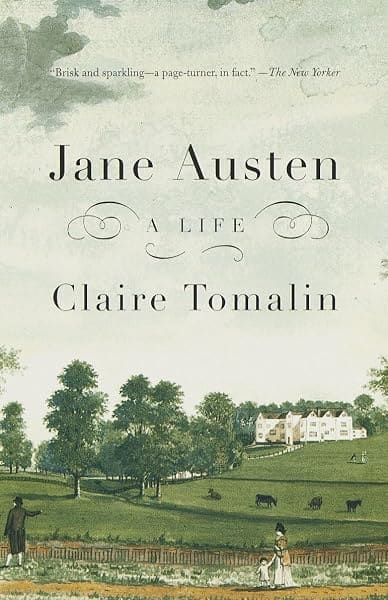
Claire Tomalin’s Jane Austen: A Life is the biography I would hand to the reader who has finished Austen’s novels and now wants to understand the woman who wrote them. Austen left us extraordinary fiction but a comparatively limited personal record, particularly because many of her letters were destroyed or altered after her death, so writing her biography involves working carefully through the evidence that remains.
What I appreciate about Tomalin’s approach is that Austen does not become a charming literary mascot living permanently beside a teapot. We see a woman embedded in family relationships, financial realities, social limitations, creative ambition, disappointment, illness, and a literary culture in which publishing as a woman was hardly straightforward. For me, understanding those constraints makes Austen’s achievement more remarkable, not less romantic.
I would start here if your questions are biographical: What was Austen’s family actually like? What did her daily life look like? How did she become a published novelist? What do we really know about her relationships? A good biography complicates the familiar portrait, and that is exactly why I find it worth reading. Grab Jane Austen: A Life here.
Austen Years: A Memoir in Five Novels by Rachel Cohen
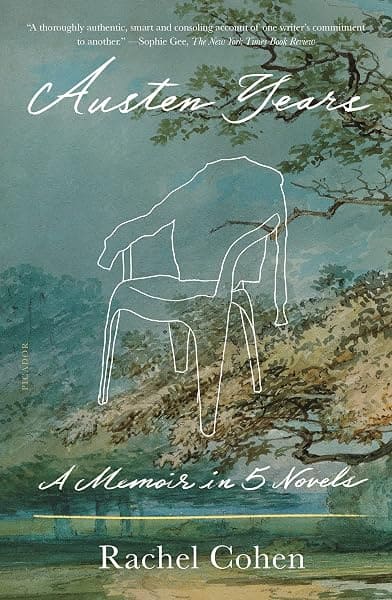
Rachel Cohen’s Austen Years does something completely different. Rather than giving us a conventional biography, Cohen writes about living with Austen’s novels during a period shaped by grief, motherhood, family change, and the slow work of understanding one’s own life.
I am drawn to books like this because they acknowledge that rereading is not a static experience. We return to the same novel as different people, and sometimes a line, character, or relationship that barely registered at twenty becomes the emotional center of the book at forty. Austen is particularly good for that kind of rereading because her novels keep revealing how much of adulthood is learning to see ourselves and other people more accurately.
This is the book I would choose if you are less interested in collecting facts about Austen and more interested in thinking about what it means to read her seriously over time. It is reflective, personal, and a wonderful reminder that classics stay alive because readers keep bringing new lives to them. Shop Austen Years here.
Miss Austen by Gill Hornby
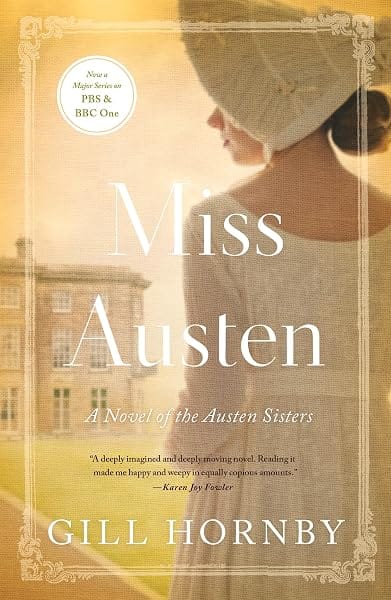
Gill Hornby’s Miss Austen moves us into historical fiction and centers Cassandra Austen, Jane’s beloved sister. The novel imagines Cassandra later in life confronting a cache of letters and considering what should be preserved, what should remain private, and what version of Jane will survive for future readers.
That premise fascinates me because so much of what we know—and do not know—about Jane Austen is connected to Cassandra. She was Jane’s closest confidante, but she also destroyed many of Jane’s letters after her death. It is very easy from two centuries away to feel frustrated by that loss, yet Miss Austen asks us to consider what protecting a sister might have looked like from Cassandra’s perspective rather than ours.
I like historical fiction most when it uses the gaps in the record thoughtfully. This novel does not simply turn Jane Austen into a character for novelty’s sake; it asks questions about memory, privacy, sisterhood, loyalty, and who gets to decide what belongs to history. Grab Miss Austen here.
Jane Austen Inspired Books About Readers and Communities
Some of my favorite Austen-inspired novels are not retellings at all. Instead, they explore what happens when Jane Austen’s books become the thing connecting a group of people who may otherwise have very little in common.
The Jane Austen Society by Natalie Jenner
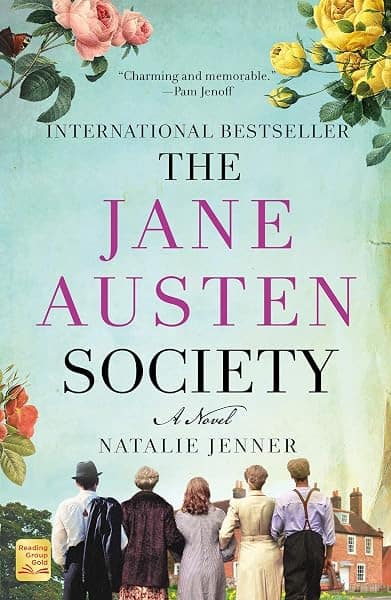
Natalie Jenner’s The Jane Austen Society takes us to Chawton after the Second World War, where a group of very different people comes together around the idea of preserving Austen’s legacy and protecting the places associated with her life.
This one appeals to me because I love books about readers almost as much as I love books themselves. The members of the society are not simply Austen fans inserted into the story so they can quote Pride and Prejudice. Their relationships with Austen’s fiction become ways of understanding grief, love, disappointment, and possibility in their own lives.
There is also something deeply satisfying about a novel built around literary preservation. Austen’s work feels inevitable to us now, as though those six novels were always destined to become classics. Books like this remind me that literary legacies survive because actual people decide they are worth protecting. Find The Jane Austen Society here.
The Jane Austen Book Club by Karen Joy Fowler
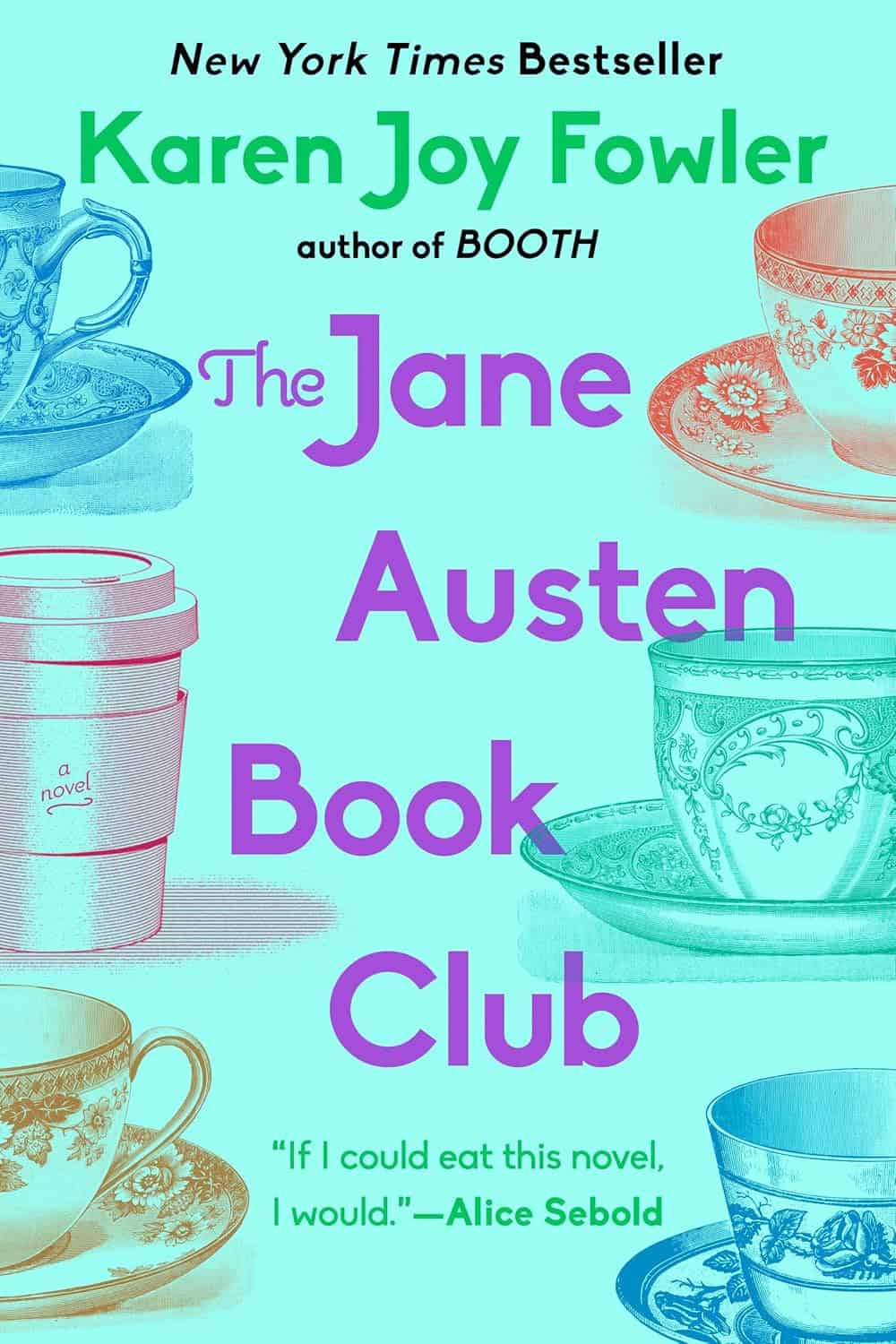
Karen Joy Fowler’s The Jane Austen Book Club brings six people together to read Austen’s six novels, and naturally their own lives begin echoing, resisting, and complicating the stories they are discussing.
I enjoy the premise because anyone who has belonged to a good book club knows we are rarely discussing only the book. Readers bring marriages, disappointments, crushes, family dynamics, opinions, blind spots, and entire histories into the room with them. Austen is particularly dangerous book-club material because she has opinions about nearly all of those things.
This is less about reproducing Austen’s plots than about showing how literature becomes a lens through which people interpret themselves. If you enjoy character-driven novels and books about the strange intimacy of discussing fiction with other people, this is one I would add to your list. Shop The Jane Austen Book Club here.
Jane in Love by Rachel Givney

Rachel Givney’s Jane in Love takes the most openly imaginative route on this list by sending Jane Austen herself forward in time and placing her inside a modern romantic story.
Time-traveling Jane Austen could easily become gimmicky, but what interests me about the idea is the contradiction at its center. Austen wrote some of the world’s most enduring love stories while remaining unmarried herself, and the novel plays with the question of what might happen if Jane were given a romantic possibility of her own.
I would choose this when I want something playful rather than biographical. This is not where I go to learn what historically happened to Jane Austen. It is where I go when I am willing to let a writer ask an impossible question and enjoy the answer. Grab Jane in Love here.
Jane Austen Retellings That Give Familiar Characters New Lives
This is probably the section I find most irresistible because secondary characters are dangerous things. Give me enough rereads and eventually I start wondering what happened to the person standing three feet to the left of the heroine.
The Other Bennet Sister by Janice Hadlow
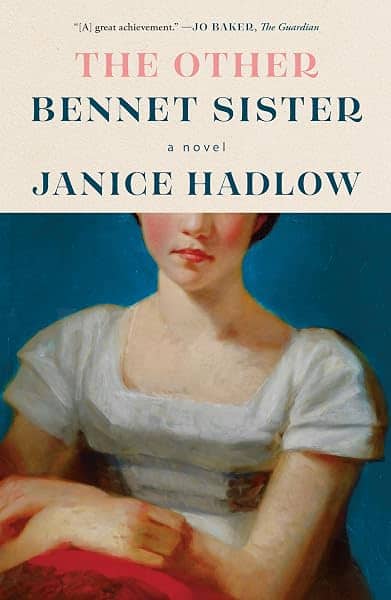
Janice Hadlow’s The Other Bennet Sister gives Mary Bennet something she rarely receives in Pride and Prejudice: patience. In Austen’s novel, Mary is painfully earnest, socially awkward, desperate to display her accomplishments, and frequently played for comedy. Hadlow asks what her life might look like if we stopped viewing her through the quicker, sharper judgments of the people around her and allowed her to become the heroine of her own story.
I love the premise because it changes the angle without requiring Austen’s original characterization to be wrong. Mary can be awkward and still deserve compassion. She can be ridiculous in one room and deeply lonely in another. That is one of the pleasures of a good retelling: moving the light slightly and discovering that the background was never empty.
If you love Pride and Prejudice but have never thought much about Mary, this is exactly the kind of book that can send you back to the original with a changed perspective. Find The Other Bennet Sister here.
The Murder of Mr. Wickham by Claudia Gray
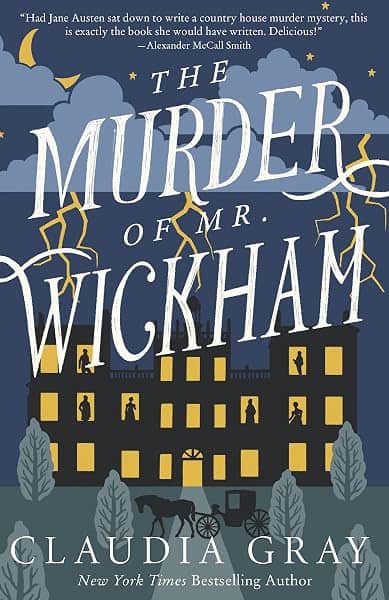
Claudia Gray’s The Murder of Mr. Wickham takes characters from across Austen’s novels, places them together at a country-house gathering, and then does something many Austen readers may consider long overdue: somebody murders George Wickham.
The fun is not simply watching a disliked character meet an unfortunate end. Gray brings together familiar couples and characters at different stages of their lives, which lets the mystery explore what might have happened after Austen closed the books on their happily-ever-afters.
I am particularly entertained by genre crossovers like this because Austen’s world already contains so much social observation. A house full of people managing secrets, reputations, marriages, resentments, and polite conversation is not actually that far from a classic mystery setup. Add a body and suddenly everyone who was merely being judged at dinner becomes a suspect. That is why this would be my pick for an Austen reader who also loves traditional mysteries and wants something more plot-driven than a straight retelling. Grab The Murder of Mr. Wickham here.
Modern Jane Austen Retellings
The modern retellings are where I think Austen’s staying power becomes especially obvious. A strong adaptation can change country, religion, profession, race, class structures, and social expectations while still retaining the emotional argument of the original novel.
Recipe for Persuasion by Sonali Dev
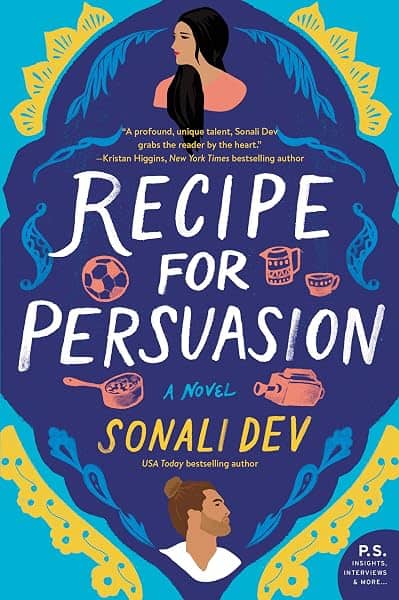
Sonali Dev’s Recipe for Persuasion draws on Persuasion, which already gives it an advantage with me because I have a particular affection for Austen’s most mature love story.
The novel reworks the emotional architecture of Anne Elliot and Captain Wentworth through chef Ashna Raje and Rico Silva, former lovers brought back into one another’s orbit through a televised cooking competition. That setup is much louder than Austen’s quiet drawing rooms, but the central question remains recognizable: what happens when two people who loved each other once are forced to confront what separated them?
What I like about Persuasion retellings is that second-chance romance has to carry real history. These characters are not misreading one conversation at a ball. Time has passed, choices were made, and hurt accumulated. A modern adaptation works when it understands that the ache of Persuasion comes from knowing exactly what was lost. Shop Recipe for Persuasion here.
Ladies of the House by Lauren Edmondson

Lauren Edmondson’s Ladies of the House takes inspiration from Sense and Sensibility and moves its questions about family reputation, money, and sisterhood into a contemporary political scandal.
The Dashwood sisters’ original crisis begins when their father’s death destabilizes their financial and social position. A modern adaptation therefore needs an equivalent disruption, and I think public scandal is an interesting way to recreate that feeling of suddenly discovering that the family name and security you took for granted are far less stable than you believed.
I am always interested in retellings that understand Austen’s novels are not simply romantic templates. Sense and Sensibility is also about sisters responding differently to crisis, economic vulnerability, social judgment, and emotional restraint. That gives a contemporary writer much more to work with than simply deciding which character gets to be Edward Ferrars. Find Ladies of the House here.
Pride and Protest by Nikki Payne
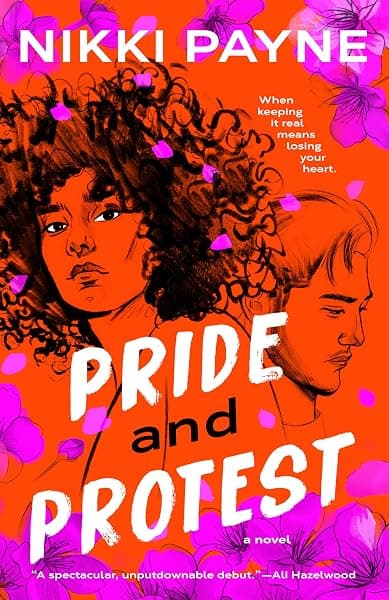
Nikki Payne’s Pride and Protest moves the conflict of Pride and Prejudice into contemporary Washington, D.C., where Liza B. is fighting development she believes threatens her neighborhood and finds herself facing Donovan, the corporate figure on the other side.
This is the sort of adaptation I enjoy because it recognizes that Elizabeth and Darcy’s attraction is inseparable from conflict over power, judgment, status, and the assumptions they make about one another. A modern version needs its own credible reason for two intelligent, opinionated people to clash before attraction becomes impossible to ignore.
The neighborhood activism and corporate-development conflict give that tension contemporary stakes. It is not Regency England pretending to be modern. It is a modern social world using Austen’s framework to ask its own questions about privilege, community, first impressions, and who has the right to decide what progress looks like. Grab Pride and Protest here.
The Wrong Mr. Darcy by Evelyn Lozada with Holly Lorincz

The Wrong Mr. Darcy uses Pride and Prejudice as a jumping-off point rather than recreating Austen scene for scene. The modern story moves into the world of professional basketball and media, bringing together characters whose first impressions and assumptions about one another create the familiar Austen-style friction.
I think that looser approach can be a lot of fun because not every Austen-inspired novel needs a one-to-one equivalent for Netherfield, Lady Catherine, and the Meryton assembly. Sometimes what survives is the emotional pattern: two people decide far too quickly that they understand one another, then spend the rest of the story discovering how incomplete those judgments were. That idea remains one of Austen’s most portable observations about human behavior. Shop The Wrong Mr. Darcy here.
Unmarriageable by Soniah Kamal
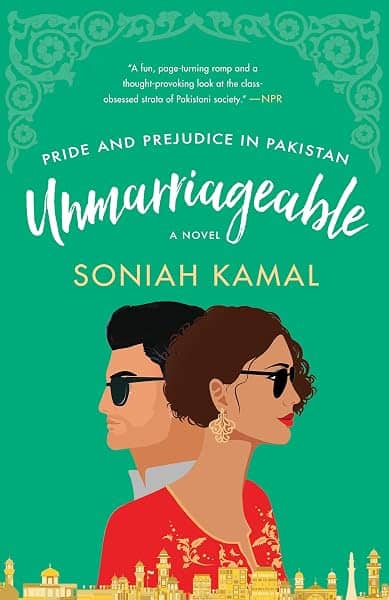
Soniah Kamal’s Unmarriageable relocates Pride and Prejudice to Pakistan, following Alys Binat and a family whose financial circumstances, marriage prospects, social anxieties, and wonderfully recognizable personalities make Austen’s structure feel immediately at home in a completely different cultural context.
This is one of the things I find most exciting about global Austen retellings. They demonstrate that the original novel’s concern with marriage is not simply about romance. Marriage is tied to family, status, money, security, reputation, expectation, and the sometimes exhausting interest other people take in deciding what a woman should do with her life.
Alys’s resistance to those pressures gives the adaptation its own identity while letting readers enjoy the familiar pleasure of recognizing where the story is heading. I would recommend this especially to someone who already knows Pride and Prejudice well enough to enjoy seeing how individual scenes and characters transform in a new cultural setting. Find Unmarriageable here.
Ayesha at Last by Uzma Jalaluddin
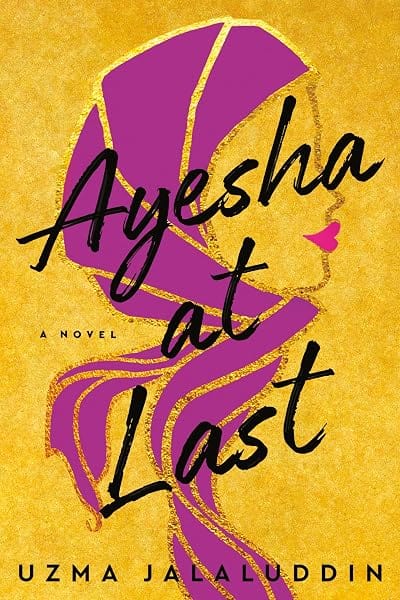
Uzma Jalaluddin’s Ayesha at Last also draws on Pride and Prejudice, but it builds its romantic conflict within a contemporary Muslim community. Ayesha is independent, outspoken, and navigating family expectations alongside her own ambitions when she encounters Khalid, whose outward conservatism makes him extremely easy for her to judge. Naturally, judging one another accurately at first meeting would make for a very short Austen retelling.
What I like here is that the adaptation uses differences in personality, faith practice, family pressure, and community expectation to create its own version of the Elizabeth-Darcy misunderstanding. The book understands that Austen’s structure works because attraction alone is not enough. Both characters need their understanding of the other person—and themselves—to change, and that process of self-correction is one of the most Austen-like qualities a retelling can have. Grab Ayesha at Last here.
Emma of 83rd Street by Audrey Bellezza and Emily Harding

Emma of 83rd Street moves Emma to Manhattan’s Upper East Side and reimagines Austen’s confident matchmaker inside a world of privilege, friendship, romantic meddling, and modern New York adulthood.
Emma Woodhouse is one of my favorite Austen heroines to see adapted because any writer taking her on has to preserve the thing that makes her both lovable and maddening: Emma is intelligent enough to be extremely confident in conclusions that are sometimes spectacularly wrong. That is the fun.
A modern Emma should be capable, socially secure, genuinely affectionate toward the people she loves, and still completely willing to interfere in situations she does not understand nearly as well as she thinks she does. This adaptation keeps that romantic-comedy energy while relocating the social world around her. I would choose it when I want something lighter, contemporary, and openly romantic while still enjoying the familiar pleasure of watching an Emma figure discover that perhaps she is not the world’s greatest authority on everybody else’s feelings. Shop Emma of 83rd Street here.
Which Jane Austen Inspired Book Should You Read First?
If you want to know more about Jane Austen herself, I would begin with Claire Tomalin’s Jane Austen: A Life. Then move to Austen Years if you want a more personal meditation on living with Austen’s fiction as a reader.
For historical fiction about Austen’s world, start with Miss Austen. Cassandra is such an important figure in Jane’s surviving story that seeing the relationship imagined from her perspective gives the novel more emotional weight than a simple fictional encounter with a famous author.
If you primarily want Austen characters given another chance, choose The Other Bennet Sister. Mary Bennet is exactly the sort of secondary character I find fascinating once a writer gives her enough room to become something other than the family joke.
For mystery readers, I would go straight to The Murder of Mr. Wickham. And if what you really want is a modern retelling, Unmarriageable, Ayesha at Last, Pride and Protest, and Emma of 83rd Street show just how many different directions Austen’s novels can travel.
What Makes a Jane Austen Retelling Work for Me
I do not need a retelling to reproduce every plot point, and in fact, I usually prefer when it does not. What I want is recognition at a deeper level. If the book is inspired by Pride and Prejudice, I want it to understand that the novel is not simply about a rich man and a clever woman who initially dislike each other. It is about judgment, status, family embarrassment, economic pressure, self-knowledge, and two people being forced to revise the stories they have told themselves.
A Persuasion retelling needs history and regret. An Emma retelling needs the danger of being clever, privileged, affectionate, and completely wrong. Sense and Sensibility needs sisters whose different ways of handling emotion reveal something about both of them.
That is why cultural reinvention can sometimes feel more Austen-like to me than a book meticulously reproducing Regency details. Austen was writing about people, and the strongest adaptations remember that.
Why Pride and Prejudice Gets So Many Retellings
It is not difficult to understand why Pride and Prejudice dominates the Austen-retelling shelf. Elizabeth and Darcy give writers an extraordinarily flexible romantic structure: immediate misjudgment, social difference, attraction mixed with irritation, wounded pride, new information, self-reflection, and eventually the deeply satisfying realization that both people were wrong in important ways.
But I also think the supporting world matters. Mrs. Bennet’s obsession with marriage is funny until we remember the financial reality facing her daughters. Lydia’s behavior is comic until it becomes potentially catastrophic for the whole family. Charlotte Lucas makes a marriage Elizabeth dislikes because Charlotte understands her own economic choices very differently.
There is a lot there for modern writers to reinterpret, and that is why books such as Unmarriageable, Ayesha at Last, and Pride and Protest can feel completely different from one another while still returning to the same Austen novel.
Frequently Asked Questions About Jane Austen Inspired Books
What are the best books about Jane Austen?
For biography, I would begin with Claire Tomalin’s Jane Austen: A Life. For something more personal and literary, Rachel Cohen’s Austen Years explores Austen through the experience of rereading her novels during a significant period of the author’s own life. Gill Hornby’s Miss Austen is historical fiction rather than biography, but it is a fascinating choice if you are interested in Cassandra Austen and Jane’s family legacy.
What should I read after finishing all of Jane Austen’s novels?
I would decide what you miss most. If you want more Jane herself, read a biography. If you want Austen’s characters, try The Other Bennet Sister or The Murder of Mr. Wickham. If you want to see how her themes work in modern settings, move into Unmarriageable, Ayesha at Last, Pride and Protest, or Emma of 83rd Street.
What are some good Pride and Prejudice retellings?
Unmarriageable by Soniah Kamal, Ayesha at Last by Uzma Jalaluddin, Pride and Protest by Nikki Payne, and The Wrong Mr. Darcy by Evelyn Lozada with Holly Lorincz all draw on Pride and Prejudice in different ways. I especially like comparing adaptations from different cultures because it shows how portable Austen’s themes of marriage, status, family, and judgment remain.
Are there Jane Austen inspired mysteries?
Yes. The Murder of Mr. Wickham by Claudia Gray brings characters from Austen’s novels into a country-house murder mystery after Mr. Wickham is killed. It is a particularly fun choice for readers who already know Austen’s characters and also enjoy traditional whodunits.
What Jane Austen inspired book focuses on Mary Bennet?
The Other Bennet Sister by Janice Hadlow centers Mary Bennet, the often-overlooked middle Bennet sister from Pride and Prejudice. The novel gives her much more interiority and space to grow than Austen’s original story could, which makes it especially interesting for readers who enjoy secondary-character reinterpretations.
What is a good modern Persuasion retelling?
Recipe for Persuasion by Sonali Dev reimagines elements of Austen’s Persuasion through former lovers Ashna Raje and Rico Silva. The story uses a contemporary culinary and television setting while retaining the central appeal of second chances, old hurt, and unresolved love.
What is a good modern Emma retelling?
Emma of 83rd Street by Audrey Bellezza and Emily Harding relocates Emma to Manhattan and gives Austen’s matchmaking heroine a contemporary Upper East Side world. It is a good choice when you want something romantic, witty, and recognizably inspired by Emma Woodhouse without simply recreating Regency England.
Do I need to read Jane Austen before reading these books?
Not necessarily. Many of these novels work perfectly well on their own, especially the modern romances. However, knowing Austen’s original novels adds another layer of pleasure because you can recognize which characters, themes, conflicts, and expectations the new writer is preserving or changing.
Final Thoughts
The reason I keep reading books about and inspired by Jane Austen is that they show me how much life still exists around six novels written more than two centuries ago.
A biography can make me rethink the woman behind the books. A novel about Cassandra can make me think about everything we lost when Jane’s letters disappeared. A story about Mary Bennet can make a secondary character feel newly visible. A Pakistani or Muslim retelling of Pride and Prejudice can reveal how easily Austen’s questions about marriage, family, status, and judgment move into another social world.
And then I go back to Austen. That is the pattern I enjoy most: I read the adaptation, notice what another writer has emphasized, and suddenly I want to reread the original scene. Was Mary always that lonely? Was Darcy’s first proposal really that terrible? Did Anne Elliot say less than I remembered? Is Emma more self-aware in the beginning than I gave her credit for? Austen rewards that kind of circling back.
So I do not think of these books as substitutes for the originals. I think of them as conversations happening around them. Some are scholarly, some are romantic, and some are wonderfully ridiculous. One kills Mr. Wickham, which I suspect more than one Austen reader has considered.
Together, they remind me that a classic is not simply a book that survived. It is a book people keep arguing with, rewriting, questioning, loving, and seeing themselves inside.
Tell me which Jane Austen inspired book has worked best for you. I am especially curious whether you prefer biographies and historical fiction that bring you closer to Jane herself, or modern retellings that take Austen’s characters and themes somewhere completely new.