Slowing Down: 21 Practical Ways to Slow Down (Without Opting Out of Your Life)
Slowing down doesn’t mean giving up your goals. Try these 21 realistic ways to create more calm, presence, and breathing room in everyday life.

How I Learned to Slow Down Without Putting My Life on Hold
Hi Besties, For a long time, I thought being busy meant I was doing life correctly. If my calendar was full, I was productive. If I answered messages immediately, I was responsible. If I squeezed one more thing into the day, I was making good use of my time. Meanwhile, without noticing it, I was constantly rushing. I’d finish one thing and I was already thinking about the next thing. I’d sit down to read and reach for my phone three pages later. Even downtime and self care moments somehow became something I wanted to optimize. Eventually, I realized I didn’t need to abandon my responsibilities or change my lifestyle and disappear to a cottage in the countryside. What I needed to learn was the art of slowing down inside the life I already had, and that distinction changed everything for me. Slowing down, at least in my life, isn’t about doing nothing. It’s about creating enough space that I can actually notice what I’m doing while I’m doing it, and these are the habits that have helped me get there.
What Slowing Down Actually Means to Me
When I talk about slowing down, I’m not talking about becoming less ambitious. I still have work I care about and quite frankly, I do have ambitions. I also have a family, responsibilities, books I want to read, projects I want to finish, and things I’m excited to build. The difference is that I’m trying to stop treating every hour like a race. For me, slowing down looks like fewer automatic yeses, fewer unnecessary notifications, more breathing room between things, and more moments where I’m actually present instead of mentally living three hours ahead. It’s less about the speed of my life and more about the pace I choose inside it.
The Moment I Realized I Needed to Slow Down
My biggest clue wasn’t one dramatic event, I think it was all the tiny things. I’d open my phone without knowing why. I’d eat while answering emails. I’d move from one task to another without even registering that I had finished the first one. I’d sit down at night completely exhausted and still feel like I hadn’t done enough. That was the part that finally got me. I didn’t want to spend my days constantly arriving at the next moment only to rush through that one too. So I started experimenting, and not with huge lifestyle changes, but with tiny brakes, and those worked much better for me.

21 Practical Ways I’m Slowing Down in Everyday Life
I Don’t Start the Day With My Phone
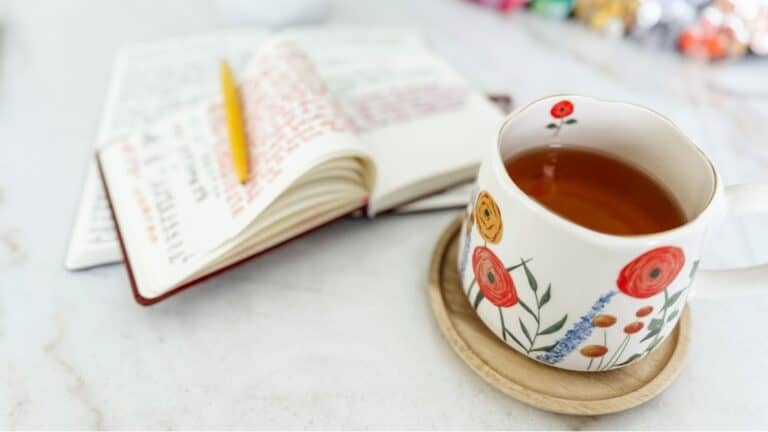
This is still one of the hardest habits for me but it is one of the most effective. If the first thing I see in the morning is email, social media, headlines, and notifications, I immediately feel like the world has already started without me. So I try to give myself a few minutes first. I open the blinds, make tea or coffee, sit down, and just breathe. Even ten phone-free minutes changes how the morning feels.
I Choose One Thing That Really Matters That Day
I used to begin every morning with a giant list. Now I ask: If only one thing gets done today, what would make me feel good about the day? Of course, there can still be other tasks, but choosing one priority stops everything from pretending to be equally urgent.
I Build Small Pauses Into My Mornings
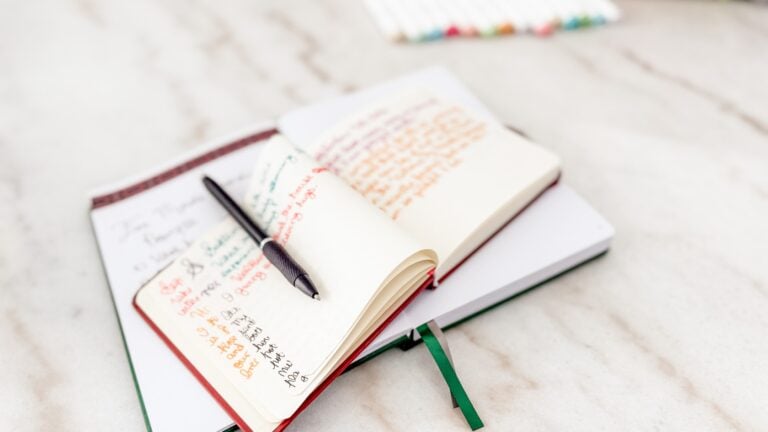
I don’t have an elaborate two-hour morning routine because first of all I don’t have time, and two, that would probably stress me out. Instead, I like little anchors: a few pages in a notebook, reading while I drink something warm, stretching for a few minutes, or simply sitting quietly before everyone needs something. Small rituals are much easier for me to keep.
I Leave Space Between Appointments When I Can
Back-to-back everything makes me feel like I’m constantly late even when I’m technically on time. Five or ten minutes between meetings (I always try to schedule thirty minutes) gives me enough room to stand up, get water, use the bathroom, or simply stop thinking about the previous conversation before starting the next one. I know it sounds insignificant, but it doesn’t feel insignificant.
I Single-Task More Often
I spent years believing multitasking made me efficient. But when I look back, mostly, it made me scattered. Now, if I’m writing, I try to write. If I’m reading, I try to read. If I’m coloring, I only color. If I’m eating lunch, I occasionally commit the radical act of simply eating lunch. I’m still very much a work in progress here, but my brain feels noticeably quieter when everything isn’t happening simultaneously.
I Take Real Breaks Instead of Phone Breaks
This was a revelation, and I discovered scrolling is not always restful for me. Sometimes I pick up my phone tired and put it down twenty minutes later somehow more tired. A better break for me is standing outside, making tea, walking to another room, stretching, or staring out the window like somebody in a Victorian novel. The goal is to just do anything that actually interrupts the input.
I Eat Away From My Screen
This sounds basic because it is basic. But I had gotten so used to eating while working that a screen-free lunch started to feel almost luxurious. When I can, I step away. Sometimes I sit outside, sometimes I read, and sometimes I do absolutely nothing except eat. It helps separate one part of my day from another.
I Make My Phone Slightly More Annoying to Reach
I know myself, and if my phone is beside me, I will pick it up. So sometimes the best solution isn’t self-control, it’s distance. I leave it in another room when I read. I keep distracting apps away from my home screen. I turn off notifications I genuinely do not need. Tiny friction works surprisingly well.
I Have a Nightly “Library Mode”
This is one of my favorite rituals. At some point in the evening, I turn down the lights, put my phone away, and read. That’s library mode. I have no elaborate rules, I have just a lamp, a book, and quiet. Even thirty minutes makes the evening feel longer.
I Do a Ten-Minute Reset Instead of a Massive Clean
I used to wait until the house annoyed me enough to clean everything. Now I prefer ten-minute resets. I put music on, and I take care of one thing. So sometimes it’s dishes being handled, blankets folded, and things returned roughly where they belong. Then I stop. The goal is not perfection and cleaning everything top to bottom, that’s for another day. The goal is making tomorrow slightly easier.
I Cook Something Slowly Sometimes
Now let me say upfront, not every meal needs to be slow. Because realistically dinner is often something that comes together fast and it’s whatever gets everybody fed. But once in a while, I like making something that requires me to stay in the kitchen. My default is usually baking, but on the odd occasion I want to take my time with a soup or stew. Maybe it’s something that requires a lot of chopping involved. Cooking becomes much more enjoyable when I’m not treating it as another obstacle between me and the evening.
I Plan Less Into My Week
This might be the most important change I’ve made. I used to see open space on the calendar and think: Excellent, something can fit there. Now I’m trying to see open space as the thing I’m protecting. Not every hour needs an assignment, and blank space is allowed.
I Walk Without Listening to Anything
I love audiobooks and podcasts, so this was difficult at first. But occasionally I leave the headphones behind. The first few minutes and first few walks without something in my ear did feel weird. But then I started embracing the quiet and then my thoughts start sorting themselves out. Some of my best ideas show up on the walks where I’m not actively feeding my brain anything.
I Use My Breath as a Tiny Reset
I don’t turn breathing into another assignment. I just notice when I’m rushing and deliberately take a few slower breaths. Sometimes before or after a hard conversation, before replying to something, or before I walk into the next thing. It helps creates a tiny gap between the moment and my reaction. Sometimes that’s enough.
I Choose Movement That Doesn’t Feel Like Punishment
I’m much more consistent when movement feels good instead of corrective. So walking, stretching, yoga, dancing in the kitchen, just whatever gets me back into my body instead of living entirely inside my head.
I Protect Phone-Free Time With People I Love
This one matters to me more as I get older. I don’t want every family memory to include everyone half-looking at a screen. So I try to create little stretches where the phones disappear. We don’t do phones at the dinner table or when eating out, when we take walks, during our check in conversations, or one on one time. Quite frankly, it’s nothing revolutionary, it’s just actual attention.
I Put Small Joys on the Calendar Too
Not just appointments, not just deadlines, but fun good things too. So when someone is coming to visit, a bookstore visit, coffee somewhere I like, a library wander, an afternoon coloring, reading, and or a day to buy flowers. If I wait until there is magically “time” for those things, they often don’t happen.
I Stop Saying Yes Immediately
This was a big one for me. My default answer used to be yes, and then I’d check whether I actually had the capacity. Now I try to say: “Let me check my calendar.” That one sentence gives me space to make a real decision instead of a reflexive one.
I Let Some Things Take Longer
There’s a strange pressure to make everything go faster. Read faster, answer faster, work faster, cook faster, and decide faster. I’m trying to resist that when there’s no actual reason for speed. Some things are nicer when they take time.
I Make Evenings Feel Different From Days
I recently started to clear my desk at the end of the work day, and clean properly at the end of the week. But on a daily basis I put my work away, shower, change clothes, make tea, then open a book (journal, color, read). I like having signals that tell my brain: we are not in daytime mode anymore, and work is over. That transition makes me feel like I actually had an evening instead of one extremely long workday.
Want To Save This Post?
I End the Day by Noticing What Was Good
This doesn’t need to become an elaborate gratitude practice. Sometimes I write three things down, and sometimes I just think about them. What felt good today? What made me laugh? What did I enjoy? Slowing down becomes much easier when I start paying attention to what I don’t want to rush past.
What a Slower Day Actually Looks Like for Me
A slow day isn’t necessarily an empty day and that’s something I wish I’d understood earlier. I still work, answer emails, run errands, and handle responsibilities. The difference is in the transitions. I’ll make tea before opening my laptop instead of opening it in bed. I’ll give myself a few minutes between tasks. I’ll walk without headphones. I’ll read at night instead of accidentally spending an hour scrolling. It’s not dramatically different from my regular life, it just feels more like I was actually there for it.
And that’s the point.
My One-Week Slowing Down Reset
If you want to experiment without reinventing your entire life, this is how I’d do it.
Monday: Put Your Phone Away Earlier
Choose a time at night when your phone goes somewhere else. Then read ten pages, color, journal, or just enjoy not being reachable for a little while.
Tuesday: Take a Quiet Walk
During your walk, for ten or twenty minutes, don’t play a podcast or make a phone call. Notice what your brain does when nobody is talking into it.
Wednesday: Eat One Meal Without a Screen
That’s it, have one meal where the meal is the activity.
Thursday: Remove One Thing
Cancel, postpone, delegate, or simply decide something doesn’t need doing. Then leave the empty space empty.
Friday: Make the Evening Feel Like an Evening
Turn on some music and cook or bake something you enjoy, and consider lowering the lights. Do something that clearly marks the end of the week.
Saturday: Spend Time Somewhere That Doesn’t Rush You
Slow down at the bookstore, the library, a park, a coffee shop, or just slowing down on your own couch with a book. Choose somewhere you naturally linger.
Sunday: Plan Less
Look at the coming week and choose three priorities. Then resist the temptation to fill every remaining gap.
What Slowing Down Is Not
This matters because I think slow living can sometimes look incredibly unrealistic online. Slowing down isn’t:
- having a perfectly minimalist home.
- making every meal from scratch.
- never using technology.
- working fewer hours than everyone else.
- moving to the countryside.
- turning your life into one long candlelit morning routine.
- And it definitely isn’t another standard you can fail at.
For me, slowing down is simply learning to recognize when unnecessary urgency has taken over. Then I ask: Does this actually need to happen this fast? When I started pausing and I asking, I realized a surprising amount of the time, the answer is no.
Why I Think Slowing Down Has Made Me More Present
The biggest thing I’ve noticed isn’t that I suddenly have endless time. I don’t. It’s that time feels less slippery. When I rush through an entire day, I barely remember it. When I stop for ten minutes to read with my tea, walk without my phone, or sit outside while the sun goes down, those moments register. They become part of the day instead of disappearing inside it. That’s what I wanted. Not necessarily more hours because we all have the same twenty-four, but I just more awareness of the hours I already have.
Slowing Down When Your Life Is Genuinely Busy
This is where I think a lot of slow-living advice goes wrong. Sometimes life is actually busy, mine for sure is and we are all in different seasons of life. You may have young kids, caregiving responsibilities, shift work, multiple jobs, and deadlines you genuinely cannot move. Slowing down doesn’t need to mean pretending those realities don’t exist. I have been in all of those busy seasons at a different point, and I opt to shrink the practice.
- Five quiet minutes instead of an hour.
- One walk instead of a whole free afternoon.
- Putting my phone away during dinner.
- Reading three pages before bed.
A slower life can be built from very small moments.
What I Stopped Doing When I Started Slowing Down
- I stopped treating every notification like a summons.
- I stopped assuming every invitation deserved a yes.
- I stopped trying to turn rest into productivity.
- I’m trying very hard to stop judging a day entirely by how much I crossed off a list.
That last one is probably going to take me a while, but I’m getting better.
Final Thoughts
I used to think slowing down required a completely different life. Now I think it mostly requires paying attention to the one I already have. So a quieter morning, a phone left in another room, a walk with no soundtrack, dinner at the table, five extra minutes between things, or a book under a warm lamp at the end of the day. None of those choices are dramatic, but together, they’ve changed the texture of my days. And that’s really what slowing down has become for me: not doing less for the sake of doing less, but creating enough space to actually experience the things I’ve decided are worth doing.
If your days have been feeling like one long sprint lately, pick just one idea from this list and try it this week. And tell me in the comments: where do you feel the most rushed right now: your mornings, your workday, or your evenings? I’d love to know what slowing down would look like in your real life.