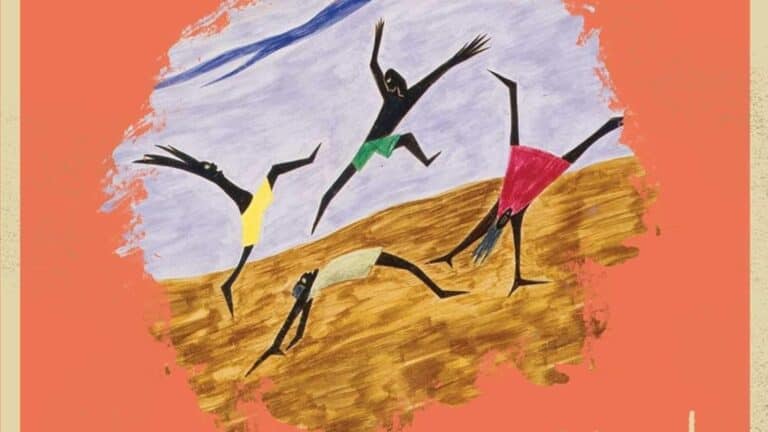
Winter Reading Guide 2026: Best Historical Fiction
Build your winter reading guide 2026 historical fiction books TBR with 12 new immersive novels full of rich history, powerful journeys, and cozy winter vibes.

12 New Historical Fiction Books for Your Winter 2026 TBR
When the weather turns cold, I always reach for sweeping, immersive historical fiction—the kind of books that pull you into another time period so completely you look up and realize your tea is cold and the afternoon has vanished. If you’re searching for my Winter Reading Guide 2026 historical fiction books and you want fresh releases, this list is your cozy home base.
These 12 historical fiction books travel from medieval Brugge to fascist Italy, Nazi-occupied Europe, postwar Germany, Jim Crow–era Florida, and beyond—always anchored by characters whose inner lives feel as vivid as the worlds around them.
Quick Picks If You’re Just Skimming
If you only have a minute and need a few instant adds for your Winter Reading Guide 2026:

- For lush, spiritual medieval vibes: Canticle by Janet Rich Edwards
- For art, love, and fascist Italy: Watching Over Her by Jean-Baptiste Andrea
- For postwar immigration + marriage-of-convenience: The Jilted Countess by Loretta Ellsworth
- For multigenerational Black Southern history: The Seven Daughters of Dupree by Nikesha Elise Williams
- For medical history + women in STEM: All in Her Hands by Audrey Blake
Now let’s curl up and dive deeper.
Why These Historical Fiction Books Belong in Your Winter 2026 Reading Guide
When I’m choosing historical fiction for my Winter Reading Guide 2026, I’m looking for more than just beautifully researched backdrops (though you’ll get plenty of those). I want:
- A strong sense of place you can feel—church walls, city streets, ship decks, underground tunnels
- Main characters who are wrestling with faith, justice, love, or identity in ways that feel surprisingly modern
- Stories that balance big historical forces with very intimate, human stakes
These novels do all of that: they’re immersive enough for a snow day binge, but thoughtful enough to linger with you long after you’ve turned the last page.
Best New Historical Fiction Books for Winter 2026

Canticle by Janet Rich Edwards
In Canticle, we follow Aleys, a woolmaker’s daughter in medieval Brugge whose hunger for the divine pulls her from her family’s world into beguine communities, Franciscan politics, and ultimately the radical choice to live as an enclosed anchorite attached to a church wall. Her journey is both intensely spiritual and painfully grounded as she’s used by powerful churchmen, cast out by skeptical women, and forced to question whether her visions are gifts or burdens. I chose this book because it beautifully explores how one young woman’s faith collides with institutional corruption and patriarchal control, and it feels very relevant for readers today who wrestle with spirituality and systems. It’s perfect for fans of Matrix, Hild, or quiet, contemplative historicals with strong religious themes, and it left me feeling both shaken and oddly comforted, like I’d just spent time with someone brave enough to keep seeking truth even when the church itself fails her.
You can get a copy on Amazon.

Watching Over Her by Jean-Baptiste Andrea (trans. Frank Wynne)
Watching Over Her is a sweeping, Prix Goncourt–winning tale told by Mimo, a dying sculptor who looks back on his life and on the mysterious pietà he created—a Virgin Mary so arresting the monks keep her hidden for fear of “impure thoughts.” As a little person sent from his French village to apprentice with his uncle in Italy, Mimo falls in love with art, battles envy and exploitation, and finds a fierce, complicated bond with Viola, the orange-grower’s daughter whose politics and courage shape him through wars, betrayals, and fascist propaganda. I selected this book because it intertwines art, love, and 20th-century Italian history in a way that feels both epic and intimate, and Mimo’s voice is unforgettable. This is for readers who love A Little Life–level emotional depth, All the Light We Cannot See–style World War II stakes, and morally knotty character arcs; it left me with that delicious, hollow-chested ache you get after finishing a truly great novel.
You can get a copy on Amazon

The Jilted Countess by Loretta Ellsworth
Inspired by a true story, The Jilted Countess follows Roza Mészáros, a Hungarian countess and former ballerina who arrives in post–World War II St. Paul expecting to marry her American soldier fiancé—only to discover he’s already married someone else. With her visa ticking down, she bravely places an ad for a husband and chooses Finn, a small-town railroad engineer, then has to figure out how to build a life in Red Wing while feeling like an alien among the town’s Norwegians, Lutherans, and potlucks. I picked this one because it captures the loneliness of immigration, the awkwardness of marriage-of-convenience, and the question of whether you can fall in love after your big fairy-tale dream is shattered. It’s perfect for readers who enjoy character-driven postwar stories like The Guernsey Literary and Potato Peel Pie Society or The Kitchen Front, and it made me root so hard for Roza’s happiness that I kept reading long past my bedtime.
You can get a copy on Amazon.

A Beast Slinks Toward Beijing by Alice Evelyn Yang
In A Beast Slinks Toward Beijing, Qianze, a Chinese American woman in Manhattan, reluctantly takes in her estranged, alcoholic father, Weihong, whose dementia unspools his past during the Cultural Revolution. Through his fragmented stories of an abusive childhood, a terrifying prophecy from the Woman in the Alley, and his zeal as a Red Guard committing atrocities to protect his family, Qianze is forced to confront the “beast” that’s haunted his life—and how that inheritance shapes her. I chose this novel because it’s doing something really powerful: pairing a brutal historical narrative with a present-day father–daughter relationship that feels painfully real, full of resentment, duty, and unexpected tenderness. It’s a strong pick for readers who appreciated The Three-Body Problem’s Cultural Revolution sections, Pachinko’s generational weight, or literary fiction that leans just a bit into the uncanny, and it left me feeling gutted, thoughtful, and deeply aware of how history lives inside families.
You can get a copy on Amazon.

Skylark by Paula McLain
Skylark braids together two survival stories set nearly 300 years apart: Alouette, a dyer’s daughter in 17th-century France whose ambition lands her in the notorious Salpêtrière madhouse, and Kristof, a Dutch psychiatrist in 1939 Paris whose life and work are upended by Nazi invasion. Both characters navigate the city’s underground tunnels—literal and metaphorical—as they confront cruelty, complicity, and the quiet bravery required to help others in impossible times. I selected this book for the guide because it captures that winter-perfect mix of urgency and hope, and McLain’s focus on the people around Alouette and Kristof (from ledger-keeping Marguerite to Sasha, a Jewish woman determined to survive) makes the world feel rich and full. It’s ideal for readers of The Paris Library, The Alice Network, or dual-timeline historicals that emphasize resistance and community, and it left me feeling tense, moved, and strangely buoyed by the recurring note of human kindness.
You can get a copy on Amazon.
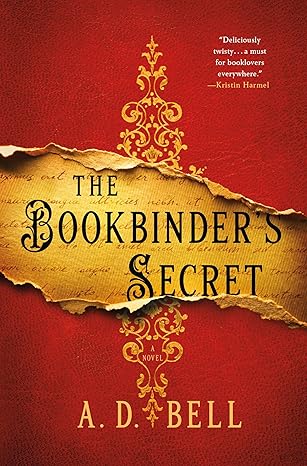
The Bookbinder’s Secret by A.D. Bell
In The Bookbinder’s Secret, Lilian Delaney is a bookbinder’s apprentice in 1901 Oxford, helping her widowed father run their struggling bookshop when a mysterious, partially burned novel lands in her hands. Hidden in its binding is a letter fragment—“I wish you had not killed him”—that sends her down a dangerous rabbit hole involving a secret love affair, a possible murder, and someone in the present who’s still desperate to keep that secret buried. I chose this one because it feels tailor-made for bookish homebodies: dusty libraries, old bindings, clues tucked into margins, and a heroine whose obsession with the puzzle puts her family and livelihood at risk. It’s perfect for readers who love The Thirteenth Tale, The Binding, or gothic-leaning literary mysteries, and it left me feeling deliciously absorbed in the puzzle while also very emotionally invested in Lilian’s fear that her curiosity might cost her everything.
You can get a copy on Amazon.
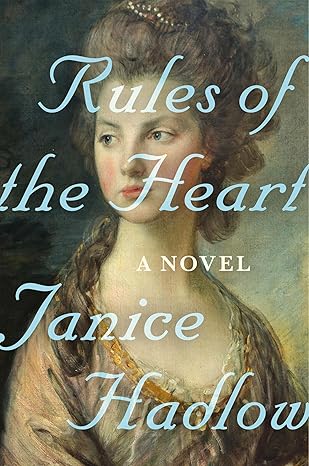
Rules of the Heart by Janice Hadlow
Rules of the Heart fictionalizes the 17-year love affair between Lady Harriet Bessborough and Lord Granville Leveson Gower, beginning when Harriet—33, exhausted by her boorish husband, and already a mother of four—falls headlong for 21-year-old, perpetually broke Granville in late-18th-century England. Told from older Harriet’s perspective as she rereads his letters and revisits their passion, the novel becomes a devastating meditation on desire, middle age, and what it means to stake your entire life on a man who can never fully belong to you. I chose this for the historical fiction guide because it’s not just about romance—it’s about reputation, motherhood, and the quiet costs of being a woman whose heart refuses to play by society’s rules. It’s a beautiful fit for readers who loved The Other Bennet Sister, The Dutch House, or deeply emotional character studies, and it absolutely wrecked me in the best, tissues-required way.
You can get a copy on Amazon.

The Seven Daughters of Dupree by Nikesha Elise Williams
In The Seven Daughters of Dupree, we move across generations of Black women from the 1860s to the 2020s, following the Dupree family from Land’s End, Alabama, to Chicago and beyond. Modern-day teen Tati starts digging into her family history—and her absent father—only to uncover harrowing, hidden stories of her ancestors Ruby, Jubilee, Emma, and others, all connected by both the trauma of slavery/Jim Crow and the fierce, complicated bond between Dupree women. I selected this saga for the guide because it’s the kind of book that makes history feel alive through hairstyles, whispered secrets, and the ways mothers teach daughters to survive. It’s perfect for fans of The Love Songs of W.E.B. Du Bois, Homegoing, and multi-POV epics that don’t flinch from violence but always center Black women’s resilience, and it left me heartbroken and hopeful, with a deep appreciation for the idea that knowing your lineage can be both painful and liberating.
You can get a copy on Amazon.
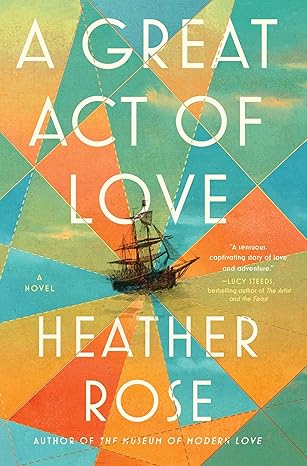
A Great Act of Love by Heather Rose
A Great Act of Love follows Caroline Colbert, an 18th-century Englishwoman who’s been trained as both an apothecary (by her father) and a thief (by her glamorous aunt), as she reinvents herself after her family’s downfall. On a long sea journey to Van Diemen’s Land (present-day Tasmania), she rescues and adopts Quill, a cabin boy, then slowly builds a new life as a governess while secretly plotting to revive an abandoned vineyard and make champagne at the edge of the world. I chose this one because it scratches that itch for big, adventurous historical fiction that still feels grounded in one woman’s determination to carve out safety, work, and chosen family. It’s a great pick for readers who enjoy The Exiles, The Signature of All Things, or shipboard-to-frontier narratives, and it left me feeling swept away and inspired by Caroline’s stubborn belief that a different life is possible, even after everything she’s lost.
You can get a copy on Amazon.

Inharmonious by Tammye Huf
Set in 1940s Jim Crow Florida and on the battlefields of World War II, Inharmonious follows three Black friends—Benny, Lee, and Roscoe—who, despite knowing how little America values them, enlist after Pearl Harbor hoping to prove their courage. When light-skinned Benny is mistakenly assigned to a white unit and silently “passes,” he experiences opportunity and dignity that his friends are systematically denied, even as they serve just as bravely. I selected this novel because it lays bare the emotional and moral toll of passing, the betrayal of Black veterans by the country they defended, and the fractures that racism drives into friendships and families. It’s perfect for readers of Invisible Man, The Warmth of Other Suns, or character-centered war stories that interrogate patriotism and identity, and it left me angry, heartbroken, and very moved by Benny’s impossible choice between belonging and truth.
You can get a copy on Amazon.

Keeper of Lost Children by Sadeqa Johnson
Keeper of Lost Children weaves three timelines together: Ethel, a Black officer’s wife in 1950s occupied Germany who discovers an orphanage full of abandoned mixed-race children; Ozzie, a Philadelphian who enlists in 1948 and falls in love with a German woman named Jelka; and Sophia, a 1965 Maryland teen whose new boarding school reveals a secret that sends her searching for her true origins. As their stories intersect, the novel exposes the forgotten history of “brown babies” born to German women and Black GIs and asks what it means to belong when the world sees you as unwanted. I chose this for the guide because Johnson excels at combining meticulous historical research with propulsive, emotional storytelling, and I could feel the weight of every choice these characters made. It’s perfect for readers who loved The House of Eve, The Girls in the Stilt House, or multigenerational stories about race, motherhood, and identity, and it left me full of sorrow, hope, and a renewed appreciation for the power of one woman’s vision to change many lives.
You can get a copy on Amazon.
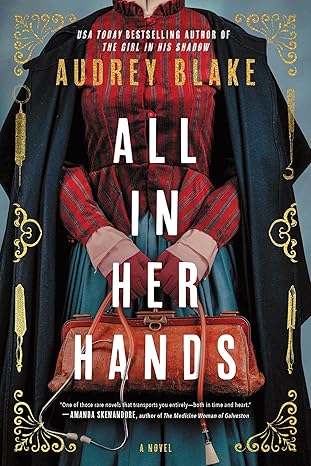
All in Her Hands by Audrey Blake
In All in Her Hands, we meet Dr. Nora Gibson, the only female surgeon in London in 1849, who has fought her way into a male-dominated medical world only to discover that keeping her position might be even harder than earning it. As she advocates for midwives and pushes for their inclusion in formal medicine, Nora faces vicious professional backlash just as cholera begins sweeping through the city, hitting the poorest residents the hardest and forcing her onto the frontlines of a deadly epidemic. I selected this one because it’s catnip for anyone who loves medical history, women-in-STEM narratives, and stories where a woman’s “too muchness” (too smart, too ambitious, too outspoken) is exactly what her community needs to survive. It’s perfect for fans of The Physicians of London books, The Lost Apothecary, or historical dramas about public health and social justice, and it left me breathless, inspired, and a little in awe of what women like Nora had to endure just to do the work they were clearly born to do.
You can get a copy on Amazon.
How to Build a Cozy Winter 2026 TBR with Historical Fiction
If you’re putting together your own Winter Reading Guide 2026, here’s one way to use this list:
Want To Save This Post?
- Choose one spiritual/medieval or art-centered book (Canticle or Watching Over Her)
- Pick one postwar or migration story (The Jilted Countess, A Great Act of Love, or Keeper of Lost Children)
- Add one multigenerational or family saga (The Seven Daughters of Dupree or So Old, So Young–adjacent vibes in Inharmonious and Keeper of Lost Children)
- Round it out with one bookish/medical/“professional woman” angle (The Bookbinder’s Secret or All in Her Hands)
Then mix these with your mystery, romance, nonfiction, and family/friendship picks from the rest of the Winter Reading Guide 2026, and you’ve built yourself a rich, cozy, and emotionally satisfying winter stack.
Tell Me Your Winter Historical Fiction TBR
Now it’s your turn: Which of these 2026 Winter Reading Guide historical fiction books are you planning to cozy up with this winter—or add to your future TBR?
Let me know your favorites in the comments and tell me your go-to historical era (medieval, Regency, World War II, 20th-century, dual timeline, etc.). If you curate a winter historical fiction stack, I’d be delighted to hear what you picked.