
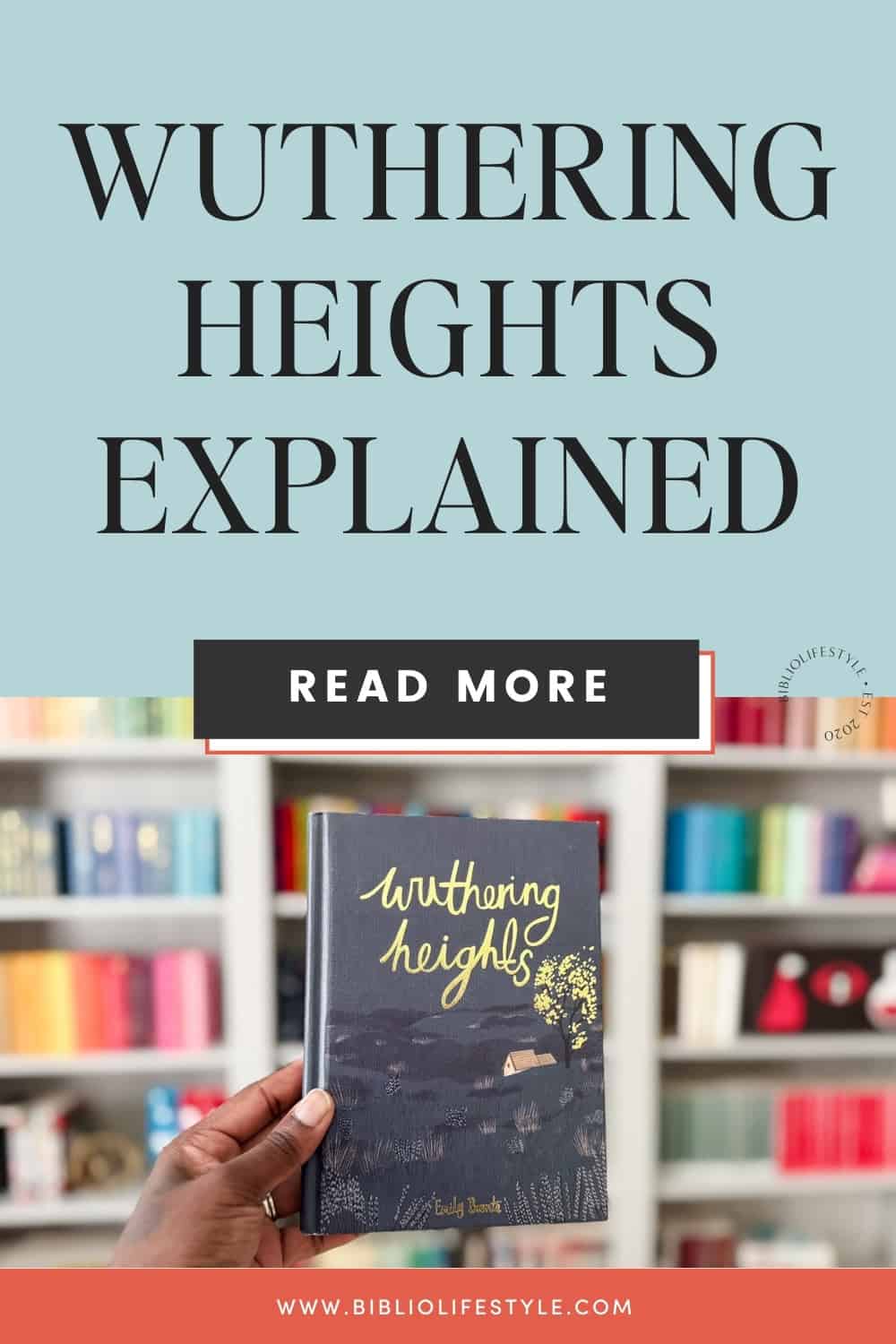
Wuthering Heights Explained: Plot, Characters & Meaning
A clear Wuthering Heights plot summary, character guide, and deep dive into meaning—plus why I believe the novel is really about Heathcliff vs. Hindley.

Wuthering Heights Plot Summary, Characters & Meaning Explained
Hi Bookish Besties, If you’ve ever searched “Wuthering Heights plot summary” and immediately felt overwhelmed, confused, or slightly betrayed by how chaotic it sounds, I completely understand. This is one of those classic novels that people either fiercely defend or openly admit they hated. There is almost no middle ground. And I think that’s because many of us were told this was a grand, tragic love story… when it’s really something much darker and far more complicated.
So let me say this clearly before we dive in: Wuthering Heights by Emily Brontë is not a soft romance. It is not meant to make you swoon. And in my opinion, it is not even primarily about Catherine and Heathcliff’s love. I have always believed this novel is about the men. About Heathcliff versus Hindley. About power, property, humiliation, and revenge. The romance is loud – but the power struggle is the engine. And once I started rereading it that way, everything made more sense. So whether you’ve never read it, are currently reading it, or finished it feeling emotionally disoriented, let’s unpack it together.
What Is Wuthering Heights About?
At its surface, Wuthering Heights by Emily Brontë (published in 1847) is a Gothic novel set on the Yorkshire moors. It centers on two neighboring estates: Wuthering Heights and Thrushcross Grange. But beneath the windswept setting and dramatic declarations, this is a story about control – who has it, who loses it, and who spends a lifetime trying to reclaim it.

The novel spans two generations and is told through layered narration, primarily by Nelly Dean, the longtime housekeeper, recounting events to an outsider, Mr. Lockwood. That framing alone tells you something: this story is being remembered, interpreted, filtered. It’s not clean or linear. It’s messy, like the people inside it.
A Clear Wuthering Heights Plot Summary
Let’s walk through the core of it in a way that doesn’t feel like a family tree headache. Mr. Earnshaw brings home an orphaned boy named Heathcliff and raises him alongside his children, Catherine and Hindley. From the beginning, Hindley resents Heathcliff deeply. He feels displaced. Threatened. Replaced. And this is where I think the real story begins.
When Mr. Earnshaw dies, Hindley inherits Wuthering Heights and immediately degrades Heathcliff – stripping him of education, status, and dignity. Heathcliff goes from quasi-adopted son to servant. The humiliation is intentional. Meanwhile, Catherine and Heathcliff form an intense bond. They run wild on the moors. She famously declares, “I am Heathcliff,” not as a romantic statement, but as a declaration of shared identity. They are mirrors of each other – raw, impulsive, untamed.
But when Catherine is exposed to the refined world of Thrushcross Grange, something shifts. She begins to see what social elevation looks like. Security. Comfort. Status. And she chooses to marry Edgar Linton. Not because she stops loving Heathcliff, but because she believes marrying him would degrade her. That moment fractures everything.
Heathcliff disappears. When he returns years later, he is wealthy, controlled, and fueled by something far colder than heartbreak. He doesn’t come back for love. He comes back for reckoning. And this is where I stand firmly in my interpretation: The novel becomes a battle between Heathcliff and Hindley – over property, over legacy, over dominance. The romance becomes collateral damage. Heathcliff manipulates marriages, seizes control of estates, and extends his revenge into the next generation. Children become pawns. Inheritance becomes strategy. Emotional wounds turn into financial conquest. This is not a love story spiraling out of control. This is a power struggle that consumes everyone in its radius.
The Wuthering Heights Characters (And Why They’re So Difficult)
Heathcliff
Heathcliff is one of the most polarizing characters in literature. He is abused and degraded – and then he becomes abusive and degrading. I don’t see him as a romantic hero. I see him as someone who internalized humiliation and decided to weaponize it. He unsettles me more than he moves me. And I think that’s intentional.
Hindley Earnshaw
Hindley is often overshadowed in discussions about the novel, but I genuinely believe he is structurally central. His jealousy, cruelty, and insecurity ignite the chain reaction. Without Hindley’s treatment of Heathcliff, there is no lifelong revenge plot. The central conflict, to me, has always been Heathcliff versus Hindley. Two men fighting over identity, legitimacy, and ownership. Catherine is emotionally central, yes. But the war is between the men.
Catherine Earnshaw
Catherine frustrates readers because she wants incompatible things. She wants Heathcliff’s wild intensity and Edgar’s social elevation. She refuses to shrink herself to fit either world fully. I don’t read her as simply selfish. I read her as someone trapped between instinct and expectation. And in that fracture, she destroys herself.
Edgar Linton
Edgar is gentle, stable, and refined. He represents comfort and structure. But in a novel this volatile, stability is almost powerless against obsession. He is not weak – he is simply unequipped for emotional warfare.
Is Wuthering Heights a Love Story?
This is the question that keeps this book trending every few years. My honest answer? It’s a story about love when it becomes possession. When identity becomes obsession. When humiliation becomes vengeance. It’s about what happens when pain isn’t processed – it’s preserved. If you read it expecting romance, you’ll probably hate it. If you read it expecting psychological and social warfare disguised as romance, you’ll see its brilliance.
Why It Still Divides Readers
This novel refuses to comfort us. There is no clear moral center. No clean redemption arc. No tidy emotional resolution. Everyone is flawed. Everyone makes destructive choices. And the second generation only barely escapes the wreckage. That lack of emotional safety is what makes readers either call it genius or unbearable. And honestly? Both reactions make sense.
Want To Save This Post?
Final Thoughts
For me, Wuthering Heights has never been about doomed soulmates on the moors. It’s about two men locked in a power struggle that ripples outward and poisons everything around them. It’s about class resentment. Property. Identity. Emotional inheritance. It’s brutal. It’s uncomfortable. And it’s still deeply relevant.
So I want to know: When you read it, did you see romance first – or revenge? Did Heathcliff feel tragic to you? Or terrifying? And did you ever get the sense that the real war was never about Catherine at all? Let’s talk in the comments. This is one of those books that only gets better when we argue about it a little.




Hi,, Victoria,
What a novel approach, and how well you express yourself!
I’m interested to know your literary background. Where and what did you study?
I’m now on my third read-through of the book, and I find myself wanting to know more of the real-life antecedents of the characters, and of the relationship of the Angria works to this particular book.
Time to think about supper. I suppose you and yours are enjoying a gourmet feast.
More soon,
Carol