Hercule Poirot Books in Order: All 33 Novels + Where to Start
Every Hercule Poirot book in order, from The Mysterious Affair at Styles to Curtain, plus the five best Poirot books to start with and Sophie Hannah’s new mysteries.
Hercule Poirot Books in Order: Christie’s Beloved Detective from Start to Finish
Hi Bookish Besties! Agatha Christie‘s meticulous Belgian detective, Hercule Poirot, is arguably her most famous creation. With his “little grey cells,” his impeccable mustache, and a need for order so intense that a crooked ornament on a mantelpiece can bother him more than a locked door, Poirot became the gold standard for the fictional detective. A century after he first stepped onto the page, he still is. He has been played by everyone from David Suchet to Kenneth Branagh, he has solved murders on trains, boats, airplanes, archaeological digs and country estates, and somehow he never stops being a little bit ridiculous and completely brilliant at the same time.
I first met Poirot in Murder on the Orient Express, and I was hooked by the way Christie balanced wit, atmosphere, and a mind-bending puzzle. Since then, I’ve gone back to the beginning with The Mysterious Affair at Styles and worked my way forward, and it has been such a joy to watch Poirot’s world grow across novels, short stories, and finally his poignant last case. If you’ve been reading along with our Miss Marple Reading Challenge, Poirot is the natural next step, because he’s everything Miss Marple isn’t. She’s quiet, he’s theatrical. She understands people because she’s watched an English village for decades. He understands them because he’s studied them like a scientist. Reading them side by side is one of the great pleasures of Christie.
Here’s what to know before you start:

- Number of Poirot novels: 33
- Short stories: more than 50, collected in several volumes
- First book: The Mysterious Affair at Styles (1920)
- Final case: Curtain: Poirot’s Last Case (written in the early 1940s, published 1975)
- Recurring characters: Captain Hastings, Inspector Japp, Miss Lemon, Ariadne Oliver and George, Poirot’s valet
- Best for: readers who love fair-play puzzles, glamorous settings, and a detective with an ego as large as his intellect
If you want the bigger picture, I also have a guide to every Agatha Christie book in order, and a beginner’s guide to Agatha Christie if you’re brand new to her.
Where Should You Start with Poirot?
Before we get to the full list, let’s talk about where to begin, because this is the question I get most. You do not have to start with book one. The Mysterious Affair at Styles is a fun debut, and it’s fascinating to see Poirot introduced as a refugee living in an English village during the First World War, but Christie hadn’t fully found his voice yet. Hastings narrates, and Hastings is lovable and a little dense, which is the point. If you’re dipping a toe in, I’d start with one of these five instead. Each one stands completely on its own, and each one shows you a different side of what Christie could do with this character.
1. Murder on the Orient Express (1934)
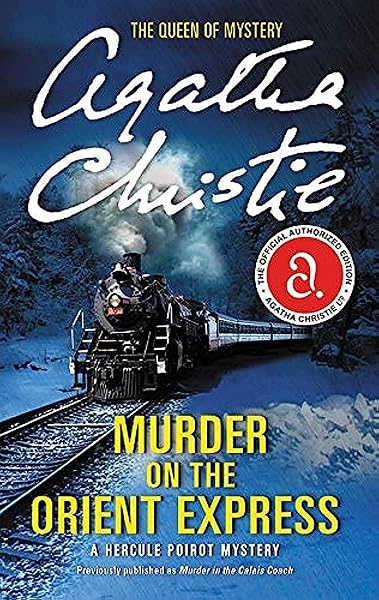
This is the quintessential Poirot, and it’s the one I’d hand to almost anyone. A snowdrift stops the famous train somewhere in Yugoslavia, a wealthy American passenger is found stabbed in his compartment, and every single person in the carriage has an alibi that seems to hold. What makes it work isn’t just the closed-circle setup, though that’s delicious. It’s the way Christie lets Poirot interview each passenger one at a time, so the book reads almost like a series of small character studies, and the solution reframes every one of them. Even if you think you know the ending from the films, the book is worth reading for how carefully Christie plants it. Grab a copy of Murder on the Orient Express here, and if you want to go deeper, my Murder on the Orient Express guide walks through the characters and themes.
2. The Murder of Roger Ackroyd (1926)
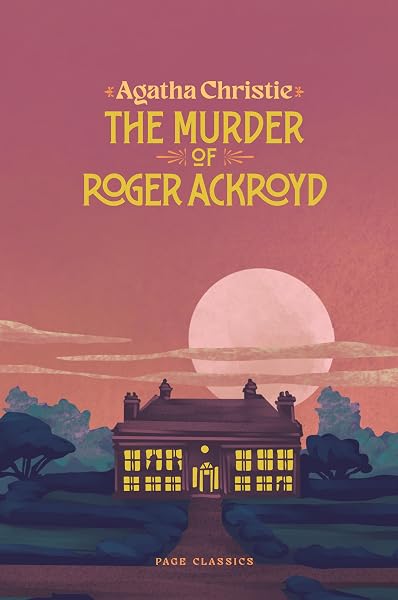
This is the one that changed what a mystery was allowed to do. A widow dies in a quiet English village, then the man she was going to marry is murdered in his study, and Poirot, who has retired to the village to grow vegetable marrows, is pulled back in. That’s all I’ll say, because Roger Ackroyd is the single Christie book most important to read before anyone spoils it for you. When it was published, some critics accused Christie of cheating. A century later, it’s still on lists of the greatest mysteries ever written, and I think the reason is that it isn’t a trick at all. Every clue is right there. Christie simply trusts you to read carelessly. You can find The Murder of Roger Ackroyd here.
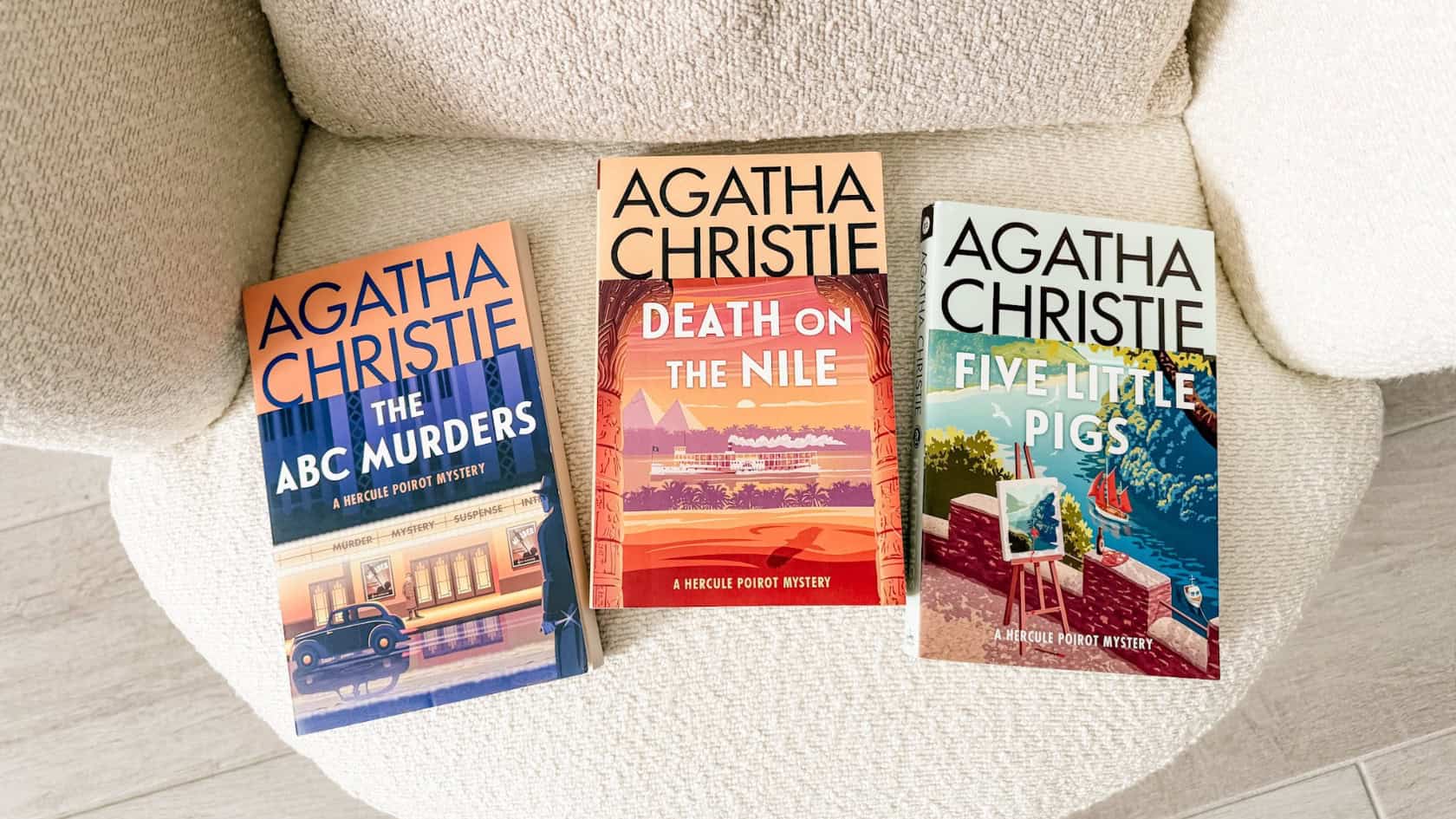
3. Death on the Nile (1937)
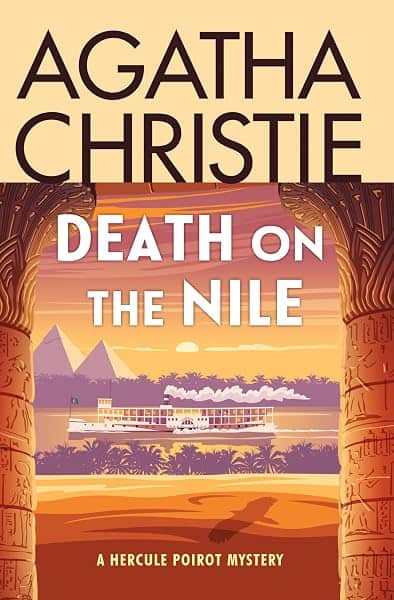
If Orient Express is Christie’s perfect puzzle, Death on the Nile is her most glamorous. A young heiress, her new husband, and the jilted best friend who follows them across Egypt all end up on the same paddle steamer, along with a boat full of passengers who each have a reason to be nervous. The first third of the book is pure atmosphere and tension before anyone dies, and I love that Christie takes her time. It’s lush, romantic, and sad in a way that sneaks up on you. This is also a great example of how Poirot works emotionally: he sees the tragedy coming before anyone else does, and he tries to stop it. Shop Death on the Nile here.
4. The A.B.C. Murders (1936)
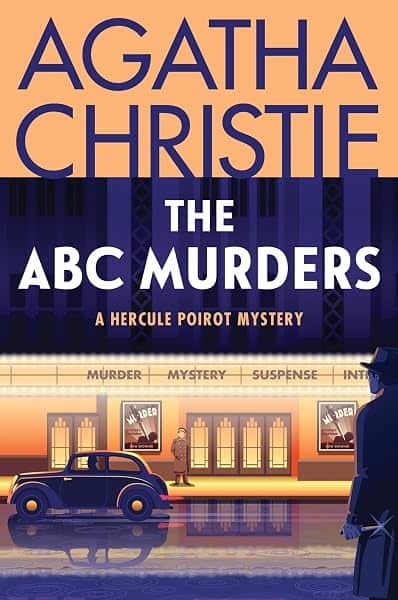
This one feels surprisingly modern. Poirot receives a taunting letter signed “A.B.C.” announcing a murder in Andover, and then a woman named Alice Ascher is killed there with an ABC railway guide left beside her body. More letters follow, more towns, more victims in alphabetical order. It’s a cat-and-mouse story with something close to a serial killer at its center, decades before that became a genre of its own, and Hastings is back to narrate. If you like thrillers and you’ve always assumed Christie was too cozy for you, start here. Grab The A.B.C. Murders here.
5. Five Little Pigs (1942)
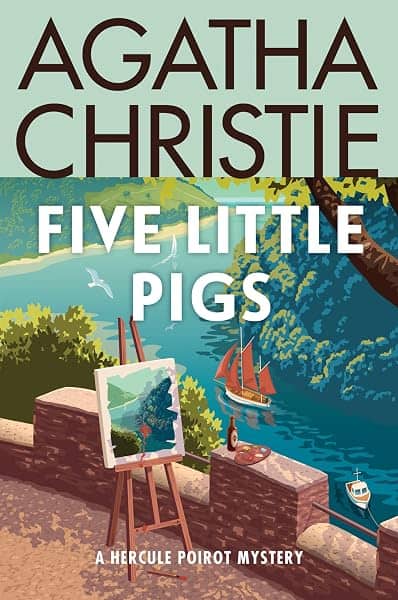
This is my quiet recommendation for readers who already love literary fiction. Sixteen years after a painter was poisoned, his wife has died in prison for the crime, and their grown daughter asks Poirot to prove her mother was innocent. There’s no fresh body and no new evidence, only five people who were there that day and their five versions of what happened. Poirot interviews each of them and then asks them to write it all down. It’s a mystery about memory, art, and love, and it’s the one that shows how good Christie really was as a novelist, not just as a puzzle-maker. Shop Five Little Pigs here.
And one rule: save Curtain for last. It was written to close Poirot’s story, and it lands best once you’ve spent real time with him.
How Many Hercule Poirot Books Are There?
Christie wrote 33 Poirot novels and more than 50 short stories between 1920 and 1975. The years below are the original UK publication dates. A few books were published under different titles in the US, which I’ve noted so you don’t accidentally buy the same mystery twice. I’ve also included the short story collections in their place in the timeline, because some of Christie’s best Poirot moments are in the short fiction, and reading them in order lets you watch his relationships with Hastings, Japp and Miss Lemon develop.
Hercule Poirot Books in Order
The 1920s: Poirot Arrives
These early books are Poirot at his most theatrical, with Captain Hastings as his loyal, slightly baffled Watson. Christie was still figuring out what kind of writer she was, and you can feel her experimenting, from a country-house poisoning to an international spy plot she later admitted she didn’t love.
- The Mysterious Affair at Styles (1920): Christie’s first novel. A wealthy widow is poisoned at an Essex country house, and a Belgian refugee staying nearby offers to help.
- The Murder on the Links (1923): Poirot and Hastings travel to France after a millionaire sends a desperate letter, and arrive to find him already dead.
- Poirot Investigates (1924): Poirot’s first short story collection, full of jewel thefts, missing heirs and a kidnapped prime minister.
- The Murder of Roger Ackroyd (1926): the masterpiece. Read it unspoiled.
- The Big Four (1927): Poirot against an international criminal organization. More of a spy adventure than a mystery, and the weakest of the bunch.
- The Mystery of the Blue Train (1928): an heiress is murdered aboard a luxury train to the Riviera. A fun warm-up for Orient Express.
The 1930s: Poirot’s Golden Decade
This is the decade where Christie was untouchable. Almost every book on this list is worth reading, and many of the most famous Poirot stories, the ones that have been adapted again and again, come from these ten years. If you only read one decade, read this one.
- Peril at End House (1932): a young woman on the Cornish coast survives three near-fatal accidents, and Poirot decides the fourth won’t be an accident.
- Lord Edgware Dies (1933; US title Thirteen at Dinner): a glamorous actress wants a divorce, and then her husband turns up dead.
- Murder on the Orient Express (1934; US title Murder in the Calais Coach): the snowbound train, and the perfect place to start.
- Three Act Tragedy (1935; US title Murder in Three Acts): a clergyman dies after a cocktail at a dinner party, and a retired actor won’t let it go.
- Death in the Clouds (1935): a murder on a passenger plane, with Poirot himself sitting a few seats away.
- The A.B.C. Murders (1936): alphabetical murders and taunting letters.
- Murder in Mesopotamia (1936): a death on an archaeological dig, inspired by Christie’s own time on excavations in Iraq.
- Cards on the Table (1936): four detectives and four suspects at a bridge party, and the first appearance of crime novelist Ariadne Oliver.
- Murder in the Mews (1937): four novellas, including the excellent Triangle at Rhodes.
- Dumb Witness (1937): an elderly woman writes to Poirot about a fall on the stairs, and by the time he reads the letter she’s dead. Her terrier, Bob, steals the show.
- Death on the Nile (1937): the glamorous Egypt mystery.
- Appointment with Death (1938): a domineering mother dies on a family trip to Petra.
- Hercule Poirot’s Christmas (1938): a tyrannical patriarch gathers his family for the holidays and is murdered in a locked room.
The 1940s: Poirot in Wartime and After
The war years made Christie’s books darker and more emotionally complicated. These are the novels I’d point to if someone told me Christie couldn’t write real feeling. Several of them are about love, guilt and the long shadow of the past, and Hastings is mostly gone, so Poirot’s voice comes through more directly.
- Sad Cypress (1940): a young woman stands trial for poisoning her rival, and Poirot is the only one who thinks she might be innocent.
- One, Two, Buckle My Shoe (1940; US title The Patriotic Murders): Poirot’s dentist is found shot, and the nursery rhyme becomes a map of the case.
- Evil Under the Sun (1941): a beautiful, disruptive woman is strangled at a seaside resort hotel.
- Five Little Pigs (1942; US title Murder in Retrospect): the cold case, and one of Christie’s best novels.
- The Hollow (1946): a country-house weekend, a gunshot by the swimming pool, and a group of people too clever for their own good.
- The Labours of Hercules (1947): twelve short stories in which Poirot takes on modern versions of the labours of his mythological namesake before retiring. A fantastic collection.
- Taken at the Flood (1948): a postwar story about a family that loses its expected inheritance to a young widow.
The 1950s: Poirot’s Later Career
By the 1950s, Christie was writing about a changing England, with boarding houses, hostels and girls’ schools replacing some of the grand estates. Ariadne Oliver becomes a frequent companion, and honestly, she’s the reason to read several of these. She’s widely understood to be a comic self-portrait of Christie herself, complaining about her own fictional detective.
- Mrs McGinty’s Dead (1952): Poirot tries to save a man already sentenced to hang for murdering his landlady.
- After the Funeral (1953): a family gathers after a funeral, and the dead man’s sister says, “But he was murdered, wasn’t he?” She’s killed the next day.
- Hickory Dickory Dock (1955): a series of petty thefts at a student hostel turns out to be something much worse.
- Dead Man’s Folly (1956): a murder-hunt game at a summer fete becomes a real murder. Ariadne Oliver wrote the game.
- Cat Among the Pigeons (1959): murder at an exclusive girls’ school, tangled up with a Middle Eastern revolution.
The 1960s and 1970s: Poirot’s Closing Cases
Christie’s late books are uneven, and I want to be honest about that. They’re often more about memory and atmosphere than tight plotting. But there’s something tender about watching an aging Poirot try to understand a world that has changed around him, and Curtain gives him an ending worthy of everything that came before.
- The Adventure of the Christmas Pudding (1960): a short story collection with a wonderfully cozy title story set at a country-house Christmas.
- The Clocks (1963): a typist arrives at a house to find a dead man surrounded by clocks. Poirot solves it largely from his armchair.
- Third Girl (1966): a young woman tells Poirot she may have committed a murder, then disappears before he can learn more.
- Hallowe’en Party (1969): a girl who boasts of witnessing a murder is drowned in an apple-bobbing tub at a children’s party.
- Elephants Can Remember (1972): Poirot and Ariadne Oliver investigate a couple’s deaths that happened years ago.
- Poirot’s Early Cases (1974): short stories from his earlier career, collected late.
- Curtain: Poirot’s Last Case (written in the early 1940s, published 1975): Poirot returns to Styles, where it all began, for his final case.
A few Poirot stories also appear in collections that mix detectives, including The Regatta Mystery (US, 1939), The Under Dog and Other Stories (US, 1951), Problem at Pollensa Bay (1991) and While the Light Lasts (1997). They’re optional, but if you fall for Poirot, they’re a lovely way to stretch out your time with him.
Do You Need to Read Poirot in Order?
Not at all, and I don’t want anyone to feel like this is homework. Each novel is a complete mystery with its own cast and its own solution, and Christie very rarely spoils one book in another. There’s one exception I’d really protect: Curtain. It’s designed as an ending, and it only works if you’ve already spent time with Poirot and Hastings. Beyond that, reading in publication order is a different kind of pleasure. You’ll see Hastings marry and move to Argentina, watch Japp move up through Scotland Yard, meet Miss Lemon and her filing system, and watch Ariadne Oliver walk into Poirot’s life and never quite leave. You’ll also see Christie’s writing change, from the playful puzzles of the 1920s to the darker, more psychological books of the 1940s.
My suggestion is a hybrid approach. Start with one of the five books I recommended above. If you love it, go back to Styles and read forward, skipping around freely in the 1930s and 1940s where the quality is consistently high. That’s the same approach we’re using in our Marple read-along, and it’s worked beautifully. If you’d like to see how Poirot compares with Christie’s other detectives, my Miss Marple books in order and Tommy and Tuppence books in order guides use the same format.
Characters to Know in the Poirot Books
Hercule Poirot
A retired Belgian police officer who arrives in England as a refugee during the First World War and stays to become the most famous private detective in Europe. He’s vain, fussy, proud of his mustache and his patent-leather shoes, and occasionally insufferable. But underneath the performance, he’s deeply moral. He doesn’t approve of murder, he says so often, and he’ll go to remarkable lengths to protect an innocent person from the gallows. What I love most is that he wants to understand why someone kills, not just who did it.
Captain Arthur Hastings
Poirot’s friend and narrator in many of the earlier books. Hastings is honest, romantic, easily charmed by a pretty face, and almost always wrong about who did it, which is exactly why he’s useful. Christie uses him the way Conan Doyle used Watson: he sees what we see, and he misses what we miss.
Chief Inspector Japp
A Scotland Yard detective who alternates between teasing Poirot and quietly relying on him. Their relationship is one of the warm, funny threads that runs through the early books.
Miss Lemon and George
Poirot’s terrifyingly efficient secretary and his impeccably correct valet. They don’t appear often, but they tell you a lot about the orderly life Poirot has built for himself.
Ariadne Oliver
A scatterbrained, apple-eating crime novelist who first appears in Cards on the Table and becomes Poirot’s frequent companion in the later books. She complains constantly about her own fictional detective, a Finnish vegetarian she wishes she’d never invented, and it’s hard not to read that as Christie poking fun at her relationship with Poirot.
Why Poirot Endures
What I love most about Poirot is how Christie uses him to explore the why of a crime just as much as the who. Beneath all the clever puzzles, you’ll find reflections on jealousy, ambition, grief, and love. Poirot is vain and theatrical, but his compassion shines through. He wants justice, yes, but he also wants to understand.
I also think Poirot endures because he’s an outsider. He’s a foreigner in England, constantly mistaken for French, often underestimated because of his accent and his fussiness, and he uses that. People talk freely in front of him because they don’t take him seriously. That’s the same quality that makes Miss Marple so effective, and I find it fascinating that Christie’s two great detectives both win by being dismissed. Even now, rereading him feels like catching up with an eccentric old friend who just happens to be the smartest person in the room.
Poirot Books for Christmas
If you’re reading this in November or December, Poirot has two built-in holiday reads. Hercule Poirot’s Christmas (1938) is a locked-room murder at a family Christmas gathering, and it’s darker than the title suggests. The Adventure of the Christmas Pudding (1960) is a cozier short story collection, and the title story is pure country-house Christmas comfort. For more seasonal ideas, my list of Christmas murder mysteries is a good next stop.
New Poirot Mysteries by Sophie Hannah
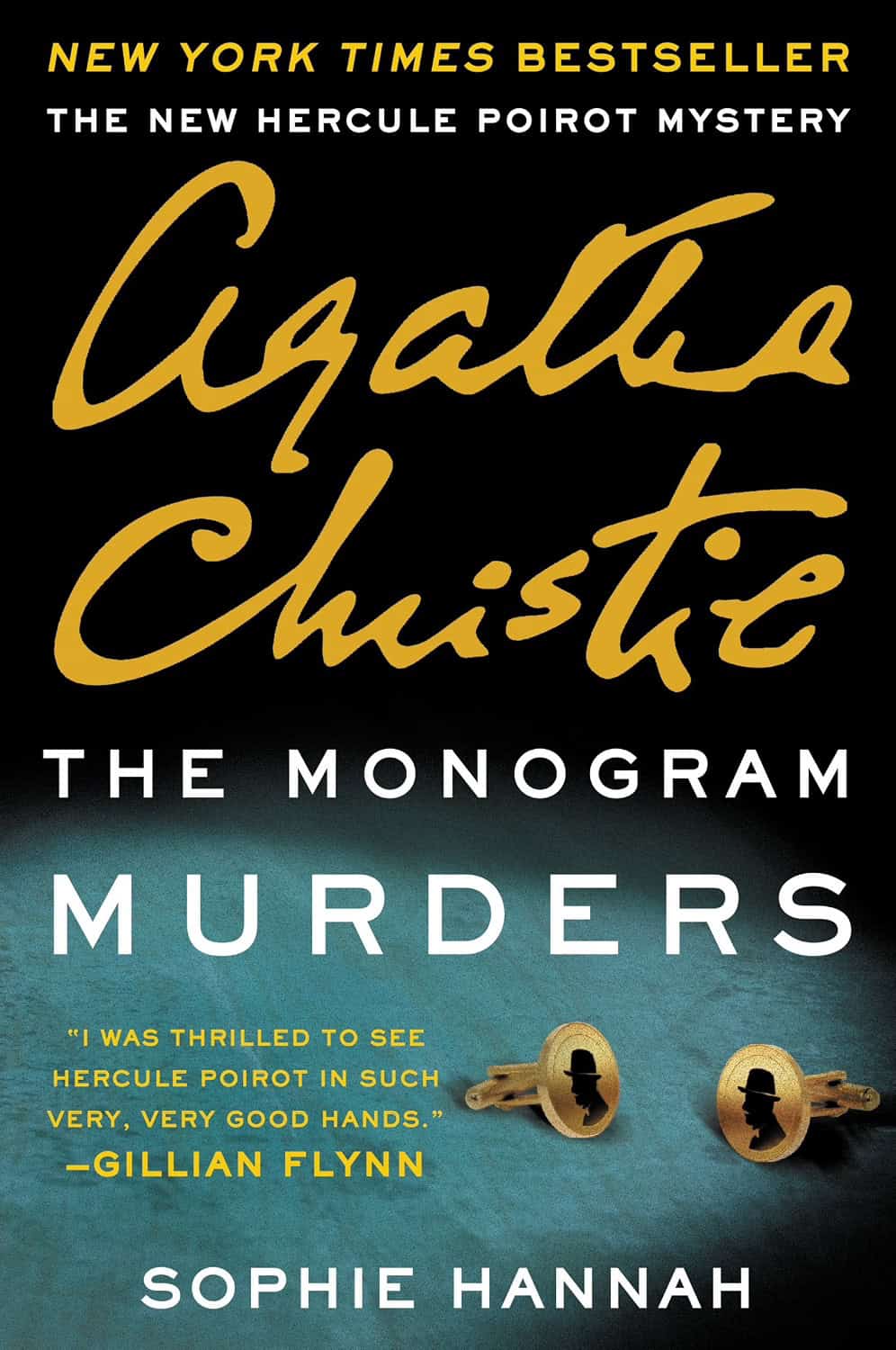
If you finish Curtain and can’t let go, the Christie estate brought Poirot back in 2014 through Sophie Hannah’s continuation novels, starting with The Monogram Murders. The series continues with Closed Casket (2016), The Mystery of Three Quarters (2018), The Killings at Kingfisher Hill (2020), Hercule Poirot’s Silent Night (2023) and The Last Death of the Year (2025). Hannah sets her books in the gap between Christie’s novels and gives Poirot a new companion, a Scotland Yard detective named Edward Catchpool. They’re not Christie, and they don’t pretend to be. Hannah’s plots are more intricate and her solutions more elaborate. But they’re a fun way to spend more time in Poirot’s world, and if you want to hear how she approaches writing him, you can read my conversation with Sophie Hannah.
Frequently Asked Questions About Hercule Poirot
What was the first Poirot book?
The Mysterious Affair at Styles, published in 1920. It was also Agatha Christie’s first novel, written partly on a dare from her sister, who doubted she could write a detective story.
What is Poirot’s final case?
Curtain: Poirot’s Last Case. Christie wrote it during the Second World War and kept it locked away so it could be published at the end of her career. It was released in 1975, shortly before she died.
What is the best Poirot book?
Most readers point to Murder on the Orient Express or The Murder of Roger Ackroyd, and both deserve their reputations. My personal recommendation for readers who want something deeper is Five Little Pigs.
How many Poirot books did Agatha Christie write?
33 novels, more than 50 short stories, and a play, Black Coffee, that was later adapted into a novel by Charles Osborne.
More Agatha Christie Reading Guides
- Agatha Christie Books in Order with Summaries
- Miss Marple Books in Order
- A Year of Miss Marple: the read-along
- Tommy and Tuppence Books in Order
- Agatha Christie Standalone Novels
- The Best Agatha Christie Books to Start With
- Modern Authors Like Agatha Christie
Final Thoughts
Hercule Poirot is more than a detective. He’s a literary icon whose cases still dazzle a hundred years later. Whether you start with Styles, the Orient Express or Roger Ackroyd, you’ll quickly see why readers (myself included) keep coming back to the little Belgian with the sharpest brain and the grandest mustache in crime fiction. And if you’ve been following Miss Marple with me this year, I think you’ll find that spending time with Poirot makes you appreciate her even more, and the other way around.
So tell me, Bookish Besties: which Poirot did you read first, and did it hook you? Leave a comment below, because I’m always looking for which one to reread next.