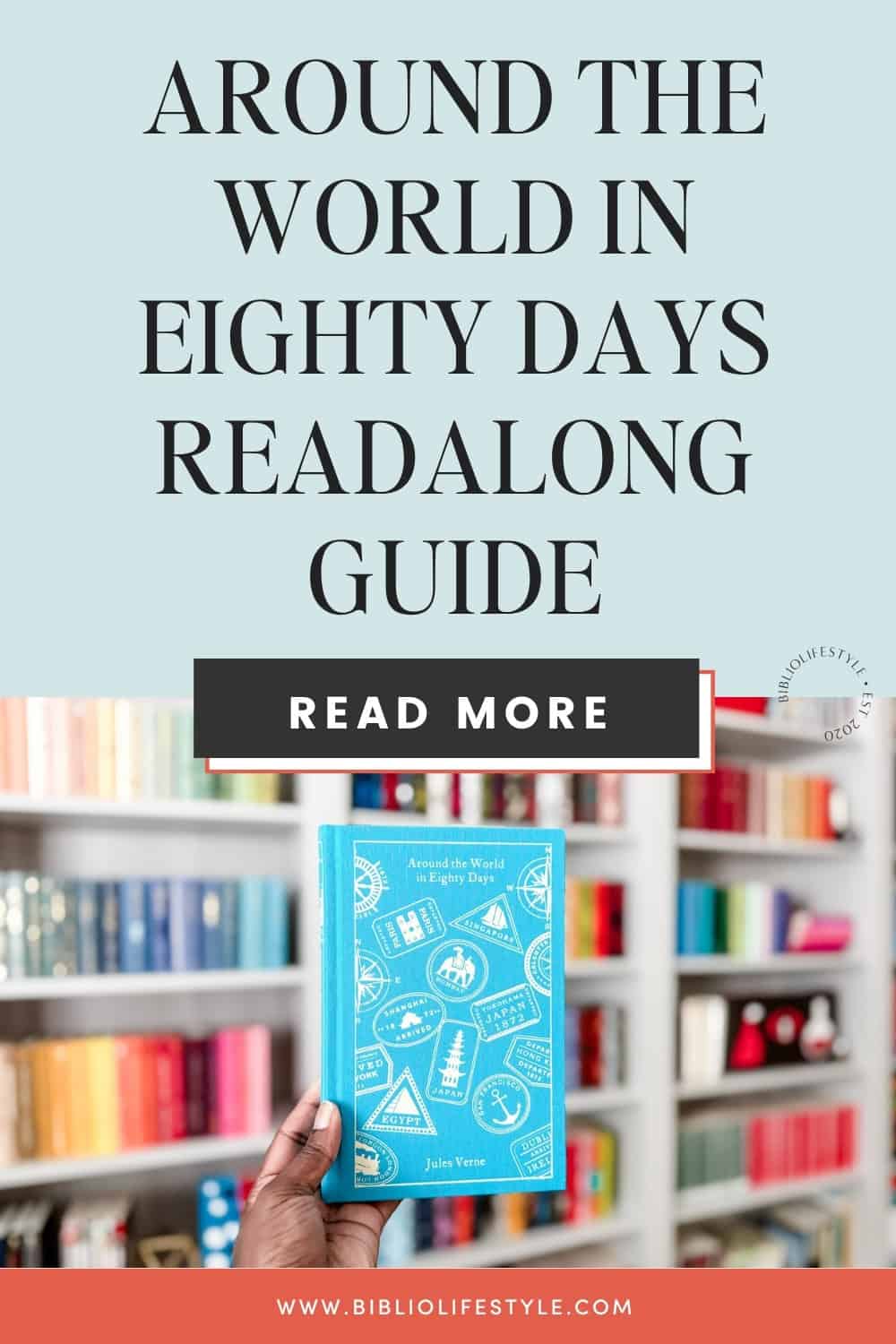
Around the World in Eighty Days Summary + Readalong Guide (A Perfect Jules Verne Starting Point)
A spoiler-free Around the World in Eighty Days summary, plus a thoughtful readalong guide, themes, and spoiler discussion of this Jules Verne classic.

Your “Around the World in Eighty Days” Read-Along Guide (Spoiler-Free First)
Welcome to our first Jules Verne readalong pick: Around the World in Eighty Days. If you’ve been wanting to read Jules Verne but keep putting it off, I chose this as our starting point very intentionally, and after rereading it, I can confidently say it’s exactly where you should begin. This is not one of those classics you have to “work up to.” It’s the kind of book that pulls you in almost immediately. The chapters are short, the pacing is steady, and there’s always something happening, whether it’s a delay, a decision, or a shift that changes everything just enough to keep you reading. I loved this in a very real, present way. Not just appreciating it because it’s a classic book, but actually enjoying the experience of reading it. And if you’ve been struggling to get back into reading or feeling like classics are too heavy, this book quietly proves otherwise.
Quick Takeaway (Before You Scroll)
If you’re deciding whether to read this, here’s the simplest way to think about it:
- This is a fast-paced, adventure-driven classic that’s easy to follow
- The short chapters make it incredibly readable, even in small pockets of time
- It blends travel, tension, and interesting details without slowing down
- It’s one of the most beginner-friendly entry points into Jules Verne
This is the book that builds your confidence and reminds you that reading classics can actually feel fun again.
Challenge Navigation (Save This)
If you’re following along with the readalong, here’s where you are:
- Jules Verne Reading Challenge Hub
- Next: Journey to the Center of the Earth
Around the World in Eighty Days at a Glance
First published in 1872. The structure is an episodic journey with continuous forward momentum. The setting is a global route spanning England, Europe, India, Hong Kong, and America. This structure is part of what makes the book so readable, because each section feels like its own moment, but they build on each other in a way that keeps the story moving.
What Kind of Book Is This?
This is a race-against-time adventure, but it’s more controlled than chaotic. The story follows Phileas Fogg, a man whose life is built on precision and routine, as he sets out to prove he can travel around the world in eighty days. That premise alone creates tension, but what makes it interesting is how that structure holds up, or doesn’t, once the journey actually begins. Rather than relying on big dramatic twists, the book builds its tension through accumulation. Small delays, missed connections, and unexpected obstacles create a steady sense of pressure that carries you through the story.
About Around the World in Eighty Days
At the center of the novel is Phileas Fogg, a man who approaches life almost mathematically. Then after making a wager that he can circumnavigate the globe in eighty days, he sets off immediately, accompanied by his valet, Passepartout. As they move from one place to another, the journey becomes a balance between careful planning and unpredictable reality. Every leg of the trip introduces something new, whether it’s a logistical challenge, a cultural encounter, or a moment where everything could unravel. I chose this as the first book in the readalong because it offers exactly what you want when starting a classic: it’s engaging without being overwhelming, structured without feeling rigid, and filled with enough adventure and detail to keep you fully present in the story. The short chapters especially make it easy to keep reading, and I found myself constantly saying “just one more” without even realizing it.
The Vibe (So You Know What You’re Getting)
This book has a very specific kind of reading experience. It feels:
- Fast-paced but not rushed
- Light but still satisfying
- Structured with just enough unpredictability
It’s the kind of story that keeps moving, but never feels chaotic. Instead, there’s a steady rhythm to it that makes it easy to settle in and stay there.
Let’s Talk About Passepartout
I have to talk about Passepartout because he was one of my favorite parts of this entire book. He is, without question, a character who will test your patience at times. There are moments where I genuinely wanted to scream at him because of the choices he makes. And yet, he is also incredibly loyal, grounded, and human in a way that balances Fogg perfectly. Where Fogg is precise and controlled, Passepartout is emotional and reactive. He complicates things, yes, but he also brings warmth and personality into the story. By the end, I appreciated him even more because of those contradictions. He’s not flawless, but he shows up, and that makes him feel real.
How to Read This One Gently (and Actually Enjoy It)
This is not a book you need to rush, and it doesn’t reward speed reading in the way you might expect. Instead, I’d recommend:
- Reading in short stretches (the chapters are perfect for this)
- Letting each part of the journey feel distinct
- Paying attention to the progression rather than rushing to the outcome
The experience builds through movement, not intensity. The more you let it unfold naturally, the more satisfying it becomes.
Read-Along Guide: What to Notice
As you read, these are a few ideas worth keeping in the back of your mind. You don’t need to track all of them, just notice what stands out to you.
Time and structure
The entire story is built around time. Watch how Fogg interacts with it, manages it, and tries to stay ahead of it.
Want To Save This Post?
Control vs. unpredictability
Fogg believes in systems and precision, but the world keeps introducing variables he can’t fully control.
Movement vs. experience
They are constantly traveling, but it raises the question of whether they are truly experiencing the places they pass through.
Small moments that matter
Many of the most important shifts happen quietly. A small delay or decision often carries bigger consequences later.
If You’re Listening on Audio
This works really well as an audiobook, especially because of the chapter structure. Each section feels contained, which makes it easy to pause and return without losing your place. As you listen, try to notice how each leg of the journey changes the overall trajectory. Even small shifts tend to matter.
Should You Read This If You’re New to Classics?
Yes, this is one of the easiest classics to get into. The pacing, structure, and chapter length all work in your favor. You don’t need to push yourself through it or adjust your reading style to make it work. Instead, the book meets you where you are and builds momentum naturally. If you’ve struggled with classics before, this is a very safe and rewarding place to start.
SPOILER DISCUSSION (Read After Finishing)
Big-Picture Reflection (Spoilers Ahead)
I loved the ending of this book, and it’s one of the reasons it stayed with me after I finished. That moment where Fogg believes he’s lost, only to realize he gained a day during his travels, is such a simple idea, but it lands perfectly. It reframes the entire journey in a way that feels both surprising and completely earned. It also ties back to the central tension of the story. Fogg is someone who believes he can account for everything, and yet the thing that ultimately determines his success is something outside of his system. That contrast is what makes the ending feel so satisfying.
The Happily Ever After
I also genuinely loved that this story ends with a happily ever after. After all the tension, movement, and near-misses, the ending feels grounded and earned rather than rushed. It gives the story a sense of closure that feels right for everything that came before it.
Passepartout at the End
And Passepartout, in the end, proves himself in the way that matters most.
For all his frustrating moments, he remains loyal and present, and that consistency is what makes his character work. It’s part of why I walked away from this book feeling so connected to the journey as a whole.
Discussion Questions
If you’re following along with the readalong, I’d love to hear your thoughts:
- At what point did you feel the tension of the timeline the most?
- Did you trust Fogg’s plan from the beginning, or expect it to fail?
- How did the ending change your perspective on the journey?
Leave a comment with your rating (⭐️/5) and how this book made you feel.
What Comes Next
Next up in the readalong is Journey to the Center of the Earth, which shifts from structured adventure into something more imaginative and immersive. If you’re continuing, this is where the experience starts to deepen.
Continue the Readalong
If you’re joining late or moving at your own pace, you can always go back to the full challenge here: Jules Verne Reading Challenge Hub.
Final Thoughts
This book reminded me that reading doesn’t have to feel difficult to be meaningful. It can be engaging, steady, and genuinely enjoyable at the same time. And if you’ve been waiting for the right place to start with Jules Verne, this is it. Have you read Around the World in Eighty Days? What did you think about it? Please share your thoughts in the comments.