Best Virginia Woolf Books: 5 Classics Worth Reading
These are the best Virginia Woolf books I’d recommend, from Mrs Dalloway to The Waves, with my take on why each one still deserves a place on your list.

The 5 Virginia Woolf Books I’d Keep on My Classics Shelf
Hi Bookish Besties, Virginia Woolf is one of the writers who changed the way I think about what a novel is allowed to do. Before Woolf really clicked for me, I was much more accustomed to following stories through what happened next. With Woolf, I learned to pay attention to what happens inside a thought, how one memory can interrupt an ordinary afternoon, and how an entire emotional life can exist underneath something as simple as buying flowers or looking across a room.
That is why my list of the best Virginia Woolf books is not simply a ranking of the most famous titles. These are the books I think best show the different sides of Woolf: the interiority of Mrs Dalloway, the emotional depth of To the Lighthouse, the playfulness of Orlando, the experimentation of The Waves, and the intellectual sharpness of A Room of One’s Own.
I also think Woolf gets flattened by her reputation sometimes. She is often introduced as Difficult Modernist Writer, which makes her sound like someone you need to prepare for rather than someone you can actually enjoy. Yes, she asks more from a reader than a straightforward plot-driven novel might, but she can also be funny, intimate, strange, tender, observant, and wonderfully alive. These are the five Woolf books that remind me why I keep returning.

WHERE TO START WITH WOOLF: Want her defining style? Mrs Dalloway. Want something playful? Orlando. Prefer essays to experimental fiction? A Room of One’s Own.
The Best Virginia Woolf Books at a Glance
If I could only keep one, it would be Mrs Dalloway. It is still the Woolf novel that feels most complete to me, because it combines her interest in consciousness, memory, time, social performance, love, loneliness, and mortality inside one seemingly ordinary day.
To the Lighthouse is the one I choose when I want Woolf at her most emotionally reflective. Orlando shows her wit and imaginative freedom. The Waves is the book that proves how far she was willing to push the form of the novel. And A Room of One’s Own gives us Woolf the essayist, thinker, and feminist critic in a voice that remains remarkably readable.
I would not call these five interchangeable. That is part of the pleasure of reading Woolf. Each book reveals another version of what she thought literature could do.
1. Mrs Dalloway
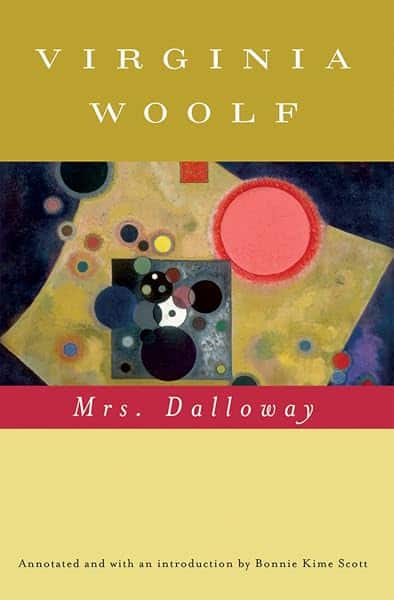
If you ask me for the Virginia Woolf book that best captures why I love her, my answer is Mrs Dalloway. The novel takes place over the course of a single day as Clarissa Dalloway prepares to host a party in London. That description makes it sound almost aggressively uneventful, which is exactly why the book becomes such a good demonstration of Woolf’s genius. A woman is preparing for a party. Meanwhile, an entire life is happening inside her.
Clarissa thinks about youth, marriage, aging, love, choices, death, the person she once was, and the people she might have loved differently. Running alongside her story is the experience of Septimus Warren Smith, a World War I veteran struggling profoundly with the psychological aftermath of the war. The two characters move through the same city without really sharing the same world, yet Woolf creates connections between their experiences that become central to the novel.
Why Mrs Dalloway Is My Favorite Virginia Woolf Book
What stays with me is the way Woolf makes an ordinary day feel enormous without making it melodramatic. Clarissa’s life is not defined by one giant plot twist. It is defined by accumulated choices, memories, relationships, compromises, and the strange fact that we are always carrying previous versions of ourselves around with us. That feels more meaningful to me the older I get.
When I first encountered Woolf, I was fascinated by the stream-of-consciousness technique. Now I am more interested in Clarissa herself. I notice the tension between the public woman who knows how to host a room and the private woman wondering what her life means. That gap between outward composure and inner complexity is where Woolf is extraordinary. If I were building a Virginia Woolf shelf from scratch, Mrs Dalloway would absolutely be on it.
You can get a copy of Mrs Dalloway on Amazon or Bookshop.
2. To the Lighthouse
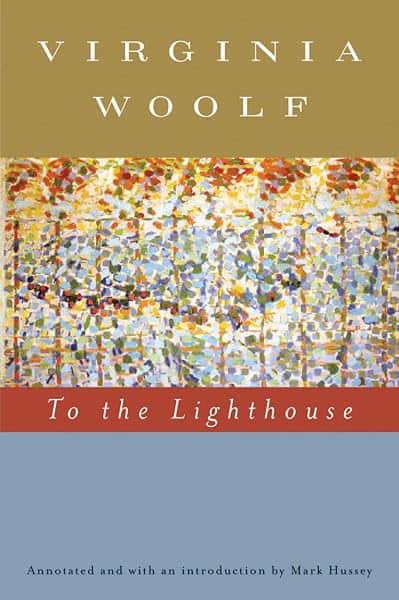
To the Lighthouse is the Woolf novel I reach for when I want something quieter, more reflective, and emotionally deeper. The book centers on the Ramsay family and their guests at a summer home on the Isle of Skye. A planned trip to the lighthouse provides the novel with a simple outward structure, but Woolf is much more interested in relationships, memory, family, art, time, and the distances that can exist between people who love one another.
This is not a book I read because I am desperate to know what happens next. I read it because of how Woolf captures the experience of being inside a family. People misunderstand each other. They need things from one another. They resent one another and love one another at the same time. Someone can occupy an enormous emotional space in a family without necessarily understanding how much power they hold. That feels painfully real.
Why To the Lighthouse Has Grown on Me
This is one of those classics I appreciate differently depending on where I am in my own reading life. The first time through, I was very aware of Woolf’s style. On later readings, the structure of time has become much more affecting. People spend so much energy treating the present as permanent. Then time moves. The house changes. Relationships change. People disappear. Life does what life does, completely unimpressed by our assumption that there will always be another summer.
That is the part of To the Lighthouse I carry with me now. It is a beautiful book, but I would not call the beauty comforting.
You can get a copy of To the Lighthouse on Amazon or Bookshop.
3. Orlando
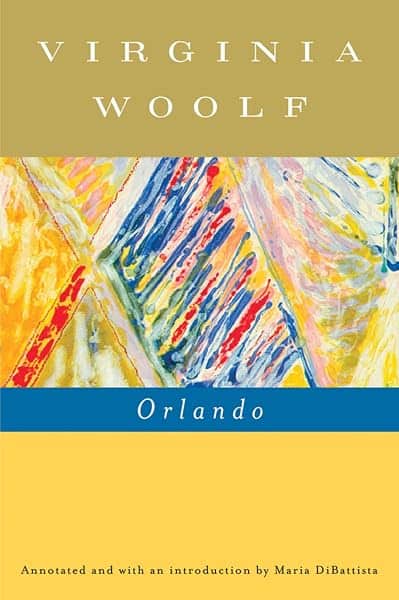
Anyone who thinks Virginia Woolf is only solemn and difficult should spend some time with Orlando. This is Woolf playing. The novel follows Orlando across centuries of history, beginning with a young nobleman in Elizabethan England who eventually wakes to discover that Orlando is now a woman. Woolf uses that wonderfully impossible premise to explore gender, identity, time, biography, social expectations, literature, and the absurdity of trying to define a person too neatly.
It is strange. It is funny. It is excessive in ways Woolf’s other fiction often is not. And that is exactly why I love having it beside Mrs Dalloway and To the Lighthouse.
Why Orlando Still Feels So Alive
What fascinates me is how lightly Woolf can carry enormous questions. What changes when society reads the same person as a man rather than a woman? How much of identity belongs to us, and how much is imposed from outside? How ridiculous does literary history become when one person gets to live through several centuries of it? Woolf does not approach those questions like she is standing behind a podium. She turns them into a game. That makes Orlando feel surprisingly fresh.
I also think it is an important corrective to the Serious Virginia Woolf reputation. Woolf could be sharp without being solemn, and Orlando is proof.
You can get a copy of Orlando on Amazon or Bookshop.
4. The Waves
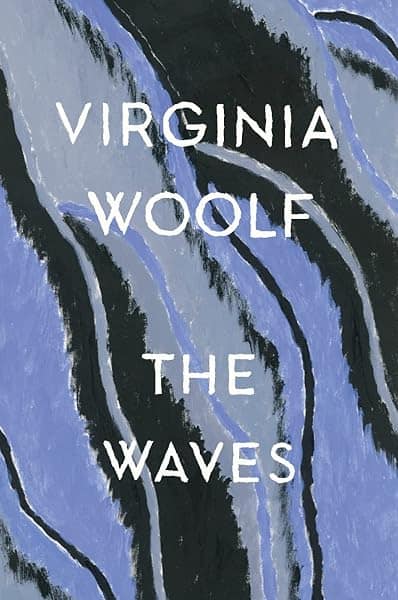
The Waves is the Woolf book I admire partly because it refuses to behave like a normal novel. Instead of following a conventional plot, it moves among six voices—Bernard, Susan, Rhoda, Neville, Jinny, and Louis—as they grow from childhood into adulthood. Their lives emerge through interior monologues rather than through traditional scenes, and interludes describing the movement of the sun and sea create a rhythm around them.
This is Woolf pushing consciousness almost as far as she can take it. And yes, it asks more of me. I do not pick up The Waves when I want straightforward narrative comfort. I read it when I want to surrender to language, pattern, identity, repetition, and the strange experience of watching individual lives merge into something larger.
What I Love About The Waves
The book makes individuality feel both intensely important and strangely fragile. Each voice is distinct, but the voices also echo and overlap. People construct themselves partly through how they imagine everyone else sees them. They change. They compare. They perform versions of themselves. They lose people. They keep going. I think that is why The Waves feels more emotional once I stop trying to force it into conventional plot expectations.
This is not the Woolf book I recommend because it is easy. I recommend it because it shows what Woolf was capable of when she stopped worrying about whether a novel needed to look like a novel at all.
You can get a copy of The Waves on Amazon or Bookshop.
5. A Room of One’s Own
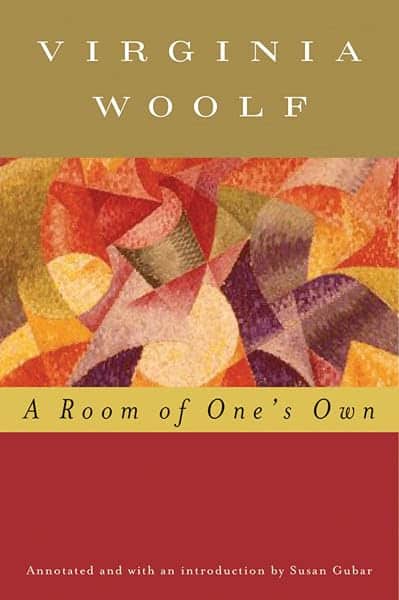
A Room of One’s Own is the book that proves Woolf’s brilliance was not limited to fiction. Based on lectures Woolf delivered on women and fiction, the essay explores the material conditions necessary for women to write, create, and participate fully in literary culture. Its famous argument about money and private space still gets repeated constantly, but I think the essay becomes much more interesting when you actually read the thinking around that idea.
Woolf is asking what happens when talent exists without opportunity. Who gets educated? Who gets uninterrupted time? Who owns property? Who gets taken seriously? Whose books are preserved? Whose lives become literary history? Those questions extend far beyond whether a woman has a desk and a lock on the door.
Why A Room of One’s Own Still Matters to Me
What I appreciate most is Woolf’s insistence that creativity has material conditions. We love romantic stories about artistic genius arriving despite everything. Woolf asks who had the money, time, education, privacy, and freedom necessary to turn talent into work in the first place. That is a much less romantic question. It is also a much more useful one.
And while the essay belongs to a specific historical moment, the underlying question about who gets the resources to create has hardly disappeared. That is why this book remains essential to my Woolf shelf.
You can get a copy of A Room of One’s Own on Amazon or Bookshop.
Why These Are My Five Best Virginia Woolf Books
I chose these five because together they show the range that disappears when Woolf gets reduced to the phrase “stream of consciousness.” Mrs Dalloway gives us Woolf compressing an extraordinary amount of life into a single day. To the Lighthouse gives us family, memory, art, and time. Orlando gives us humor, gender, literary play, and imagination. The Waves gives us Woolf at her most formally experimental. A Room of One’s Own gives us the critic and essayist examining who gets to make literature in the first place.
They do not all offer the same reading experience, and I would not want them to. Part of what makes Woolf such an important writer to me is that she keeps changing the question. What can a day contain? What happens to a family when time passes? What happens to identity when gender and history become unstable? How close can prose get to consciousness? What conditions allow a writer to become a writer? That is a much more interesting literary legacy than simply saying Woolf was innovative.
Where Should You Start With Virginia Woolf?
If you’re completely new to Woolf and only want my shortest answer, I would still choose Mrs Dalloway for the reader who wants her defining fictional style. I would choose Orlando if you want something more playful, and A Room of One’s Own if essays and ideas feel more inviting than experimental fiction.
I am intentionally keeping that answer brief here, because choosing your first Woolf book deserves its own guide. The best Woolf book overall and the best Woolf book for you to read first are not necessarily the same thing. That distinction has become increasingly important to the way I recommend classics. I don’t want everyone beginning with the same book simply because literary history tells us it is the important one. I want you to find the door that makes you want to stay.
What Virginia Woolf Does Better Than Almost Anyone
For me, Woolf’s great subject is consciousness. Not plot. Not even character in the conventional sense. Consciousness. She understands that one human mind can move from a flower to a memory to an old relationship to death to dinner plans in a matter of seconds. That movement is ordinary. Woolf makes it literature.
This is why her books can initially feel unfamiliar. We are used to fiction organizing life for us. Woolf often reproduces the way experience actually feels: messy, associative, interrupted. A smell reminds you of childhood. Someone says one sentence and you remember something from twenty years ago. You are standing in the present while mentally occupying several different versions of your past.
Once I understood that, Woolf became much less intimidating. I stopped asking the books to hurry toward the next event. I started paying attention to how people experience the event they are already inside.
Virginia Woolf and Time
Time is another reason these books stay with me. Woolf understands how strange time feels from inside a human life. A clock can measure an hour precisely. Emotion does not. Five minutes can stretch forever. Twenty years can disappear inside a paragraph. A memory can make something decades old feel present again. That tension appears throughout her fiction, particularly in Mrs Dalloway and To the Lighthouse.
It is also one of the things that has become more meaningful to me with age. The younger version of me noticed Woolf’s technique. The older version notices what the technique is saying: time passes whether or not we are ready for it. That is much ruder.
Virginia Woolf and Women’s Lives
I also keep returning to Woolf because she treats women’s interior lives as worthy of serious literary attention. Marriage. Domesticity. Ambition. Art. Friendship. Desire. Economic dependence. Social expectations. A party. A room. These things do not have to become secondary simply because they were historically associated with women.
Woolf makes interior experience enormous. That is one reason her work continues to feel relevant even when the social worlds surrounding her characters are clearly of another era. The conditions change. The questions echo.
Why Virginia Woolf Still Feels Modern
Woolf was writing a century ago, yet her fascination with identity, gender, fractured attention, social performance, memory, interiority, and the difficulty of truly knowing another person can feel remarkably contemporary. I think part of that modern feeling comes from the way she refuses to stabilize people. Her characters contradict themselves. They remember differently. They perform versions of themselves depending on who is watching. They want incompatible things. They are never just one thing. That feels true to life.
We have simply replaced some drawing rooms with group chats. The human tendency to replay a conversation for six hours afterward appears to be doing perfectly well.
What I Notice More Each Time I Read Woolf
The first thing I noticed was the style. That is probably true for a lot of readers. It is hard not to notice when a writer moves so freely between minds, memories, sensations, and time. But rereading has made me notice how compassionate Woolf can be about the messiness of being human. Characters misunderstand each other. They judge each other. They need affection they cannot ask for properly. They wonder whether their lives turned out correctly. They feel alone while surrounded by people.
Underneath all the formal experimentation, those emotions are incredibly recognizable. That is why I do not think of Woolf primarily as a writer I “should” read anymore. I think of her as a writer who keeps giving me another way to notice ordinary life.
Frequently Asked Questions About Virginia Woolf Books
What are Virginia Woolf’s best books?
My five essential Virginia Woolf books are Mrs Dalloway, To the Lighthouse, Orlando, The Waves, and A Room of One’s Own. Together, they show her range across modernist fiction, experimental narrative, gender and identity, feminist criticism, memory, and time.
What is Virginia Woolf’s most famous book?
Mrs Dalloway and To the Lighthouse are among Woolf’s most famous and widely studied novels, while A Room of One’s Own is one of her best-known works of nonfiction.
What is Virginia Woolf’s best novel?
My personal choice is Mrs Dalloway. I think it brings together Woolf’s interest in consciousness, time, memory, mortality, social identity, and the hidden emotional lives of ordinary people particularly well.
Is A Room of One’s Own a novel?
No. A Room of One’s Own is an extended essay based on lectures Woolf gave about women and fiction. It examines the relationship between creative freedom and material conditions such as money, education, privacy, and opportunity.
What is Orlando about?
Orlando follows a character who lives across several centuries and changes sex from male to female. Woolf uses the unusual premise to explore gender, identity, history, literature, biography, and social expectations.
What is The Waves about?
The Waves follows six central voices from childhood through adulthood, but it does not use a conventional plot structure. The novel is built through interior monologues and lyrical interludes, making it one of Woolf’s most experimental works.
Why is Virginia Woolf so important?
Woolf helped reshape modern fiction through her treatment of consciousness, memory, time, perspective, and interior life. Her essays also made lasting contributions to discussions of women, literature, economic independence, and creative freedom.
Final Thoughts
The thing I love most about Virginia Woolf is that she changed what I look for when I read. I still love plot. I still want things to happen. I am not surrendering all narrative events in favor of staring thoughtfully through a window. But Woolf taught me that what happens inside a person can be just as consequential as what happens around them.
That is why Mrs Dalloway remains my favorite. A party is happening. Flowers are being bought. London is moving through an ordinary day. And underneath it, Woolf gives us memory, war, aging, love, mortality, regret, identity, and the enormous question of what it means to have lived the life you ended up living.
To the Lighthouse makes time feel physical. Orlando reminds me that Woolf could be mischievous. The Waves makes me stop expecting a novel to obey me. A Room of One’s Own reminds me that creativity never exists outside the material conditions that make it possible. Those are five very different reasons to read one writer, and that is ultimately why I think these are the best Virginia Woolf books to know. They do not give us one version of Woolf. They give us the range.
If you’ve read Virginia Woolf, I would love to know which book has stayed with you the longest, Bookish Besties. Is Mrs Dalloway your favorite too, or is there another Woolf book you would refuse to leave off this list?