The Mirror Crack’d from Side to Side Guide + Ending Explained
Read my spoiler-free guide to The Mirror Crack’d from Side to Side by Agatha Christie, including themes, discussion prompts, ending insights, and reading tips.
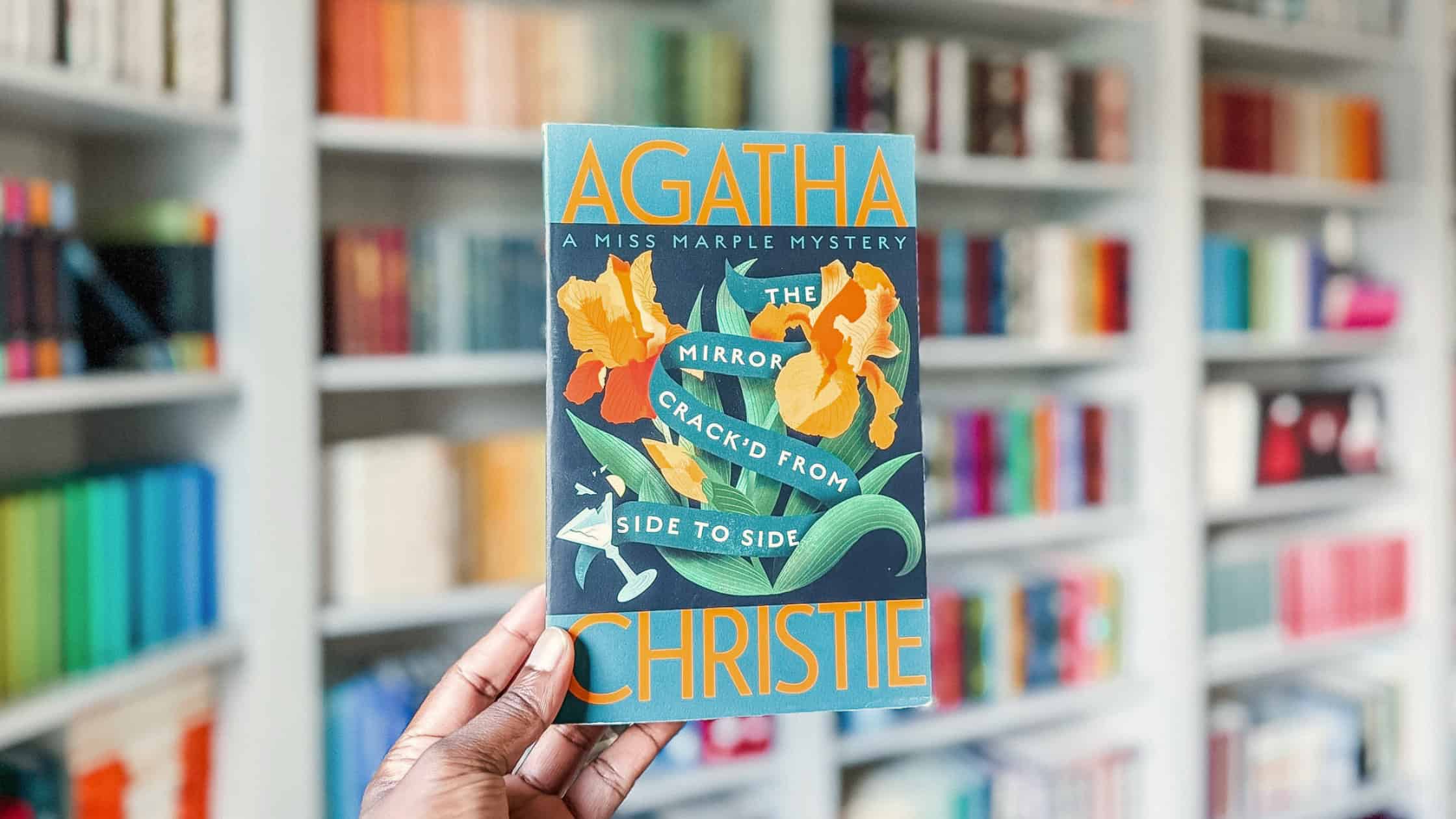
Your The Mirror Crack’d from Side to Side Read-Along Guide (Spoiler-Free First)
If the last mystery in the Miss Marple Reading Challenge began with one unforgettable image (a murder witnessed from a passing train) this month’s mystery begins with another. A beloved film star smiles at a devoted fan. Moments later, the fan is dead. On the surface, The Mirror Crack’d from Side to Side feels glamorous. There are celebrities, garden parties, gossip, and the changing face of St. Mary Mead. But underneath, this is one of Agatha Christie‘s most emotional novels. It asks what happens when one ordinary moment changes the course of an entire life, and whether grief can ever truly stay in the past. It’s a quieter mystery than some of the earlier books in the series, but for me, it’s also one of the most unforgettable.
Challenge navigation
- Miss Marple Reading Challenge Hub
- Agatha Christie Category
- Previous month: 4:50 From Paddington
- Next month: A Caribbean Mystery
The Mirror Crack’d from Side to Side at a Glance
- First published: 1962
- Setting: St. Mary Mead
- Mystery type: celebrity mystery, mistaken victim, psychological motive
- Best for readers who like: character-driven mysteries, village settings, old Hollywood, emotional endings, and slower investigations.
Quick Takeaway
The Mirror Crack’d from Side to Side isn’t the most complicated Miss Marple mystery. It’s one of the most human. The solution depends less on hidden clues than understanding how a single tragic moment can echo through someone’s entire life.

About The Mirror Crack’d from Side to Side
When famous actress Marina Gregg moves into Gossington Hall, the quiet village of St. Mary Mead is thrilled. During a charity garden party, local resident Heather Badcock dies after drinking a poisoned cocktail that appears to have been intended for someone else. As the investigation unfolds, Miss Marple pieces together witness accounts, village gossip, and seemingly insignificant conversations to uncover a devastating truth hidden beneath celebrity glamour. I chose The Mirror Crack’d from Side to Side for our challenge because it shows a different side of Christie, one that explores grief, memory, regret, and the unintended consequences of ordinary choices. I especially recommend it to readers who enjoy character-driven mysteries with emotional depth, and every time I finish it I’m reminded that Christie often understood human psychology better than she gets credit for.
The Vibe of This Book
This book feels different from earlier Miss Marple novels. Instead of country houses full of inheritance disputes or impossible murder puzzles, we spend time in a village that’s changing. New housing developments replace familiar landmarks. Old neighbors become strangers. Hollywood arrives in St. Mary Mead. The result is one of Christie’s most reflective novels. So expect:
- Village gossip
- Film stars and celebrity culture
- Nostalgia for an older England
- Quiet observation
- Psychological tension
- An emotionally devastating motive
Why This Story Still Feels Surprisingly Modern
One thing that always strikes me when I reread this novel is how current it feels. Today we live in a world where celebrities appear accessible. Fans believe they know them. Chance encounters become viral stories. Christie explores that same idea decades earlier. Heather Badcock believes she’s sharing a happy memory. Marina Gregg hears something completely different. That disconnect becomes the emotional center of the novel. It’s one of those mysteries where the murder matters, but the reason behind it stays with you much longer.
How to Read This One Without Turning It Into Homework
This is a slower, more reflective mystery than 4:50 From Paddington. Instead of trying to solve the puzzle immediately, I’d encourage you to pay attention to people’s emotional reactions.
Watch Marina Gregg’s expressions
Christie repeatedly draws attention to Marina’s face. Notice when people describe her expression. Notice who interprets it correctly, and who doesn’t.
Listen carefully to stories from the past
Many conversations seem like ordinary reminiscing. Very few are. Christie quietly plants emotional clues long before they’re meaningful.
Notice how St. Mary Mead has changed
This isn’t just background. The changing village reflects one of the novel’s biggest themes: time changes places, but it doesn’t always heal people.
Read-Along Guide: What to Notice
As you read, think about these questions.
Want To Save This Post?
- How does celebrity affect the way people interpret Marina Gregg?
- What assumptions do people make because someone is famous?
- Which conversations seem ordinary but linger afterward?
- How does Miss Marple approach this mystery differently from previous books?
- Is anyone really the “intended victim” in the emotional sense?
Characters to Watch
Miss Marple
Miss Marple spends much of this novel recovering from illness, yet she remains astonishingly perceptive. Rather than chasing clues herself, she quietly gathers stories. She’s almost like an editor, assembling everyone’s memories until they finally reveal the truth.
Marina Gregg
One of Christie’s most fascinating characters. It’s easy to view Marina simply as a glamorous actress. Try reading her instead as someone carrying invisible emotional weight. Everything changes.
Heather Badcock
Heather seems almost insignificant at first. She isn’t. The more you learn about her past, the more powerful the novel becomes.
Dolly Bantry
It’s lovely returning to Gossington Hall through Dolly, even though life has changed dramatically since earlier books. She reminds us how much the village, and the series itself, has evolved.
What Makes This One Stand Out
If I had to describe this novel in one sentence, I’d call it Christie’s most compassionate Miss Marple mystery. The solution isn’t satisfying because it’s clever. It’s satisfying because it feels heartbreakingly inevitable. Reading it now, it’s remarkable how much empathy Christie shows toward nearly everyone involved. There are villains. There are victims. But there are also ordinary people living with impossible consequences. That’s what makes this book linger.
Audiobook Tip
This works beautifully on audio because so much depends on conversation. Don’t worry about trying to solve the mystery immediately. Instead, imagine yourself sitting beside Miss Marple while villagers tell their stories. Often, what they don’t emphasize turns out to matter the most.
Spoiler Section: Ending Discussion
Stop reading here if you haven’t finished the novel.
Big Picture (Spoilers Ahead)
For me, this is one of Agatha Christie’s greatest motives. The murder doesn’t come from greed, or inheritance, or blackmail. It comes from irreversible loss. Marina Gregg’s reaction during the garden party is so memorable because readers, and almost everyone in the story, assume she’s reacting to something happening in the present. In reality, she’s reliving the worst moment of her life. It’s one of Christie’s finest examples of misdirection. Not because she hides information. Because she lets us misunderstand emotion. Looking back, nearly every important clue is there. We simply attach the wrong meaning to it. That’s classic Christie.
Discussion Questions
- Did you sympathize with Marina Gregg by the end of the novel?
- Did the emotional motive make this mystery more memorable for you?
- Where would you rank this among the Miss Marple books we’ve read so far?
Leave a comment below with your ⭐️ rating out of 5 and tell me whether this is the most emotional Christie you’ve read.
What Comes Next in the Reading Challenge
Next month we’re leaving St. Mary Mead behind for sunshine, suspicious holidaymakers, and another unforgettable mystery. We’ll be reading A Caribbean Mystery, where Miss Marple proves she doesn’t need familiar surroundings to understand human nature. If you’re joining us late, you can always start from the beginning here: Miss Marple Reading Challenge Hub.