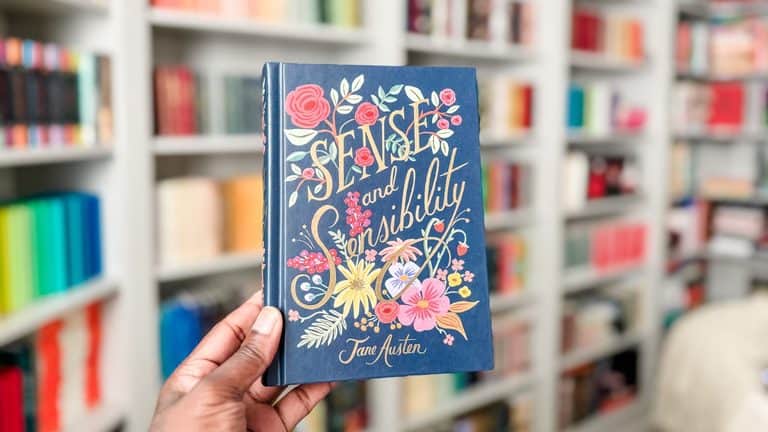
Where to Start With Jane Austen: Beginner’s Reading Guide
Which Jane Austen book should I read first? I compare the best starting points, explain which is easiest, and share how hard Austen really is for beginners.

The Jane Austen Book I’d Hand You First Depends on What You Love Reading
Hi Bookish Besties, If you have been meaning to read Jane Austen but keep looking at the six novels and wondering which one is supposed to come first, I completely understand. Austen has acquired that particular classics reputation where people either talk about her as though everyone obviously grew up understanding Regency inheritance law or make her sound like six variations of elegant women waiting around for attractive men to propose. Neither version is especially helpful.
The biggest thing I wish new Austen readers knew is that she becomes much easier once you stop reading her simply as old-fashioned romance and start listening for who she is quietly making fun of. Austen is constantly watching people perform status, misread one another, make terrible assumptions, justify selfish choices, worry about money, and say things that reveal far more than they intended. That is where she comes alive for me.
If you want my quick answer to which Jane Austen book you should read first, I would choose Pride and Prejudice for most readers. It gives you the best introduction to her wit, romance, social commentary, family dynamics, and fascination with people who are extremely confident in judgments that turn out to be wrong. But that is not the only good answer. If you want a heroine who has absolutely no intention of minding her own business, start with Emma. If you prefer quieter, more mature stories about regret and second chances, start with Persuasion. If your biggest concern is finding the easiest Austen to read, Northanger Abbey may actually be the least intimidating place to begin. The right first Austen depends on what already makes you want to keep turning pages.
START HERE: Most readers: Pride and Prejudice. Love flawed heroines and comedy: Emma. Love second chances and yearning: Persuasion. Want the easiest start: Northanger Abbey.
My free Jane Austen Kit has a Pride and Prejudice character map and chapter tracker, plus a checklist of all six novels and a “Which Austen next?” flowchart, all ready to print at home.
Which Jane Austen Book Should You Read First?
For most readers, my answer is Pride and Prejudice. It is not simply Austen’s most famous novel. It is also the book where I think all the things people eventually love about her are easiest to see working together. You get Elizabeth Bennet’s intelligence, Mr. Darcy’s terrible first impression, family embarrassment, romantic tension, social hierarchy, financial pressure, misunderstandings, self-knowledge, and some of Austen’s funniest characters. Most importantly, the story gives you enough plot momentum to keep you oriented while you adjust to Austen’s style. That makes it an excellent first book.
Why Pride and Prejudice Is My Default Starting Point

Pride and Prejudice gives a new reader something recognizable to hold onto. Elizabeth and Darcy do not like each other very much at first. Their judgments begin changing. Information gets revealed. People turn out to be different from how they appeared. Meanwhile, Austen quietly builds a much larger story around them involving class, inheritance, marriage, family reputation, and the economic reality facing women like Elizabeth and her sisters. The romance pulls you through, and the social commentary is waiting underneath it. That balance is what makes the novel so useful as an introduction to Austen.
I first read Pride and Prejudice as a teenager, and naturally I was very interested in Elizabeth and Darcy. I still am. But rereading the book as an adult completely changed what I noticed. Now Charlotte Lucas fascinates me more. Mrs. Bennet is still ridiculous, but her panic about marrying off five daughters becomes more understandable when you remember that their financial future is genuinely uncertain. Elizabeth’s confidence in her own judgment looks much more complicated once you recognize that her intelligence is exactly what makes her so certain she cannot possibly have misread Darcy and Wickham. That is what I love about Austen. You can enter through the romance and gradually discover an entire social system operating behind it.
If you enjoy witty romance, character growth, family drama, social commentary, and the satisfying experience of watching two intelligent people reconsider themselves, this is the book I would hand you. I would rate its reading difficulty around 2.5 out of 5. The language takes a little adjustment if you do not read older fiction often, but the characters and central conflict are relatively easy to follow. Austen’s humor also becomes much clearer once you recognize that the narrator may be gently mocking a character even when the character has no idea anything funny is happening. That recognition is the doorway into Austen. Once you hear the irony, the books become much more fun.
You can get a copy of Pride and Prejudice on Amazon.
Start With Emma If You Love Character-Driven Comedy
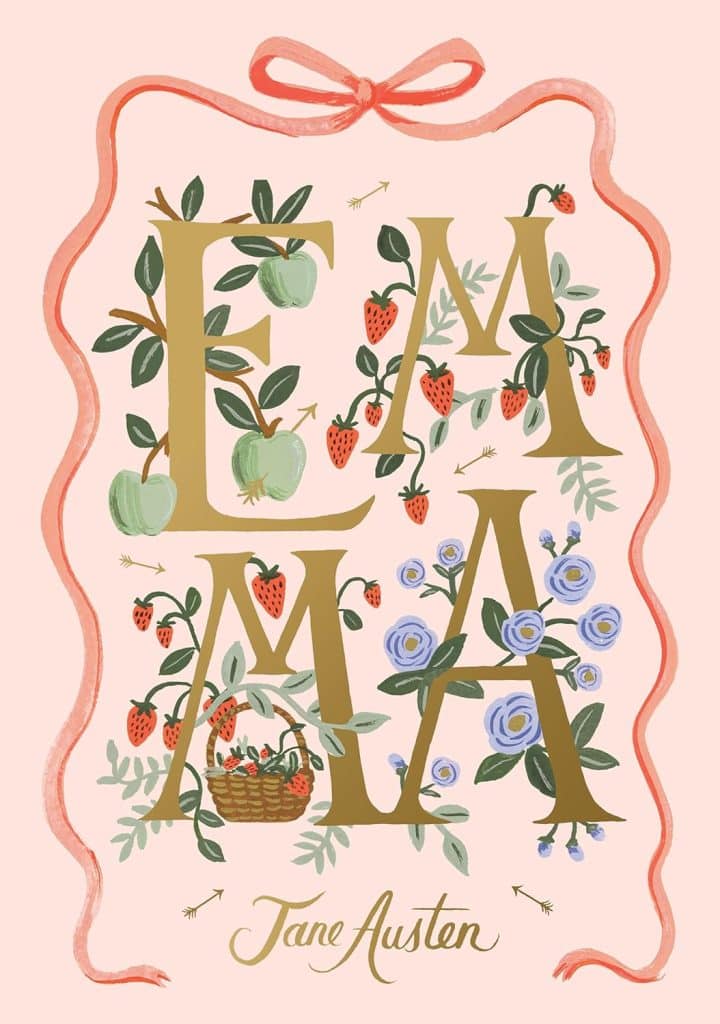
My second beginner route is Emma. Emma Woodhouse is wealthy, intelligent, socially confident, and completely convinced that she understands everyone around her. She does not. That is the pleasure of the book. Emma spends much of the novel arranging other people’s romantic futures while remaining hilariously unaware of her own feelings and surprisingly blind to what is actually happening around her. A friend once told me that Emma simply needs to mind her own business, and I have never entirely recovered, because that really is the situation. The problem is that Emma does not have a group chat where she can quietly speculate about everybody. She has access to their actual lives. Chaos follows.
Emma is ideal if you love stories where the main character has to develop self-awareness. There is romance, but what keeps the book moving is Emma’s gradual realization that good intentions do not automatically produce good outcomes. She means well much of the time. She is also privileged enough to interfere without immediately understanding the consequences for people with less social power. That makes the novel funny and uncomfortable at the same time, and I think it is one of Austen’s best examples of how humor and character growth can exist together.
I would rate Emma around 3 out of 5. The prose itself is manageable, but the book asks you to follow a lot of social relationships, conversations, hidden motives, and mistaken assumptions. Austen also uses free indirect discourse brilliantly here, which means readers often experience events through Emma’s perspective without the narrator stopping to announce that Emma’s interpretation may be wrong. That can be confusing initially. It is also the point. Once you understand that you are not always supposed to trust Emma’s reading of the room, the novel becomes much more entertaining.
You can get a copy of Emma on Amazon.
Start With Persuasion If You Want a More Mature Love Story

If you already know you love second-chance romance, regret, quiet longing, or emotionally reflective fiction, I would start with Persuasion. Anne Elliot was once engaged to Captain Frederick Wentworth. She ended the relationship after being persuaded that the match was unwise. Years pass. Then Wentworth returns. That means the novel begins in a place most romances would treat as backstory. The love has already happened. The mistake has already happened. The regret has had years to settle in. Now Austen asks what happens if those two people encounter one another again.
Persuasion has become more powerful to me the older I get. When I was younger, I understood Anne’s regret. Now I feel the weight of the time around it much more clearly. There is something deeply moving about a heroine who cannot go back and make the younger version of herself choose differently. She has to live with that decision and discover whether a second chance is even possible. That gives Persuasion a quieter emotional register than Pride and Prejudice. It is not driven by sparkling conflict in quite the same way. It is driven by everything Anne and Wentworth are not saying.
I would rate Persuasion around 2.5 to 3 out of 5. The plot is not especially complicated, and Anne’s emotional journey gives the story a clear center. The challenge is tone. A reader looking for constant banter or dramatic romantic scenes may initially find it restrained. But if you enjoy reading between the lines and noticing what characters cannot quite bring themselves to say, the restraint becomes part of the romance. This is the Austen I recommend when someone tells me they like yearning. And I mean proper yearning.
You can get a copy of Persuasion on Amazon.
What Is the Easiest Jane Austen Book to Read?
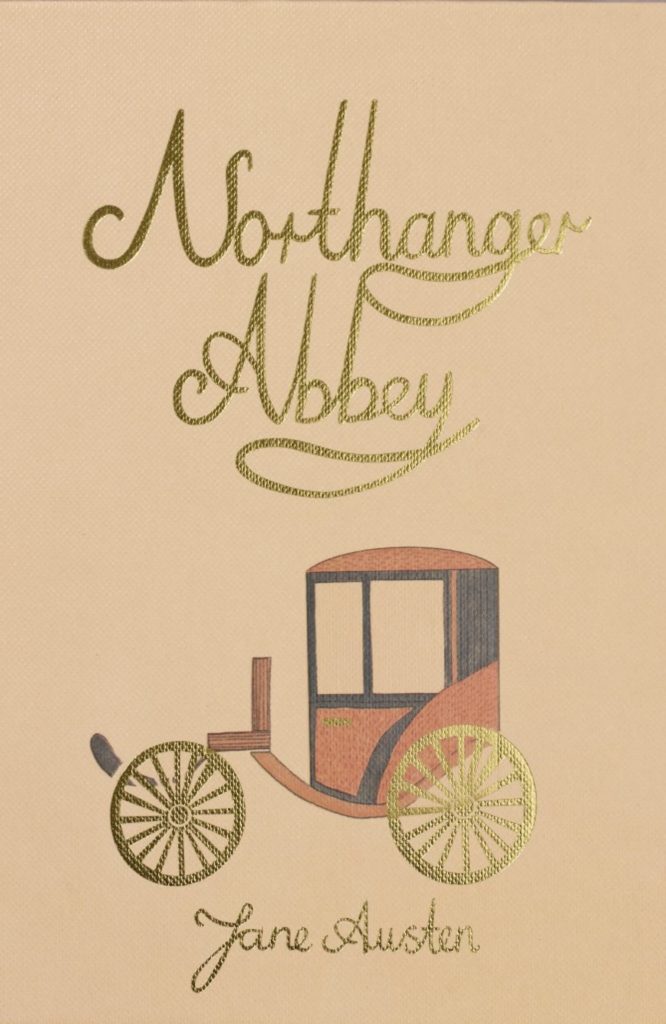
If the question is purely about accessibility, I would probably choose Northanger Abbey. I would rate it around 2 out of 5 for difficulty. It is shorter, playful, relatively quick-moving, and built around Catherine Morland, a young heroine whose love of Gothic novels begins influencing the way she interprets real life. Austen spends much of the book having fun with storytelling itself, which makes it feel lighter than novels such as Mansfield Park. But there is an important distinction between easiest Austen and best first Austen, and I do not automatically think those should be the same book.
I genuinely enjoy Northanger Abbey. Catherine is charming, the Gothic parody is funny, and Austen’s affection for readers and reading comes through beautifully. But it also gives you a slightly different version of Austen from the one you encounter in Pride and Prejudice, Emma, or Persuasion. A lot of the comedy depends on Austen playing with the conventions of Gothic fiction. You do not need to have read a stack of eighteenth-century Gothic novels to understand it, but knowing that Catherine’s imagination is being shaped by the popular fiction she loves makes the satire richer. So if someone tells me, “I am intimidated and I just want the least intimidating Austen,” I may suggest Northanger Abbey. If someone tells me, “I want to understand why people love Jane Austen,” I still reach for Pride and Prejudice. Those are different questions.
You can get a copy of Northanger Abbey on Amazon.
Is Jane Austen Hard to Read?
I would say she can feel difficult at first, but the difficulty is usually temporary. Austen is not difficult in the same way a writer with extremely experimental structure or obscure vocabulary might be difficult. The challenge comes from sentence structure, social context, irony, and the fact that she expects readers to notice what people mean rather than simply what they say. If you are used to contemporary fiction where emotions are explained very directly, Austen can require a little recalibration. Someone may say something perfectly polite while Austen expects us to understand that the entire exchange is an insult. That is where the fun lives.
The Biggest Adjustment Is Learning to Hear the Irony
This is the piece of advice I would give almost every new Austen reader. Do not assume the narrator agrees with everything being described. Do not assume characters understand themselves accurately. And definitely do not assume somebody saying something confidently means Austen expects you to believe them. Austen constantly creates distance between how a character sees themselves and how we gradually learn to see them. Mr. Collins thinks he is impressive. Lady Catherine thinks interference is authority. Emma thinks matchmaking is practically a public service. Mrs. Elton thinks she is sophisticated. The books become much easier once you recognize that Austen is standing quietly in the corner watching all of this happen, and you are supposed to notice with her.
Jane Austen Is Easier If You Read Her as People-Watching
This is probably the most useful way I can describe my own reading approach. I read Austen like extremely sophisticated people-watching. Who is trying too hard? Who wants something they cannot admit? Who is pretending money does not matter while making every decision based on money? Who believes they are being generous, and who is actually being generous? Who is flirting? Who thinks somebody is flirting? Who has completely misunderstood the room? Once I started reading her this way, the old-fashioned language became much less intimidating. The social behavior is incredibly recognizable. The clothing changed. The group dynamics did not.
Why Austen’s Language Can Feel Slow at First
Austen’s sentences often contain more clauses and qualifications than modern commercial fiction. That means you sometimes have to read a sentence long enough to discover that the final phrase changes how you should interpret everything before it. She also relies on understatement. A modern writer might explicitly tell us someone is being ridiculous. Austen may give the character three paragraphs in which to prove it themselves. That requires more attention, but I think it creates a much better joke. You get the pleasure of recognizing what the character does not.
You Do Not Need to Understand Every Regency Rule
This is another place where new readers sometimes make Austen harder than necessary. You do not need to memorize nineteenth-century inheritance law before beginning. You do not need an academic understanding of rank, or to know the exact income required to keep a carriage. Context helps, but you can learn much of what matters from the novel itself. If someone has money, Austen will make that clear. If someone does not have enough money, Austen will make that extremely clear. Start with the people. The social history can deepen your understanding later.
One thing I do want new readers to recognize early is that Austen’s romances are never happening in an economic vacuum. Marriage had enormous financial implications, especially for women whose opportunities to earn independent incomes were limited. That is why characters such as Charlotte Lucas become so important. If you read her marriage decision purely as romance, it looks depressing. If you understand the financial reality surrounding her, it becomes much more complicated. Austen does this constantly. She makes us enjoy the love story while quietly reminding us that marriage also affects housing, security, status, family, property, and the rest of adult life. The romance is real. So is the rent.
Which Jane Austen Book Should You Read First, Based on Your Taste?
If you love romance: I would choose Pride and Prejudice if you want romance with banter, tension, misunderstandings, and strong character growth. If you prefer second-chance romance and emotional longing, choose Persuasion. If you like romances where the heroine takes an unreasonable amount of time to recognize that she has feelings, Emma is very satisfying. I would not call one of those universally “more romantic” for every reader. They are doing different romantic things, which is exactly why mood matters.
If you love funny books: I would start with Emma or Northanger Abbey. Emma gives you social comedy built around character blindness. Northanger Abbey gives you literary parody and a heroine whose imagination keeps turning ordinary situations into possible Gothic conspiracies. Pride and Prejudice is also very funny, but its humor is more deeply integrated with family dynamics and class. Austen is funnier than her reputation sometimes suggests. You do not have to sit beside a window looking thoughtful the entire time.
If you love emotional books: Choose Persuasion. This is the novel I recommend when someone wants Austen but also wants ache. Anne Elliot’s emotional world is quieter than Elizabeth Bennet’s, but that quietness carries years of regret. There is also something about reading a heroine who has already made a life-changing mistake that feels different from watching a younger character learn through first experience. Anne already knows what loss feels like, and the novel asks whether knowing that changes what she does with another chance.
If you love flawed heroines: Read Emma. Emma Woodhouse is intelligent, privileged, generous in some situations, selfish in others, perceptive about certain things, spectacularly blind about others, and convinced for much of the novel that she understands everybody. That makes her incredibly interesting. I would much rather read a heroine who gets things wrong than one who exists only to demonstrate admirable behavior. Emma has room to grow because she has something to learn.
If you love sisters and family dynamics: Choose Sense and Sensibility. The relationship between Elinor and Marianne Dashwood is the emotional center for me. One sister values restraint, the other trusts feeling, and both approaches contain strengths and weaknesses. Austen gradually forces each woman to encounter the limits of her own philosophy. The romances matter, but the sisters make the novel. If family dynamics are what pull you into fiction, I think this can be an excellent early Austen.
Is Sense and Sensibility a Good First Jane Austen Book?
Yes, although it would not be my default. I would rate the difficulty around 3 out of 5. The central relationship between the Dashwood sisters is easy to understand, and the financial situation gives the story clear stakes. The challenge is that there are several romantic relationships, social connections, and misunderstandings to keep straight, and I think Pride and Prejudice introduces Austen’s humor more immediately. But if you love stories about sisters, emotional contrast, or the tension between heart and head, you could absolutely begin here.
Is Mansfield Park a Good First Jane Austen Book?
I would usually say no, and not because Mansfield Park is not worth reading. It absolutely is. I simply think it asks more of a reader who has not yet learned Austen’s rhythms. Fanny Price is quieter and less immediately charismatic than Elizabeth Bennet or Emma Woodhouse. The book is morally complicated, the social dynamics can feel denser, and the romantic relationship is not the main attraction for many readers. I would rate it around 3.5 to 4 out of 5 for a first-time Austen reader. That is still very manageable. I just think Austen has friendlier doors.
My Jane Austen Difficulty Guide
If I were thinking only about how much adjustment each novel asks from a new reader, I would rate them like this:
- Northanger Abbey: around 2 out of 5
- Pride and Prejudice: around 2.5
- Persuasion: around 2.5 to 3
- Emma: around 3
- Sense and Sensibility: around 3
- Mansfield Park: around 3.5 to 4
Those ratings are personal rather than absolute. A reader who loves nineteenth-century fiction may find every one of these easy. Someone coming directly from fast contemporary thrillers may initially find even Pride and Prejudice slow. That does not mean Austen is beyond you. It means your reading rhythm is adjusting. Classics are not tests. You do not get extra points for suffering through the least accessible option first.
What Is the Best Jane Austen Book for Beginners?
For most readers, Pride and Prejudice. It is the book I think gives you the strongest combination of accessibility and representation. You get the romance people associate with Austen, but you also get her irony, social criticism, obsession with judgment, financial realities, family comedy, and the importance of self-knowledge. Most importantly, it makes you want to understand Austen better rather than merely proving you can finish an Austen novel. That is what I want from a first book. The best starting point should create curiosity.
Should You Read Pride and Prejudice or Emma First?
I would choose Pride and Prejudice unless you strongly prefer character comedy over romantic tension. Elizabeth Bennet is easier to trust initially than Emma Woodhouse, which makes Pride and Prejudice a slightly smoother introduction to Austen’s narrative style. With Emma, part of the pleasure comes from learning not to trust the heroine’s interpretation completely. That is brilliant once you recognize it. For a first Austen, though, Pride and Prejudice gives you a little more stability while still teaching you how Austen works.
Should You Read Pride and Prejudice or Persuasion First?
This depends almost entirely on mood. Choose Pride and Prejudice if you want energy, banter, humor, family chaos, and a romance built through changing first impressions. Choose Persuasion if you want quieter emotion, regret, lost time, and a second-chance love story. If you have absolutely no preference, I would begin with Pride and Prejudice. Then I would save Persuasion for later and let it sneak up on you. That seems to be one of its specialties. If you’d like more help choosing by feeling, my Jane Austen mood guide matches each novel to a reading mood.
Should You Read Jane Austen’s Books in Order?
No. You do not have to read Jane Austen’s novels in publication order. The six completed novels are standalone stories with different characters and settings, so you will not miss plot information by jumping from one book to another. Chronological reading can be interesting later because it allows you to watch Austen’s writing develop, and my Jane Austen books in order guide covers that timeline. But I would not make publication order the deciding factor for a first-time reader. Begin with the book whose emotional world interests you most, and explore the chronology once you already know you enjoy Austen.
You also absolutely do not need to read all six. I love the idea of eventually reading all of them because they reveal different sides of Austen, but reading should not become literary administration. You can read Pride and Prejudice and stop. You can fall in love with Persuasion and spend six months thinking about Captain Wentworth’s letter. You can become weirdly defensive about Fanny Price and enter the Mansfield Park discourse forever. There is no Austen completion certificate waiting at the end. Read enough to discover what interests you, and then follow that interest.
How I Would Read Jane Austen for the First Time
I would begin by giving the book enough time for the language to settle. Do not decide after three pages that you cannot read Austen. The rhythm often needs a few chapters. I would also pay much more attention to conversation than description. Who is saying something? Why are they saying it? What do they want the other person to think? Does the narrator seem to be agreeing with them or quietly exposing them? Those questions reveal enormous amounts in Austen. Dialogue is not filler between plot events. Dialogue is often the event.
Do Not Speed-Read Austen
Austen is not difficult, but she is easy to skim badly. If you rush through a conversation only to discover that three chapters later everyone is behaving strangely, there is a reasonable chance somebody said something important while you were mentally making lunch. I find Austen much more enjoyable when I give dialogue room. Her best jokes are often tucked into phrasing rather than announced, and her characters may reveal attraction, irritation, arrogance, insecurity, or manipulation without naming any of those emotions directly. A slightly slower pace helps. You do not need to read with a dictionary in one hand and a dissertation committee in the other. Just pay attention.
Let Characters Be Annoying
This is especially important with Austen. You do not need to like everyone immediately. You may find Emma frustrating. You may find Fanny too passive at first. You may want Marianne to calm down. You may want Anne Elliot’s family to discover the concept of listening. All of that is fine. Austen’s characters are not designed to function as inspirational posters. They are allowed to be irritating, vain, immature, selfish, overly confident, anxious, judgmental, and wrong. That is what creates room for growth.
Do Not Reduce the Books to the Romance
I love Austen’s romantic relationships. I also think you miss half the book if you read only for the couple. Pay attention to the marriages around the central romance. Pay attention to money. Notice which women have financial security and which do not, how family reputation affects courtship, and how class determines who feels entitled to judge whom. The central romance usually becomes more interesting once you understand the system surrounding it. Austen’s characters are not falling in love in a vacuum. They are falling in love while everyone around them has opinions, expectations, financial interests, and absolutely no intention of minding their own business.
Why Jane Austen Still Works for Modern Readers
Austen’s society was obviously different from ours, but the emotional behavior feels startlingly familiar. People perform status. They make assumptions based on social circles. They choose charming people over trustworthy ones. They become jealous. They manage to misunderstand one another despite speaking face-to-face. They worry about what everyone else thinks. They date people their families hate. They stay interested in people they insist they cannot stand. None of that requires a Regency education to understand. We have changed the technology. The mess remains.
I think I spent too much time early on approaching classics with the assumption that I needed to decode them correctly. That mindset makes reading exhausting. With Austen, I have learned to experience the book first. Who makes me laugh? Who irritates me? Which relationship feels convincing? Where do I feel uncomfortable? When do I realize I have judged a character too quickly? Then I go deeper. Austen rewards analysis beautifully, but she also rewards simply noticing people. That is why rereading her works so well. The first time, you follow the story. The next time, you notice the machinery.
My Beginner Jane Austen Reading Path
If someone told me they wanted to read several Austen novels and wanted a gradual introduction rather than simply choosing by mood, I would suggest this order:
- Pride and Prejudice
- Emma or Sense and Sensibility, depending on whether you want more comedy or stronger family dynamics
- Persuasion
- Northanger Abbey
- Mansfield Park, once you are comfortable with Austen’s style
I would save Mansfield Park until you are already comfortable with Austen’s style and interested in seeing her work with a heroine and moral world that are less immediately charming. That is not a ranking. It is simply a path designed to help a new reader learn Austen’s rhythms before entering the book that tends to require the most patience. For my actual ranking, see my list of the best Jane Austen books.
What I Wish I Had Known Before Reading Jane Austen
I wish someone had told me that the romance is the door, not the whole house. That would have changed the way I read Austen much earlier. When I first read Pride and Prejudice, I understood why Elizabeth and Darcy were exciting. With rereading, I understood why Charlotte Lucas mattered, why the entailment mattered, why Mrs. Bennet’s absurdity existed alongside real financial fear, and why Elizabeth’s intelligence did not protect her from prejudice. That is Austen’s real magic for me. The love story gets you into the room. Then you realize everybody in the room is negotiating money, class, reputation, family, desire, and their own completely unreliable understanding of themselves.
Frequently Asked Questions About Reading Jane Austen
Which Jane Austen book should I read first?
For most readers, I recommend starting with Pride and Prejudice. It gives you the strongest introduction to Austen’s wit, romance, social commentary, family dynamics, and interest in self-knowledge while remaining relatively accessible.
Where should I start with Jane Austen?
Start with Pride and Prejudice if you want the classic Austen experience, Emma if you love character-driven comedy, Persuasion if you prefer mature second-chance romance, or Northanger Abbey if your biggest priority is finding something lighter and less intimidating.
What is the easiest Jane Austen book to read?
I think Northanger Abbey is one of Austen’s easiest novels because it is relatively short, playful, and quick-moving. However, Pride and Prejudice remains my preferred first book because it provides a fuller introduction to Austen’s overall style.
Is Jane Austen hard to read?
Austen can feel unfamiliar at first because of her sentence structure, irony, historical context, and subtle social cues. Once you adjust to the language and learn to pay attention to who she is quietly mocking, the novels become much easier and much funnier.
Is Emma good for beginners?
Yes. Emma is an excellent beginner choice for readers who enjoy flawed heroines, character comedy, matchmaking, and stories about self-awareness. I would rate it slightly more difficult than Pride and Prejudice because so much of the novel depends on recognizing when Emma has misread a situation.
Is Persuasion good for beginners?
Yes, especially for readers who love quiet, emotional, second-chance romances. It has a more reflective tone than Pride and Prejudice, but Anne Elliot’s emotional journey gives the novel a clear and compelling center.
Which Jane Austen book is the hardest?
For a new reader, I would probably choose Mansfield Park. Its moral questions, quieter heroine, social dynamics, and less conventionally satisfying romantic focus can require more patience than Austen’s other completed novels.
How can I make Jane Austen easier to read?
Give yourself a few chapters to adjust to the language, pay close attention to dialogue, watch for irony, and remember that characters are not always accurate judges of themselves or other people. Reading a little more slowly also helps Austen’s humor and social dynamics come through.
Final Thoughts
If you are still standing in front of the Austen shelf wondering where to begin, I would hand you Pride and Prejudice. It is still my default because it gives you enough romance to pull you through, enough humor to show you that Austen does not need to be treated solemnly, and enough social commentary to reveal how much more is happening underneath the courtship plot. But I would not hand everybody the same book without asking what they already love. If you want a heroine who badly needs to stop managing everyone else’s life and examine her own, choose Emma. If you want longing, regret, and the possibility of getting something right the second time, choose Persuasion. If the whole idea of nineteenth-century fiction makes you nervous and you want the gentlest entry, try Northanger Abbey.
What I would not do is choose the book you think you are “supposed” to read because classics are somehow more legitimate when they feel like work. That has never been my reading philosophy. The best first Jane Austen novel is the one that teaches you how enjoyable Jane Austen can be. For me, that means learning to hear the joke underneath the manners. It means realizing that the romance is never only romance. It means watching characters evaluate everyone around them while remaining magnificently unaware of their own blind spots.
Once that clicks, Austen stops feeling distant, and the people start feeling very familiar. They are worrying about money, embarrassing themselves around someone attractive, judging their neighbors, interfering in relationships, choosing charming people over sensible ones, and privately insisting they understand a situation they have completely misread. We know these people. Some days, unfortunately, we are these people. That is why I keep coming back.
If you are about to read Jane Austen for the first time, tell me which book you are choosing in the comments, Bookish Besties. And if you already love Austen, I want to know which novel you would hand a first-time reader and whether your answer has changed as you have reread her.