Jane Austen Books Ranked: All 6 Novels From Best to Least
These are my best Jane Austen books ranked from one to six, with personal takes on what each novel does best and why my order changes with every reread.

I Ranked All Six Jane Austen Novels—and My Order Keeps Changing
Hi Bookish Besties, Ranking Jane Austen is one of those ideas that sounds perfectly reasonable until you actually have to put six novels in order and realize you are about to publicly demote a book you still genuinely love. I have reread Austen enough times now to know that my ranking is never going to be carved into stone. Certain books rise as I get older, others become more interesting even when they are not necessarily more enjoyable, and a novel sitting at number six can still be one I would happily defend. So this is my current ranking of the best Jane Austen books, not a declaration handed down from the literary heavens.
What makes the exercise interesting to me is that Austen’s six completed novels are doing different things. Pride and Prejudice gives me the most complete combination of romance, wit, social commentary, and character growth. Persuasion has become much more emotionally powerful to me with age. Sense and Sensibility gives me sisters, emotional contrast, and a wonderfully messy argument about reason and feeling. Emma is one of Austen’s sharpest studies of self-deception, while Mansfield Park makes me think harder than it makes me swoon. Northanger Abbey comes last in my ranking, but it may be Austen having the most obvious fun.
That range is exactly why I dislike reducing Austen to romantic comedy, even though I absolutely enjoy the romance. Her couples matter, but so do money, class, reputation, family, judgment, self-knowledge, female independence, social performance, and the enormous human talent for being extremely confident while completely misunderstanding a situation. My ranking reflects all of that.

My Jane Austen Books Ranking
- Pride and Prejudice
- Persuasion
- Sense and Sensibility
- Emma
- Mansfield Park
- Northanger Abbey
That order has changed before, and I expect it will change again. In fact, that is one of the pleasures of rereading Austen. I am not bringing the same version of myself to these books each time. A novel about first impressions can hit differently when you are younger, while a novel about regret and second chances can become much louder after you have lived enough life to understand what it means to wish you had made a different choice. So rather than pretending this is an objective ranking, I want to explain exactly why each book sits where it does for me right now.
1. Pride and Prejudice

If I can only choose one Jane Austen novel to put at the top, Pride and Prejudice still wins. I first read it as a teenager, when naturally I was very interested in Elizabeth Bennet, Mr. Darcy, the tension, the misunderstandings, and the romantic satisfaction of watching two intelligent people spend a significant amount of time being wrong about one another before finally sorting themselves out. I still love all of that. What has changed is what I notice around the romance. Now I pay much more attention to the Bennet family’s financial vulnerability, Charlotte Lucas’s practical choices, Darcy’s class assumptions, Elizabeth’s confidence in her own judgment, Wickham’s ability to use charm as evidence, and the fact that the novel’s title applies just as thoroughly to Elizabeth as it does to Darcy. That has made the book better with every reread.
Why Pride and Prejudice Is Still My Number One
For me, Pride and Prejudice gives the fullest Jane Austen experience in one novel. The dialogue is sharp without feeling like everyone has arrived merely to perform cleverness. The romance develops through conflict and changed understanding rather than immediate compatibility. The social comedy is funny, but the consequences beneath it are real. Elizabeth cannot afford to behave as though class and money are irrelevant simply because she has principles. Darcy cannot assume wealth and position make his judgment automatically superior.
Even the secondary characters contribute something essential. Mr. Collins makes social climbing ridiculous. Lady Catherine exposes entitlement. Charlotte Lucas reminds us that marriage looks different when romance is not your only practical consideration. Lydia turns family embarrassment into a genuine social and financial crisis. Everything connects. I also think Elizabeth’s growth is one of Austen’s most satisfying because her strength and her flaw come from the same place. She trusts her mind. That is one of the things we love about her, and it is also exactly why she becomes so vulnerable to believing her first interpretation must be correct. Austen does not punish Elizabeth for being intelligent. She asks her to become a more careful reader of people, and that is the kind of character growth I enjoy most.
No other Austen novel gives me quite the same balance of humor, romance, social criticism, family chaos, and emotional payoff. Persuasion may move me more deeply in certain moods. Emma may be an even more intricate study of a heroine’s blind spots. Mansfield Park may provoke more moral debate. But Pride and Prejudice is the one where everything seems to click together at once. It is the Austen I can reread when I want comfort and still find something new enough to justify having picked it up again.
You can get a copy of Pride and Prejudice on Amazon.
2. Persuasion

Persuasion is the Austen novel that has risen the most for me over time. When I was younger, I could appreciate Anne Elliot’s story intellectually. I understood that she had been persuaded to end her engagement to Captain Wentworth because he lacked money and status, and that the novel begins years later when they are unexpectedly thrown back into each other’s lives. But understanding regret and actually feeling its weight are two different things. The older I get, the more Persuasion works on me. There is something uniquely painful about a love story that begins after the wrong decision has already been made.
Anne does not begin the novel with Elizabeth Bennet’s energy or Emma Woodhouse’s social confidence. She has already spent years living with a choice she wishes she had made differently, and that immediately changes the emotional stakes. This is not a story about whether she can avoid making a mistake. She made it. Now she has to live in the world created by that decision and discover whether life may offer another possibility. I think that is why the novel feels so mature. Austen is interested in time here in a way that feels different from her earlier books. People change. Feelings survive. Resentment survives too. Wentworth has his own wound, Anne has hers, and their eventual reconnection has to move through everything that happened in between.
Anne’s quietness can initially make her seem less immediately charismatic than Elizabeth or Emma. I think that is part of her power. She watches. She understands. She is regularly underestimated by members of her own family. And unlike several Austen heroines, Anne’s growth is not primarily about discovering that she has been wrong about everyone around her. Her challenge is learning to trust herself more fully after once allowing other people’s judgment to override her own. The older I become, the more interested I am in heroines whose strength is not expressed through constant wit or rebellion. Anne’s strength is quieter. It is still strength.
So why is it not number one? The answer is mostly personal enjoyment. Pride and Prejudice gives me more tonal range and more characters I enjoy revisiting scene by scene. Persuasion is narrower emotionally and more melancholy, which is exactly what makes it beautiful but also means I am less likely to pick it up casually. Still, this is the book I most suspect could eventually challenge my number-one position. Every reread makes it more dangerous.
You can get a copy of Persuasion on Amazon.
3. Sense and Sensibility
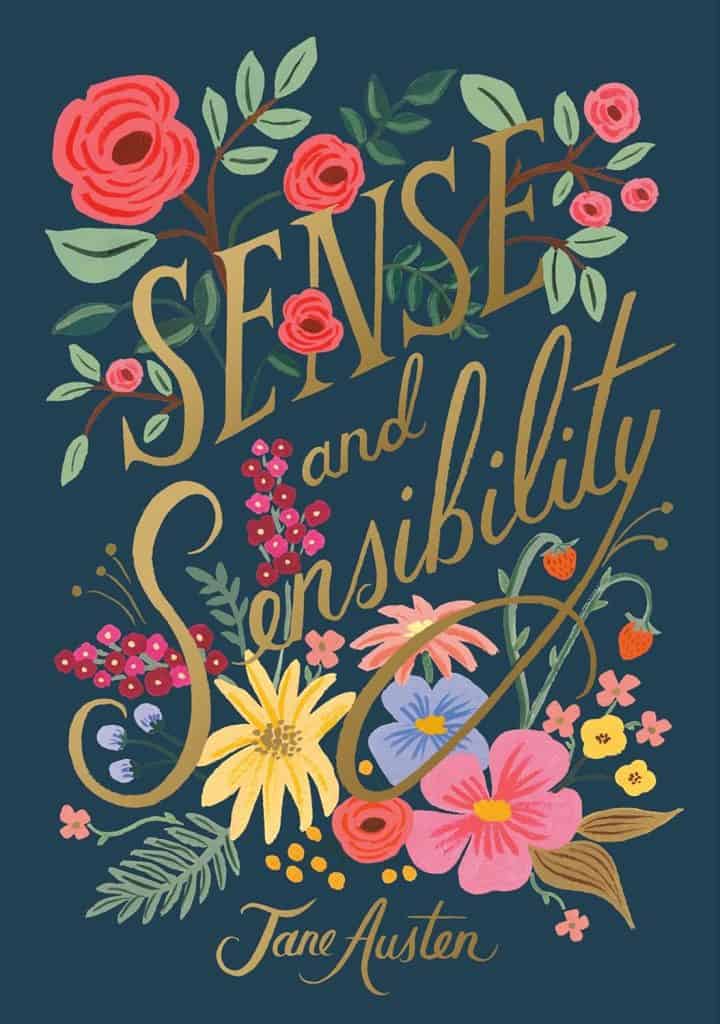
Sense and Sensibility sits comfortably at number three because I love the way Austen builds an entire novel around two sisters who respond to emotion almost oppositely. Elinor Dashwood controls herself. Marianne Dashwood feels everything at full volume. At first, the title practically invites us to choose which approach is superior, but the novel is much smarter than that. Both sisters have to change, and that is what makes the book work for me.
Elinor’s restraint is often treated as maturity, and much of the time it is. She thinks before acting. She considers other people’s needs. She understands practical consequences. But the burden of being the sensible person in a family can become its own form of isolation. Elinor is expected to absorb everyone’s emotions because she appears capable of handling them. Marianne creates the opposite problem. She values emotional honesty so strongly that she sometimes treats restraint as hypocrisy, and she wants feeling to prove sincerity, especially in love. Then Willoughby happens. Austen gives both women something to learn without suggesting either one should become the other. Elinor does not need to become reckless. Marianne does not need to stop feeling deeply. They need balance.
This has become more noticeable with rereading: the sisters matter more to me than the romances. The romantic relationships obviously drive much of the plot, but the emotional relationship between Elinor and Marianne is what keeps me invested. They frustrate each other because they understand life differently, but they remain deeply connected. I also appreciate how Austen places their emotional choices inside financial reality. The Dashwood women have lost economic security, and that vulnerability shapes the romantic stakes. Love never exists separately from money. That is true throughout Austen, but Sense and Sensibility makes the relationship particularly visible.
Why does it rank above Emma? This is close. I actually think Emma may be more structurally intricate and psychologically clever. But I enjoy spending time with Elinor and Marianne more, and that matters in a personal ranking. I am not handing out literary achievement trophies. I am deciding which books I most want to reread, and Sense and Sensibility wins that contest by a narrow margin.
You can get a copy of Sense and Sensibility on Amazon.
4. Emma
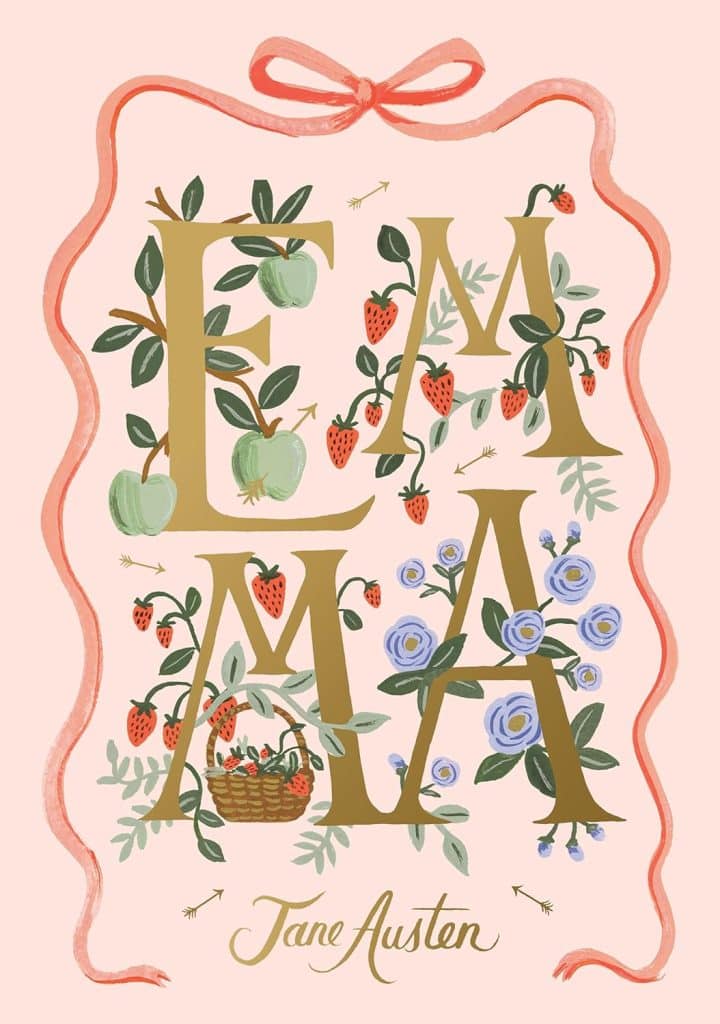
Emma is one of Austen’s most fascinating novels because the heroine is both delightful and profoundly irritating. Emma Woodhouse is wealthy, clever, charming, socially secure, and convinced that she possesses unusual insight into other people’s romantic lives. Unfortunately for almost everyone around her, she is wrong with tremendous confidence. I love this setup. Austen gives Emma enough intelligence to make her mistakes believable. She is not foolish. She is simply very good at arranging evidence around whatever conclusion she already prefers. Again, painfully modern.
The entire novel is essentially a study of misreading. Emma misreads Harriet. She misreads Mr. Elton. She misreads Frank Churchill. She misreads Jane Fairfax. Most importantly, she misreads herself. That makes the romance especially satisfying, because the central love story has been sitting inside Emma’s life while she busies herself constructing romantic stories for everyone else. Her great mistake is not simply matchmaking. It is assuming she occupies a completely objective position from which she can interpret everybody else, and Austen slowly dismantles that belief.
What has grown on me most is that Emma is Austen’s great novel about self-awareness. Emma’s journey is not primarily about becoming kinder because she begins as secretly terrible. She has many generous impulses. Her problem is that good intentions do not protect other people from the consequences of her mistakes. That distinction becomes clearest in moments when Emma finally sees how her behavior has affected someone more vulnerable than herself. Austen lets her heroine be privileged, likable, selfish, generous, perceptive, blind, and capable of growth at the same time, which is much more interesting than a perfectly admirable heroine.
So why number four? I admire Emma enormously. I sometimes admire it slightly more than I love reading it. There are stretches where Emma’s matchmaking schemes make me want to reach into the novel and gently confiscate her access to other people’s romantic lives. That frustration is intentional, and it works. It simply means Sense and Sensibility currently edges it out for me on rereading pleasure. Ask me again in two years and this could easily reverse.
You can get a copy of Emma on Amazon.
5. Mansfield Park

Mansfield Park is the book I find harder to describe through the word “favorite.” I think it may be one of Austen’s most intellectually interesting novels, and I also understand completely why it produces such divided reactions. Fanny Price does not have Elizabeth’s wit, Emma’s confidence, or Marianne’s passionate presence. She is quiet, dependent, observant, physically vulnerable, and morally stubborn. That can make her difficult for readers who want an immediately charismatic heroine, and I think it also makes the novel unusually challenging.
Mansfield Park makes me use my brain more than my heart. That is still the best way I can put it. The novel makes me think about morality, education, wealth, family obligation, class, performance, social ambition, and what it costs to hold onto your principles when everyone around you thinks you are being unreasonable. Fanny begins as a poor relation brought into the wealthy Bertram household, and she is never allowed to forget completely that she occupies a different position from her cousins. That outsider status teaches her to observe. It also gives the novel a much more uncomfortable power dynamic than some of Austen’s lighter social comedies.
Fanny Price is more interesting than lovable to me, and I do not need every heroine to be charming. Her strength is not social brilliance. It is refusal. Fanny is surrounded by people who are wealthier, louder, more confident, and more socially powerful than she is, and when she believes something is wrong, she holds her position even when doing so makes her life substantially more difficult. There are moments when I disagree with her, and moments when her moral seriousness feels restrictive. But that is part of why the book makes me think. Austen does not make Fanny easy.
The private theatrical production is one of my favorite Austen set pieces, because it brings so many of the novel’s tensions into one space. Performance becomes flirtation. Social rules become temporarily unstable. Characters use the play to express things they cannot say directly, and Fanny’s refusal to participate separates her even further from the others. It is a perfect Austen situation, because something that appears to be entertainment becomes a test of character, desire, boundaries, and self-deception.
It is not at number five because I think it is weak. It is here because I return to Austen partly for pleasure, and Mansfield Park asks more from me than several of the others. It is denser morally. The heroine is less immediately inviting. The romance is less satisfying to me than the questions surrounding it. But I would never remove it from an essential Austen shelf. If anything, it may be the novel I am most likely to keep arguing with, and that gives it enormous value.
You can get a copy of Mansfield Park on Amazon.
6. Northanger Abbey
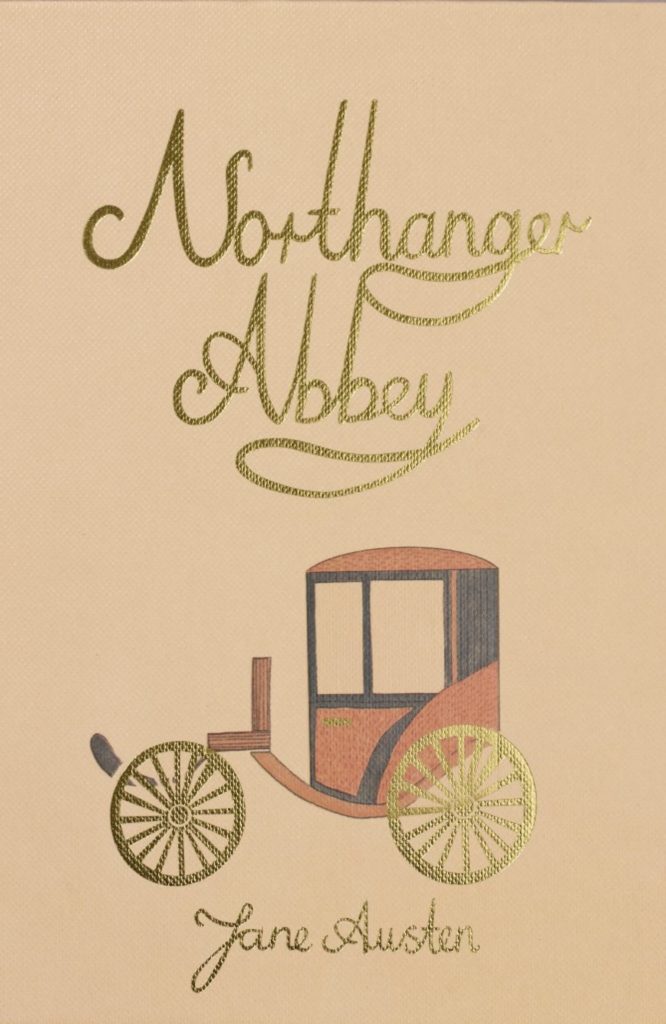
Putting Northanger Abbey at number six feels unfair, because I genuinely enjoy it. This is Austen being playful with Gothic fiction, readers, imagination, and the way stories teach us to interpret reality. Catherine Morland loves Gothic novels so much that she begins expecting real life to behave like one. Naturally, complications follow. The setup is funny, but Austen’s attitude toward Catherine is more affectionate than cruel, and that matters to me.
Austen knows exactly what it feels like to become absorbed in a story. She also knows that reading can shape our expectations of the world. Catherine begins imagining dark secrets because fiction has trained her to look for them. The joke is not simply that Catherine reads too much. Austen herself obviously believes books matter enormously. The problem is that Catherine has not yet learned how to distinguish imaginative possibility from evidence. That gives the novel a surprisingly thoughtful idea beneath the parody: stories teach us how to read, and then we have to learn how to read life.
Austen is clearly enjoying herself here, and that may be my favorite part. Northanger Abbey lets her poke fun at literary convention while participating in it. There is romance. There is a mysterious house. There are ominous expectations. There is a heroine whose imagination is prepared to do an unreasonable amount of narrative labor. Austen continually builds the possibility of Gothic drama and then lets ordinary human selfishness provide most of the actual danger. Sometimes the villain is not an ancient curse. Sometimes it is a man interested in money. Very Austen.
Why is it last? Someone has to be. That is truly the problem with ranking six books I like. For me, Northanger Abbey has less emotional weight than the novels above it. I enjoy Catherine and the satire, but I do not think about her relationships or growth with the same intensity that I think about Anne Elliot’s regret, Elizabeth Bennet’s self-correction, or the Dashwood sisters’ emotional education. That said, number six should not be mistaken for “bad.” It is number six in a Jane Austen ranking. The competition is rude.
You can get a copy of Northanger Abbey on Amazon.
Why Pride and Prejudice Beats Persuasion for Me
This is probably the closest fight at the top. If I rank according to emotional maturity alone, Persuasion makes an extremely convincing case. Anne and Wentworth have history. Their love exists in the shadow of time, regret, resentment, and the possibility that some mistakes cannot be repaired, and that emotional register has become more meaningful to me as I have gotten older. But Pride and Prejudice still gives me more of what I want from Austen in one place. It has the family comedy, the social satire, the romantic tension, the class critique, the embarrassing relatives, the self-deception, and the transformation. It is the novel where I feel Austen’s entire toolkit operating at once. So Persuasion may hurt more beautifully. Pride and Prejudice still wins the whole package.
Why My Jane Austen Ranking Changes When I Reread Her
I think this is one of the most interesting things about Austen. At different ages, different heroines become louder. A younger reader may naturally respond to Elizabeth’s confidence and romantic discovery. Later, Anne’s regret may become more recognizable. Charlotte Lucas may stop looking merely practical and start looking frighteningly clear-eyed about her circumstances. Mrs. Bennet may remain ridiculous while also becoming easier to understand once you pay attention to what happens financially if Mr. Bennet dies. The books do not change. The reader does. That is one reason I expect to keep ranking Austen for the rest of my reading life without ever producing a final answer.
My Austen Superlatives
The Jane Austen novel I appreciate more with age: Persuasion. The idea of a second chance means something different once you understand that time changes people whether or not they want it to. Anne cannot simply recover the girl she was when she rejected Wentworth. Wentworth cannot erase the years of resentment. Their relationship only works if they meet each other again as the people they have become. That gives the romance a depth I did not fully appreciate when I was younger, and I suspect this is why so many longtime Austen readers eventually become very protective of Persuasion. It waits for you.
The one I find most interesting to argue about: Mansfield Park. I can understand why readers dislike Fanny, and I can understand why others defend her fiercely. I can understand discomfort with the romance, admiration for Fanny’s resistance, and frustration with her judgment. That much disagreement usually means a book is doing something interesting. I would much rather argue with a classic than admire it politely from across the room.
The funniest: Northanger Abbey. This one depends on what kind of humor you enjoy. Pride and Prejudice has some of Austen’s most iconic comic characters, while Emma gets enormous mileage out of a heroine’s confident misunderstandings. But if I am choosing the novel where Austen seems most openly amused by the entire literary situation, I would give the title to Northanger Abbey. Catherine wants life to behave like a novel, and Austen keeps reminding her that actual human beings are fully capable of causing trouble without secret manuscripts or haunted corridors. That joke still works.
The most romantic: Persuasion. Pride and Prejudice may be the most satisfying romantic comedy, but Persuasion gives me longing. There is history between Anne and Wentworth. There is loss. There are years in which both have had to continue living without the future they once imagined. Their eventual reconnection therefore feels less like the beginning of romance and more like the recovery of something both thought might be permanently gone. Ask me again after another reread and I reserve the right to become inconsistent. Jane Austen herself would probably approve of recognizing one’s capacity for error.
The most underrated: Sense and Sensibility. It obviously is not obscure, but I think it sometimes gets overshadowed by Pride and Prejudice, Emma, and the passionate reader devotion surrounding Persuasion. The Dashwood sisters deserve more credit. Their emotional contrast gives Austen a way to explore two incomplete philosophies of life without making either sister merely a lesson for the other, and the financial vulnerability surrounding their romantic choices gives the novel real stakes from the beginning. It may not be the Austen book people argue about most loudly. I think it quietly does a lot extremely well.
My favorite heroine: Elizabeth Bennet, with Anne Elliot gaining. I love that Austen allows Elizabeth to be witty and perceptive without making her automatically correct. Elizabeth is enjoyable partly because she knows she is intelligent, and then the novel forces her to discover the limits of that intelligence. I also have increasingly strong affection for Anne Elliot, whose quiet emotional intelligence feels very different from Elizabeth’s energy. If Elizabeth is the heroine I most enjoy spending time with, Anne may be the one whose emotional world has grown most meaningful to me.
The best character growth: Emma. Emma Woodhouse begins with enormous confidence in her ability to interpret other people, and the novel methodically reveals how much she has failed to understand. What I appreciate is that her growth does not require Austen to erase everything enjoyable about her personality. Emma remains intelligent, socially confident, and capable of acting. She simply becomes more aware of the limitations of her judgment and of the effects her actions can have on people with less power than she possesses. That feels like genuine growth rather than personality replacement.
Why Jane Austen Rankings Are So Personal
We tend to talk about literary rankings as though the goal is to identify the objectively correct sequence. I do not think that is especially interesting. What I want to know is why someone puts a book first. Which heroine do you understand? Which romance works on you? Which flaws make you sympathetic rather than annoyed? Which themes have become louder because of where you are in your life? Those answers tell me much more than a score.
My Jane Austen ranking reveals that I value self-knowledge, emotional growth, social observation, and romances where the relationship becomes more satisfying because the characters have had to reconsider themselves. Someone else may rank according to humor, experimentation, morality, romantic intensity, or comfort. That is why Austen rankings become such good conversations. We are not really arguing only about the books. We are revealing what we value when we read them. If you are still deciding where to begin, my guide to where to start with Jane Austen is a better place than a ranking, and my Austen mood guide can help you choose your next one.
Frequently Asked Questions About the Best Jane Austen Books
What are the best Jane Austen books?
My current ranking of Jane Austen’s six completed novels is Pride and Prejudice, Persuasion, Sense and Sensibility, Emma, Mansfield Park, and Northanger Abbey. I genuinely like all six, and my order changes as I reread them.
What is Jane Austen’s best book?
For me, Pride and Prejudice remains Austen’s best overall novel because it balances romance, wit, social commentary, character growth, family dynamics, and class criticism exceptionally well. A reader who values emotional subtlety may prefer Persuasion, while someone fascinated by moral complexity may choose Mansfield Park.
What are Jane Austen’s six completed novels?
Jane Austen’s six completed novels are Sense and Sensibility, Pride and Prejudice, Mansfield Park, Emma, Northanger Abbey, and Persuasion. If you want them in publication order, my Jane Austen books in order guide covers the timeline.
Which Jane Austen novel is the most romantic?
I currently consider Persuasion Austen’s most romantic novel because Anne Elliot and Captain Wentworth’s relationship is shaped by lost time, regret, lingering love, and the possibility of a second chance.
Which Jane Austen novel is the funniest?
I find Northanger Abbey especially funny because Austen openly parodies Gothic fiction and the way readers allow stories to shape their expectations. Pride and Prejudice and Emma also contain some of Austen’s strongest social comedy.
Which Jane Austen book has the best romance?
My favorite overall romance is Elizabeth Bennet and Mr. Darcy in Pride and Prejudice, while I think Anne Elliot and Captain Wentworth in Persuasion offer Austen’s most emotionally mature and romantic love story.
Why is Mansfield Park ranked so low?
I find Mansfield Park intellectually fascinating, but I enjoy rereading the four novels above it more. Fanny Price, the moral questions, and the social dynamics make it deeply interesting even when it is not my most pleasurable Austen reading experience.
Is Northanger Abbey Jane Austen’s worst novel?
I would not call it a bad novel at all. It ranks sixth for me only because something has to occupy that position. I enjoy its Gothic parody, Catherine Morland’s imagination, and Austen’s playful treatment of reading and storytelling.
Does your Jane Austen ranking change?
Yes, and I expect it to keep changing. Persuasion in particular has grown enormously for me over time, while every reread makes me notice different strengths in the other novels.
Final Thoughts
Ranking Jane Austen feels slightly absurd because putting Northanger Abbey at number six does not mean I would hesitate to reread it. That is what happens when the shelf is this strong. Right now, though, Pride and Prejudice is still my number one. It gives me the version of Austen I most enjoy: funny, romantic, socially observant, psychologically sharp, and deeply interested in what happens when intelligent people become too confident in their own interpretation of the world.
Persuasion is the book gaining on it. The more life I live, the more Anne Elliot’s story of regret, time, and another chance affects me. I would not be shocked if one day I quietly rearrange this ranking and pretend I never said anything else. Sense and Sensibility remains the novel I think deserves more love. Emma may be Austen’s most intricate lesson in self-awareness. Mansfield Park is the one I want to discuss after finishing because I am never entirely done arguing with it. Northanger Abbey reminds me that Austen could be enormously playful and that literary seriousness does not require everyone to stop having fun.
That is why I like ranking her novels even though the ranking itself is temporary. Each reread reveals what I am responding to now. And maybe that is one of the reasons classics remain alive in the first place. We are not reading the exact same book at seventeen, thirty, forty, or sixty, because we are not bringing the exact same reader with us. So this is my Austen ranking today: Pride and Prejudice, Persuasion, Sense and Sensibility, Emma, Mansfield Park, and Northanger Abbey. I fully expect future me to cause problems.
If you have read all six Jane Austen novels, I want your ranking in the comments, Bookish Besties. Tell me which book you would put at number one, which one you think I have criminally underrated, and whether Persuasion has also become more dangerous to your rankings the older you get.