
Emma by Jane Austen: Summary, Analysis, Themes & Ending
Emma by Jane Austen summary and analysis with themes, characters, romance, ending explained, and my take on Emma’s growth, class, and self-knowledge today.

Emma Is a Romance, But Emma Woodhouse Is the Real Love Story
Hi Bookish Besties, Every time I return to Emma, I become more convinced that Jane Austen pulled off something incredibly clever: she wrote a romance in which the heroine spends almost the entire novel obsessing over everyone else’s love life so she does not have to recognize what is happening in her own. Emma Woodhouse believes she is an exceptional reader of people, which would be more convincing if she were not wrong about Mr. Elton, Harriet Smith, Frank Churchill, Jane Fairfax, and eventually herself. Watching that confidence slowly collapse is one of the reasons I enjoy the book so much.
A friend once told me that Emma simply needs to mind her own business, and unfortunately there is no better summary of several hundred pages of plot. Emma does not have a group chat where she can quietly speculate about everybody’s relationships, so she has to interfere directly. Austen turns that meddling into comedy, but she also makes the consequences matter, because Emma is wealthy, socially powerful, and capable of influencing people who do not have the same security she does.
That is why I would never describe Emma as only a romantic comedy. Yes, Emma by Jane Austen is absolutely a romance, but the romance is not the novel’s primary engine. Emma’s deeper journey is learning that her confidence in reading everybody else has allowed her to avoid reading herself accurately. Mr. Knightley matters, but the relationship becomes satisfying only after Emma becomes more capable of seeing herself, her privilege, and the effects of her behavior clearly.

For me, that is the real reason Emma holds up. Austen is not simply waiting for her heroine to discover who she loves. She is waiting for Emma to become the kind of person who can recognize love without turning it into another theory about someone else’s life.
Spoiler note: This guide contains full spoilers for the novel, including the ending and romantic pairings.
Emma by Jane Austen: Quick Summary
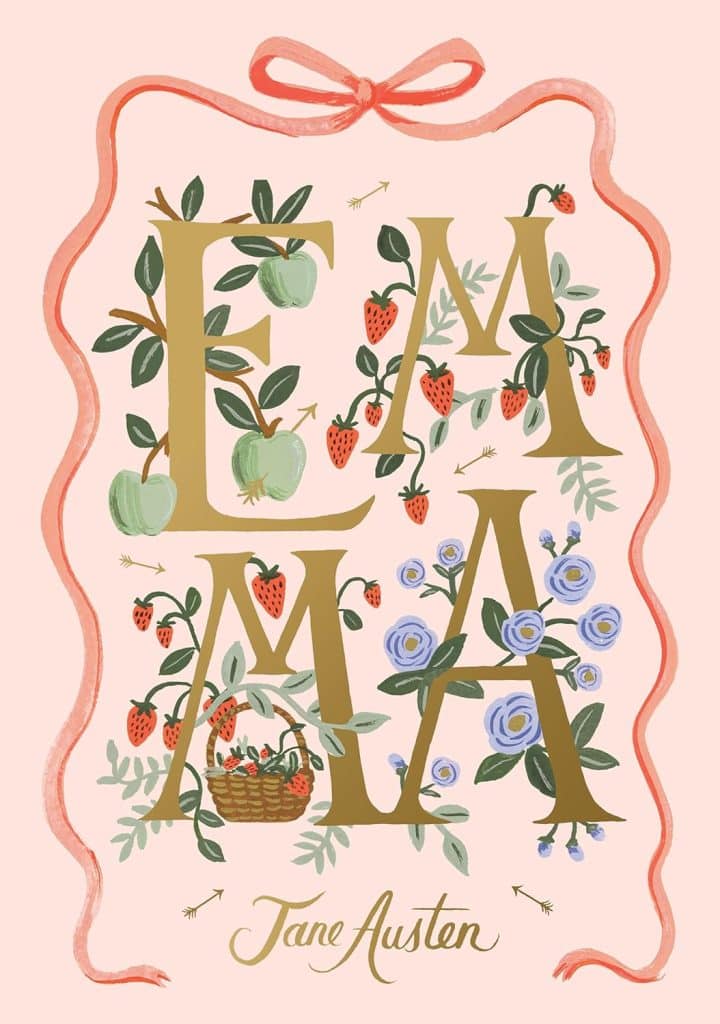
Emma follows Emma Woodhouse, a wealthy young woman living at Hartfield with her widowed father in the village of Highbury. Emma is intelligent, socially secure, and confident in her own judgment, and after taking credit for the marriage of her former governess Miss Taylor to Mr. Weston, she decides that she has a particular talent for matchmaking.
Her next project is Harriet Smith, a sweet but socially uncertain young woman whose parentage is unknown. Emma persuades Harriet to reject a proposal from respectable farmer Robert Martin because Emma believes Harriet can marry someone of higher social status. Emma then becomes convinced that Mr. Elton, the local clergyman, is secretly in love with Harriet. He is not. Mr. Elton is interested in Emma herself, and when he proposes to her, Emma is forced to acknowledge the first major failure in her matchmaking. Unfortunately, this does not immediately cure her of believing she understands everyone.
The arrival of charming Frank Churchill gives Emma another person to interpret, while the reserved Jane Fairfax becomes the subject of Emma’s suspicion and jealousy. Emma convinces herself that Frank may be interested in her and later imagines possible romantic connections between Frank and Harriet, all while completely missing the fact that Frank and Jane are secretly engaged.
Meanwhile, Mr. Knightley, Emma’s longtime friend and the brother of her sister’s husband, repeatedly challenges her behavior and judgment. It takes Harriet revealing that she has feelings for Knightley for Emma to realize something she has failed to understand for the entire novel: she loves him herself.
What Is Emma Really About?
At the surface level, Emma is about matchmaking, romance, friendship, and the social world of a small English community. Underneath that, I think it is one of Austen’s sharpest novels about self-deception. Emma spends the book interpreting everybody. She decides what Harriet should want, what Mr. Elton feels, what Frank Churchill means, what Jane Fairfax is hiding, and what romantic future would be best for everyone around her. The irony is that she has almost no idea what is happening emotionally inside herself.
That makes matchmaking more than a comic plot device. It becomes the perfect expression of Emma’s central flaw. She treats other people’s lives as stories she can arrange, and Austen has to teach her that people are not characters in a narrative Emma gets to control.
Is Emma by Jane Austen a Romance?
Yes, Emma is a romance. Courtship, attraction, proposals, marriage, and romantic misunderstanding drive a large part of the plot, and the novel eventually resolves several romantic relationships. Emma and Mr. Knightley become engaged, Harriet returns to Robert Martin, and Frank Churchill’s secret engagement to Jane Fairfax becomes public.
But I would argue that Emma is a novel of self-knowledge disguised as a matchmaking romance. Emma spends most of the book assuming that romance is something she can observe objectively from the outside. She believes she can identify attraction, create opportunities, elevate Harriet socially, and arrange relationships according to her own interpretation of what everyone needs. Meanwhile, Austen hides Emma’s actual love story from the person who should know it best: Emma. That is what makes the romance so clever.
Why Emma and Knightley’s Romance Stays in the Background
Austen could have written Emma as a straightforward story in which Emma gradually falls for Knightley. Instead, Knightley is already embedded in her life. He visits Hartfield. He argues with her. He knows her family. He challenges her judgment. He irritates her in ways that only someone with emotional access can manage. Because Emma does not initially categorize him as a romantic possibility, she does not apply the same matchmaking imagination to him that she applies to everybody else, and that allows the relationship to develop in plain sight.
For me, the romance becomes satisfying because Emma’s realization is also a realization about herself. She cannot recognize what Knightley means to her until she stops treating romance as an intellectual puzzle happening to other people.
Is Emma Jane Austen’s Most Romantic Novel?
I would not call Emma Austen’s most romantic novel. For me, Persuasion wins if we are talking about longing and emotional ache, while Pride and Prejudice gives us the most satisfying balance of romantic tension, conflict, and transformation. What Emma gives us is something different. It may be Austen’s most hidden romance. The heroine is so preoccupied with arranging everybody else’s love life that she fails to recognize her own. That makes the romantic payoff less about discovering a mysterious stranger and more about finally seeing a familiar person differently. I love that distinction. Knightley has been there all along. Emma’s understanding has to catch up.
Emma Woodhouse: Why I Like a Heroine Who Gets Things Wrong
Emma is twenty-one, wealthy, attractive, intelligent, and socially powerful within Highbury. Unlike many Austen heroines, she is not facing immediate financial pressure to marry, and that changes the story dramatically. Elizabeth Bennet’s family situation gives marriage real economic stakes. The Dashwood sisters experience financial insecurity directly. Anne Elliot’s family has rank but declining finances. Emma is secure. She expects to remain at Hartfield with her father and initially declares that she has little intention of marrying. That security gives her enormous freedom, but it also contributes to her blind spots. She has been protected enough to believe her judgment carries few consequences.
Emma’s Greatest Flaw Is Not Matchmaking
I do not think matchmaking itself is Emma’s deepest flaw. Her real problem is overconfidence in her own interpretation. She assumes that because she is intelligent, she is perceptive, and those are not the same thing. Emma sees clues and then arranges them around whatever conclusion she has already reached. Once she decides Mr. Elton loves Harriet, almost everything he does becomes evidence. Once she imagines Frank Churchill may have feelings for her, she reads his behavior through that possibility. Once she begins constructing a story about Jane Fairfax, Jane’s privacy becomes suspicious rather than understandable.
Emma is constantly gathering information. Her problem is interpretation. That is why she still feels so recognizable to me. We have all decided what something meant and then conveniently noticed only the evidence supporting us. Emma simply has enough free time to turn the habit into a full community project.
The Main Characters in Emma
Harriet Smith and the Cost of Emma’s Interference
Harriet Smith is essential because she makes Emma’s mistakes consequential. Harriet has uncertain parentage and less social power than Emma, which makes her much more vulnerable to Emma’s influence. Robert Martin loves Harriet and proposes marriage, and Emma discourages Harriet from accepting because she believes Robert is socially beneath the future Emma imagines for her. This is where Emma’s class prejudice becomes impossible to separate from her matchmaking. Emma genuinely likes Harriet. She also reshapes Harriet’s expectations according to Emma’s own social assumptions. That is not friendship at its healthiest.
Robert Martin matters because he exposes the weakness in Emma’s judgment very early. Knightley respects him. He is responsible, sincere, hardworking, and genuinely attached to Harriet. Emma dismisses him largely because of social rank, which reveals something important: Emma claims to be arranging Harriet’s happiness, but she is actually teaching Harriet to value Emma’s hierarchy. By the end, Harriet’s marriage to Robert Martin is not simply a romantic resolution. It corrects one of Emma’s earliest attempts to turn class prejudice into romantic advice.
Mr. Elton and Emma’s First Major Misreading
Mr. Elton is one of my favorite examples of Austen letting a heroine become completely convinced of a theory the reader increasingly suspects is wrong. Emma interprets Elton’s attention as interest in Harriet. Every compliment becomes evidence. Every social interaction becomes meaningful. The portrait episode practically glows with romantic possibility in Emma’s mind. The problem is that Elton is interested in Emma. His proposal forces her to confront a humiliating fact: she has not merely misunderstood one conversation. She has built an entire romantic narrative around evidence she interpreted incorrectly. That should cure her. It does not. Austen has more work to do.
Frank Churchill: Charm as a Distraction
Frank Churchill is exactly the kind of character Emma is vulnerable to misreading, because he is charming, socially confident, entertaining, and difficult to pin down. He gives Emma attention. She enjoys him. She can imagine herself being in love with him because the idea fits the sort of story she expects. But there is a crucial difference between enjoying the possibility of romance and actually loving someone, and Emma eventually recognizes that difference.
Frank’s deeper role in the novel is even more interesting, because much of his behavior is performance. He is secretly engaged to Jane Fairfax, which means many of the flirtations and social games Emma interprets as meaningful are part of a deception. Emma thinks she is observing the romantic plot. She is actually being used as cover for it.
Jane Fairfax and Emma’s Jealousy
Jane Fairfax is one of the most interesting characters in Emma because she functions almost like Emma’s opposite. Jane is accomplished, reserved, financially vulnerable, and constrained by circumstances Emma never has to face. Emma does not particularly like her, and that reaction becomes revealing. Jane’s accomplishments make Emma uncomfortable in a way Harriet’s admiration does not. Harriet looks up to Emma. Jane can rival her.
Jane’s future appears to be governess work unless marriage changes her circumstances. Emma, meanwhile, can announce that she has no intention of marrying because her wealth gives her the option. That contrast matters enormously. Two intelligent young women can live in the same social world while having radically different degrees of freedom. Emma’s dislike of Jane therefore becomes more than personality conflict. Austen puts privilege beside vulnerability and lets us see how differently those women have to behave. Emma can afford openness. Jane has secrets because Jane has more to lose.
The secret engagement between Frank and Jane is one of Austen’s smartest plot devices, because it exposes Emma’s interpretive weakness on multiple levels. Emma misses the relationship entirely. She becomes briefly interested in Frank herself. She later encourages Harriet’s hopes involving him. She speculates about Jane while missing the truth directly in front of her. Once the engagement is revealed, earlier scenes change meaning, which is one reason Emma rewards rereading so well. The first time, we experience much of the confusion with Emma. On reread, we can see what she cannot, and that changes the comedy.
Mr. Knightley as Emma’s Moral Counterweight
Mr. Knightley occupies a complicated position in the novel. He is Emma’s friend, critic, eventual romantic partner, and one of the few people willing to tell her when she is behaving badly. Emma is accustomed to being indulged. Knightley does not indulge her in the same way, and that gives their relationship friction. He respects her intelligence enough to expect better from her. I think that is essential to understanding why Austen pairs them. Knightley does not love an imaginary version of Emma. He knows exactly how difficult she can be.
The Age Gap Between Emma and Knightley
Modern readers often notice that Knightley is considerably older than Emma. Emma is twenty-one, while Knightley is about sixteen years older and has known her since she was very young. That can make the relationship feel uncomfortable to contemporary readers, and I think it is completely reasonable to discuss it rather than pretending the age difference disappears because the novel is a classic.
What matters to me within the novel is that Austen spends considerable time establishing Emma’s independence. Knightley does not financially rescue her. He does not elevate her social position. And importantly, the ending accommodates Emma’s responsibility toward her father rather than simply requiring Emma to leave Hartfield and enter Knightley’s household. Still, a modern reader does not have to ignore the age gap in order to appreciate what Austen is doing with the relationship. Classics can hold discomfort and literary interest at the same time.
Why the Box Hill Scene Matters
The Box Hill scene is one of the most important moments in Emma. The gathering begins as an outing and gradually becomes socially uncomfortable. Frank Churchill encourages a playful game, and Emma, caught up in the atmosphere, makes a cruel joke at Miss Bates’s expense. Miss Bates has far less money and social power than Emma, and that imbalance transforms what Emma treats as clever teasing into something genuinely hurtful. Knightley confronts her afterward. His criticism devastates Emma because she knows he is right.
I think Box Hill matters more than any matchmaking failure. Being wrong about Mr. Elton embarrasses Emma. Hurting Miss Bates changes her. That distinction is crucial. Emma finally recognizes that her social power can wound people. Her wit is not harmless simply because she intended to be funny, and her confidence does not excuse cruelty. The next day, she visits Miss Bates. That action is small, but morally it matters. Emma has begun moving away from self-justification toward accountability.
Miss Bates is easy for wealthier characters to overlook because she is talkative, socially dependent, and financially limited. Austen makes her comic, but she does not make her disposable, and that difference becomes clear at Box Hill. Emma’s joke crosses a line because Miss Bates cannot answer Emma as an equal. The scene forces Emma to recognize that manners are not simply decorative rules. They can protect people from the cruelty of unequal power. That makes Austen’s social comedy much sharper than jokes about etiquette.
Is Emma a Likeable Character?
I think Emma is likeable precisely because Austen lets her be unlikeable sometimes. She is generous in certain situations and selfish in others. She loves her father deeply but can be impatient with other people. She genuinely cares about Harriet while also manipulating Harriet’s choices. She has intelligence without enough humility. She can be kind and cruel within the same social world. That complexity makes her feel alive. A heroine who never misjudges anyone would not have much of an arc, and Emma has plenty of room.
The Major Themes in Emma
Self-Knowledge
Self-knowledge is the central theme of the novel for me. Emma knows everyone else’s business. She does not know herself. That contradiction drives the matchmaking, the comedy, the romance, and eventually the transformation. The moment Harriet reveals feelings for Knightley forces Emma into an emotional recognition she cannot intellectualize away. Suddenly, all the analysis points inward. Emma realizes she loves Knightley, and she also recognizes that her own interference may have helped create the possibility of losing him. For once, she cannot simply rearrange somebody else’s romantic future. She has to sit with what she feels.
Matchmaking and Why Emma Keeps Getting Love Wrong
Matchmaking is more than something Emma does because she is bored. It represents her desire to control narrative. Emma likes placing people into stories. She sees Harriet and imagines a more elevated future. She sees Mr. Elton and assumes he belongs in that future. She observes Frank Churchill and turns his behavior into several possible romantic narratives. The actual relationships refuse to cooperate, and that is Austen’s point. Human beings do not exist to complete Emma’s plot.
Emma understands social patterns better than she understands emotional truth. She knows who has money. She understands rank. She notices manners. She recognizes what society considers an appropriate match. But love continually refuses to obey her models. Robert Martin loves Harriet despite Emma’s belief that Harriet should aim higher. Elton wants Emma rather than Harriet. Frank loves Jane while flirting elsewhere. Emma loves Knightley without initially realizing it. The novel keeps telling her the same thing: love cannot be managed simply by reading the social chart correctly.
Social Class, Marriage, and Money
Class is everywhere in the novel. Emma occupies one of the highest positions in Highbury’s local social hierarchy, and that status shapes who she considers appropriate for Harriet, how she views Robert Martin, how she reacts to the Coles, and how easily she moves through the community. Her class assumptions are not separate from her mistakes. They help create them. Austen allows Emma to be generous while still being class-conscious, and that contradiction is important. Emma does not need to become a cartoon snob for Austen to expose the prejudices embedded in her worldview.
Unlike many Austen heroines, Emma does not need to marry for financial survival. Harriet does not have the same security. Jane Fairfax certainly does not. Miss Bates shows another possible future for an unmarried woman without substantial wealth. That range of female economic circumstances matters, because the novel’s marriages cannot be separated from money and social position even though Emma herself can initially pretend marriage is optional. Austen gives her heroine exceptional privilege and then surrounds her with women who reveal how exceptional that privilege really is.
Female Friendship
Harriet and Emma’s friendship is affectionate, but it is unequal. Emma is older, wealthier, more socially powerful, and more confident. Harriet is eager to be guided. That creates a relationship where influence can easily turn into control. Emma tells herself she is improving Harriet, but improvement according to whose standard? That question becomes increasingly uncomfortable as Emma’s advice pulls Harriet away from Robert Martin and encourages expectations that Emma herself created. By the end, Austen has not shown us that friendship is bad. She has shown us that friendship becomes dangerous when one person assumes affection gives them authority over the other’s life.
Appearance Versus Reality
Nearly every major plotline depends on the gap between appearance and reality. Mr. Elton appears attentive to Harriet because Emma interprets his behavior that way. Frank appears romantically available while secretly engaged. Jane appears cold or mysterious because she cannot reveal the truth. Harriet’s parentage becomes the subject of fantasies that do not match reality. Emma appears to understand everyone, and she does not. Austen turns social interpretation into suspense. Who actually understands what is happening? Usually fewer people than the room believes.
Why Free Indirect Discourse Matters in Emma
Emma is particularly famous for the way Austen keeps us close to Emma’s consciousness. The narration often absorbs Emma’s assumptions without stopping to say, “Emma is wrong.” That means readers can become trapped inside her interpretations. I love this because Austen makes the narrative technique serve the theme. A novel about misreading people invites us to misread people alongside its heroine. Then the evidence changes, and we have to reinterpret earlier scenes. Emma’s education becomes ours.
Emma and Mr. Knightley’s Relationship
Emma and Knightley’s relationship is built on familiarity rather than mystery. They know each other’s families. They argue. They disagree. Knightley sees Emma’s flaws clearly, while Emma is comfortable enough around him to challenge him in return. That creates a very different romantic dynamic from Elizabeth and Darcy. The tension in Emma is not primarily “Will these two enemies understand one another?” It is “When will Emma understand what this relationship already means to her?” That is why Harriet’s confession becomes so powerful. Emma’s jealousy finally tells her something her intelligence missed.
Knightley’s feelings develop more subtly than a straightforward courtship plot would suggest. He is deeply attentive to Emma, frequently concerned with her behavior, and increasingly jealous of Frank Churchill. The revelation of Frank and Jane’s engagement changes what Knightley believes may be possible, so his proposal arrives after both characters have been forced to reconsider their assumptions. I think that matters. Austen does not simply reward Emma with the man who corrected her most effectively. The relationship works because both have emotional stakes that become clearer over the course of the novel.
What Happens at the End of Emma?
Near the end of the novel, multiple romantic misunderstandings unravel. Frank Churchill’s secret engagement to Jane Fairfax becomes public after the death of Mrs. Churchill removes the primary obstacle to their marriage. Harriet then reveals that she has developed feelings for Mr. Knightley. That revelation forces Emma to recognize immediately that she loves Knightley herself. It is one of the novel’s great ironies. Emma can spend months inventing romances for everyone else, but she understands her own heart only when she thinks she may lose the person she loves. Knightley later proposes to Emma, and she accepts.
Emma Ending Explained
The ending resolves Emma’s romantic future, but it also demonstrates how much she has changed. Emma cannot simply marry Knightley and abandon her father, whose anxieties make the idea of her leaving Hartfield deeply upsetting. Instead, Knightley agrees to move into Hartfield after the marriage. I like this detail because it prevents Emma’s happy ending from requiring her to stop being the daughter she has always been. The marriage adapts to her existing responsibilities.
Meanwhile, Harriet ultimately marries Robert Martin. That ending corrects Emma’s earliest major matchmaking mistake and acknowledges that Harriet’s happiness was never dependent upon being elevated into Emma’s social world. Robert has not magically become more socially impressive. Emma’s understanding has changed. Frank Churchill and Jane Fairfax also move toward marriage once their engagement is openly acknowledged. The hidden relationships become visible, and the imagined relationships disappear. That feels exactly right for a novel about learning to see.
Why Emma Ends Up With Mr. Knightley
Emma and Knightley end up together because the relationship combines affection, familiarity, intellectual challenge, and the possibility of mutual growth. Knightley sees Emma clearly, and Emma eventually learns to see him differently too. But I think the relationship works thematically because Knightley is the one person Emma cannot comfortably turn into a matchmaking project. He already exists outside her schemes. She cannot arrange him. She has to recognize him. That is an important difference.
What Is the Main Message of Emma?
For me, Emma is ultimately about the difference between confidence and self-knowledge. Emma begins the novel believing she understands people. By the end, she has learned how dangerous that certainty can be. She has misjudged romantic attraction. She has misjudged social status. She has underestimated the consequences of her influence. She has failed to understand her own feelings. Growth comes when Emma begins replacing certainty with humility, and that is why the novel remains more than a matchmaking comedy for me.
Why Emma Still Feels Modern
Emma feels modern because the basic behavior has survived perfectly. We still interpret other people’s relationships. We still decide we know what someone “really” meant. We still confuse confidence with accuracy. We still give friends romantic advice based partly on our own preferences. We still watch someone else’s situation from the outside and think the answer seems extremely obvious. Austen’s world has formal visits and country houses. We have group chats and screenshots. The impulse remains, which is why Emma’s mistakes never feel entirely historical to me. I recognize the behavior too well.
What Has Changed in the Way I Read Emma
When I first encountered Emma, I was mostly entertained by the matchmaking. Now I notice power more. Emma can interfere because she has social security. Harriet is susceptible to her influence because she has less. Jane Fairfax cannot behave with Emma’s freedom because her financial future is precarious. Miss Bates cannot respond to Emma’s insult as an equal because their positions in the community are different. That has made Box Hill much more important to me than it once was. Emma’s growth is not simply learning that she has been silly about romance. She has to understand that her actions carry more weight because of who she is, and that makes the book richer every time I reread it.
If you love a flawed heroine, Emma is also one of my suggested first reads in my guide to where to start with Jane Austen. You can get a copy of Emma on Amazon.
Frequently Asked Questions About Emma by Jane Austen
What is Emma by Jane Austen about?
Emma follows wealthy young Emma Woodhouse as she attempts to arrange romantic matches within her community while repeatedly misreading the people around her. The novel gradually becomes a story about self-knowledge, class, friendship, social power, romance, and learning the limits of one’s own judgment.
Is Emma by Jane Austen a romance?
Yes. Emma is a romance and ends with several marriages, including Emma’s engagement to Mr. Knightley. However, I would argue that the deeper story is Emma’s journey toward self-awareness, with the romance working as part of that transformation rather than replacing it.
Who does Emma marry?
Emma marries Mr. George Knightley. Their relationship develops from longstanding friendship and frequent disagreement into romance once Emma finally recognizes her own feelings.
Does Emma love Mr. Knightley throughout the novel?
Emma does not consciously understand her feelings for Knightley for most of the story. She realizes she loves him after Harriet reveals that she has developed romantic feelings for him, which forces Emma to confront her own jealousy and emotional attachment.
Who does Harriet Smith marry?
Harriet eventually marries Robert Martin, the farmer whose earlier proposal she rejected after Emma discouraged the match. Their marriage helps resolve one of Emma’s earliest and most consequential matchmaking mistakes.
Who are Frank Churchill and Jane Fairfax?
Frank Churchill and Jane Fairfax are secretly engaged throughout much of the novel. Because they cannot initially reveal the relationship, Frank’s public behavior helps create several of the misunderstandings Emma interprets incorrectly.
What is Emma’s biggest flaw?
Emma’s greatest flaw is her overconfidence in her own judgment. She assumes she understands other people’s feelings and social situations much better than she actually does, and that confidence leads her to interfere in lives she cannot fully understand.
What happens at Box Hill in Emma?
At Box Hill, Emma makes a cruel joke at Miss Bates’s expense. Mr. Knightley later confronts Emma about her behavior, and the incident becomes a major turning point because Emma recognizes that her wit and social power have genuinely hurt someone more vulnerable.
What are the main themes in Emma?
Major themes include self-knowledge, social class, matchmaking, romance, marriage, money, friendship, social power, appearance versus reality, female economic security, and the consequences of misjudging others.
Is Emma Woodhouse a good person?
I think Austen deliberately makes that question more complicated than a simple yes or no. Emma can be generous, affectionate, intelligent, selfish, class-conscious, meddlesome, and cruel at different moments. Her ability to recognize her mistakes and change is what makes her character arc meaningful.
Why is Emma considered a comedy?
Much of the comedy comes from dramatic irony and misinterpretation. Emma confidently constructs romantic explanations that readers gradually recognize are wrong, while characters such as Mr. Elton, Mrs. Elton, and Miss Bates create additional social comedy.
What is the main message of Emma?
For me, the novel’s central message is that intelligence without self-knowledge can still produce bad judgment. Emma has to learn that understanding other people requires humility, empathy, and an awareness of how her own assumptions distort what she sees.
Final Thoughts
I used to think the funniest part of Emma was the matchmaking. Now I think the real joke is that Emma spends an entire novel trying to interpret everybody else’s feelings while being the person least capable of recognizing her own. That is also why I think the question “Is Emma a romance?” deserves a more interesting answer than yes or no. Yes, it is a romance. Emma and Knightley’s relationship matters. Harriet and Robert Martin matter. Frank and Jane matter. Courtship structures the plot.
But Austen is doing something much smarter with all those relationships. Every romance becomes another test of Emma’s ability to interpret people. She gets Mr. Elton wrong. She gets Harriet wrong. She gets Frank wrong. She gets Jane wrong. And finally she discovers that she has even managed to get Emma Woodhouse wrong. That is the part I love more with every reread. Emma’s journey is not from single woman to married woman. It is from certainty to self-knowledge, and the romance works because that emotional change has happened underneath it.
I also appreciate Emma more now because I am less interested in requiring heroines to be lovable at every moment. Emma can be frustrating. She can be arrogant. She can hurt someone. She can meddle where she has no business meddling. And she can learn. Austen gives her enough room to be wrong without deciding that being wrong makes her irredeemable. That feels far more human to me than a heroine who arrives already knowing exactly how to behave.
So yes, I come to Emma for the romance and the social comedy. But I stay for the much more uncomfortable pleasure of watching a very intelligent woman discover that intelligence has never guaranteed that she sees herself clearly.
If you’ve read Emma, I would love to know what you think in the comments, Bookish Besties. Do you read it primarily as a romance, a comedy of manners, or a story about self-knowledge? And most importantly, at what point did you realize Emma really needed to mind her own business?


