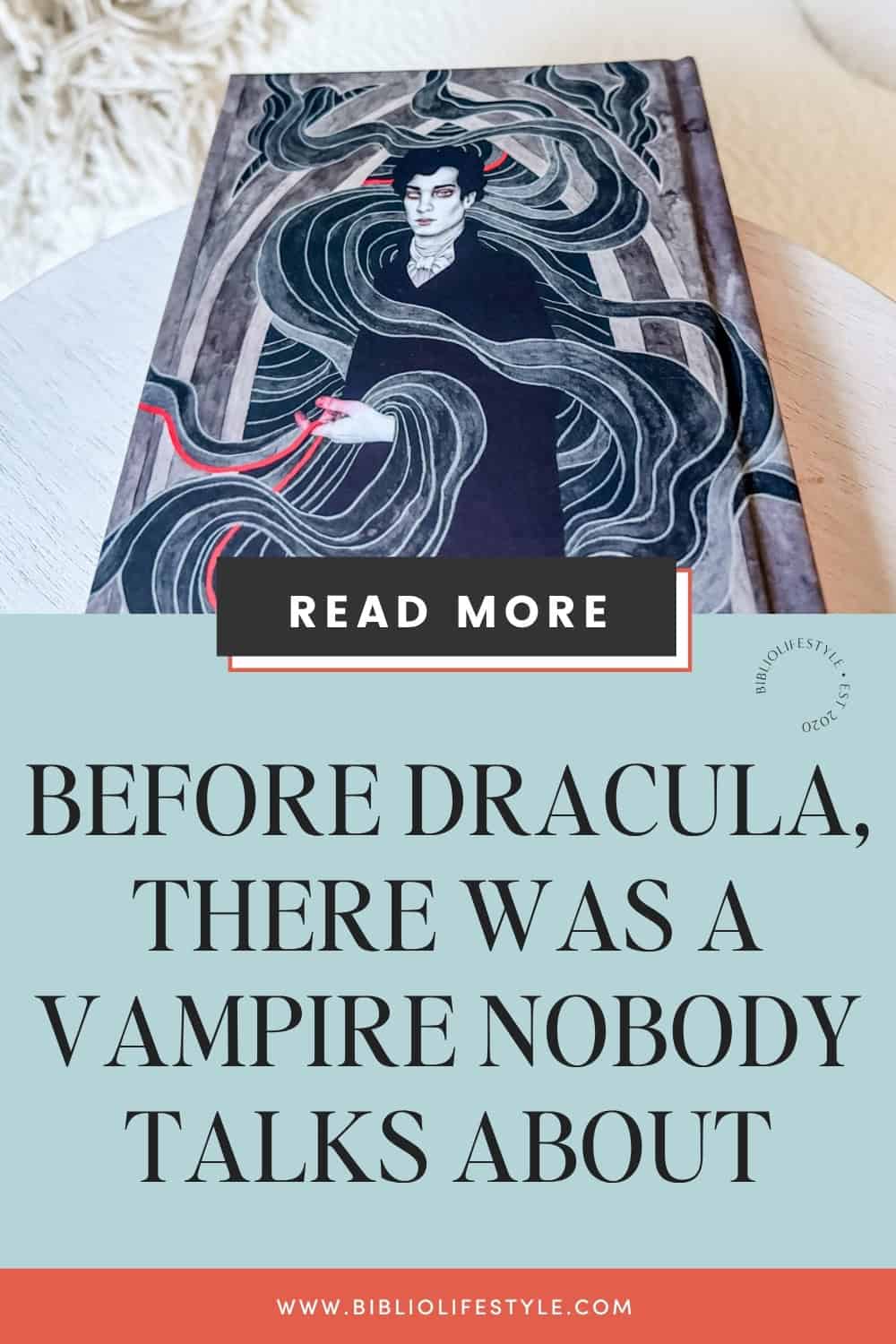
The History of Vampires in Literature From Byron to Rice
Trace the history of vampires in literature, from Polidori’s Swiss villa and Victorian London to Dracula and Anne Rice’s unforgettable New Orleans vampires.
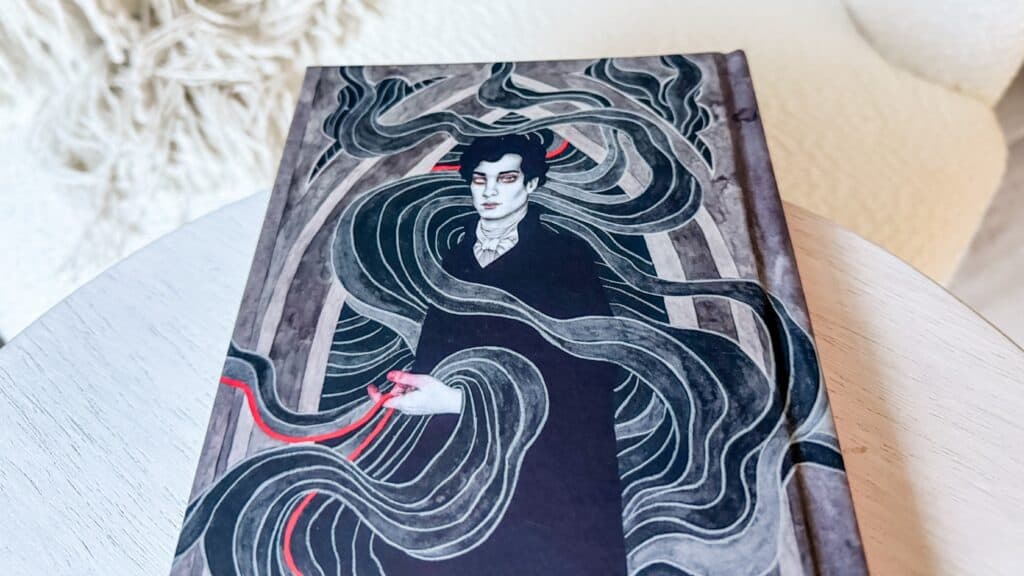
The Vampire’s 200-Year Journey: From a Swiss Villa to New Orleans
Hi Bookish Besties, I think one of the biggest misconceptions about vampires is that they’ve always been what we recognize today: beautiful, mysterious, impossibly old, usually wealthy, and somehow capable of looking fantastic despite spending most of their lives avoiding sunlight. We tend to imagine Dracula standing at the top of a Transylvanian staircase as though he’s been there since the beginning of time, waiting patiently for literature to catch up. But he hasn’t, The vampire has a history, and it’s much more interesting than simply saying Bram Stoker invented Dracula and everybody else followed. In fact, one of my favorite things about the history of vampires in literature is that you can watch this monster change as it moves from one writer to the next.
It begins as something repulsive in folklore, becomes an aristocrat in the nineteenth century, develops fangs and increasingly intimate desires, moves into a Transylvanian castle, and eventually ends up wandering the streets of New Orleans having an existential crisis. And I think that journey tells us something fascinating about why vampires have survived for so long. The vampire’s greatest supernatural power may actually be its ability to reinvent itself. Every generation seems to make the vampire into something that reflects its own fears, desires, anxieties, or fantasies. The details change, but the monster keeps finding a way to remain relevant. So today, I want to trace that evolution, from the rainy summer that gave us Frankenstein to Anne Rice’s New Orleans and the vampires still occupying our bookshelves and screens. Because once you see how these stories connect, I don’t think you’ll ever look at Dracula quite the same way again.
The Modern Literary Vampire Was Born Before Dracula
If you’ve read my post about The Haunted Summer That Invented Two Monsters, you already know where this story begins. In 1816, a group of writers gathered near Lake Geneva during the Year Without a Summer. The dreadful weather repeatedly kept them indoors, and a ghost-story challenge eventually helped inspire Mary Shelley’s Frankenstein. But another enormously influential monster came out of that gathering. Lord Byron had started a supernatural story involving a mysterious aristocratic traveler. His physician, John William Polidori, later developed a separate tale inspired in part by Byron’s abandoned idea. That story became The Vampyre, published in 1819. And while vampires had already existed in folklore and earlier literature, Polidori helped give us something distinctly modern. He made the vampire an aristocrat.

1819: Lord Ruthven Makes the Vampire Irresistible
Before Polidori, many European folkloric accounts imagined vampires as grotesque returning corpses. They were associated with graves, decay, illness, and the frightening possibility that the dead might refuse to stay dead. These were not necessarily creatures anybody wanted to kiss. Then Polidori introduced Lord Ruthven. Ruthven was mysterious, wealthy, charismatic, and dangerous. He moved through polite society, fascinated the people around him, and used his social position to conceal his predatory nature. And this is where I think the vampire becomes much more interesting. Because the monster no longer needs to announce itself by looking monstrous. It can be attractive. It can have status. It can be invited into respectable company. People can admire it right up until the moment they realize what it really is. Even better, Ruthven was widely understood as a portrait of Lord Byron himself, Polidori’s difficult and scandalously famous employer. Which means one of the most influential changes in vampire history was helped along by a young physician turning his boss into a bloodsucking aristocrat. I cannot tell you how much I appreciate that detail. Polidori’s story was initially published under Byron’s name, creating an authorship controversy that overshadowed its actual writer. But despite that injustice, The Vampyre became enormously influential. The vampire had officially entered high society, and it wasn’t leaving.
1845-1847: Varney Takes the Vampire to the Masses
The next major stop in our journey is Victorian Britain, where the vampire moves from fashionable gothic storytelling into the wonderfully excessive world of cheap serialized fiction. Enter Varney the Vampire; or, The Feast of Blood. Published in installments between 1845 and 1847, this enormous story belongs to the world of penny dreadfuls: sensational fiction designed to entertain readers who wanted suspense, violence, scandal, and a reason to buy the next installment. And when I say enormous, I mean enormous. The complete story runs to hundreds of thousands of words. Apparently nineteenth-century readers also understood the appeal of a series that absolutely refuses to end. But Varney matters for more than its length. It helped popularize vampire imagery that would become familiar to later readers, especially the sharp teeth and frightening attacks at the throat. What I find interesting about this stage is that the vampire becomes a recognizable entertainment commodity. The monster is no longer only a sophisticated gothic figure. It’s a creature that can keep appearing in installment after installment because readers want more. We’ve gone from Polidori’s elegant predator to something closer to a sprawling supernatural franchise. The vampire is learning how to be popular.
1872: Carmilla Makes the Vampire Intimate
Before there was Dracula, there was Carmilla. Joseph Sheridan Le Fanu’s gothic novella was published in 1871-1872, twenty-five years before Bram Stoker’s famous novel. It follows Laura, a young woman living in an isolated castle in Styria, whose life becomes entangled with the beautiful and mysterious Carmilla. And this is one of the most important stops on our journey because Carmilla makes the vampire’s relationship with its victim intensely personal. Carmilla isn’t simply a frightening stranger attacking from the shadows. She becomes part of Laura’s private world, and their relationship is filled with fascination, affection, obsession, and unsettling desire. It’s difficult to discuss Carmilla without discussing its queer undertones, which are central to how many modern readers understand the story. I also think it’s fascinating that so much of what we associate with seductive vampires was already being explored through a female vampire before Dracula appeared. The vampire was becoming more than a physical threat. It could represent forbidden attraction, intimacy, and the unsettling possibility that desire might make us vulnerable. And once again, literature had found a new use for an old monster.
1897: Dracula Becomes the Vampire Everybody Remembers
Then we arrive at the big one. In 1897, Bram Stoker published Dracula, and the vampire’s place in popular culture changed forever. But here’s what I want readers to remember: Dracula wasn’t the beginning of modern vampire literature. He was the character who became its most recognizable face. Stoker drew on earlier literary vampires, including Carmilla, as well as folklore and his own research. He gave us Count Dracula, the Transylvanian setting, and a terrifying story about an ancient predator attempting to establish himself in modern Britain. And the brilliance of Dracula, to me, is that the novel makes the vampire frightening in a new way. This isn’t simply a monster terrorizing an isolated household. Dracula threatens to cross borders, establish himself in London, and spread his influence through a society that thinks of itself as modern and civilized. The novel is full of late-Victorian anxieties about disease, sexuality, outsiders, science, superstition, and the vulnerability of a supposedly powerful society.
It’s also worth remembering that some of the vampire rules we now treat as universal developed through later adaptations. Stoker gave us important details involving garlic, crucifixes, invitations, and Dracula’s missing reflection, but his vampire isn’t destroyed simply by stepping into daylight. That familiar image owes much to later vampire cinema. I love that distinction because it demonstrates my entire point. Even Dracula wasn’t finished evolving once Stoker put him on the page. The movies kept changing him, other writers kept changing him, and the vampire continued moving.
1976: Anne Rice Takes the Vampire to New Orleans
If Polidori made the vampire socially seductive and Stoker made him an enduring gothic threat, I think Anne Rice helped give him one of his most significant modern transformations. She let the vampire tell us how it felt to be a vampire. In 1976, Rice published Interview with the Vampire, introducing readers to Louis de Pointe du Lac, who recounts his life as a vampire, including his complicated relationship with Lestat and their existence in New Orleans. And suddenly we’re not simply watching humans try to understand or destroy the monster. We’re listening to the monster explain himself and I think this is an enormous change. Louis is capable of terrible things, but he’s also lonely, conflicted, reflective, and troubled by the moral consequences of his existence. He isn’t merely a threat moving through somebody else’s story. He’s the person telling the story. New Orleans becomes such a memorable part of Rice’s vampire world because its beauty, history, atmosphere, and relationship with death suit these characters so perfectly. But what interests me even more is the emotional shift. Rice’s vampires can experience grief, guilt, desire, boredom, and the crushing weight of immortality. Their supernatural existence doesn’t free them from human problems. In many ways, it makes those problems worse. And this is where the vampire becomes somebody readers can identify with, not simply somebody they’re supposed to fear. That’s an astonishing journey for a creature that began in folklore as something crawling out of a grave.
From New Orleans to Twilight, True Blood, and Beyond
Once the vampire becomes a character whose inner life matters, an extraordinary range of stories becomes possible. You can write vampire horror, of course, but you can also write vampire romance, family drama, political intrigue, historical fiction, and stories about identity and belonging. We get the tortured immortals of Anne Rice’s The Vampire Chronicles, the Cullens in Stephenie Meyer’s Twilight, the supernatural social tensions of Charlaine Harris’s The Southern Vampire Mysteries and True Blood, and countless other interpretations across books, movies, and television. I’m not suggesting that every modern vampire story is directly copied from Polidori or Rice. Literature is too messy and interconnected for that. But I do think it’s fascinating that these later stories continue returning to questions earlier vampire writers helped establish. Can something monstrous also be desirable? Can a predator be sympathetic? What does immortality do to love? What happens when someone who should terrify us becomes the person we’re rooting for? And perhaps most importantly, what does each generation want its vampires to represent? Because the answer keeps changing.
Why I Think Vampire History Is Really About Us
This is the part of the journey I find most compelling. I don’t think the vampire survived for two centuries simply because people enjoy fangs, castles, and beautiful immortals. Although, to be fair, those things certainly help. I think the vampire survives because it’s unusually good at absorbing the concerns of the culture telling the story. Polidori’s vampire exposes the dangers beneath aristocratic charm and privilege. Varney turns the monster into sensational mass entertainment. Carmilla explores intimacy and forbidden desire. Dracula channels late-Victorian anxieties about contamination, sexuality, and social change. Anne Rice transforms the vampire into a being struggling with identity, morality, and loneliness. The vampire becomes a mirror, and every generation sees something slightly different reflected back. That’s also why I don’t particularly believe in reading classic literature as though every famous book exists in its own sealed glass case. I much prefer thinking of the classics as a map. You follow an idea from one writer to another and start noticing how the next story responds to the previous one. Sometimes an author changes the rules completely. Sometimes they take a character type that already exists and ask an entirely different question. And sometimes a monster that started as a grotesque corpse becomes somebody readers are genuinely disappointed they can’t date. Literature is a fascinating place.
Where I Would Start Reading the Vampire Classics
If you’re curious about tracing this history for yourself, I’d start with Polidori’s The Vampyre. It’s short, enormously influential, and especially interesting when you know about his relationship with Byron. Then I’d move to Carmilla, which offers a very different kind of vampire story and deserves to be read on its own terms rather than simply as a stepping-stone to Dracula. After that, I’d read Stoker’s Dracula and finish with Anne Rice’s Interview with the Vampire. I’d also dip into Varney the Vampire if you’re particularly interested in the development of vampire imagery and serialized gothic entertainment. At its extraordinary length, however, I wouldn’t make finishing the entire thing a requirement for enjoying this literary journey. What I’d pay attention to isn’t simply which vampire rules appear in each story. I’d ask what each writer is doing differently. Who is the monster? Who gets to tell the story? What makes the vampire frightening? What makes the vampire desirable? And what changes when readers are encouraged to feel sympathy for a creature earlier stories taught them to fear? Those questions are what make reading these classics together so rewarding.
Final Thoughts
I think this is why the vampire remains one of my favorite monsters in literature. You can trace its journey for more than two hundred years, from the aristocratic Lord Ruthven of 1819 to the deeply conflicted immortals of Anne Rice and the countless vampires who followed, and the creature never really stops changing. We began with a monster people wanted to keep out of their homes. Then we made him sophisticated enough to invite inside. We gave him fangs, a castle, and a collection of supernatural rules. We made him seductive, lonely, romantic, philosophical, and occasionally insufferably dramatic. And somewhere along the way, we stopped asking only how to kill the vampire and started asking what it feels like to be one. That’s a remarkable transformation. It’s also why I think reading the classics as a connected literary history is so much more interesting than approaching them as books we’re supposed to read simply because they’re important. Every book is talking to another book, every monster inherits something, every generation changes the story, and our vampire’s journey is nowhere near finished.
Next, I want to return to the figure who made the vampire a household name: Bram Stoker’s Dracula. Because now that we’ve followed the monster from Polidori’s Swiss villa all the way to New Orleans, I think it’s time to spend some proper time with the Count himself. But for now, tell me in the comments: which version of the vampire interests you most, the frightening monster, the seductive aristocrat, or the lonely immortal who just wants someone to understand him? I’m particularly interested in the fact that, depending on the book, those might all be the same vampire.