15 Best New Books to Read in November 2026 for Every Mood
These best new books to read in November 2026 include literary fiction, romance, historical fiction, fantasy, sci-fi, and nonfiction worth adding to your TBR.

15 November 2026 Books Worth Making Room for on Your TBR
Hi Bookish Besties, November’s books are not giving me one neat little seasonal mood, and I actually think that is what I like most about this month’s list. October made it very easy to lean into atmosphere. November feels different. These books are full of people whose lives have gone slightly-or spectacularly-off script. They are coming home, starting over, grieving people they cannot quite let go of, reconsidering work they thought would define them, falling for people they absolutely did not put in the plan, and trying to decide what comes next when the life they expected is no longer available. Apparently my November reading mood is people standing in the wreckage of Plan A and figuring out whether Plan B might actually be more interesting. And there is a lot of range here. I have quiet literary fiction, a sweeping historical love story, Gilded Age melodrama, a glacier that may or may not be talking, sibling drama on a Maine island, Hollywood romance, a sunflower farm, romantasy, murder on a generation ship, Cold War espionage, an entire history of the telephone, and a WNBA fake-dating romance.
Nobody can accuse November of lacking options. More importantly, these aren’t books I want to hand you because the premises sound good on paper. What I care about in these monthly lists is the feeling of the reading experience. Which book should you grab when you want something quiet and interior? Which one will give you romance without asking you to turn your brain off? Which book do you pick when you want to disappear completely into another place? So here are my picks for the best new books to read in November 2026, grouped by the reading mood I think each one serves best.
If You Want a Quiet Book About Reconsidering Your Life
These are the November books I would reach for when I want character over spectacle. The plot matters, but what really pulled me in was watching someone examine the choices, relationships, and beliefs that brought them to where they are.
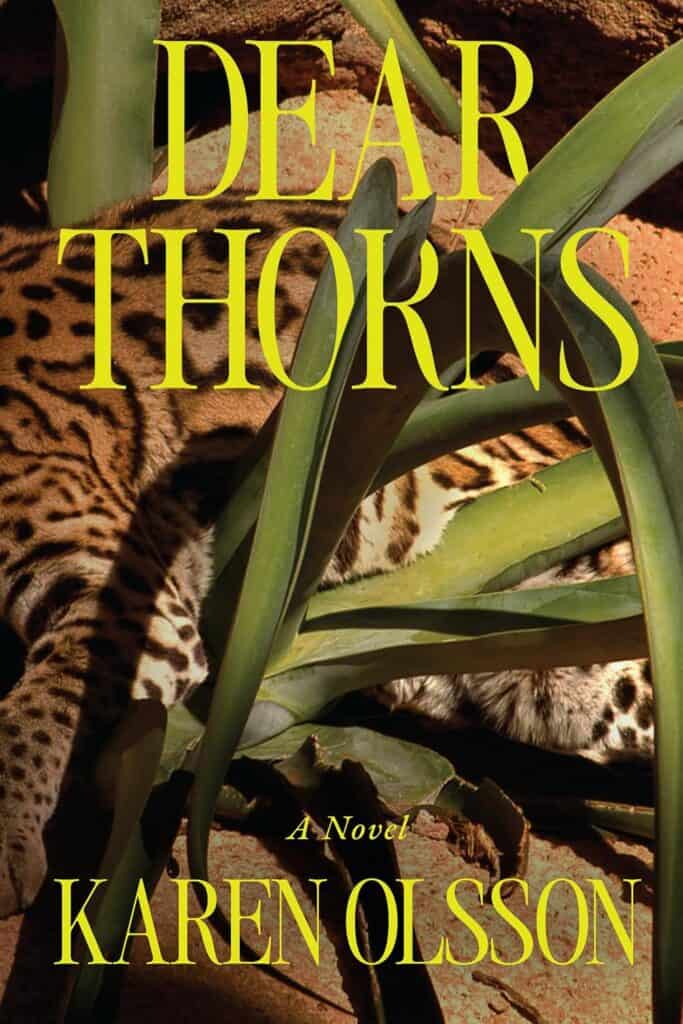
Dear Thorns by Karen Olsson
Lora has spent years working at a wildlife refuge in South Texas studying the country’s dwindling ocelot population, and I loved that Dear Thorns allows her work to matter as much as her romantic life. She’s in her forties, deeply committed to conservation, surrounded by men with their own ideas about what the refuge should become, and suddenly making some very questionable choices with a younger intern. What interested me wasn’t the affair itself as much as the larger question underneath it: what happens when you’ve built a life around your values and begin wondering whether the life you’ve chosen still fits? This is quiet, observant fiction about work, aging, compromise, environmental loss, and the strange distance between who we thought we’d become and who we actually are. Read this when you want a novel that trusts you to pay attention rather than throwing drama at you every ten pages.
You can get a copy of Dear Thorns by Karen Olsson on Amazon.
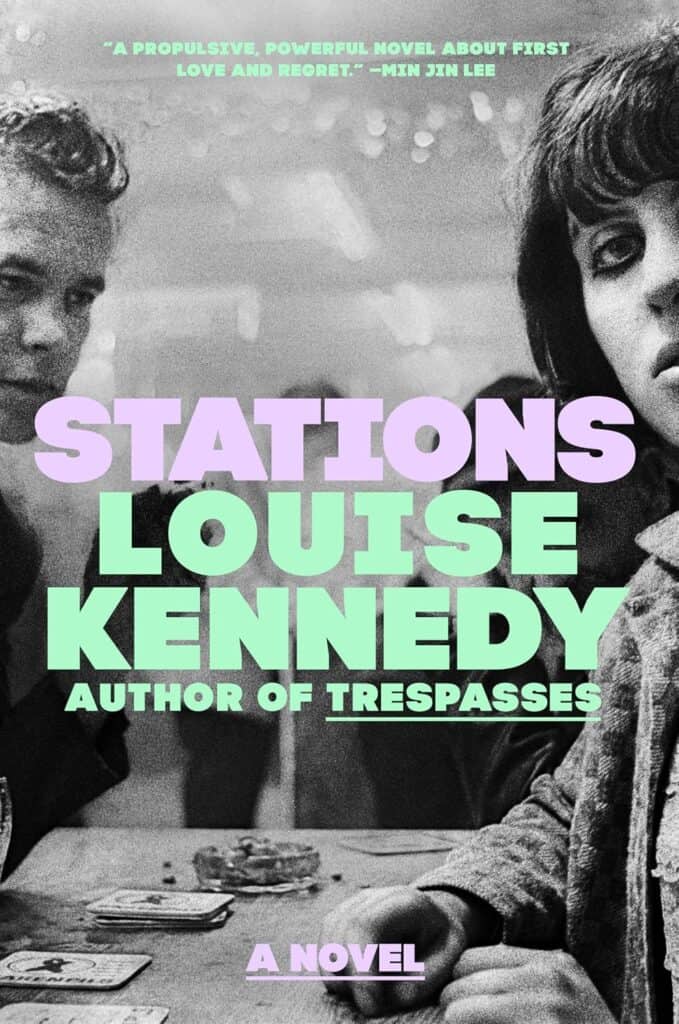
Stations by Louise Kennedy
Stations is one of those books where I wanted to shake a character and protect her at exactly the same time. Róisín meets Red as a teenager in 1980s Ireland, and what begins as the intense connection between two young outsiders follows them across years of love, addiction, guilt, separation, and the complicated ways one person can remain lodged inside your emotional life long after the relationship itself should have ended. What stayed with me is how Kennedy writes about the stories we tell ourselves when we’re young and how difficult they can be to outgrow. Róisín spends years protecting herself from one kind of hurt while becoming unable to recognize the people offering her something healthier. This is heartbreaking, but it isn’t hopeless, and that’s an important distinction. Pick it up when you want literary fiction about first love, regret, trauma, and the painfully slow process of learning that history does not have to become destiny.
You can get a copy of Stations by Louise Kennedy on Amazon.
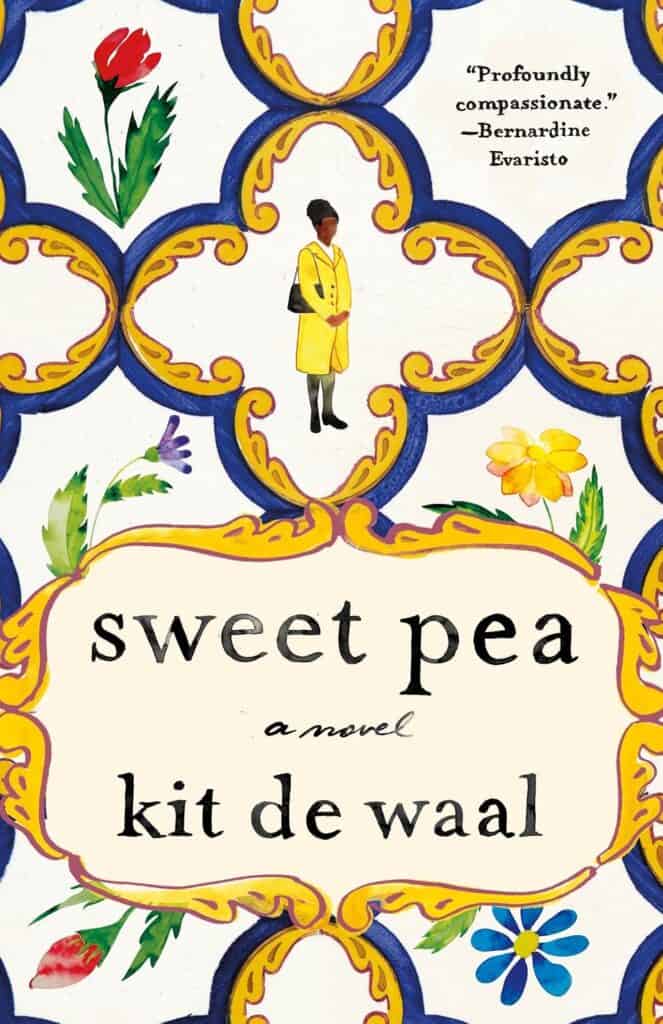
Sweet Pea by Kit de Waal
I went into Sweet Pea expecting a family story and came out thinking much more about the strange ways people become family to one another. Paulette has already had to rebuild her life more than once when the novel opens in 1970s England, and another devastating loss leaves her raising her son while grieving the future she thought she would have. Then an unexpected connection with another struggling family begins shifting the shape of her life again. What I loved here is that kindness isn’t treated as something sentimental or easy. Caring for people complicates Paulette’s life. It asks things of her. It also gives her something she wasn’t necessarily looking for. This is the book on the list I’d hand to someone who likes Ann Patchett-style stories about ordinary lives becoming emotionally enormous. It’s warm without pretending life is gentle, which is exactly the kind of warmth I respond to.
You can get a copy of Sweet Pea by Kit de Waal on Amazon.
If You Want Family Drama Where Everybody Loves Each Other Badly
November apparently looked at healthy family communication and decided we had enough of that elsewhere. These books are full of parents, children, siblings, inheritance, loyalty, resentment, and the particular kind of damage that can happen when loving someone does not automatically mean knowing how to love them well.
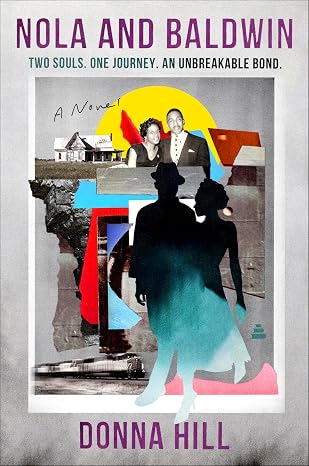
Nola and Baldwin by Donna Hill
Nola and Baldwin is much bigger than a love story, although the love story at its center matters enormously. Nola and Baldwin meet while both are carrying the weight of difficult pasts in 1930s and ’40s America, and their relationship unfolds alongside the racism, violence, labor struggles, and limited choices Black Americans faced during the era. I was especially drawn to the way books and imagination shape Nola’s idea of what her life could become, with Their Eyes Were Watching God giving her an early glimpse of possibility beyond the circumstances she has inherited. That feels so true to the way reading can sometimes work: a book doesn’t fix your life, but it can show you that another version exists. Nola and Baldwin have to fight for dignity as much as happiness, which gives the romance real weight. Pick this when you want sweeping historical fiction where love is not an escape from history but one of the ways people endure it.
You can get a copy of Nola and Baldwin by Donna Hill on Amazon.
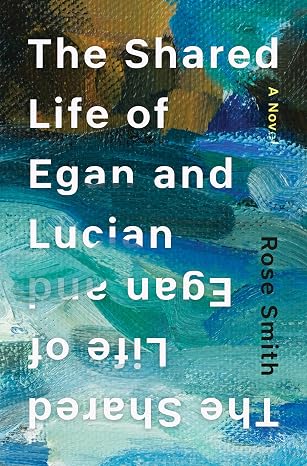
The Shared Life of Egan and Lucian by Rose Smith
Twin stories always fascinate me because they come with such an immediate question of identity: what happens when the person who understands you best is also the person you’re constantly being compared with? Egan and Lucian grow up nearly inseparable on an island off the coast of Maine, but they want completely different lives. Egan is the easygoing athlete; Lucian is the anxious artist. A childhood accident binds them even more tightly before adulthood, relationships, resentment, and some truly bad decisions begin pulling them apart. The Maine setting is a huge part of what worked for me here. This is one of those books where place gives the family story another layer, because the island feels like both home and something everyone is struggling to escape in their own way. If you like family sagas where love and rivalry become nearly impossible to separate, this debut gives you plenty to think about.
You can get a copy of The Shared Life of Egan and Lucian by Rose Smith on Amazon.
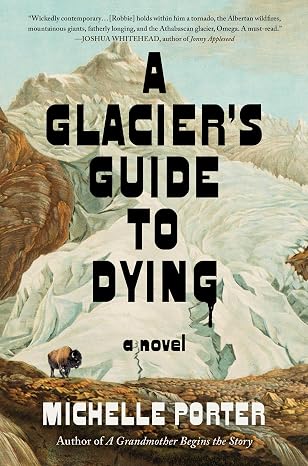
A Glacier’s Guide to Dying by Michelle Porter
I knew from the title alone that A Glacier’s Guide to Dying was probably going to be strange, but I didn’t expect the emotional route it takes to get there. Robbie, a young Métis man from Alberta, goes looking for his missing father while wildfires close in, eventually finding himself on a Montana glacier with an uncle, a pregnant bison, complicated family history, and what may be the voice of the glacier itself. Somehow, this combination works. The novel moves through abuse, mental illness, Indigenous identity, environmental destruction, family inheritance, and healing without turning Robbie into a collection of issues instead of a person. What interested me most was the parallel between damaged families and damaged landscapes-the things we’ve neglected for so long that we eventually have to decide whether repair is still possible. This is the book I’d recommend if you want your literary fiction slightly weird, emotionally grounded, and willing to let the natural world talk back.
You can get a copy of A Glacier’s Guide to Dying by Michelle Porter on Amazon.
If You Want Historical Fiction With Secrets, Schemes, and Terrible Options
Neither of these books gives its characters particularly easy choices, which is probably why they’re so much fun to read.
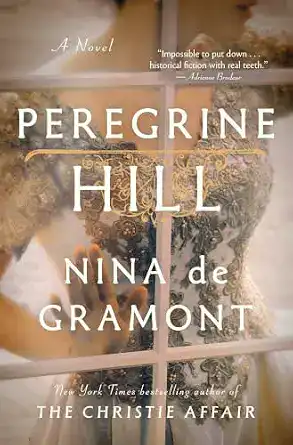
Peregrine Hill by Nina de Gramont
If you tell me there is a Gilded Age mansion, a financially desperate family, an unwanted marriage, secret romances, a writer quietly producing stories of her own, a poisonous potion, a kidnapping, and a pipe-smoking fortune teller, I am going to need very little additional convincing. Peregrine Hill begins with Mariah Bishop losing much of her family in a shipwreck and then discovering that financial survival may depend on marrying an older, extremely wealthy man who wants an heir. From there, things become wonderfully messy. What kept this from feeling like historical drama for drama’s sake is Mariah’s writing. She pours herself into stories even when she has very little control over the rest of her life, and I loved that thread of private creative rebellion. This is for the reader who wants historical fiction with beautiful rooms, terrible men, women making impossible calculations, and enough melodrama to keep you saying, “Well, surely things cannot get worse,” immediately before they do.
You can get a copy of Peregrine Hill by Nina de Gramont on Amazon.
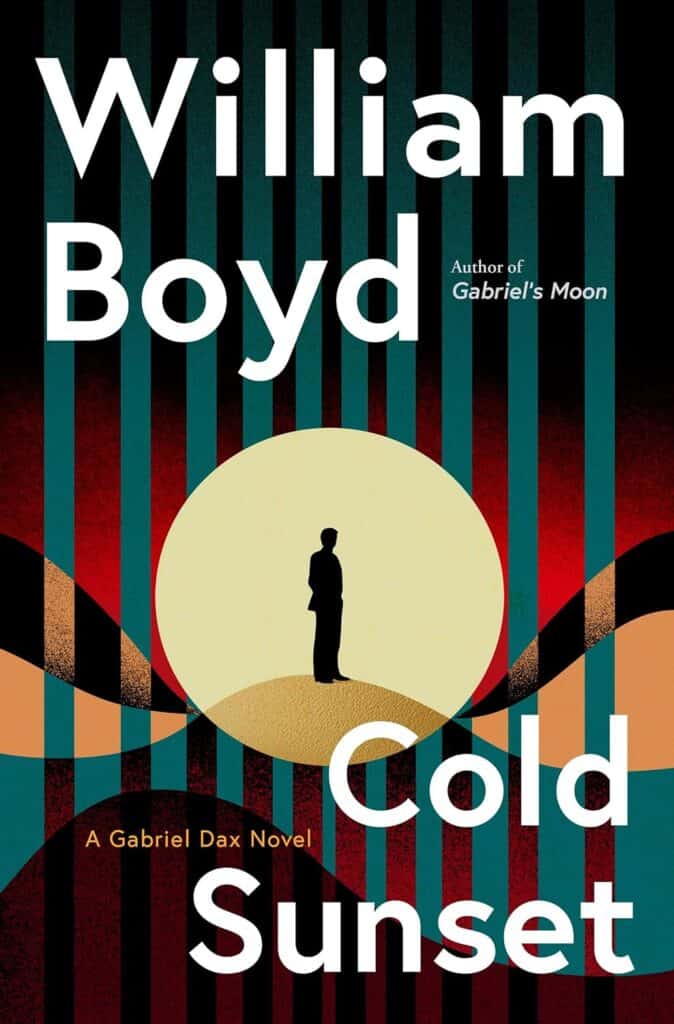
Cold Sunset by William Boyd
Sometimes I want historical fiction to break my heart, and sometimes I want someone to put on an excellent jacket, board a plane, and get mixed up in Cold War espionage. Cold Sunset is for the second mood. Gabriel Dax is once again caught between intelligence agencies, personal relationships, old enemies, and assignments that become much more complicated than anyone initially admits. This installment moves from California to England to Moscow, and I enjoyed the contrast between the genuinely dangerous spy work and Gabriel’s continuing ability to notice everybody’s clothing in extraordinary detail while his life is falling apart. There is something charmingly old-fashioned about the pace of this series: intrigue, double agents, assassination attempts, betrayals, and people who definitely know more than they’re saying. If you already know Gabriel, you’ll want to follow him into this next mess. If you’re a spy-fiction reader who likes wit alongside the danger, this series is worth putting on your radar.
You can get a copy of Cold Sunset by William Boyd on Amazon.
If You Want Romance With a Very Specific Hook
This month’s romances made me happy because none of them feel interchangeable. We have Hollywood fandom, a sunflower farm, rival literary tour guides, and WNBA fake dating. These are books where the romance matters, but so does the world built around it.
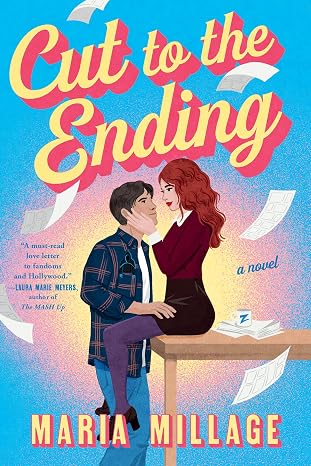
Cut to the Ending by Maria Millage
This premise was almost unfairly designed for readers who have ever had opinions about the final installment of a beloved franchise. Delaney is an aspiring screenwriter who gets the opportunity to write the conclusion to the massively popular Magician’s Gambit film series, except she has one fairly significant problem: she isn’t actually a fan. Enter Max, an assistant who knows the franchise inside out and can teach her everything she needs to know. Naturally, there is chemistry. What made this especially fun for me is how convincingly Millage creates the fictional fandom around Magician’s Gambit. The emails, commentary, script material, and larger Hollywood ecosystem make it feel like the sort of franchise people really would have been arguing about online for years. Come for the workplace romance, stay for the very relatable terror of being responsible for ending a story beloved by millions of people who will absolutely have thoughts.
You can get a copy of Cut to the Ending by Maria Millage on Amazon.
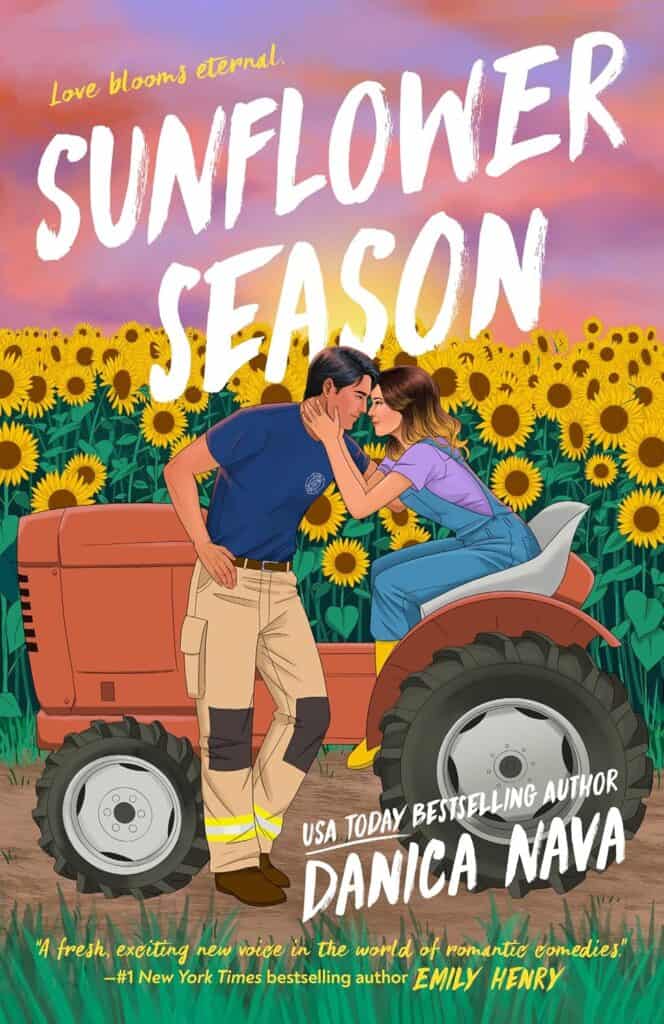
Sunflower Season by Danica Nava
June quits the San Francisco tech job making her miserable and buys the Oklahoma sunflower farm that once belonged to her grandmother’s family, which sounds beautifully restorative until she remembers that owning a farm requires considerably more than watching homesteading videos online. I loved that Sunflower Season doesn’t let the fantasy of starting over completely erase the work involved. June has fences, animals, money problems, and a farm she is trying to keep afloat. She also has Noah, the high school sweetheart she left behind and the man who has apparently spent a decade remaining inconveniently devoted to her. This is a softer romance than some on the list, and sometimes that is exactly what I want. If your reading mood is “woman burns out, goes home, buys land she may not know how to manage, and encounters the man who never quite got over her,” I suspect you’re already reaching for this.
You can get a copy of Sunflower Season by Danica Nava on Amazon.
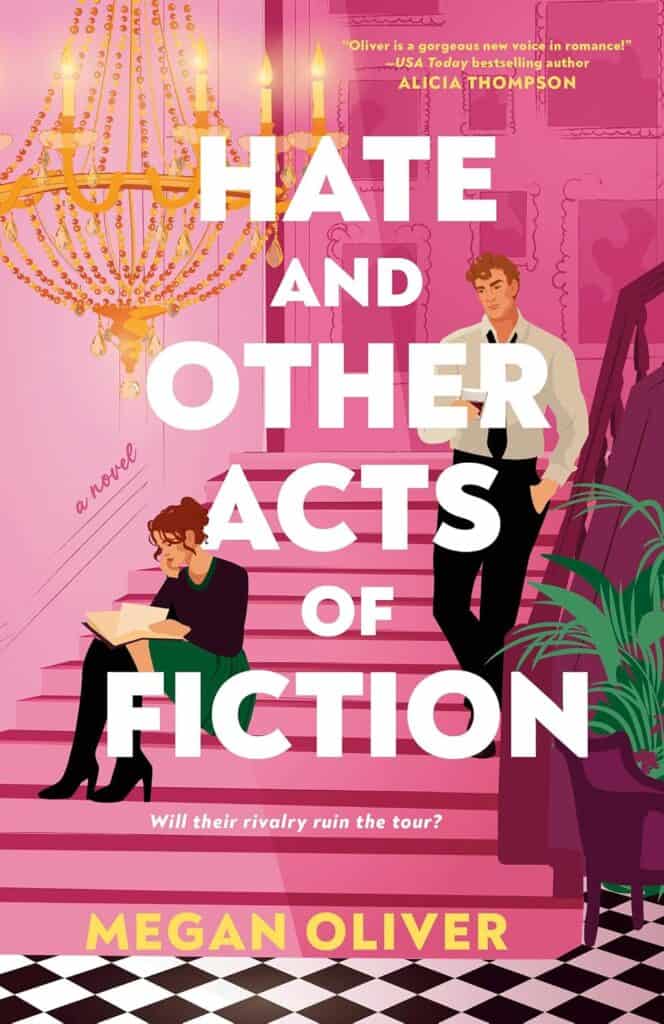
Hate and Other Acts of Fiction by Megan Oliver
Rival tour guides and literary history? Yes, obviously I wanted to know more. Sadie leads tours at the former home of her favorite author and takes the responsibility of protecting that author’s legacy very seriously. Ryan runs a competing pub-crawl business, happens to be someone Sadie once had a fling with, and is exactly the person she does not want helping her create an overnight murder-mystery experience at the house. Which, naturally, means they have to work together. I loved how much this romance understands that rivalry is only fun when both people are actually good at what they do. Their chemistry works because neither one feels like an obstacle dropped into the other’s life purely to create banter. There is history, hurt, attraction, and enough bookish-tour-guide specificity to give the story its own personality. Put this one near the top if you like second chances, competence, and romantic tension disguised as professional annoyance.
You can get a copy of Hate and Other Acts of Fiction by Megan Oliver on Amazon.
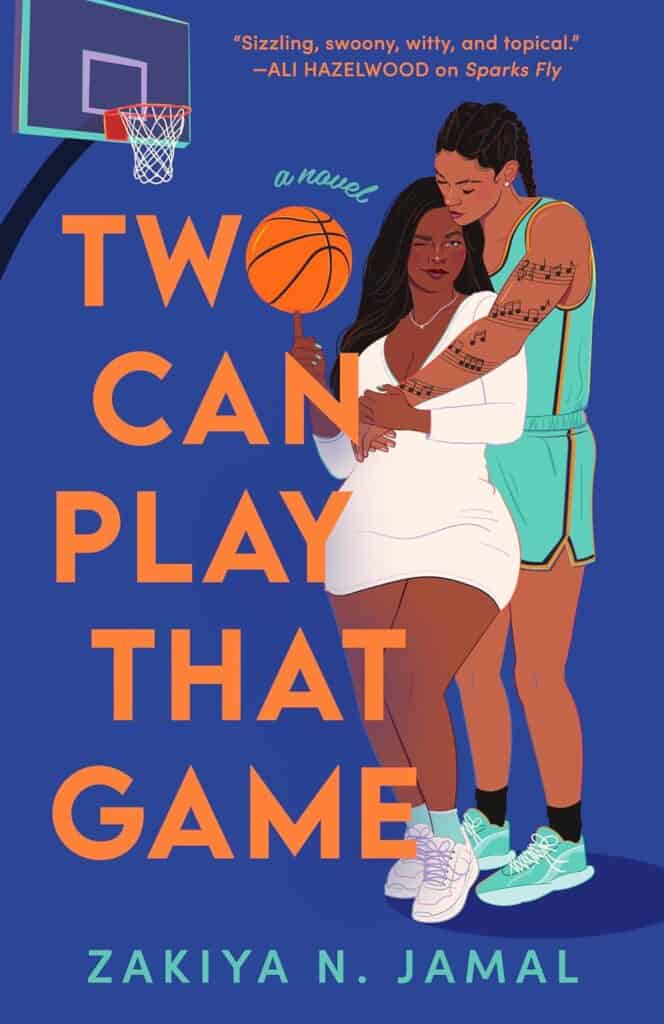
Two Can Play That Game by Zakiya N. Jamal
A WNBA star, a sex-positive influencer, and a fake relationship that benefits both of their careers is a setup I did not need explained twice. Chelsea meets Adrienne “AD” Daniels courtside, they hook up, somebody gets a photo, and suddenly a pretend relationship looks professionally useful to both of them. You already know where this is going. The pleasure is watching them get there. What I especially appreciated is that the book doesn’t need endless manufactured misunderstandings to keep the romance moving. Chelsea and AD actually communicate, their chemistry is excellent, and the story makes room for Black, queer, nonbinary, and polyamorous characters without treating representation like a checklist. Sometimes I want a romance where the central conflict is not “these two adults could solve everything by speaking for six minutes.” This scratched that itch. Read it when you want sports romance, fake dating, plenty of heat, and characters you genuinely enjoy spending time with.
You can get a copy of Two Can Play That Game by Zakiya N. Jamal on Amazon.
If You Want Genre Fiction With a Big Idea and an Emotional Core
These are the two books I’d hand to someone who wants plot but doesn’t want plot at the expense of character. One gives you dead princes, faith, and forbidden magic. The other gives you murder on a generation ship. November said we could have both.
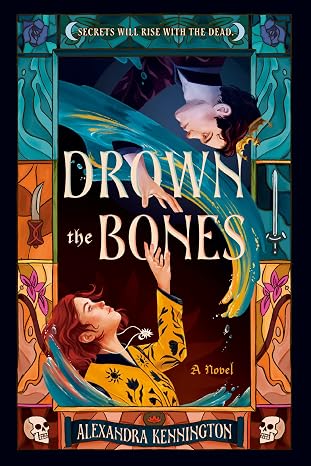
Drown the Bones by Alexandra Kennington
Merridan has always expected her twin brother to inherit the throne while she devotes herself to serving the Goddess and guiding spirits toward the Afterworld. Then her brother is murdered, an enemy kingdom is blamed, and Merridan attempts forbidden magic only to accidentally bind herself to the spirit of Phoenix, the murdered crown prince of that very kingdom. This is such a good romantasy setup because the romance grows directly out of the larger questions the book is asking about faith, propaganda, grief, and the stories we’re taught about people on the other side of a conflict. Merridan isn’t simply falling for an enemy prince; she’s discovering that much of what she believed about his people may be wrong. I liked the yearning, but I especially liked watching certainty become much harder for her to maintain. This is for romantasy readers who want the kissing but also want the worldview to crack a little.
You can get a copy of Drown the Bones by Alexandra Kennington on Amazon.
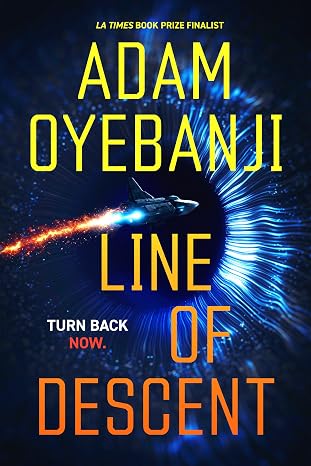
Line of Descent by Adam Oyebanji
A murder mystery aboard a generation ship that has already been traveling for more than a century is exactly the sort of premise that makes me immediately wonder how many things can go wrong at once. The answer is apparently several. The Archimedes is 109 years into a 133-year voyage, resources are becoming dangerously strained, some people want to turn around, communications with home have gone silent, and security officer Faisal Vasconcelos has a strange kidnapping to investigate before a body turns up inside one of the ship’s reproductive incubators. What I loved about this setup is that the closed-circle mystery isn’t happening in a country house where everyone can simply leave after the detective catches the killer. These people are trapped together in space, and the entire society around the crime may already be failing. If you like mysteries where the setting creates as much pressure as the killer does, this is the November book I’d choose.
You can get a copy of Line of Descent by Adam Oyebanji on Amazon.
If You Want Nonfiction About Something You Thought You Already Understood
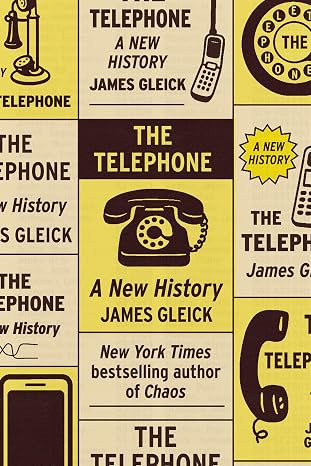
The Telephone by James Gleick
I did not expect a history of the telephone to make me think quite so much about how quickly extraordinary technology becomes ordinary. James Gleick traces the invention and evolution of the telephone through the experiments, companies, operators, monopolies, cultural shifts, and technologies that eventually led to the little device most of us now carry around and rarely use primarily as a phone. What makes this work is that it isn’t simply an inventor-by-inventor march through history. The telephone changed language, work, business, architecture, social expectations, privacy, and the way human beings understood what it meant to be reachable. I love nonfiction that takes something so familiar I barely notice it and makes it strange again. If you enjoy books about technology, cultural history, or how everyday objects quietly rearranged society, this is the nonfiction pick I’d make room for in November.
You can get a copy of The Telephone by James Gleick on Amazon.
What November’s Books Have in Common
Looking back over this list, I kept noticing the same idea appearing in wildly different forms: what happens when the life you thought you were building changes underneath you?
Want To Save This Post?
Lora in Dear Thorns is questioning the compromises surrounding the work she has dedicated herself to. June in Sunflower Season abandons one version of success and quite literally buys herself another life. Róisín in Stations spends years trying to understand the emotional hold of a relationship that began when she was young. Paulette in Sweet Pea keeps discovering that family can become something different from what she planned.
Even the genre books are doing it. Merridan’s entire understanding of faith and enemy is destabilized in Drown the Bones. The people aboard the Archimedes in Line of Descent have inherited a mission from generations before them and now have to ask whether completing it is even possible.
Maybe that’s why this group of books works so well for me in November. November sits in that strange stretch of the year where we’re close enough to the end to start noticing what did and didn’t happen the way we expected. I’m not interested in turning that into a productivity exercise or making everyone review their annual goals. Sometimes I just like reading about fictional people whose plans also went sideways. It puts things into perspective.
If You Only Have Room for a Few November Books
If your November TBR is already behaving like it pays rent, I would choose based entirely on mood rather than trying to identify one universal “best” book.
For literary fiction that will stay with you emotionally, I’d start with Stations. If you want something sweeping and historical, Nola and Baldwin would be my pick. For romance, Two Can Play That Game is the one I’d hand to the reader who wants chemistry, fun, and characters who know how to communicate.
If you need a page-turning genre change, go with Line of Descent. And if you want the book on this list that feels hardest to neatly categorize, A Glacier’s Guide to Dying gives you family, climate, identity, strange beauty, and a glacier with opinions.
Final Thoughts
What I like about the best new books to read in November 2026 is that this month doesn’t feel like it’s trying to impress me with one big trend. Instead, it feels full of lives in motion. People go home, people leave home, and they fall in love with the wrong person, the right person, or somebody they already tried loving once before. They also lose families and build new ones. They question the work they’ve devoted years to. They realize the story they’ve been telling themselves about someone, or about themselves, may not be true anymore. And then, because books understand balance, somebody gets murdered on a spaceship. I appreciate the range, and I also appreciate that November gives us books for very different versions of ourselves. There is something here for the night when I want to sit quietly with complicated people and something for the night when I need a WNBA fake-dating romance immediately. There is a Gilded Age mansion for one mood and a dying glacier for another. That’s exactly what I want from a monthly reading list. Not fifteen books that all sound good in the same way, fifteen different doors. Tell me in the comments: which November 2026 book are you making room for first?