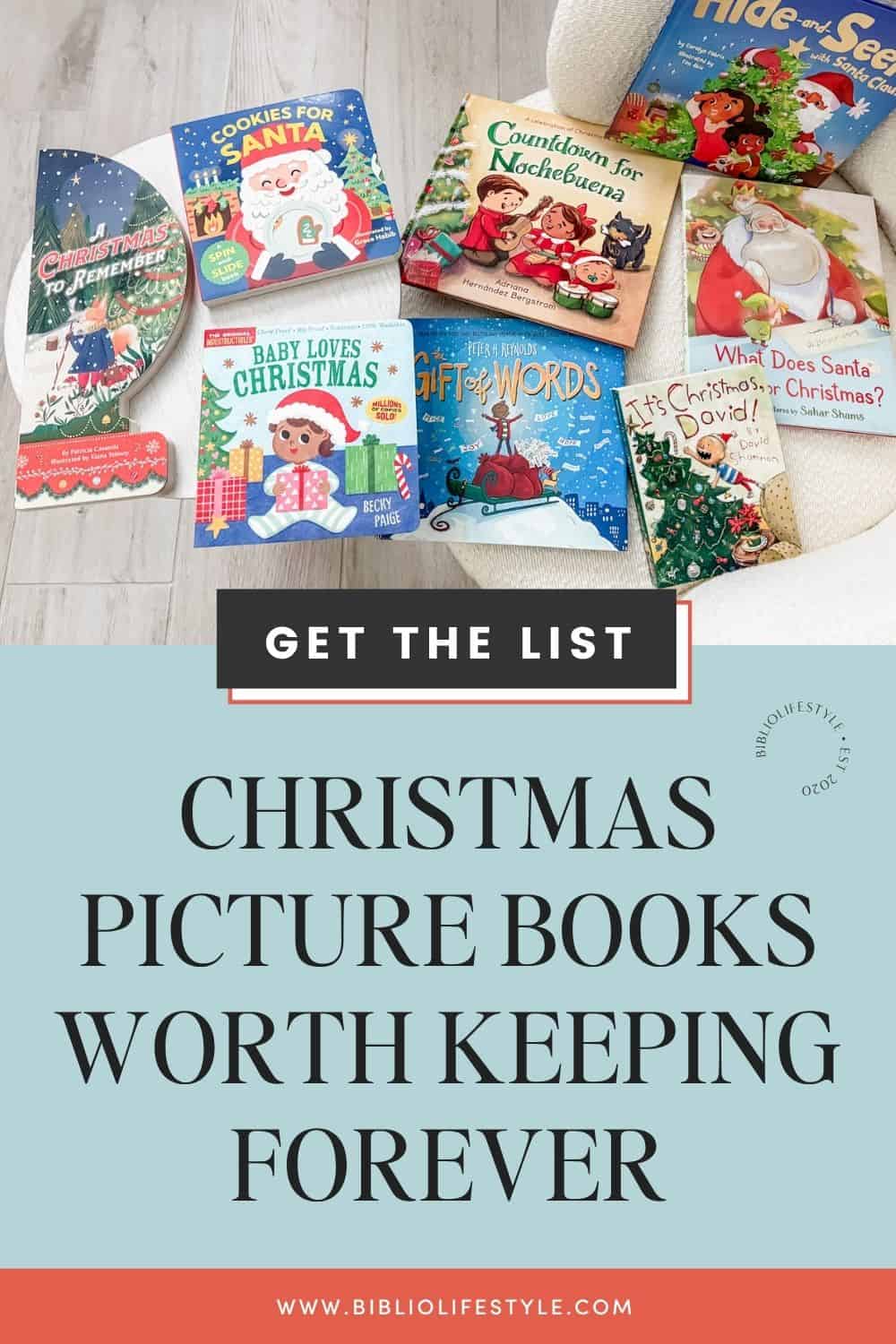
9 Christmas Picture Books Worth Adding to Your Shelf
These Christmas picture books are new, noteworthy, funny, cozy, and gift-worthy picks for babies, toddlers, preschoolers, and family reading this December.
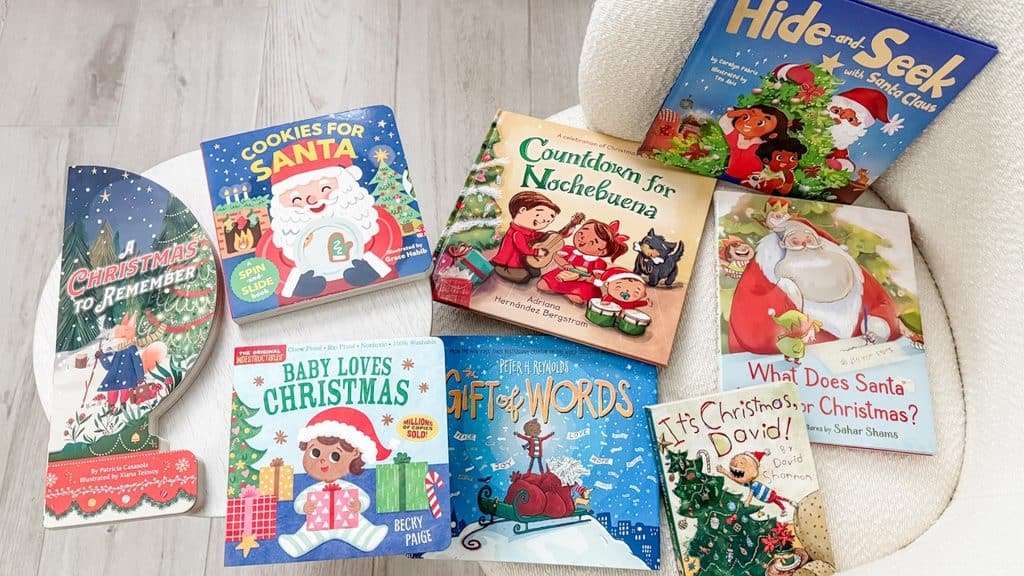
The Christmas Picture Books I’d Put on This Year’s Holiday Shelf
Hi Bookish Besties, I love the Christmas books that have been on family shelves for decades, but I also think there should be room every December for something new. There are so many exciting children’s books, specifically Christmas picture books every year, and I am always interested in the ones that feel as though they might survive beyond one holiday season rather than disappearing into the enormous pile of books that were cute once and never requested again. That is the standard I am using for this Christmas picture books guide. I am not trying to recreate my Christmas bedtime-story list, which is more about the comforting classics and quieter books that work as an evening ritual. I am also keeping this separate from my Christmas stories to read aloud guide, which is built for older children and mixed-age families who can settle into longer stories over several nights.
This is the new-and-noteworthy shelf. Some of these are brand-new releases, while others are newer editions or current titles I think deserve another look. I plan to refresh this list every Christmas rather than letting it become one of those “new Christmas books” posts that is still recommending the same supposedly new books seven years later.
My question for every book here is simple: Would I be happy to read this again after a child asked for it for the tenth time? That changes what I look for. I want illustrations that give children something new to notice, language that does not become unbearable on repeat, interactive elements that actually add something, humor that works for adults too, and messages about Christmas that feel warm without becoming sugary.

If you are choosing quickly, Baby Loves Christmas is my practical pick for babies, Cookies for Santa is the most hands-on toddler choice, It’s Christmas, David! is the one for laughs, Countdown for Nochebuena gives families a joyful bilingual Christmas Eve story, and Jon J Muth’s new ’Twas the Night Before Christmas is the one I would consider when I want a book that may still be coming off the shelf years from now.
Christmas Picture Books for Babies and Toddlers
At this age, I care much less about literary complexity and much more about whether the book understands how babies and toddlers actually interact with books. They grab them, chew them, fling them, slide things, point at pictures, insist on turning three pages at once, and occasionally decide that reading should happen upside down. The best Christmas books for very young children work with that reality instead of requiring a perfectly attentive audience.
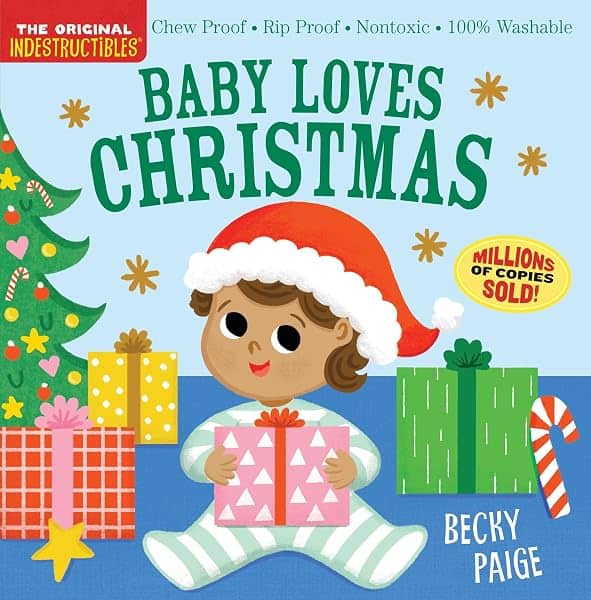
Baby Loves Christmas by Workman Publishing, Illustrated by Becky Paige
Baby Loves Christmas comes from the Indestructibles line, which immediately tells me what its real superpower is: this is a Christmas book designed to survive the baby reading process. It is rip-proof, waterproof, washable, lightweight, and made to handle hands, mouths, drool, travel bags, spills, and whatever else the youngest member of the household decides constitutes literary criticism.
The Christmas content itself is wonderfully simple. Baby sees familiar parts of the season such as decorating the tree, making a gingerbread house, and wishing family a Merry Christmas, with bright illustrations and minimal text encouraging the adult to talk about what is happening on the page. That makes this less about performing a perfect read-aloud and more about pointing, naming, noticing, and letting the child lead the interaction.
This would be my pick for a baby’s first Christmas book because practicality matters at this age. A beautiful board book nobody is allowed to touch is far less useful than a book a baby can actually explore. I also like that it is portable enough to live in the diaper bag through December, because Christmas reading does not always happen in a carefully styled nursery chair.
Best for: Babies and young toddlers, especially families who need a Christmas book that can survive enthusiastic handling.
My read-again verdict: This is less about the parent loving the prose on the tenth reading and more about having a book you will not mind handing over for the tenth round of chewing, pointing, and page grabbing. At this age, that absolutely counts as a win.
You can get a copy of Baby Loves Christmas by Workman Publishing, Illustrated by Becky Paige on Amazon.
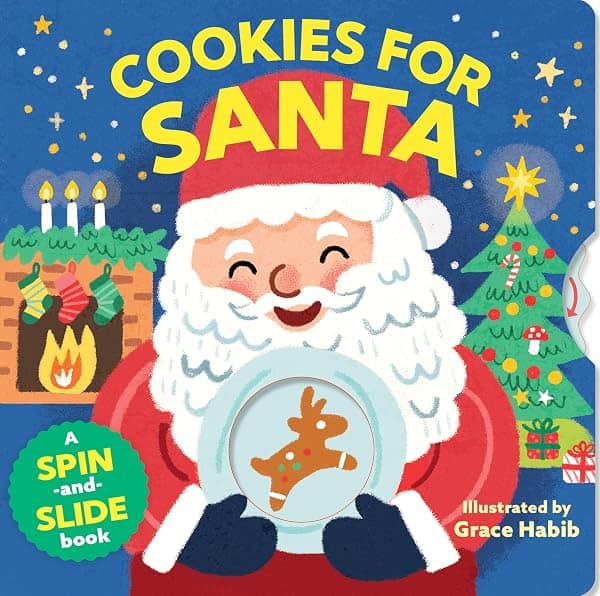
Cookies for Santa by Workman Publishing, Illustrated by Grace Habib
Cookies for Santa is the toddler book I would choose for the child who wants to touch everything. The spin-and-slide format turns the familiar tradition of making Santa’s cookies into a sequence of physical actions, with children sliding the rolling pin, mixing the dough, closing the oven, adding frosting and sprinkles, and spinning the platter to fill it with finished cookies.
What appeals to me here is that the interactive elements are connected to the actual story instead of feeling randomly attached to the page. Young children already understand actions such as stirring, rolling, decorating, and eating, so the movements reinforce what the book is showing them. There is also the lovely little payoff the next morning when a bite is missing and everyone knows exactly who must have visited.
This feels like the kind of book that could easily become part of the cookie-baking ritual itself. Read it before baking together, bring it back out when you leave cookies for Santa, and suddenly the book is tied to something the child actually did. Those are the Christmas books I think children remember best.
Best for: Babies and toddlers who love lift-the-flap, slide, pull, and spin books.
My read-again verdict: Very strong for repeated toddler reading because the child is doing part of the storytelling. When I am going to hear the same book repeatedly, I am always grateful when somebody else has a job.
You can get a copy of Cookies for Santa by Workman Publishing, Illustrated by Grace Habib on Amazon.
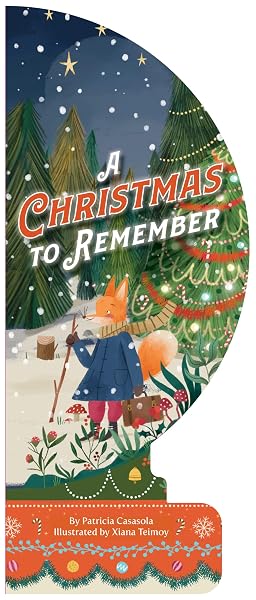
A Christmas to Remember by Patricia Casasola, Illustrated by Xiana Teimoy
A Christmas to Remember is the most keepsake-like choice in this younger group. Fox has decorated for Christmas, but something still feels missing. Looking back at memories of earlier Christmases helps reveal that the thing giving the season its real meaning is not the decorations or feast but the time shared with the people we love.
That message is familiar, but the format is what makes this one stand out to me. The oversized board book unfolds and stands upright as a holiday decoration, turning the book itself into something that can remain visible throughout Christmas rather than immediately returning to the shelf. I love objects that blur the line between book and tradition when there is a real reason for the format, and this feels like one of those cases.
This is the book I would give when I want something that feels more substantial than another cute Christmas story. I can imagine a grandparent gifting it, a family displaying it every December, and the child gradually associating the physical book with the arrival of the season. That is exactly how a newer book begins earning its way toward becoming a family classic.
Best for: Toddlers, preschoolers, grandparents looking for a gift book, and families who like interactive or displayable books.
My read-again verdict: More sentimental than silly, so I would use it as one of the calmer books in the rotation. The display format also means it has value beyond the reading itself, which helps it earn shelf space.
You can get a copy of A Christmas to Remember by Patricia Casasola, Illustrated by Xiana Teimoy on Amazon.
New and Noteworthy Christmas Picture Books for Preschoolers
Preschool is where Christmas picture books become especially fun for me because children can follow a fuller story but still want participation, repetition, jokes, surprises, and illustrations they can examine closely. This is also the age when one beloved book may be demanded every night for three weeks, so repeatability matters enormously.
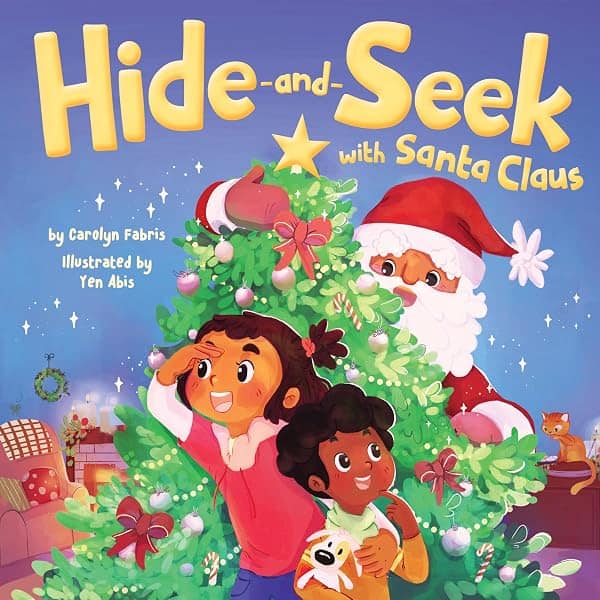
Hide-and-Seek with Santa Claus by Carolyn Fabris, Illustrated by Yen Abis
Hide-and-Seek with Santa Claus begins when a brother and sister arrive at Grandma and Grandpa’s house on Christmas Eve and become convinced Santa is hiding somewhere inside. Naturally, they begin searching.
This is exactly the kind of premise I like for preschoolers because the child listening to the story has an immediate job. Instead of passively waiting to find out what happens, they can scan the illustrations, look for hints, make predictions, and try to find Santa before the characters do. That participation tends to hold up much better on repeat readings because the pages become a game as well as a story.
I also like the grandparents’ house setting. Christmas picture books understandably return again and again to home, Santa, and presents, so changing the household slightly gives this one a warm extended-family feeling. It would be an especially cute book for grandparents to keep at their own house and bring out when grandchildren visit for Christmas.
Best for: Ages roughly three to seven, children who love seek-and-find books, and grandparents building a Christmas shelf at their house.
My read-again verdict: One of the stronger tenth-reading candidates because children can keep searching the artwork even after they know the answer. Knowing where Santa is rarely stops a preschooler from wanting to find him again.
You can get a copy of Hide-and-Seek with Santa Claus by Carolyn Fabris, Illustrated by Yen Abis on Amazon.
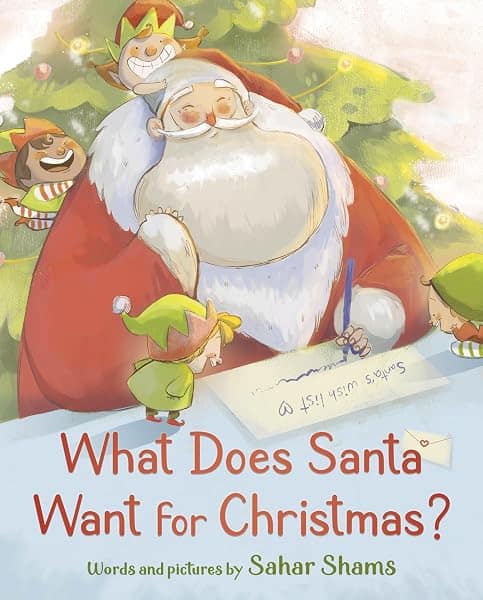
What Does Santa Want for Christmas? by Sahar Shams
What Does Santa Want for Christmas? caught my attention immediately because it flips the usual Santa question around. Instead of wondering what he will receive, Dorim starts wondering what Santa might want for Christmas and sets out with his friends to create the perfect gift for him.
That small change gives the story a completely different emotional direction. Children spend much of December being asked what they want, making lists, and anticipating presents, so I like a book that gently turns their attention toward the pleasure of giving without making the lesson feel like a lecture. Dorim has a problem to solve, his friends become part of the solution, and generosity emerges through action.
This would be one of my choices for reading earlier in December, especially before children begin choosing or making gifts for family members. A good picture book can sometimes introduce an idea more naturally than an adult announcing, “Now we are going to discuss generosity,” which is rarely the sentence that fills a preschooler with holiday enthusiasm.
Best for: Ages roughly four to eight and families looking for a Christmas story about kindness, creativity, teamwork, and giving.
My read-again verdict: I think the reversed premise helps it stand out. It has an actual question driving the story, and the humor in the artwork should give families more to notice after the ending is already familiar.
You can get a copy of What Does Santa Want for Christmas? by Sahar Shams on Amazon.
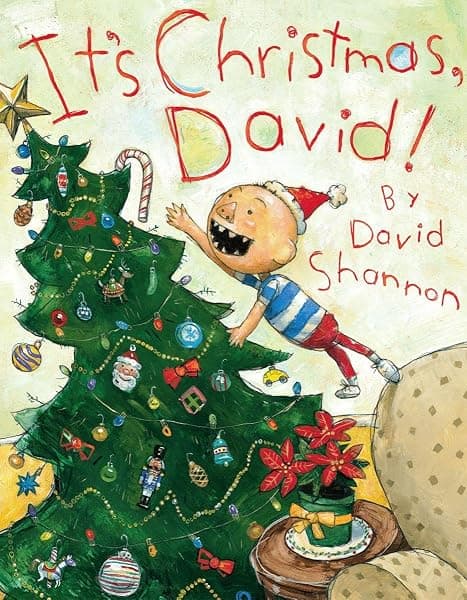
It’s Christmas, David! by David Shannon
It’s Christmas, David! is not a brand-new story, but the current board-book availability makes it worth putting back on the Christmas shelf, particularly because this guide is about books I think families may actually want in circulation now rather than only books with the newest publication date.
David is trying very hard to behave because Christmas is coming and Santa is watching. Unfortunately, Christmas contains approximately eight thousand opportunities to make poor decisions when you are David. There are hidden presents to peek at, decorations to interfere with, formal dinners to survive, and all the other parts of Christmas that become considerably more chaotic when seen through his eyes.
I would reach for this on the nights when everybody needs to laugh rather than settle immediately into a soft, meaningful lesson about the true spirit of the season. Children understand the tension of trying to be good when everything exciting is happening around them, and adults understand exactly what it feels like to watch a child make a choice that seemed inevitable from three rooms away.
This is also a good reminder that not every Christmas picture book has to lower the room’s energy. Sometimes the right book makes everyone louder for ten minutes and sends them to bed laughing.
Best for: Preschool and early elementary readers, especially children who already love No, David!.
My read-again verdict: Very high if your family enjoys chaotic read-alouds. Humor is one of the best protections against the dreaded tenth reread, especially when adults can perform the story rather than simply recite it.
You can get a copy of It’s Christmas, David! by David Shannon on Amazon.
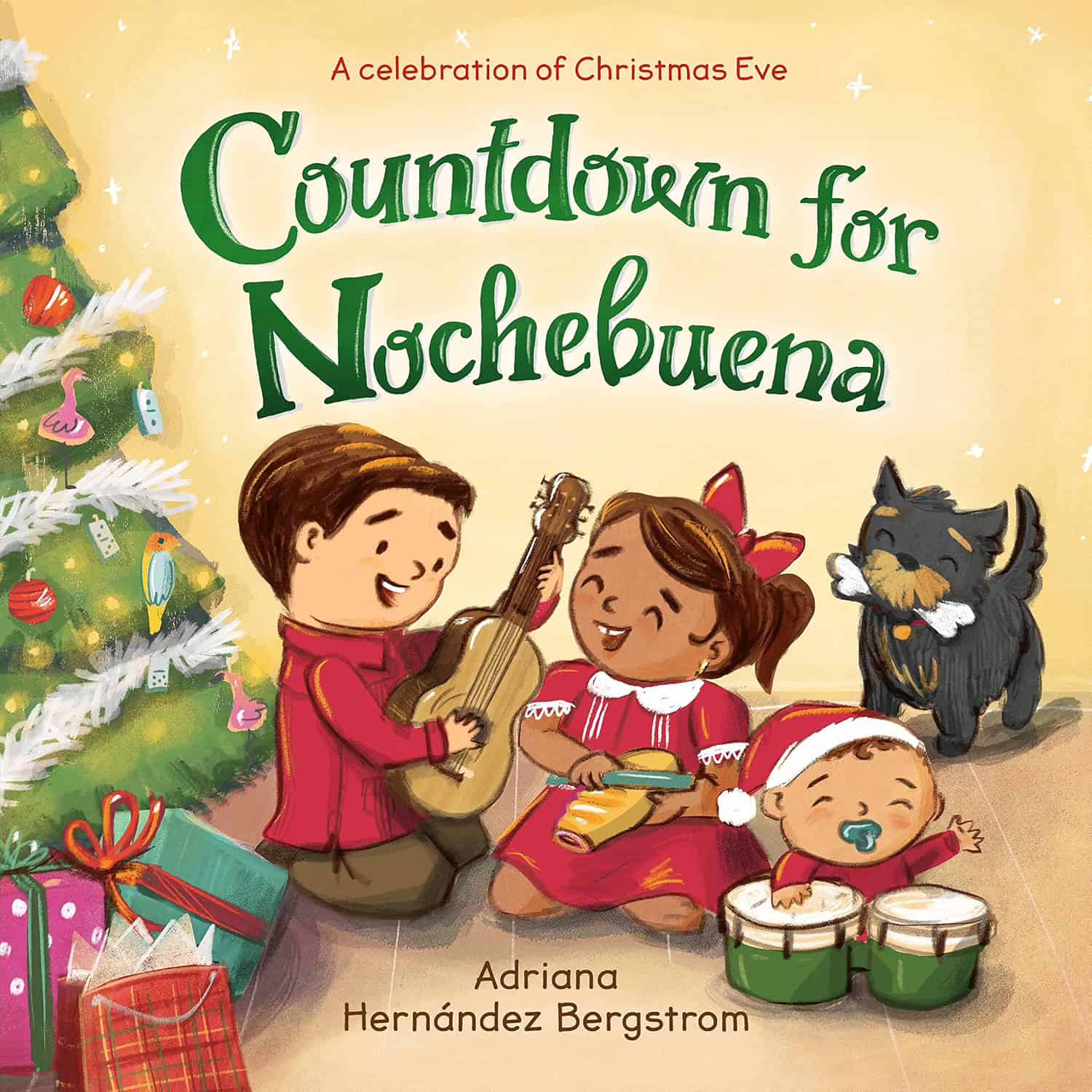
Countdown for Nochebuena by Adriana Hernández Bergstrom
Countdown for Nochebuena brings something important to this shelf because Christmas Eve does not look the same in every family. Inspired by Adriana Hernández Bergstrom’s Cuban American heritage, the book celebrates Nochebuena through a rhythmic countdown from twelve to one, moving through food, music, family, celebration, and the moment Christmas Eve becomes Christmas Day.
The text moves between English and Spanish, with the illustrations giving context that helps children follow along naturally. I especially like that the counting structure gives younger readers something concrete to participate in while the story also reflects a specific cultural tradition. That makes it useful both for families who recognize their own celebrations on the page and for children learning that “Christmas traditions” are much broader than one standard picture-book version.
This is the one I would choose when I want energy, family, and celebration rather than a sleepy bedtime mood. It belongs on a Christmas Eve stack, particularly in a household where people are still very much awake at the hour some books assume every child has been tucked into bed.
Best for: Babies through preschool in the board-book format, older picture-book readers in the expanded edition, bilingual families, and anyone looking for a joyful Nochebuena story.
My read-again verdict: The counting pattern and bilingual language make repetition part of the appeal rather than a drawback. This feels like a book children can begin anticipating and joining in with, which is exactly what repeated Christmas reading should do.
You can get a copy of Countdown for Nochebuena by Adriana Hernández Bergstrom on Amazon.
Christmas Picture Books That Feel Like Keepsakes
Some Christmas picture books are primarily for the child currently sitting in your lap. Others make me think about the adult carefully packing them away with the decorations because they want the same edition back next year. These are the two on this year’s shelf that give me that second feeling most strongly.

’Twas the Night Before Christmas by Clement Clarke Moore, Illustrated by Jon J Muth
There are so many editions of ’Twas the Night Before Christmas that a new version has to give me a reason to care, and Jon J Muth’s 2026 edition has one: the illustrations.
Muth brings the familiar poem to life through sweeping watercolor artwork, rich Christmas color, foil and embossed details, and a gatefold finale. There are also little mice hidden throughout the spreads for children to find, which is exactly the kind of detail that helps a beautifully illustrated book survive repeated readings rather than becoming something adults admire while children wait for the next page.
I already think of The Night Before Christmas as a ritual book rather than a suspenseful story. Nobody is reading it on December 24 because they have forgotten whether Santa arrives. You read it because the familiarity is the point. That means the edition matters enormously.
This is the one on the list I would consider as a Christmas Eve keepsake. The watercolor artwork gives adults something to appreciate, the hidden mice give children a reason to examine the pages, and the poem itself already has generations of repetition behind it. If I were choosing a new edition to become “our copy,” this is exactly the sort of version I would look at.
Best for: Ages roughly four to eight, family Christmas Eve reading, collectors of illustrated classics, and anyone looking for a gift edition.
My read-again verdict: This may be the strongest repeat-read book here because repetition is already baked into the tradition. The question is not whether the poem holds up; it is whether the artwork gives your family a reason to choose this edition, and Muth’s version makes a strong case.
You can get a copy of The Night Before Christmas by Clement Clarke Moore on Amazon or Bookshop.
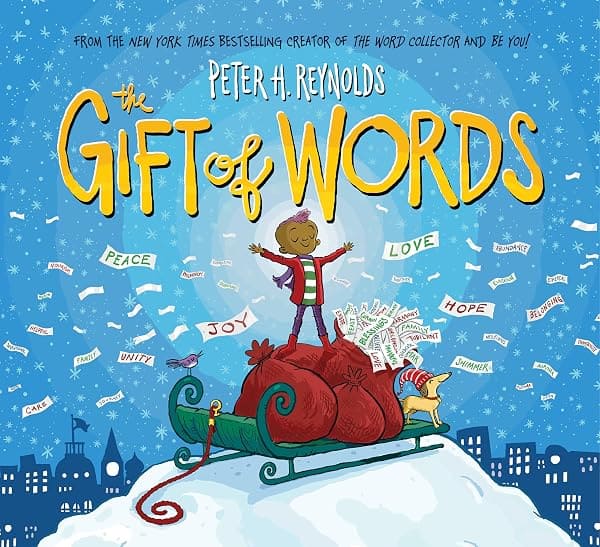
The Gift of Words by Peter H. Reynolds
The Gift of Words brings back Jerome from Peter H. Reynolds’s The Word Collector, this time with a holiday problem. Jerome wants to collect words filled with hope, love, and joy to share with the people around him, but finding those words proves harder than he expects. Eventually, his search grows into something communal, turning language itself into the gift.
This appeals to me because I spend so much time thinking about words anyway. Christmas books frequently focus on gifts as objects, so I like the idea of asking children to consider how words can be given too. Encouragement, kindness, reassurance, gratitude, and telling somebody what they mean to you are all forms of generosity that cost nothing but still require attention.
I would especially like this as a bridge between story and family activity. After reading it, everyone could choose one word for another person, write a note, make a paper ornament with a meaningful word, or collect words the family wants to carry into the next year. That makes the book feel less like a one-night message and more like something capable of starting a tradition.
Best for: Ages roughly four to eight, classrooms, families who already love The Word Collector, and readers who enjoy thoughtful books about kindness and community.
My read-again verdict: This is more reflective than laugh-out-loud, so I would not expect a child to demand it every night purely for entertainment. But as an annual Christmas book with an activity or family tradition attached, I think it has strong staying power.
You can get a copy of The Gift of Words by Peter H. Reynolds on Amazon.
Which Christmas Picture Book Should You Choose?
If I were choosing for a baby, I would begin with Baby Loves Christmas because babies should be allowed to interact with their books without adults hovering nearby in fear. For a toddler who wants to push, slide, spin, and participate, Cookies for Santa is the much more interactive choice.
For preschoolers who need laughter, It’s Christmas, David! gets my vote. If the child loves looking for things and participating in the illustrations, choose Hide-and-Seek with Santa Claus instead. What Does Santa Want for Christmas? is the one I would pick when I want a story about giving rather than receiving, while Countdown for Nochebuena is my choice for a lively family-centered Christmas Eve story with English and Spanish woven together.
When the goal is a book that feels gift-worthy and potentially permanent, I would look hardest at Jon J Muth’s ’Twas the Night Before Christmas or A Christmas to Remember. One refreshes a true Christmas classic with art worth lingering over; the other turns the physical book itself into part of the holiday display. And when I want a book to lead naturally into conversation or a family activity, The Gift of Words gives me the most room to continue beyond the final page.
Christmas Picture Books for Laughing vs. Winding Down
This is one of the distinctions I wish more book lists made because “perfect Christmas picture book” means very little at 7:58 p.m. when you are trying to determine whether the book in your hand is about to help bedtime or destroy it.
For laughing and high-energy reading, I would put It’s Christmas, David! at the top. Hide-and-Seek with Santa Claus also keeps children actively involved, while Cookies for Santa is tactile enough that I would expect toddlers to want to participate rather than quietly observe.
For something warmer and calmer, A Christmas to Remember and The Gift of Words are much better choices. Both give you an emotional idea to linger with afterward without relying on frantic action.
’Twas the Night Before Christmas sits somewhere in the middle for me. The poem is exciting because Santa is coming, but familiarity creates its own calming rhythm, particularly if the family already associates it with Christmas Eve.
And Countdown for Nochebuena is gloriously not interested in pretending every family’s Christmas Eve is calm. This is celebration, food, music, relatives, counting, and anticipation. I would let it be exactly that.
Which Christmas Picture Books Hold Up on the Tenth Reading?
This is my unofficial picture-book test because adults deserve consideration too. Interactive books usually do well because the child can participate differently each time. That gives Cookies for Santa and Hide-and-Seek with Santa Claus an immediate advantage. Search-and-find elements are especially useful because even when children know what happens, they still enjoy finding the thing again.
Humor helps enormously, which is why David Shannon’s Christmas chaos has staying power. A book that makes the adult laugh at least a little is simply easier to read repeatedly than something delivering a very earnest moral lesson every night for three weeks.
Books with rich illustrations also survive repetition better because the visual storytelling keeps producing details. That is where Muth’s ’Twas the Night Before Christmas appeals to me most. Hidden mice, sweeping scenes, and watercolor details give children reasons to spend time on spreads they already know by heart.
And then there are tradition books, where repetition is not a problem because repetition is the entire purpose. A family may read the same Christmas Eve book for twenty years precisely because it is the same. Those are the books I ultimately want on a Christmas shelf.
How This Christmas Picture Book List Is Different From My Other Christmas Reading Guides
I am being very deliberate about this because Christmas book lists can become repetitive quickly. This page is my current Christmas picture-book shelf, refreshed annually with newer books, newer editions, and titles that feel especially worth noticing now. It is where I want to highlight what is changing in children’s Christmas publishing without abandoning the standards I use when deciding whether a book deserves family shelf space.
My Christmas bedtime-story guide has a different purpose. That list is about the nightly ritual: comforting books, familiar classics, and stories particularly suited to slowing children down before sleep.
My Christmas read-aloud guide is different again because it is designed for older children, tweens, and mixed-age families who can spend several nights reading something such as A Christmas Carol, Tolkien’s Letters from Father Christmas, or The Nutcracker and the Mouse King.
Keeping those jobs separate means I do not need to tell you The Polar Express belongs on every Christmas list I ever write simply because it is famous. There is room for more shelves than that.
How I Build a Christmas Picture Book Shelf Without Buying Everything
I love children’s books, which means I am exactly the kind of person who needs rules around seasonal book buying. My favorite approach is to combine library books, existing family favorites, and one or two new additions each year. That keeps the Christmas shelf changing without requiring an annual purchase of twelve new books that will spend eleven months occupying storage space.
I would also think about function rather than simply buying whichever covers are prettiest. Do you already have a funny Christmas book? A quiet one? A Santa story? A book reflecting your family’s cultural traditions? A sturdy toddler book? A Christmas Eve classic? Fill the gaps.
That creates a much more interesting shelf than twelve books all delivering roughly the same message beneath different illustrations. And when a new book becomes the one a child asks for repeatedly, keep it. That is how the real classics enter the family.
Frequently Asked Questions About Christmas Picture Books
What are some good new Christmas picture books for kids?
For current and newer picks, I would look at Baby Loves Christmas, Cookies for Santa, What Does Santa Want for Christmas?, Jon J Muth’s 2026 illustrated edition of ’Twas the Night Before Christmas, and Peter H. Reynolds’s The Gift of Words. Each serves a different reading mood, so I would choose based on the child’s age and whether you want interaction, humor, reflection, or a keepsake.
What are the best Christmas board books for babies?
Baby Loves Christmas is particularly practical for babies because the Indestructibles format is washable, rip-resistant, and designed for hands and mouths. Cookies for Santa is another strong choice for babies and toddlers who enjoy interactive elements such as sliders, tabs, and spinning pieces.
What Christmas picture books are funny?
It’s Christmas, David! is my clear choice when laughter is the goal. David’s inability to navigate Christmas expectations without creating chaos gives children plenty to enjoy and gives adults the pleasure of recognizing exactly how difficult “being good for Santa” can become when a child is surrounded by temptation.
What are good Christmas picture books for preschoolers?
Hide-and-Seek with Santa Claus, What Does Santa Want for Christmas?, It’s Christmas, David!, Countdown for Nochebuena, and The Gift of Words all work well for preschool and early elementary readers. I would choose based on whether the child prefers searching, humor, family celebration, kindness-centered stories, or more reflective reading.
What Christmas picture books make good gifts?
Jon J Muth’s illustrated ’Twas the Night Before Christmas is my strongest keepsake-style recommendation because it pairs a traditional poem with elaborate new watercolor illustrations and gift-worthy production. A Christmas to Remember is another especially giftable choice because its shaped stand-up format allows it to double as a holiday decoration.
What is a good bilingual Christmas picture book?
Countdown for Nochebuena by Adriana Hernández Bergstrom alternates between English and Spanish while celebrating Nochebuena traditions inspired by the author-illustrator’s Cuban American heritage. Its counting structure and visual context make it particularly accessible for younger children.
Are Christmas picture books different from Christmas bedtime stories?
They can overlap, but I use the categories differently. This picture-book list focuses on newer and noteworthy illustrated books worth adding to the current Christmas shelf, while my bedtime list is specifically built around stories that work well as a comforting evening ritual.
How many Christmas books should I buy for my child?
There is no ideal number, and I would not try to build an enormous collection all at once. A few family favorites plus library books and one or two new additions each year is enough to create variety while still allowing children to develop the repeated-reading relationships that turn books into traditions.
Final Thoughts
The Christmas picture books I care about most are not necessarily the ones that look the most impressive in a stack on December 1. They are the ones somebody is still asking for on December 19. That is why I keep coming back to repeatability when I think about children’s books. Will the interactive element still be fun? Is there something hidden in the artwork? Does the joke survive? Does the language sound good aloud? Can the book become attached to something the family actually does together? The nine books on this year’s shelf answer those questions in very different ways.
Baby Loves Christmas understands that babies read with their entire bodies. Cookies for Santa makes the child part of the action. A Christmas to Remember turns the book into a keepsake. Hide-and-Seek with Santa Claus makes searching part of the story, while What Does Santa Want for Christmas? turns the familiar gift question around and asks children to think about giving.
It’s Christmas, David! is there because Christmas needs laughter too. Countdown for Nochebuena gives us family, bilingual storytelling, and a Christmas Eve celebration that expands the picture-book shelf beyond one version of the holiday. The Gift of Words asks what we can give one another when the gift is language rather than an object.
And Jon J Muth’s ’Twas the Night Before Christmas is the one that makes me think most about how a new edition of an old story can earn its own place in a family tradition.
That is what I want this guide to become every year: not an endless catalog of every Christmas picture book published, but a shelf I have actually thought about.
Some books should make everybody laugh. Some should settle the room. Some should become dog-eared from repetition. And once in a while, one of the “new” Christmas books becomes the old favorite nobody is willing to pack away.
Tell me which Christmas picture book your family has already read approximately one thousand times—and which newer one you are tempted to add this year. Those repeat-read favorites are always the books I want to know about first.