Is Steinbeck Easy to Read? My Honest Difficulty Guide
Is Steinbeck easy to read? Here’s my honest difficulty rating for his major books, what makes each one challenging, and where beginners should start first.
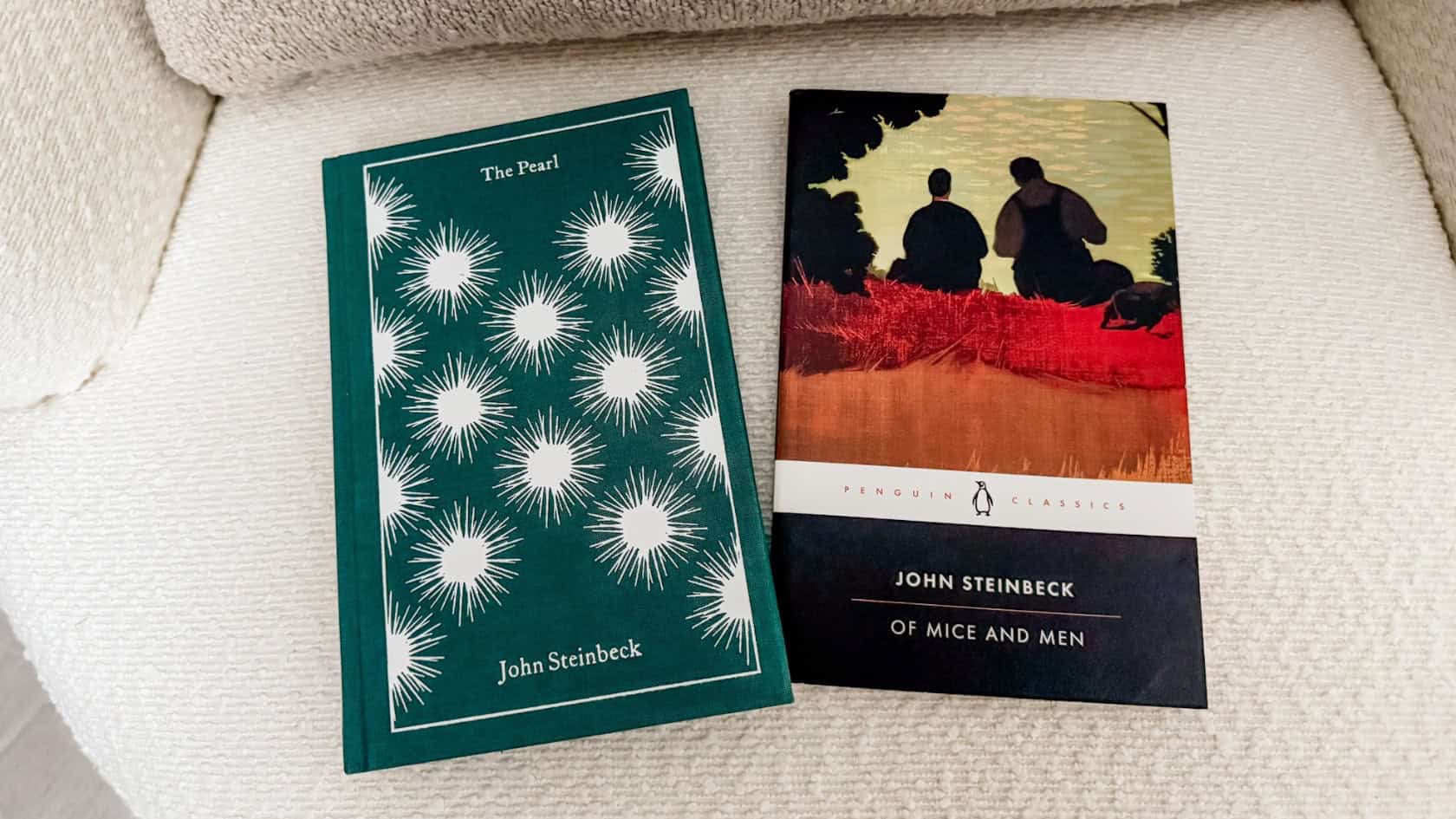
How Hard Is John Steinbeck, Really? Here’s Where I’d Start
Hi Bookish Besties, If the word “Steinbeck” immediately makes you picture a classroom, a thick classic, and the uncomfortable possibility that you are about to be tested on symbolism, I understand why you might be wondering whether John Steinbeck is actually easy to read. My answer is yes, mostly.
Steinbeck is one of the classic authors I recommend most confidently to readers who want to get into classics, because his prose is usually much more approachable than his reputation suggests. His sentences are often clear, his stories are grounded in recognizable human problems, and he is very good at making big ideas feel personal rather than academic.
But there is a catch: easy to read and easy to experience are not always the same thing. Of Mice and Men is straightforward on the sentence level and can emotionally ruin your afternoon. East of Eden is surprisingly readable but long. The Grapes of Wrath has an accessible central story surrounded by more demanding chapters about economics, migration, and collective experience. The Log from the Sea of Cortez can suddenly turn a tide pool into a philosophical discussion about existence.
This is why I wanted to start my “Is It Hard to Read?” series with Steinbeck. I think classics become much less intimidating when we stop treating difficulty as one mysterious quality and start asking what is actually difficult about the book. The language? The length? The structure? The historical context? The emotional weight? Those are completely different problems, and Steinbeck proves it.
Is Steinbeck Easy to Read? The Short Answer
For most readers, John Steinbeck is relatively easy to read compared with many classic authors. His prose is generally direct, and books like Of Mice and Men, The Pearl, Cannery Row, and The Moon Is Down are short and approachable enough for someone who does not regularly read classics.
The challenge increases when you get into books such as The Grapes of Wrath, where dialect, historical context, length, and experimental interchapters require more attention. East of Eden is long but, in my opinion, much easier to actually read than its size suggests.
START HERE: Completely new to Steinbeck? Start with Of Mice and Men (2/5). Already read long novels comfortably? Don’t be afraid of East of Eden (3/5).
My Steinbeck Difficulty Scale
I am rating these based on my actual reading experience rather than on whether a book appears on a school syllabus. A 1 out of 5 means I think almost any comfortable adult reader could pick it up without much adjustment. A 2 is approachable but may include older language, symbolism, or emotional intensity. A 3 asks for more attention because of length, structure, context, or ideas. A 4 is noticeably more demanding. A 5 would be the kind of classic I think requires substantial patience, background, or active interpretation.
And this is important: I do not give any of Steinbeck’s major books a 5. That should tell you something.
| Steinbeck Book | My Difficulty Rating | My Quick Take |
|---|---|---|
| Of Mice and Men | 2/5 | Short, clear, and emotionally much harder than it is linguistically. |
| The Pearl | 2/5 | Very readable, but the parable and symbolism give you more to unpack afterward. |
| The Red Pony | 2/5 | Straightforward prose with darker emotional material than the title suggests. |
| The Moon Is Down | 2/5 | Compact and accessible, with political and wartime context doing most of the heavier work. |
| Cannery Row | 2.5/5 | Easy to read once you settle into its loose, episodic structure. |
| Travels with Charley | 2.5/5 | Conversational nonfiction that is more reflective than difficult. |
| Tortilla Flat | 3/5 | Readable prose, but modern readers may need more cultural and historical context. |
| The Winter of Our Discontent | 3/5 | Quiet rather than difficult, with much of the complexity living in Ethan’s moral thinking. |
| East of Eden | 3/5 | Long but surprisingly readable; the bigger challenge is keeping track of generations and ideas. |
| In Dubious Battle | 3.5/5 | More political and ideological, with labor history adding another layer. |
| The Grapes of Wrath | 4/5 | Accessible story plus dialect, historical context, length, and experimental interchapters. |
| To a God Unknown | 4/5 | More symbolic and strange than the Steinbeck most beginners expect. |
| The Log from the Sea of Cortez | 4/5 | Natural history, philosophy, science, and reflection make this a slower kind of Steinbeck. |
Of Mice and Men: 2/5

If you want the easiest place to begin with Steinbeck, this is still my recommendation. Of Mice and Men was the first Steinbeck I read, and I encountered it in school long before I had any idea I would eventually become the person voluntarily encouraging other people to read more classics.
The prose is direct. The book is short. The central story involving George and Lennie is easy to follow. That does not mean the book is simple. The themes around friendship, disability, loneliness, aging, race, economic insecurity, and mercy become much more complicated the longer you sit with them. But you do not have to fight the writing to reach those ideas, and that is exactly what I want from a beginner classic. Grab Of Mice and Men here.
What Makes Of Mice and Men Difficult?
The emotional content, not the prose. The ending is devastating, and modern readers may also want to think carefully about Steinbeck’s portrayal of disability, race, gender, and violence. Those are meaningful conversations. They are not barriers to understanding the basic story. If you are nervous about Steinbeck because you have been told classics are “hard,” start here.
The Pearl: 2/5

The Pearl is another excellent starter Steinbeck. It is short, fable-like, and built around a clear story: Kino discovers an extraordinary pearl and believes it will change his family’s future. The plot itself is easy to follow. Where the complexity comes in is deciding what the pearl actually means. Is the story simply about greed? I don’t think so. I read it as a much more complicated parable about wealth, inequality, exploitation, hope, and what happens when one object becomes responsible for carrying every dream you have. Shop The Pearl here.
What Makes The Pearl Difficult?
Mostly the symbolism. The pearl, the canoe, the songs Kino hears, and the scorpion all carry meaning beyond their literal roles. But this is exactly why I think The Pearl is useful for someone getting more comfortable with classics. You can understand the story without decoding every symbol. Then you can go back and think about what Steinbeck is doing underneath it. That is a very friendly way to build your classic-reading muscles.
The Red Pony: 2/5

The Red Pony is another fairly approachable Steinbeck on the sentence level. The stories focus on young Jody Tiflin growing up on a California ranch and confronting animals, adults, responsibility, death, and disappointment. I would not necessarily make it your first Steinbeck, because I think Of Mice and Men gives you a stronger introduction to the writer. But I do not think the reading itself is particularly difficult. Find The Red Pony here.
What Makes The Red Pony Difficult?
Again, emotion. The title can make the book sound much gentler than it actually is. Steinbeck was never especially interested in protecting readers from the fact that growing up includes discovering that living things die and adults do not always have answers. Very cheerful.
The Moon Is Down: 2/5
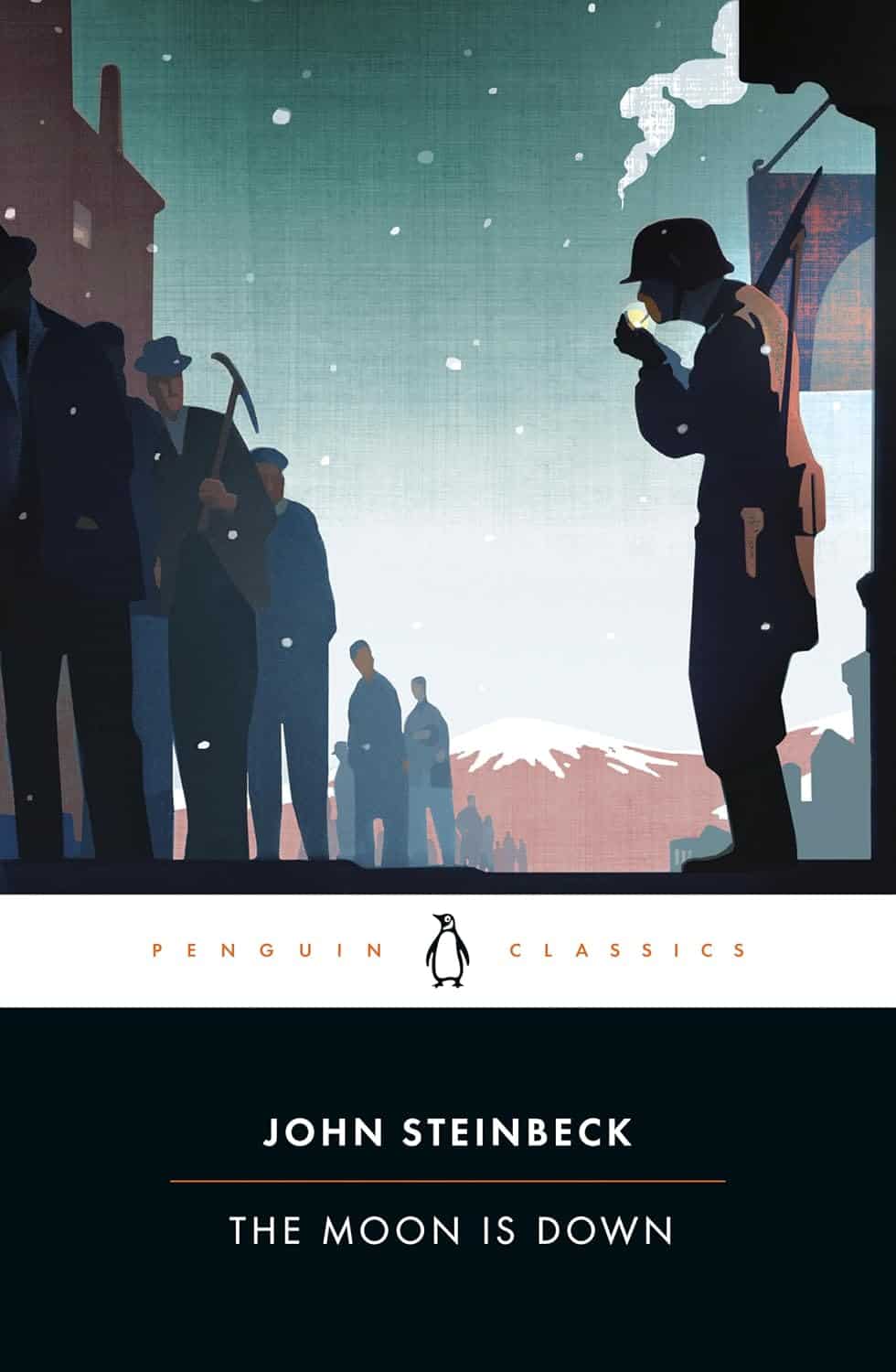
This is one of Steinbeck’s shorter and more accessible political novels. It is about an occupied town and the relationship between occupiers and the people who resist them. The prose is direct, and the story has the compressed feeling of a parable or stage drama. I think the main thing that makes it slightly harder for a modern reader is historical context rather than language. Grab The Moon Is Down here.
What Makes The Moon Is Down Difficult?
Knowing something about World War II and the role the book played as resistance literature gives the reading more depth. But you do not need a history degree to follow the story. If anything, I think this is one of Steinbeck’s lesser-known books that newer readers could handle quite easily.
Cannery Row: 2.5/5

Cannery Row is warm Steinbeck for me. Not completely cozy, because we are still dealing with Steinbeck and he refuses to let life become that tidy, but much warmer than Of Mice and Men or The Grapes of Wrath. The main adjustment is structural. This is not a tightly plotted novel where one problem appears on page twenty and drives everything forward until the end. Instead, Steinbeck builds a community around Monterey’s waterfront through episodes, characters, observations, and small events. Shop Cannery Row here.
What Makes Cannery Row Difficult?
Very little once you understand what kind of book it is. If you keep waiting for the Big Plot to arrive, you may feel slightly lost. I think the better approach is to let yourself live there. Meet Doc. Meet Mack and the boys. Notice how everybody’s lives overlap. Once I stopped expecting the novel to behave like a traditional plot machine, I found it extremely easy to love.
Travels with Charley: 2.5/5

If fiction is what makes classics intimidating for you, Travels with Charley may actually be an easier entrance. Steinbeck travels across the United States with his poodle, Charley, and reflects on the country, the people he encounters, regional differences, and his own ideas about America. The voice is conversational compared with some of his fiction. It often feels like sitting beside an observant, occasionally opinionated traveling companion. Find Travels with Charley here.
What Makes Travels with Charley Difficult?
The main challenge is remembering that this is one man’s account rather than an objective documentary record of America. I actually think the book becomes more interesting when read that way. You are encountering Steinbeck the observer. His curiosity is part of the book. So are his limitations.
Tortilla Flat: 3/5

The language in Tortilla Flat is not particularly difficult. The context is where I would slow down. The novel centers on a group of paisanos in Monterey and uses an episodic, comic structure influenced partly by Arthurian legend. It can be funny and affectionate. It can also make modern readers uncomfortable in the way it represents ethnicity, poverty, drinking, and Mexican American characters. Grab Tortilla Flat here.
What Makes Tortilla Flat Difficult?
This is the kind of classic where I think “readable” and “easy to recommend without context” are different things. You can move through the prose without much trouble. Understanding how to approach the portrayals responsibly is more complicated. That is why I would not make this your first Steinbeck, even though it appears relatively early in his career.
The Winter of Our Discontent: 3/5

This is my overlooked-Steinbeck campaign book. I want more people reading it. The novel follows Ethan Hawley, a man from a once-prominent family who becomes increasingly tempted to compromise his ethics in pursuit of money, status, and the life he believes he should have. The prose is not hard. The plot is not hard. What makes the book more demanding is that so much happens inside Ethan’s moral reasoning. Shop The Winter of Our Discontent here.
What Makes The Winter of Our Discontent Difficult?
It is quiet, and quiet books sometimes require more attention than dramatic ones. Nobody is crossing the Dust Bowl. There is no tragic ranch confrontation. Instead, you are watching a person explain his own compromises to himself. I find that fascinating. If you need constant plot movement, you may find this slower. If you like moral psychology, I think it is one of Steinbeck’s most underrated books.
East of Eden: 3/5

This is the Steinbeck book that intimidates people almost entirely because it is large. I understand. A thick classic sitting on a shelf has a particular way of looking like it knows you haven’t read it yet. But East of Eden is much easier to read than it looks, and that is one of the things I most want people to know.
The story follows generations of the Trask and Hamilton families, draws on Cain and Abel, and wrestles with family, inheritance, love, rejection, good, evil, and moral choice. It is also the Steinbeck book I love most. Grab East of Eden here.
Is East of Eden Hard to Read?
Not especially on the sentence level. Steinbeck’s prose is clear, and there is plenty of family drama pulling you forward. The main challenges are length, the multigenerational cast, and the biblical framework. You may occasionally need to remind yourself which Trask belongs to which generation. That is manageable. And once the characters become familiar, I think the book reads much faster than its page count suggests.
Why I Would Still Recommend East of Eden to a Classics Beginner
If you already read long contemporary novels or fantasy books, do not let the word “classic” convince you that East of Eden is suddenly beyond you. Length is length. If you can comfortably read 600 pages elsewhere, you can read 600 pages here. The difference is that Steinbeck may occasionally make you stop and think about the human capacity for good and evil when you were only trying to finish a chapter before bed. That is part of the experience. And if the Netflix series sent you here, my East of Eden book vs. Netflix post covers what the show changes.
In Dubious Battle: 3.5/5

In Dubious Battle takes us into labor organizing and a fruit workers’ strike in California. The story itself is understandable, but the politics of collective action become central. Characters debate strategy, leadership, exploitation, sacrifice, manipulation, and what happens when individuals become part of a movement. Find In Dubious Battle here.
What Makes In Dubious Battle Difficult?
Context helps. Understanding something about labor conditions and organizing during Steinbeck’s era makes the book richer. The ideological conversations can also slow the pace if you primarily read for character and plot. I would save this until after Of Mice and Men or The Grapes of Wrath. Once you already care about Steinbeck’s interest in workers and economic power, In Dubious Battle becomes much more interesting.
The Grapes of Wrath: 4/5

This is the Steinbeck that earns the “yes, this one takes some work” rating. But I need to explain what I mean by work. The central story of the Joad family is not especially difficult to understand. They leave Oklahoma during the Dust Bowl and travel toward California looking for work and opportunity. You can follow them. The challenge comes from everything Steinbeck builds around them. Shop The Grapes of Wrath here.
Why Is The Grapes of Wrath Harder to Read?
First, it is long. Second, Steinbeck alternates the Joad family’s story with broader intercalary chapters about migration, poverty, land, labor, economics, and collective experience. Some readers love those chapters. Some readers would very much like to return to Tom Joad now, please. I understand both positions. There is also dialect, historical context, and an enormous amount of suffering. So while I think the writing remains accessible, the overall experience asks for more patience.
Is The Grapes of Wrath Worth the Difficulty?
Completely. I delayed reading it because I thought it would feel like Important Literature homework. Instead, I found a book that was angry, alive, compassionate, and much more emotionally immediate than I expected. If you are new to classics, I simply would not make it your first Steinbeck. Let him earn your trust first. Then go with the Joads.
To a God Unknown: 4/5

This is early, strange Steinbeck. The novel deals with land, fertility, belief, nature, drought, ritual, and a man’s intense connection to the earth. It is much more symbolic than something like Of Mice and Men. Grab To a God Unknown here.
What Makes To a God Unknown Difficult?
The symbolism is doing heavy work, and the whole book has an almost mythic quality that may feel unfamiliar if your idea of Steinbeck is straightforward social realism. This is exactly the kind of book I think becomes more interesting after you already know the author. If it is your first Steinbeck, you may reasonably wonder what everybody has been talking about. If it is your seventh, you get to see another side of him.
The Log from the Sea of Cortez: 4/5

This is difficult for a completely different reason. The Log from the Sea of Cortez grew from Steinbeck’s expedition with marine biologist Ed Ricketts in the Gulf of California. There is marine life. There is collecting. There is natural history. There is science. Then suddenly Steinbeck and Ricketts are thinking about interconnectedness, society, human behavior, and the nature of existence, because apparently nobody in this friendship could simply look at a starfish and leave it at that. Find The Log from the Sea of Cortez here.
What Makes The Log from the Sea of Cortez Difficult?
It asks you to slow down. This is not plot-driven reading. You are following observation and thought. Some sections are scientific. Others become philosophical. I love what it reveals about Steinbeck’s mind, but I would never hand it to someone asking for their first Steinbeck novel. This is a “now I care enough about this author to follow him into a tide pool” book.
So Which Steinbeck Book Is Easiest?
For me, the easiest combination of language, length, and narrative clarity is Of Mice and Men. The Pearl comes immediately after it. If you want something less tragic, I would choose Cannery Row, although its looser structure requires a small adjustment. Those are the three I would consider the friendliest entry points.
If page count does not bother you, East of Eden is also surprisingly accessible. I would rather give you 600 readable pages of East of Eden than 200 pages of a classic whose prose fights you every step of the way.
Which Steinbeck Book Is Hardest?
Of the major Steinbeck books most people are likely to encounter, I would say The Grapes of Wrath is the most demanding overall reading experience. Not because the sentences are impossibly difficult; they aren’t. It combines length, dialect, historical context, emotional heaviness, and an unusual structure.
The Log from the Sea of Cortez is harder in a different direction, because its combination of science and philosophy requires slower reading. To a God Unknown can also feel more difficult because of its heavy symbolism. The important thing is that none of those difficulties mean “you are not smart enough for this book.” They mean you may need a different reading pace. That is a much less intimidating problem.
Why Steinbeck Is Such a Good Author for Getting Into Classics
This is the larger reason I wanted him to begin this series. I think classics have acquired an unnecessary aura of difficulty. Sometimes deservedly. There are absolutely classic authors I would not toss casually into the hands of someone who tells me they have not read a novel since high school. But Steinbeck? Steinbeck is one of my bridges.
He proves that older books can contain complicated ideas without making the reader wrestle every sentence into submission. He can write about capitalism, labor, biblical morality, poverty, free will, racism, loneliness, and the American Dream in prose that still feels approachable. That is a gift, and it is one of the qualities that has made him such an important part of my own classics reading life.
The Thing That Makes Steinbeck Feel Hard Is Often the Emotion
I think we underestimate this kind of difficulty because reading advice usually focuses on vocabulary and page count. But emotional difficulty is real. Of Mice and Men is easy to understand and difficult to finish without feeling something. The Pearl is easy to follow and horrible to watch unfold. The Grapes of Wrath asks you to spend hundreds of pages with poverty, hunger, exploitation, displacement, and small acts of dignity. East of Eden gives you family damage stretching across generations.
Sometimes you put the book down because the sentence was complicated. Sometimes you put the book down because Steinbeck has once again decided peace was unnecessary. Those are not the same experience.
What If You Haven’t Read Classics Since School?
Then I especially want you to ignore the idea that you should begin with the “most important” Steinbeck. Begin with the one most likely to work. That is how I increasingly approach classics. I am not trying to recreate an English syllabus for myself. I want to build a reading life where classic literature is something I choose, return to, argue with, enjoy, and occasionally become completely obsessed with.
If you start with Of Mice and Men and like Steinbeck, wonderful. Move to Cannery Row. Try The Pearl. Then maybe you decide East of Eden does not look quite so frightening anymore. That is how confidence grows. One book makes the next book possible.
My Steinbeck Reading Path From Easiest to More Challenging
If I were helping someone who specifically wanted to work their way up in difficulty, I would begin with Of Mice and Men, followed by The Pearl and Cannery Row. After those, I would move into Travels with Charley or The Winter of Our Discontent before tackling East of Eden.
Once you are comfortable there, I would go to In Dubious Battle and finally The Grapes of Wrath. I would save To a God Unknown and The Log from the Sea of Cortez for the stage where you are no longer trying Steinbeck and have instead become interested in Steinbeck. There is a difference. That is usually when the weird stuff gets fun.
Where to Start If You Want More Steinbeck
If this post has answered the difficulty question but left you wondering which book actually fits your reading taste, my John Steinbeck beginner guide is the next place I would send you. That guide does not rank the books according to difficulty. It matches them according to mood and reading experience: short and devastating, big family saga, social epic, warm community story, nonfiction. Different readers need different doors.
And once you become curious enough to want the whole bibliography, my John Steinbeck Books in Order guide gives you the complete chronological map. This page has a simpler job. I just want to convince you that the door is not locked.
Frequently Asked Questions About Reading John Steinbeck
Is Steinbeck easy to read?
Generally, yes. Steinbeck’s prose is usually clear and accessible compared with many classic authors. His books become difficult more often because of their themes, historical context, length, dialect, or structure than because of complicated sentences.
Is John Steinbeck good for beginners?
I think he is one of the best classic authors for beginners. Of Mice and Men, The Pearl, and Cannery Row are all manageable entry points that still give you plenty to think about.
What is the easiest John Steinbeck book to read?
My choice is Of Mice and Men. It is short, straightforward, emotionally powerful, and easy to follow without requiring much historical or literary background.
Is East of Eden hard to read?
Not as hard as it looks. I rate East of Eden about 3 out of 5 for difficulty. The prose is accessible, but the length, multigenerational cast, biblical parallels, and philosophical themes require more attention.
Is The Grapes of Wrath hard to read?
I think The Grapes of Wrath is one of Steinbeck’s more difficult major books, around 4 out of 5. The Joad family’s story is straightforward, but the novel’s length, dialect, historical context, and intercalary chapters make the overall experience more demanding.
Should I read Of Mice and Men or The Pearl first?
I would choose Of Mice and Men. Both are short and accessible, but I think George and Lennie’s story gives a new reader a slightly fuller introduction to the humanity, social concerns, and emotional power I associate with Steinbeck.
Can I start with East of Eden?
Absolutely. If you already enjoy long novels, family sagas, or big classics, there is no reason you need to “work up” to East of Eden. It is long, but I find the actual prose very readable.
Which Steinbeck book should I avoid as a beginner?
I would not begin with To a God Unknown or The Log from the Sea of Cortez. They are interesting books, but neither represents the easiest or most immediately rewarding way into Steinbeck.
Final Thoughts
So, is Steinbeck easy to read? Yes, much more than his place in the classic-literature canon might make you think. But I have also learned that “easy” is not a particularly useful word until we decide what kind of difficulty we mean.
Of Mice and Men is easy to read and hard on the heart. The Pearl is easy to follow and much harder to interpret once you start thinking about what the parable is actually saying. East of Eden looks intimidating because it is big, but I find the prose surprisingly inviting. The Grapes of Wrath asks for more patience because its form, history, dialect, and scale are all doing something at once.
That is how I want to approach this entire “Is It Hard to Read?” series. I do not want to tell you a classic is easy and leave you wondering why you’re struggling on page fifty. And I definitely do not want to tell you a classic is hard in a way that makes you assume the problem is you. Sometimes a book needs context. Sometimes it needs patience. Sometimes it needs a slower week. And sometimes you simply started with the wrong book.
If Steinbeck is new to you, begin with Of Mice and Men. If you already love long family dramas, ignore the intimidation and read East of Eden. If you want the bigger challenge afterward, The Grapes of Wrath will be there when you’re ready. Classics do not need to be tests. I would much rather help you find the door that makes you want to keep reading.
So tell me in the comments, Bookish Besties: which Steinbeck book have you been avoiding because you thought it would be difficult? And if you’ve already read him, which book was much easier—or much harder—than you expected?