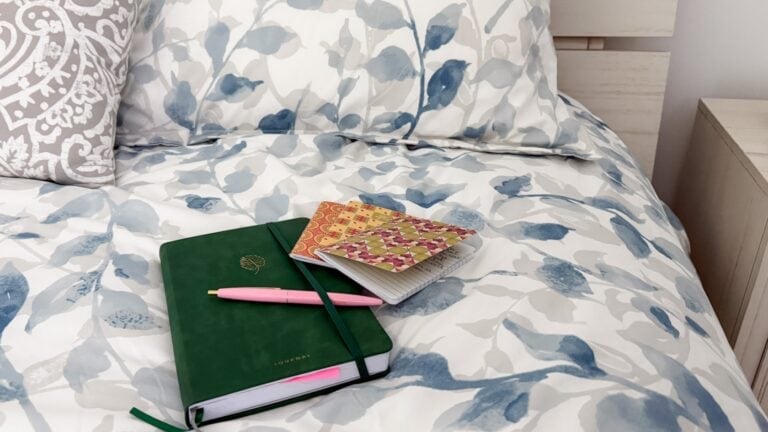
My No-Pressure Journaling Guide for Beginners
New to journaling? This journaling guide for beginners gives you an easy, no-pressure plan to start (and keep) a journal—prompts, supplies, habit tips, and my favorite books included.

How I Finally Started Journaling (and Actually Stuck With It)
Confession: I used to buy pretty notebooks with grand plans to be consistent with journaling and then… ghost them. What finally worked wasn’t perfection—it was a low-stakes, friendly routine and a few simple pages I could do even when I was tired. If you’re brand-new or restarting after a false start, this is the exact journaling guide for beginners I wish someone had handed me: quick setup, zero pressure, and lots of ways to make it yours.
Why Journal? (The honest version)
For me, journaling is a daily exhale. It helps me hear myself under the noise, make decisions faster, sleep better, and remember tiny moments I’d otherwise lose. On stressful weeks, it’s a pressure valve. On good weeks, it’s a gratitude magnet. You don’t need perfect handwriting, special stickers, or a bougie desk—just a pen, a page, and five quiet minutes.
The 15-Minute Quick-Start (Do this tonight)
- Set a five-minute timer. Write whatever’s in your head—messy, out of order, unfiltered. Stop when the timer does.
- Add two lines: one win from today + one thing you’re looking forward to tomorrow.
- Close the notebook. That’s it. Show up again tomorrow.
Where and when I journal
- Mornings when I want clarity (coffee + lamp + three scrappy pages).
- Nights when I want calm (ten lines and a little gratitude).
Pick one time, tie it to an existing habit (coffee, skincare, subway), and you’re 80% there.
Choose Your Style (Pick one to start)
Reflection Journal
A short recap + feelings about the day. Great for stress relief and decision-making.

Gratitude Journal
Three good things. Simple, uplifting, especially on “meh” days.
Bullet Journal (Beginner version)
One page: date, three priorities, a short to-do list, one line of reflection. Minimal, effective.
Creative/Art Journal
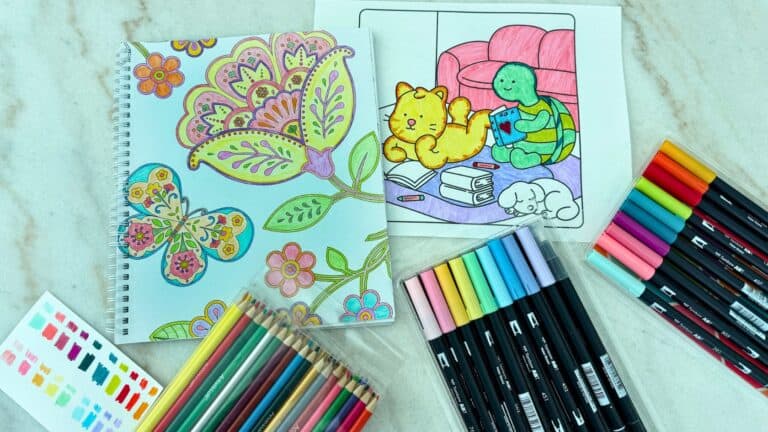
Words + doodles + scraps + tickets. Perfect if you think in images.
Reading Journal
Titles, quotes, tiny reactions. My favorite for remembering why a book mattered.
Goals Journal
Monthly intentions → weekly steps → quick daily check-in. Keeps big dreams humane.
Supplies
Beginner Recommended Supplies
- A dot-grid, blank or ruled notebook (any brand you like).
- One pen you love (gel or felt).
- Optional: a highlighter for headings, washi tape for tabs.
P.S. You can absolutely start with a $1 notebook and a pen from your junk drawer.
Supplies I Actually Use
- Scribble & Dot® Bullet Dotted Journal
- Sharpie S-Gel Pens
- Tombow Dual Brush Pen, Black
- Tombow Dual Brush Pen Art Markers, Tropical, 10-Pack
- Tombow MONO Permanent Adhesive Applicator, 1/3-Inch
- Westcott 8ths 12-Inch Beveled Transparent Ruler
Easy Layouts You Can Copy
The One-Page Day
- Top: Today’s three priorities
- Middle: 6–8 bullets (events, tasks, thoughts)
- Bottom: One sentence—What did I learn/notice/need?
The Two-Line Nightcap
- Line 1: One thing I’m grateful for
- Line 2: One thing I’m letting go of
Want To Save This Post?
The Weekly Spread (10 minutes on Sunday)
- Left: This week’s big three + appointments
- Right: Habit tracker (3–5 habits) + wins column + “dump zone” for brain clutter
25 Starter Prompts (Steal freely)
- What would make today feel successful?
- Three small joys I noticed…
- If I say no to one thing this week, it will be…
- I feel most like myself when…
- A thought I’m tired of believing…
- What I need more/less of right now…
- One kind thing I can do for future-me…
- A moment I want to remember from today…
- What energized me vs. drained me…
- If fear were a person, what would I say back?
Habit Secrets That Made It Stick
- Keep your journal where the habit happens (nightstand, tote, desk).
- Lower the bar: one line counts on chaotic days.
- Use “after” language: After I pour coffee, I write one page.
- Put your phone in another room for five minutes. (Your brain will thank you.)
- Miss a day? You didn’t break anything. Open to a fresh page and begin again.
Privacy Check (So you actually feel safe writing)
- Mark your journal “Private.” (Sounds silly—works.)
- Use a password app for digital journaling.
- Create a coded symbol for sensitive topics.
- Give yourself permission to destroy pages you never want to revisit.
Troubleshooting: Common Beginner Roadblocks
“I don’t know what to write.” Start with lists: 5 words for how you feel, 3 things you did, 1 thing you want.
“I’m scared someone will read it.” See privacy tips above; also try a “working notebook” for daily stuff and a separate “keeper” for reflections you love.
“My handwriting is messy.” Same. Neatness isn’t the goal; feeling better is.
“I fall off the wagon.” Shrink the habit: two lines is still a journal.
My Favorite Books About Journaling & Creative Momentum
The Artist’s Way by Julia Cameron
Cameron invites you to try two anchor habits—Morning Pages and weekly Artist Dates—to rediscover your creative self after seasons of doubt or burnout. I picked it because Morning Pages was the first practice that unclogged my brain on anxious mornings. For readers who like guided structure and pep talks with heart, it made me feel un-stuck, like someone quietly handed me permission to make things again.
The Bullet Journal Method by Ryder Carroll
Part memoir, part manual, Carroll shows how to capture tasks, thoughts, and goals in one flexible system that evolves with your life. I chose it because I needed fewer apps and more clarity. For readers who love lists and minimal layouts, it felt empowering—like I finally had a dashboard for my days instead of a pile of sticky notes.
Writing Down the Bones by Natalie Goldberg
Goldberg’s short essays champion “writing practice” as a path to honesty and attention—no perfection allowed. I picked it because her voice is warm and a little mischievous, the exact energy I need when I censor myself. For readers who crave freedom on the page, it made me braver and kinder with my first drafts (and with myself).
Start Where You Are: A Journal for Self-Exploration by Meera Lee Patel
This guided journal blends prompts and watercolor art to help you notice gratitude, fear, and hope in small, doable steps. I chose it for its gentle on-ramp when my brain felt too busy to reflect. For readers who like structure without pressure, it felt soothing—like a creative stretch for the soul.
Keep Going by Austin Kleon
Kleon offers 10 simple ways to stay creative when life is loud: daily walks, eager curiosity, and tiny rituals. I picked it because it reads like a pep talk you can finish in an afternoon and use for a year. For readers who like practical inspiration, it made me protect my little routines (including journaling) like treasure.
The Gratitude Diaries by Janice Kaplan
Kaplan chronicles a year of focused gratitude and how it reshaped work, relationships, and mood. I chose it because gratitude journaling often felt cheesy—this book made it feel grounded and doable. For readers who like real-life experiments, it left me lighter and more aware of small wins I’d usually skip past.
FAQs for Absolute Beginners
How long should I write? Five minutes is plenty. Some days you’ll want more—great.
Paper or digital? Whichever you’ll actually use. I do paper at home, digital when traveling.
Is it okay to skip days? 100%. Journaling is a relationship, not a streak. Come back when you can.
Do I need prompts? Only if they help. Some seasons I need them; other times I free-write.
Your First Page, Right Now
Set a timer for five minutes. Finish these lines:
- Today, I’m proud that…
- I’m worried about…
- One tiny thing that would make tomorrow kinder is…
Close the notebook. Look at you—you’re journaling.
What kind of journal are you starting—reflection, gratitude, bullet, creative, reading, or goals? Tell me in the comments, and I’ll match you with a couple of prompts to try this week.