The Brontë Sisters Were Never Just Writing Romance
Are the Brontë sisters really writing romance? A deeper look at Wuthering Heights, Jane Eyre, and The Tenant of Wildfell Hall.
The Brontë Sisters Didn’t Write Love Stories (And We Keep Reading Them That Way)
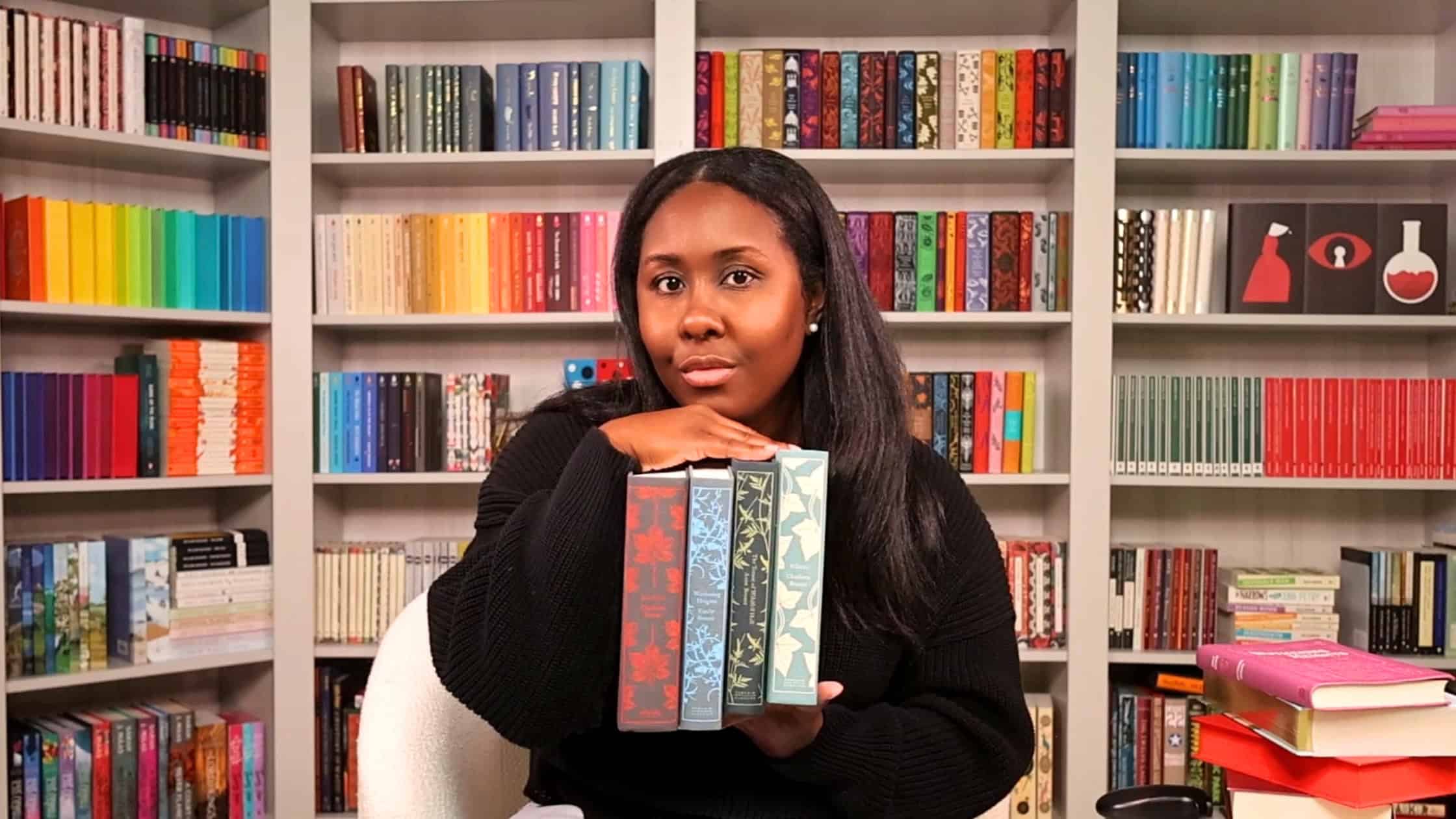
Hi Bookish Besties, Let me just say this upfront, because I know it might sound a little dramatic, but I genuinely mean it. We have been reading the Brontë sisters wrong and I’m going to tell you why in my mini Brontë sisters analysis. Not because we’re careless readers. Not because the books are simple. But because somewhere along the way, these stories got packaged, labeled, and handed back to us as gothic love stories. And once something gets labeled as romance, even dark romance or gothic romance, it becomes very easy to stop asking harder questions. So here’s the real takeaway I want you to sit with before we go any further: These books of classic literature are not just about love. They are about power, survival, control, and what happens when people are pushed to their limits inside systems they didn’t create. And once you see that, you can’t unsee it.
Watch the Full Breakdown (Video)
Before we dive in, I did a mini Brontë sisters analysis deep-dive discussion on this exact topic over on YouTube where I go even deeper into the books, the adaptations, and some theories I have.
Why We Keep Calling Them Romance
Before we even get into the books themselves, we need to talk about something that honestly shapes how we read them before we even open the first page. The Brontë sisters have been turned into an aesthetic. Three women on the moors. Wind. Grief. Genius. Early death. That whole misty, melancholic image that feels almost cinematic. And while that image is beautiful, it flattens them. It turns three completely different writers into one shared mood. And once that happens, their books get grouped together as if they’re all doing the same thing. They’re not.

- Emily writes about obsession and emotional extremity
- Anne writes about survival and moral clarity
- Charlotte writes about inner life, longing, and endurance
Those are three completely different projects. But when we label all of them as romance, we smooth over the sharp edges that actually make these books powerful.
Wuthering Heights Is Not a Love Story
Let’s start with Wuthering Heights as the first book in my Brontë sisters analysis because this is the one people love to romanticize the most. And I get it. I really do. The connection between Catherine and Heathcliff feels intense, almost otherworldly. It feels bigger than language, bigger than logic. But intensity is not the same thing as romance, and that distinction really matters here. Heathcliff is not written as a romantic ideal. He is written as a product of humiliation, exclusion, and long-term emotional damage. He comes into the Earnshaw household as an outsider and is treated like one almost immediately. After Mr. Earnshaw dies, he is degraded, denied education, and pushed into a lower status. And when he returns years later, he doesn’t come back softened or healed. He comes back strategic. What makes him frightening is not just his emotions. It’s the way he learns how systems work and uses them.
- property
- inheritance
- marriage
- financial dependency
He turns all of it into tools for revenge. And Catherine is not a simple romantic heroine either. She loves Heathcliff, yes. But she chooses Edgar because he offers something Heathcliff cannot. Stability. Status. A different kind of life. That decision is not just emotional. It is social. And it sets off everything that follows. What I think people often miss is the ending. The novel does not end with Catherine and Heathcliff. It ends with the next generation, with a kind of quiet repair. So no, this is not just a tragic love story. It is a story about how damage spreads and what it takes for it to finally stop.
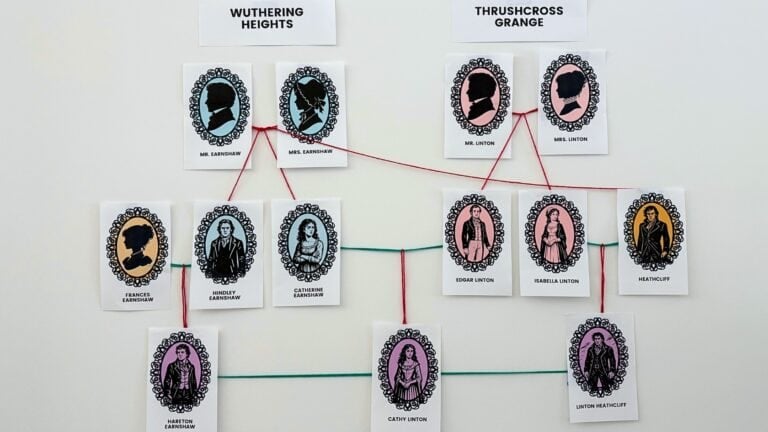
Now if you’ve read Wuthering Heights but you get confused about who is who, especially when we get into the next generation, I have you covered. I created a Wuthering Heights family tree to help you track the Earnshaws, Lintons, and Heathcliff while reading the novel. And if you’re into adaptations, I shared my thoughts on the 2026 Wuthering Heights adaptation as well.
The Tenant of Wildfell Hall Is About Survival
Now the second book I want to talk about in my Brontë sisters analysis is The Tenant of Wildfell Hall because this is the one that still feels the most misunderstood to me. Anne is often called the quiet Brontë, and I honestly think that label has done her such a disservice. Because this book is not quiet at all. It is direct in a way that feels almost shocking, especially when you remember it was published in 1848. Helen marries a man who is charming at first. But that charm erodes into something much darker. Alcoholism. Infidelity. Emotional neglect. A slow unraveling that Anne does not soften or romanticize.
She documents it. That’s what makes this book feel so modern. We are not asked to guess whether the marriage is bad. We are shown, step by step, how it becomes unbearable. And then Helen does something that, at the time, was almost unthinkable. She leaves. She leaves her husband. She takes her child. She supports herself. And this is happening in a legal system where:
- married women had extremely limited rights
- children were legally tied to the father
- leaving could mean losing everything
Want To Save This Post?
Anne is not writing around that reality. She is writing directly into it. What makes this even more complicated is what happened after Anne died. Charlotte Brontë did not support the continued publication of this book. She called its subject matter a mistake. And I think that matters. Because it means this book was not just overlooked. It was actively made harder to circulate. Anne was not too quiet. She was too honest.
Jane Eyre vs Villette: Two Very Different Endings
Now we get to Charlotte Brontë, and this is where things get really interesting because in my Brontë sisters analysis I’m going to come at this from a different angle. Most readers know Jane Eyre. It’s the one that gets republished constantly, the one that feels the most familiar. And I understand why. Jane’s voice is unforgettable. She insists on her own worth in a world that keeps trying to diminish her. And the ending gives readers something deeply satisfying.
- resolution
- reunion
- emotional closure
But the older I get, the more I find myself thinking about her other novel, Villette. And Villette feels like a completely different emotional experience. Lucy Snowe is quieter, more reserved, harder to read. The story is more internal, more ambiguous, more unresolved. And the ending does not give you the same sense of closure. It withholds. It leaves space for uncertainty, for loss, for interpretation. And that feels intentional. It feels like Charlotte stepping away from the idea that a story needs to reward the reader. Instead, she gives us something closer to real life, where not everything resolves cleanly. If Jane Eyre believes in a kind of moral order, Villette questions whether that order is ever guaranteed.
What We Lose When We Call These “Romance”
So if all three of these books are doing something different, what do we lose when we group them together as love stories? We lose the warning. We lose the systems. We lose the tension between emotion and structure, between desire and reality. Because these books are not just about how people feel. They are about what happens when those feelings collide with:
- class
- gender roles
- legal systems
- power dynamics
- social expectations
And that is a much more uncomfortable conversation. It’s also a much more interesting one.
Final Thoughts
I’m not saying there’s no love in these books. There absolutely is. But I think the love is often the most dangerous part. It’s the thing that blinds people, traps them, pushes them to make choices they can’t undo. And sometimes, it’s the thing that survives long after it should have ended. So maybe the question isn’t “Are these romance novels?” Maybe the better question is: Why do we keep needing them to be?
I would love to know what you think. Do you read Wuthering Heights as a love story, a warning, or something in between? And if you’ve read Villette or The Tenant of Wildfell Hall, did they change how you see the Brontës as a whole? Let’s talk in the comments.