Journey to the Center of the Earth Summary + Readalong Guide
A spoiler-free Journey to the Center of the Earth summary plus a thoughtful readalong guide, themes, and spoiler discussion of this Jules Verne classic.
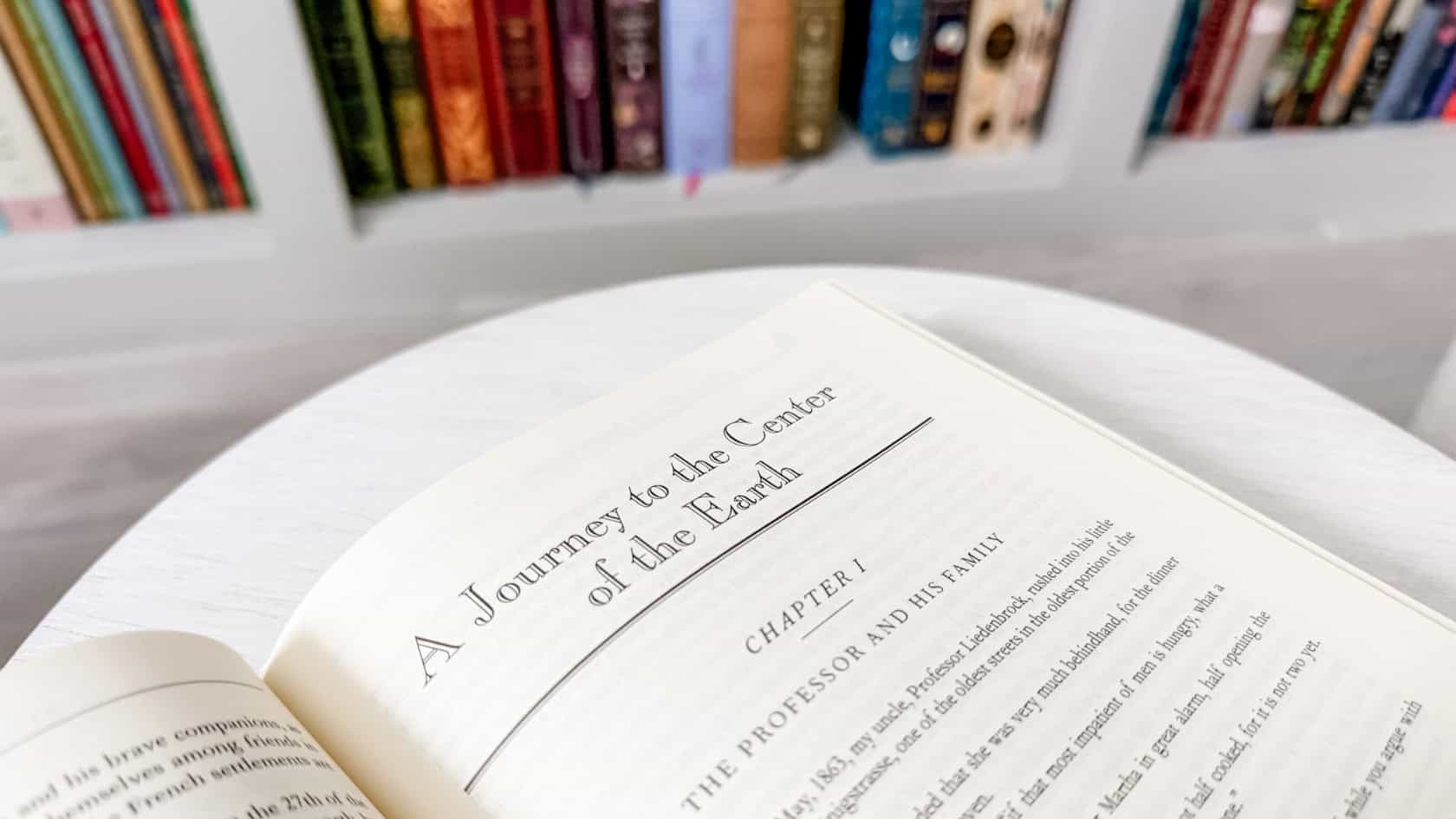
Your “Journey to the Center of the Earth” Read-Along Guide (Spoiler-Free First)
Welcome to Month 2 of the Jules Verne readalong, and this one is a shift. After the structure and forward momentum of Around the World in Eighty Days, we’re stepping into something slower, stranger, and much more immersive with Journey to the Center of the Earth. This is the Jules Verne book where you stop moving quickly across the surface and start going deeper, and I don’t just mean physically. I’ll be honest, this one took me a minute to settle into. It’s not as immediately fast-paced, and it asks a little more of your attention at the beginning. But once it opens up, it becomes one of those reading experiences that feels expansive in a completely different way. It’s less about racing forward and more about stepping into the unknown and staying there long enough to see what reveals itself.
Quick Takeaway (Before You Scroll)
If you’re deciding whether to read this, here’s the simplest way to think about it:
- This is a slower, more immersive adventure than Month 1
- It leans heavily into curiosity, discovery, and imagination
- The early chapters require a bit more patience, but it pays off
- If you enjoy atmosphere and exploration, this one really works
This is where the readalong starts to deepen.

Challenge Navigation (Save This)
If you’re following along:
- Jules Verne Reading Challenge Hub
- Previous: Around the World in Eighty Days
- Next: Five Weeks in a Balloon
Journey to the Center of the Earth at a Glance
This book was first published in 1864 and its structure feels like discovery, descent, exploration, and then return. The setting takes us from Hamburg to Iceland, and then far beneath the Earth. This one feels more contained than the first book, but also more imaginative in scope.
What Kind of Book Is This?
This is an exploration-driven science fiction adventure, but it’s not fast in the same way as Around the World in Eighty Days. Instead, it builds through curiosity. The story begins with a scientific discovery that leads Professor Lidenbrock, his nephew Axel, and their guide Hans on a journey beneath the Earth’s surface. From there, the tension comes less from time and more from uncertainty. They don’t know exactly what they’ll find, or if they’ll make it back. That unknown becomes the driving force.
About Journey to the Center of the Earth
When Professor Lidenbrock discovers a coded manuscript that points to a path leading to the center of the Earth, he becomes immediately determined to follow it, pulling his hesitant nephew Axel along with him. Their journey takes them to Iceland, where they descend into a volcanic passage that leads into an underground world far beyond what they expected. What unfolds is a series of discoveries that feel both imaginative and strangely grounded, as Verne blends scientific curiosity with something much more fantastical. I chose this as our second book because it expands the experience in a completely different direction. Where the first book builds confidence through pacing and structure, this one builds it through immersion. It asks you to slow down, stay present, and trust the journey a little more-and once you do, it becomes incredibly rewarding.
The Vibe (So You Know What You’re Getting)
This one feels:
- Slower and more atmospheric
- Curious rather than urgent
- Expansive, even in confined spaces
There’s a sense of quiet tension throughout, but it’s not constant pressure, it’s more about what might happen next rather than what’s about to go wrong.
Let’s Talk About Axel
Axel is such an interesting perspective to read through, especially in contrast to Professor Lidenbrock. He’s hesitant, cautious, and often very aware of the risks involved-which makes him incredibly relatable. While Lidenbrock pushes forward with confidence and determination, Axel is constantly questioning whether they should continue at all. There were moments where I completely understood his resistance and others where I wanted him to just go along with it already. But that tension between fear and curiosity is what makes his character work. He gives voice to the reader’s doubts while still moving forward, and that balance adds depth to the journey.
How to Read This One Gently (and Actually Enjoy It)
This is the book where your reading pace matters more. My recommendation:
- Be patient with the opening chapters
- Let the scientific details sit without overanalyzing them
- Focus on the feeling of discovery rather than understanding everything perfectly
Once the descent begins, the story becomes much easier to move through.
Read-Along Guide: What to Notice
As you read, keep an eye on a few of these ideas:
Curiosity vs. fear
Axel and Lidenbrock approach the journey very differently, and that contrast drives much of the tension.
Want To Save This Post?
Science vs. imagination
Verne blends real scientific ideas with imaginative possibilities, notice where that line starts to blur.
Isolation
The deeper they go, the more removed they are from the known world, and that shift changes everything.
Endurance
This journey isn’t quick or easy, it’s about persistence as much as discovery.
If You’re Listening on Audio
This can work well on audio, especially once the journey is underway. If the beginning feels dense, don’t worry too much about catching every detail. Focus on the progression and let the atmosphere carry you forward.
Should You Read This If You’re New to Classics?
Yes, but with slightly different expectations. This isn’t as immediately easy as Around the World in Eighty Days, but it’s still very accessible if you allow yourself to ease into it. If you enjoy imaginative settings and exploration, this is where classics start to feel expansive rather than intimidating.
SPOILER DISCUSSION (Read After Finishing)
Big-Picture Reflection (Spoilers Ahead)
The journey itself is the payoff here. Unlike the first book, where everything builds toward a precise outcome, this story is more about what happens along the way. The underground world, the sea, the creatures, all of it contributes to a sense of discovery that feels bigger than any single plot point. And then the return. Being expelled back to the surface through volcanic activity feels chaotic compared to the structured descent, but it works because it reinforces the idea that this was never something they could fully control.
The Ending
The ending doesn’t tie everything up neatly, and I actually liked that. It feels more like a return from an experience rather than the resolution of a problem. The journey changes them, even if not everything is fully explained, and that’s what makes it linger.
Axel’s Growth
Axel’s arc is one of my favorite parts. He starts out hesitant and uncertain, but by the end, he’s someone who has gone through the experience fully. He doesn’t lose his caution, but he gains resilience, and that shift feels earned.
Discussion Questions
If you’re following along:
- Did you relate more to Axel or Lidenbrock?
- At what point did the story fully pull you in?
- Did the ending feel satisfying, or unfinished?
Leave a comment with your rating (⭐️/5) and how this book made you feel.
What Comes Next
Next up is Five Weeks in a Balloon, which shifts again, this time into something more observational and expansive.
Continue the Readalong
If you’re moving at your own pace or jumping in: Jules Verne Reading Challenge Hub.
Final Thoughts
This is the book where the readalong changes. It asks for a little more patience, but it gives you something different in return, a sense of wonder that builds slowly and stays with you. If the first book helped you start, this one helps you go deeper.