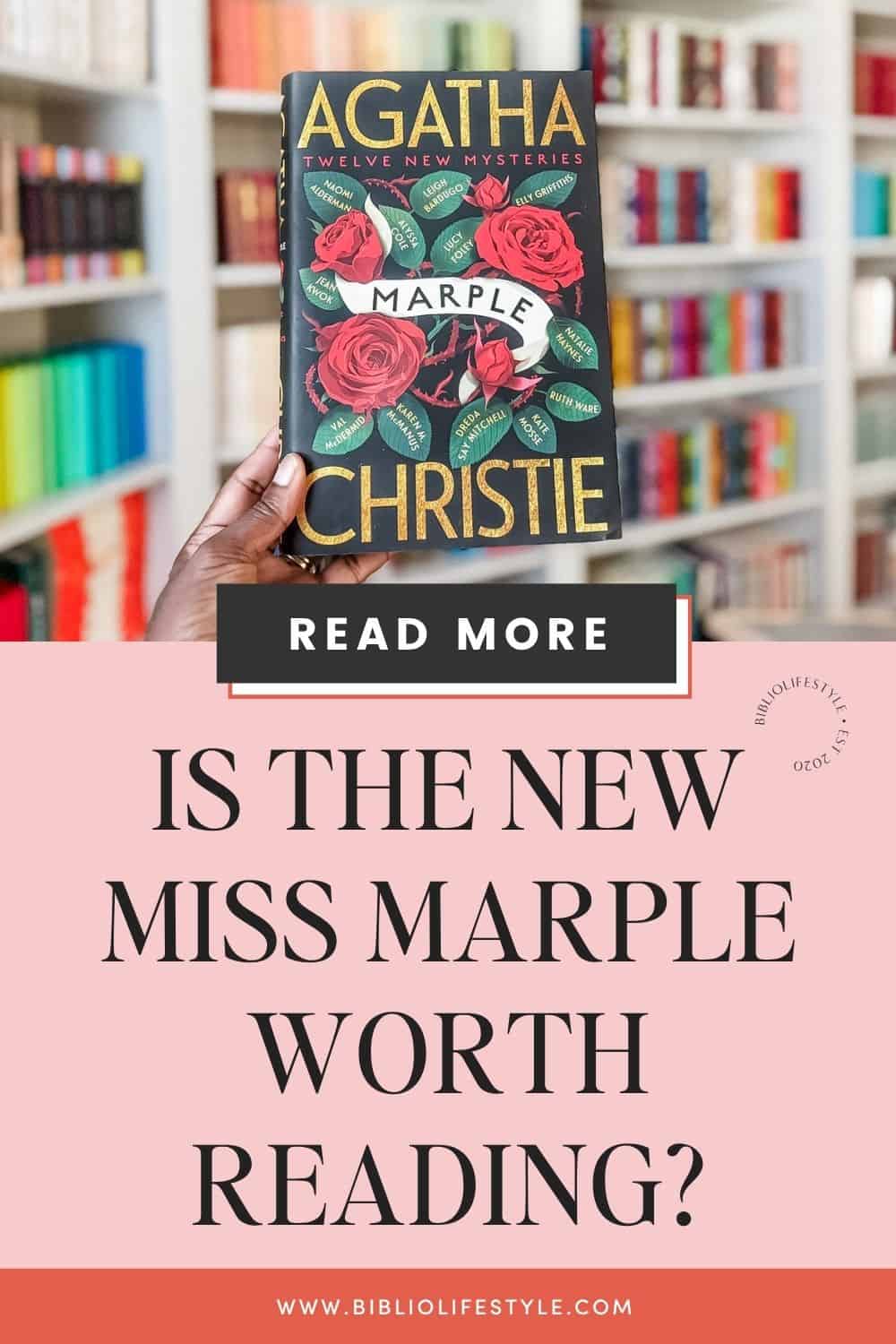
Marple: Twelve New Mysteries Review, and Is It Worth Reading?
My Marple: Twelve New Mysteries review explores all 12 stories, the authors, how they compare with Agatha Christie, and whether the collection is worth reading.
Marple: Twelve New Mysteries Made Me Appreciate Agatha Christie Even More
Hi Bookish Besties! I have a question for you. When an author creates a character as beloved as Miss Marple, should other writers be allowed to continue her adventures? Part of me absolutely loves the idea. After all, I don’t think any of us who enjoy Agatha Christie would complain about having another mystery to solve with Jane Marple. There’s something comforting about returning to St. Mary Mead, encountering a suspicious collection of characters, and watching our favorite elderly detective quietly recognize what everyone else has overlooked. But there’s another part of me that wonders whether bringing a character back is quite the same thing as bringing her world back. And that’s exactly the question I kept returning to with Marple: Twelve New Mysteries, the 2022 collection featuring twelve original Miss Marple short stories written by twelve contemporary authors.
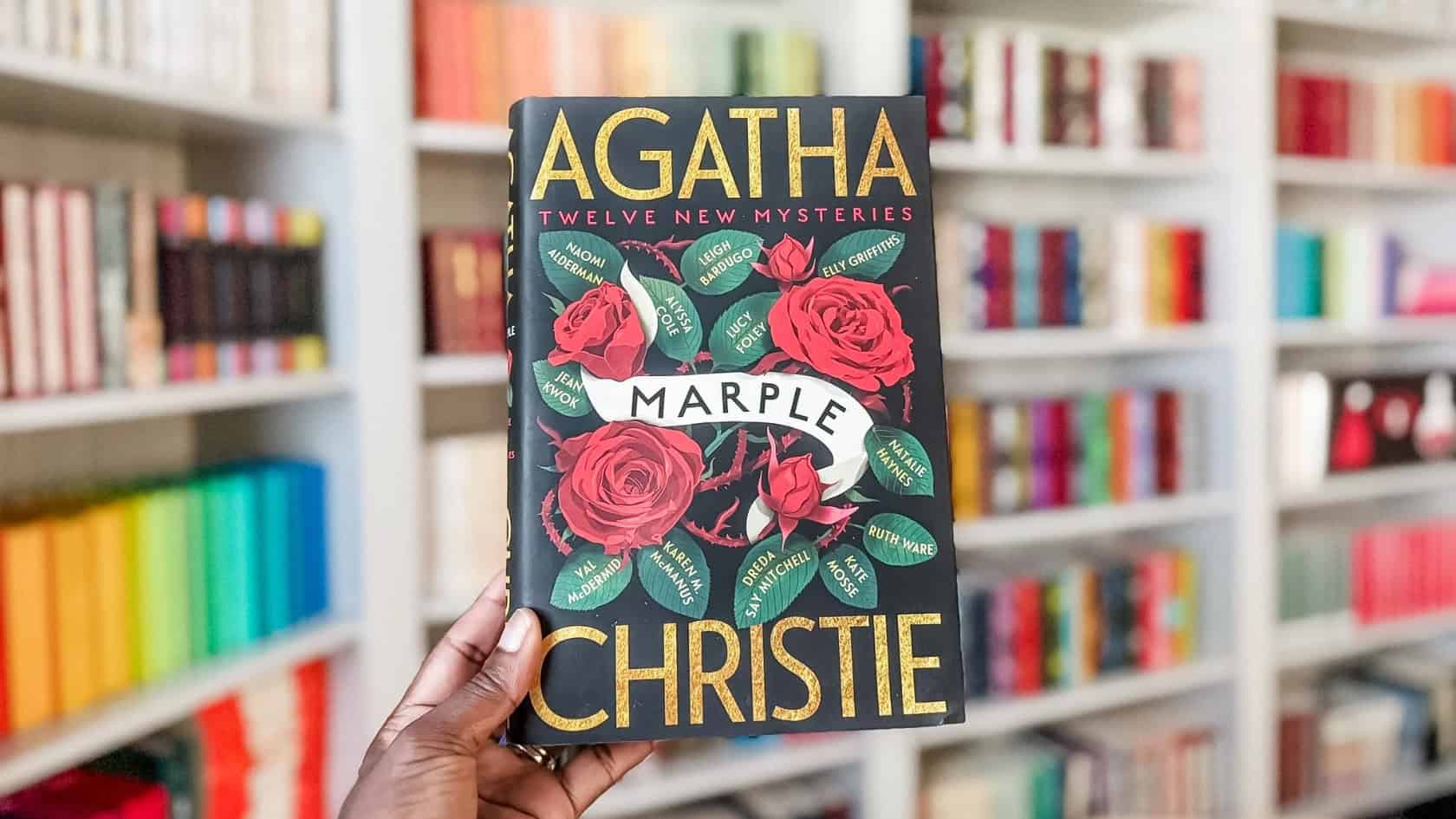
Marple: Twelve New Mysteries is an officially authorized collection of twelve new short stories featuring Agatha Christie’s Miss Jane Marple, with contributions from bestselling authors including Lucy Foley, Ruth Ware, Leigh Bardugo, Val McDermid, and Naomi Alderman. The collection brings Miss Marple into a variety of familiar and unfamiliar settings, from English villages and country houses to New York City, Italy, and a cruise ship traveling to Hong Kong. On paper, it sounds wonderful. Twelve established writers, each bringing their own interpretation to one of detective fiction’s most enduring characters. But after spending so much time exploring the original Miss Marple novels through my Miss Marple Reading Challenge, I’ve become increasingly aware of how difficult it is to reproduce what made Christie’s mysteries so special. And I think that’s where this collection becomes interesting.
My overall assessment is that Marple: Twelve New Mysteries is an enjoyable idea with uneven execution. Some stories come closer to capturing the spirit of the original mysteries than others, and Lucy Foley’s Evil in Small Places is a particular standout. But the collection also reminds me that Miss Marple is much more than an elderly woman who happens to be good at solving murders. Her understanding of human nature is the entire point. And when that quality isn’t central to the mystery, something important is missing. So today, I want to talk about what this collection offers, introduce all twelve stories and their authors, and explain how these newer mysteries compare with the original novels we’ve been reading together. I’ll also share whether I think it’s worth adding to your Agatha Christie reading list and where I’d recommend fitting it into the Miss Marple reading order. Here’s what to know about the book:

- Book: Marple: Twelve New Mysteries
- Format: Short story anthology
- Number of stories: 12
- Number of contributing authors: 12
- Best for: Established Miss Marple fans, readers interested in modern interpretations of classic characters, and anyone who enjoys sampling several mystery authors in one collection
- My recommendation: An interesting companion to the original series, but not a replacement for Christie’s own Miss Marple stories
And don’t worry, this review is completely spoiler-free. I’ll discuss the stories, their premises, and what makes the anthology interesting without revealing the murderers or endings.
What Is Marple: Twelve New Mysteries About?
Marple: Twelve New Mysteries brings Agatha Christie’s famous amateur detective back for twelve new adventures, each written by a different contemporary author. Rather than following one continuous investigation, the collection presents a series of independent mysteries in which Miss Marple encounters suspicious deaths, unusual crimes, and people whose behavior isn’t always as innocent as it appears. Some stories return her to the familiar villages and households associated with Christie’s original novels, while others take her to places such as Manhattan, Oxford, Italy, and a cruise ship bound for Hong Kong. The collection includes contributions from writers with backgrounds in crime fiction, psychological suspense, historical fiction, and contemporary thrillers, allowing each author to approach the character from a slightly different perspective. It’s an intriguing premise for readers who love Miss Marple and are curious to see how modern writers interpret her extraordinary ability to understand people. But for me, the central question is whether those interpretations preserve the distinctive qualities that made Christie’s detective so compelling in the first place.
Why This Collection Is Such an Interesting Idea for Miss Marple Fans
One of the things I’ve enjoyed most about working through the twelve original Miss Marple novels is discovering how much variety Christie introduced into the series. Before beginning my reading challenge, I think it was easy to remember Miss Marple primarily as the observant elderly woman who knows everything about St. Mary Mead. And she certainly is that. But we’ve also watched her investigate crimes involving trains, hotels, glamorous film stars, suspicious inheritances, anonymous letters, and complicated family relationships.
In The Murder at the Vicarage, her understanding of village behavior helps expose the truth about an apparently straightforward murder. In The Body in the Library, she recognizes how easily people are misled by appearances. And in A Murder Is Announced, she sees through an elaborate deception because she understands the personalities and histories involved. Then, in A Caribbean Mystery, Christie takes her thousands of miles from St. Mary Mead and demonstrates that her investigative abilities aren’t confined to one English village.
I think that’s an important distinction. Miss Marple isn’t successful simply because she’s familiar with the people living around her. She’s successful because she recognizes patterns in human behavior. She understands jealousy, greed, loneliness, vanity, resentment, and the countless little ways people reveal their true feelings when they don’t realize anyone is paying attention. And that knowledge travels with her.
So the idea of twelve modern authors giving Miss Marple new adventures is actually quite appealing. There are so many settings and situations in which her particular understanding of human nature could become useful. But that also creates a challenge. If a new writer sends Miss Marple somewhere different, gives her a suspicious group of people, and lets her announce the murderer at the end, have they necessarily written a convincing Miss Marple mystery? I’m not sure they have. Because the magic of the original stories isn’t simply the presence of Miss Marple. It’s how she arrives at the truth.
Is Marple: Twelve New Mysteries Actually Written by Agatha Christie?
This is something I want to clarify early, especially for anyone who’s just discovering the collection. No. Agatha Christie did not write the twelve stories in Marple: Twelve New Mysteries. The book is an officially authorized continuation of her famous character, written by twelve contemporary authors with permission from Agatha Christie Limited. Christie died in 1976, the same year her final Miss Marple novel, Sleeping Murder, was published posthumously.
The stories in this collection are new works inspired by her detective, rather than previously unpublished Christie manuscripts. And I think that distinction matters. If you’re looking for another book written in Christie’s own voice, this isn’t quite what you’re getting. Instead, you’re reading twelve interpretations of a character originally created by Christie. Some writers aim for the atmosphere of her traditional English mysteries.
Others take Miss Marple into unfamiliar surroundings or experiment with the way the stories are told. And while I think that variety can be entertaining, it also means the collection doesn’t always feel completely consistent. The Miss Marple who appears in one story may feel a little different from the version we encounter in another. That’s almost inevitable when twelve writers are working with the same established character.
But it’s also why I think readers familiar with Christie’s original novels may notice the differences more than someone who’s encountering Miss Marple for the first time.
All 12 Stories in Marple: Twelve New Mysteries
One of the most appealing things about this anthology is the opportunity to experience twelve different authors in a single book. You may already be familiar with some of them, particularly Lucy Foley, Ruth Ware, Leigh Bardugo, or Karen M. McManus. Others may introduce you to a writer you haven’t read before. And because the stories are relatively short, it’s easy to read one whenever you’re in the mood for a little mystery without committing to an entire novel. Here’s what you’ll find in the collection, in its published order.
1. Evil in Small Places by Lucy Foley
The collection opens with Lucy Foley’s Evil in Small Places, and this is the story I would be most interested in recommending to readers who particularly enjoy Christie’s original approach. Miss Marple visits an old school friend in the village of Meon Maltravers, where the community is preparing to commemorate a group of Protestant martyrs. But during the proceedings, someone is found murdered, and a threatening note introduces another unsettling element to the investigation.
What I appreciate about this premise is how naturally it fits Miss Marple’s understanding of village life. We’ve seen throughout the original novels that small communities can conceal extraordinary amounts of resentment, jealousy, and cruelty beneath apparently respectable behavior. And that seems like exactly the kind of environment where Miss Marple should be at her best. I think Foley comes closest to recognizing that the setting matters because of the people living within it, not simply because it’s picturesque.
It’s a strong way to begin the collection and a particularly interesting story for readers who appreciate the psychological foundations of Christie’s mysteries.
2. The Second Murder at the Vicarage by Val McDermid
Next is Val McDermid’s The Second Murder at the Vicarage, which immediately takes us back to one of the most familiar locations in the Miss Marple series. And honestly, I think the title alone will make longtime readers curious. If you’ve read The Murder at the Vicarage, you already know that Christie’s first Miss Marple novel introduced us to the complicated lives of St. Mary Mead’s residents. Now another mysterious death brings us back to the vicarage.
I appreciate the idea of returning to such an important location because it gives readers an opportunity to revisit the atmosphere of the original mystery. But it also creates an obvious comparison. When a story deliberately recalls one of Christie’s novels, readers are naturally going to consider whether the new mystery captures the humor, observations, and carefully constructed clues that made the earlier book memorable. I think this is one of the more interesting challenges facing any author who chooses to revisit an established fictional world.
3. Miss Marple Takes Manhattan by Alyssa Cole
Alyssa Cole takes Miss Marple somewhere considerably less familiar in Miss Marple Takes Manhattan. New York City. And I have to admit, the idea of Miss Marple navigating Manhattan is quite entertaining. The story takes her into a bustling American setting, where the energy and pace are very different from the quiet streets of St. Mary Mead. There’s an appealing contrast between an elderly English detective and the noise, crowds, and excitement of New York.
But this is also the kind of premise that makes me wonder whether the novelty of the setting might become more important than the actual mystery. I don’t necessarily need Miss Marple to remain in England. We’ve already seen how effectively Christie takes her abroad in A Caribbean Mystery. But I do want her investigative method to remain recognizable. For me, changing the scenery should create new opportunities for her understanding of people rather than becoming the main attraction.
4. The Unravelling by Natalie Haynes
Natalie Haynes’s The Unravelling returns us to village life and offers a perspective involving a police sergeant reflecting on Miss Marple’s remarkable abilities. I think there’s something particularly interesting about seeing Miss Marple through the eyes of someone involved in official investigations. Throughout Christie’s original novels, police officers respond to her in very different ways. Some dismiss her. Others become frustrated by her unusual explanations.
And a few, such as Inspector Craddock, recognize how valuable her observations can be. That relationship between professional investigation and personal experience is one of the things I’ve enjoyed most about reading the series. So I appreciate a story that draws attention to the way Miss Marple’s abilities might appear to someone accustomed to more conventional detective work.
5. Miss Marple’s Christmas by Ruth Ware
Ruth Ware gives us a festive mystery in Miss Marple’s Christmas, bringing together familiar characters for a Christmas gathering at the Bantrys’ home. And I think this is exactly the kind of premise many classic mystery readers will enjoy. There’s something particularly appealing about an English country house at Christmas. The familiar guests. The holiday traditions. And, naturally, the possibility that someone attending the celebration isn’t behaving entirely honestly.
The story involves a jewel theft, giving Miss Marple another opportunity to demonstrate her investigative abilities. I also appreciate the connection to Dolly Bantry, one of my favorite supporting characters from the original series. After spending so much time with the Bantrys through our reading challenge, there’s something lovely about the idea of returning to their household for another mystery.
6. The Open Mind by Naomi Alderman
In The Open Mind, Naomi Alderman takes Miss Marple to Oxford, where she becomes involved in a mystery connected to a university college. I think this is an interesting setting because it allows the author to contrast formal education and intellectual authority with the practical understanding of human nature that makes Miss Marple so effective. And that’s a contrast Christie herself frequently explores. Miss Marple may not have the professional qualifications or academic reputation of the people surrounding her.
But she’s spent decades observing how people behave. And sometimes that experience reveals something that a more conventionally educated person overlooks. I think Oxford provides a particularly interesting environment for that kind of mystery.
7. The Jade Empress by Jean Kwok
Jean Kwok’s The Jade Empress takes Miss Marple aboard a cruise ship traveling toward Hong Kong. And I think the setting has enormous potential. A ship brings together passengers who may come from completely different backgrounds but are temporarily sharing the same confined environment. People become acquainted. Relationships develop. And yet, much like the guests in A Caribbean Mystery, they may know very little about one another’s lives beyond what they’re told.
I love mysteries set aboard ships because the setting creates a natural sense of containment. The passengers can’t simply disappear into an enormous city. And their interactions become increasingly important as the investigation unfolds. It’s another opportunity to see Miss Marple apply her understanding of human nature somewhere far removed from St. Mary Mead.
8. A Deadly Wedding Day by Dreda Say Mitchell
In A Deadly Wedding Day, Dreda Say Mitchell places Miss Marple among the guests at a wedding. And if there’s one setting that’s particularly good for bringing together complicated relationships, I think it’s a wedding. Family members who haven’t seen one another for years suddenly find themselves sharing the same space. Old disagreements resurface. And everyone is expected to behave as though the occasion is completely joyful.
The story also contains a connection to St. Honoré, the fictional Caribbean island we visit in A Caribbean Mystery. I think that’s a lovely detail for readers working through the original books in publication order because it creates another connection to the wider world Christie established.
9. Murder at the Villa Rosa by Elly Griffiths
Elly Griffiths takes Miss Marple to Italy in Murder at the Villa Rosa, where she becomes involved in a mystery connected to a successful novelist. I think the premise is interesting because Christie herself frequently traveled and drew inspiration from the places and people she encountered. There’s also something particularly entertaining about fictional writers appearing in mysteries written by other authors. But for me, the challenge with this type of story is maintaining the right balance between literary references and the central investigation.
I enjoy a clever allusion. What I value more, though, is a mystery where the clues and solution emerge naturally from the characters and their circumstances. And that’s the standard I find myself returning to when evaluating these newer Miss Marple stories.
10. The Murdering Sort by Karen M. McManus
Karen M. McManus brings Miss Marple to Cape Cod in The Murdering Sort. It’s another significant change of scenery, with an American coastal setting that feels quite different from the English villages we associate with Christie’s detective. I think the idea of introducing Miss Marple to a different social environment is appealing. After all, her understanding of human nature isn’t limited to one country. But again, what matters most to me is whether the mystery makes meaningful use of her abilities.
The question isn’t simply whether Miss Marple can identify a murderer in Cape Cod. It’s whether the people and circumstances provide her with opportunities to make the kinds of observations that only she would recognize as important.
11. The Mystery of the Acid Soil by Kate Mosse
Kate Mosse’s The Mystery of the Acid Soil brings Miss Marple together with a friend from her younger years. And I particularly enjoy that kind of connection. Throughout our reading challenge, we’ve gradually learned more about Miss Marple’s history, including her friendships, travels, and experiences before becoming the elderly detective of St. Mary Mead. I love those little glimpses into her life. They remind us that Miss Marple has an entire personal history beyond the investigations we follow.
A mystery involving an old friend also creates interesting possibilities because Miss Marple may understand the person’s habits and past behavior in ways that someone meeting them for the first time wouldn’t. And as we’ve seen repeatedly, her memory for human behavior is one of her greatest strengths.
12. The Disappearance by Leigh Bardugo
The collection concludes with Leigh Bardugo’s The Disappearance, which brings us back to St. Mary Mead and another appearance by Dolly Bantry. When Dolly makes an urgent call, Miss Marple returns to the village earlier than planned. I think it’s fitting that the anthology closes with a connection to the familiar world that helped establish the character. After traveling through several countries and encountering a wide range of new personalities, there’s something satisfying about returning to St. Mary Mead.
But I also think it’s a reminder of the challenge these authors face. Because when we return to Christie’s original setting and familiar supporting characters, the comparison with her own writing becomes almost unavoidable. And that brings me to the part of this collection I find most interesting.
My Review: What Marple: Twelve New Mysteries Gets Right
Before getting into my reservations, I want to acknowledge something important. I think this anthology is a genuinely appealing tribute to Agatha Christie. There’s something lovely about twelve accomplished writers coming together to celebrate a character who has remained popular for generations. And I appreciate the ambition behind the project.
The Collection Reminds Us How Influential Miss Marple Has Become
One of the things that’s easy to forget when reading classic literature is just how original certain characters were when they first appeared. Miss Marple wasn’t a glamorous detective. She didn’t possess extraordinary scientific knowledge. And she certainly wasn’t someone the people around her expected to solve murders. She was an elderly unmarried woman living in a small English village. Someone who spent her time gardening, knitting, visiting neighbors, and paying attention to local gossip.
And Christie made those ordinary experiences the foundation of her investigative brilliance. I think that’s extraordinary. Because Miss Marple’s intelligence doesn’t depend on her behaving like someone society considers important. It depends on her recognizing the value of experiences other people dismiss. And the fact that twelve contemporary writers wanted to create new stories featuring her demonstrates just how influential that idea has become.
The Different Settings Offer Something Fresh
I also appreciate the variety of places Miss Marple visits. We have traditional English villages, a Christmas gathering, Oxford, Italy, New York, Cape Cod, and a cruise ship to Hong Kong. I think that range is particularly interesting after reading Christie’s later novels, where she increasingly takes Miss Marple outside St. Mary Mead. In 4.50 from Paddington, the investigation involves railway travel and an unfamiliar country estate.
In A Caribbean Mystery, she’s surrounded by strangers at a tropical resort. And in At Bertram’s Hotel, she encounters a London establishment where appearances are carefully maintained. So I don’t think there’s anything inherently wrong with sending Miss Marple somewhere new. Christie did that herself. The important question is whether the setting helps reveal something interesting about the people Miss Marple encounters.
It Gives Readers an Accessible Introduction to Several Authors
Another thing I like about short story collections is that they offer an opportunity to sample different writers without committing to twelve separate novels. Perhaps you’re already familiar with Ruth Ware but haven’t read Val McDermid. Or maybe you love Leigh Bardugo and are curious about Lucy Foley. I think this anthology creates a fun opportunity to discover how different authors approach suspense, characterization, and mystery construction.
And even if one story doesn’t work particularly well for you, another might be exactly the kind of mystery you enjoy. That’s one of the advantages of an anthology. You don’t need every contribution to become a favorite to find something worthwhile.
Where I Think the Collection Falls Short
Now, here’s where I have some reservations. And these are reservations that have become more important to me after spending so much time reading Christie’s original novels. A Miss Marple story needs more than Miss Marple’s presence. It needs Miss Marple’s particular way of understanding the world. I think that’s what separates a genuinely convincing continuation from a mystery that simply borrows a familiar character.
Miss Marple’s Understanding of Human Nature Needs to Matter
One of the things I appreciate most about Christie is the way she builds Miss Marple’s deductions around recognizable human behavior. Consider The Moving Finger. The anonymous letters are frightening and destructive, but Miss Marple recognizes that the pattern of accusations doesn’t fit the type of person everyone assumes must be responsible. Or think about A Pocket Full of Rye. Miss Marple’s understanding of a vulnerable young woman’s character helps her recognize an important truth that the physical evidence alone doesn’t explain.
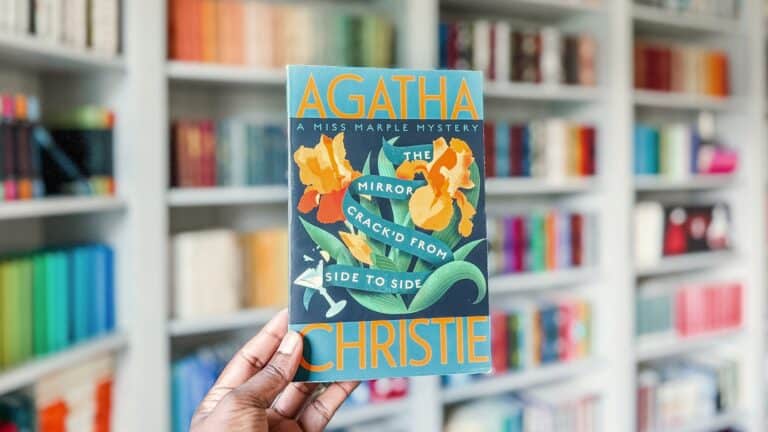
And in The Mirror Crack’d from Side to Side, understanding someone’s emotional reaction becomes central to solving the mystery. Those are the kinds of moments that make Miss Marple distinctive. She’s not simply identifying clues that anyone could notice. She’s interpreting behavior through decades of personal experience. And I think some of the stories in this newer collection are less successful at placing that quality at the center of the mystery.
The detective may identify the culprit. But the explanation doesn’t always feel as though it could only have come from Miss Marple. And for me, that’s a significant difference.
Some Mysteries Don’t Give Readers Enough Opportunity to Solve Them
This is another important consideration. I don’t expect to guess the murderer in every Christie novel. In fact, part of the enjoyment comes from being surprised. But I do appreciate when the solution feels connected to information the author has made available. One of my favorite examples is A Murder Is Announced. Once you know the ending, so many little details suddenly become meaningful. The clues were there. We simply didn’t understand them.
That’s a different kind of satisfaction from discovering that the detective knew something important the reader was never given an opportunity to consider. And I think that’s where some of these new stories struggle. The mysteries can feel clever, but the explanations don’t always offer the same sense of fair-play detection that makes Christie’s strongest work so rewarding. To be fair, Christie herself wasn’t perfect at this.
I’ve already mentioned in my 4.50 from Paddington review that the final solution depends heavily on information revealed relatively late. So this isn’t a standard I apply only to contemporary authors. But I do think it’s something particularly important when someone is continuing a character whose creator became famous for ingenious puzzle construction.
Short Stories Have Less Room for Character Development
Another challenge is the format itself. In a full-length Christie novel, we often spend considerable time becoming familiar with the suspects. We learn their habits. Understand their relationships. And gradually begin recognizing the contradictions in the stories they tell. A short story has far less space to establish those details. And when Miss Marple’s detective method depends so heavily on understanding personality, that limitation becomes significant.
Of course, Christie wrote excellent short stories featuring Miss Marple. But she was particularly skilled at creating the impression of a complicated social world through a few carefully chosen observations. I think that’s a difficult talent to reproduce. And it’s one of the reasons I don’t necessarily find the newer anthology as satisfying as her original work.
Why Lucy Foley’s Evil in Small Places Stands Out
If there’s one story I’d particularly encourage longtime Christie readers to pay attention to, it’s Lucy Foley’s Evil in Small Places. And I think the reason is fairly simple. It returns to something fundamental about Miss Marple. The understanding that terrible things can happen in apparently ordinary communities. We’ve spent so much time visiting fictional English villages throughout this reading challenge that I think it’s easy to become attached to the atmosphere.
The little shops. The gardens. The familiar neighbors. And the endless cups of tea. But Christie never suggests that those charming surroundings make the people living there particularly innocent. In fact, she often argues the opposite. Small communities can be extraordinarily good at concealing unpleasant behavior because everyone believes they already understand one another. Someone has a respectable reputation. Another person is considered harmless.
And old disagreements can remain hidden beneath years of polite conversation. I think Foley’s story is appealing because its premise naturally draws upon those ideas. The village of Meon Maltravers has its own history and traditions, and the murder occurs against a backdrop of communal memory. That feels like fertile ground for Miss Marple. Because she’s particularly good at recognizing when an apparently respectable community is concealing something much darker.
For me, that’s the difference between a story that merely features Miss Marple and one that understands why she makes such an effective detective. And there’s another interesting development worth mentioning. Lucy Foley has also written Murder at the Grand Alpine Hotel, a separate, full-length authorized Miss Marple novel published in 2026. So if you’re especially interested in her interpretation of the character, there’s now an opportunity to experience it in a much longer mystery.
What Agatha Christie Did Better Than Almost Anyone Else
I think reading Marple: Twelve New Mysteries alongside the original novels has made me appreciate three particular aspects of Christie’s writing. And they’re qualities that can be easy to overlook because her stories often appear so effortless.
She Understands That Human Behavior Can Be Evidence
Christie doesn’t always need fingerprints, elaborate forensic discoveries, or extraordinary scientific knowledge. Sometimes the most important clue is how someone reacts to a question. Why a person seems surprised. Why someone becomes unusually defensive. Or why a particular explanation doesn’t fit what we know about their personality. I think that’s the foundation of Miss Marple’s investigative method. She recognizes patterns because she’s spent years observing ordinary people. And that allows her to understand motives that other investigators may underestimate.
She Makes Ordinary Details Important
One of the things I love most about Christie’s mysteries is how frequently a seemingly insignificant detail becomes essential to the solution. A conversation. A household object. A remembered expression. Or a small inconsistency in someone’s routine. The clues are often embedded in everyday life. And that’s part of what makes the books so satisfying to reread. We begin recognizing how carefully Christie has constructed the story.
I think that’s particularly evident in books like The Body in the Library and A Murder Is Announced, where apparently straightforward observations lead us toward completely incorrect assumptions.
She Never Confuses Gentleness With Weakness
This might be my favorite quality of Miss Marple herself. She’s polite. She’s often kind. And she understands the importance of behaving appropriately in social situations. But she’s certainly not naive. She knows that people can be cruel. She’s familiar with jealousy, greed, and dishonesty. And when someone has harmed an innocent person, she’s remarkably determined to see justice done. We’ve seen this especially clearly in A Pocket Full of Rye and A Caribbean Mystery.
And I think that’s what makes her such a memorable detective. Miss Marple isn’t a harmless elderly woman who occasionally surprises people by solving crimes. She’s an exceptionally perceptive person whose ordinary appearance causes others to underestimate how much she understands. And that distinction is important.
How Does Marple: Twelve New Mysteries Compare With Christie’s Original Short Stories?
This is probably the comparison I’d most encourage readers to make. Because if you’re interested in Miss Marple short stories, there’s already a wonderful collection of mysteries written by Christie herself. Miss Marple first appeared in 1927 in the short story The Tuesday Night Club, several years before her first full-length novel, The Murder at the Vicarage. And Christie went on to write twenty original Miss Marple short stories. Those stories have been gathered in Miss Marple: The Complete Short Stories.
The Thirteen Problems Introduces Miss Marple’s Detective Method
If you haven’t read The Thirteen Problems, I’d actually recommend starting there before moving into the newer anthology. The collection features thirteen mysteries, many of which are discussed by a group of people who gather to exchange stories about unsolved crimes. Miss Marple often appears to be the least impressive person participating. And yet, she repeatedly demonstrates that her knowledge of ordinary village life provides an extraordinary advantage.
I think it’s a wonderful introduction to the way her mind works. And it also gives us an opportunity to see how Christie establishes a complete detective puzzle within a much shorter format.
Miss Marple’s Final Cases Offers More Original Christie Mysteries
The remaining original Miss Marple stories can be found in the later collections, including Miss Marple’s Final Cases and Greenshaw’s Folly. These stories provide more examples of her investigative approach and demonstrate how Christie adapts the character to different circumstances. I think they’re particularly rewarding after reading the novels because we’re already familiar with her habits, her observations, and the way she interprets people’s behavior.
And while I appreciate the ambition behind Marple: Twelve New Mysteries, I still think there’s something special about encountering the character in the stories written by the person who created her. My recommendation would be to read Christie’s original twenty Miss Marple short stories before moving into the twelve contemporary additions. That way, you’ll have a stronger understanding of the character and the qualities that make her mysteries distinctive. And you’ll be in a better position to appreciate the different approaches taken by the newer writers.
When Should You Read Marple: Twelve New Mysteries in the Miss Marple Reading Order?
One thing I want to make clear is that Marple: Twelve New Mysteries isn’t a thirteenth novel in Agatha Christie’s original Miss Marple series. It’s a separate, authorized short story collection. So you don’t need to fit it between two particular novels. And you certainly don’t need to read it to understand anything that happens in Christie’s original twelve books. If you’re following my Miss Marple Reading Challenge, I’d suggest treating it as optional bonus reading.
First, work your way through the twelve original novels, from The Murder at the Vicarage to Sleeping Murder. Then, if you’re interested in exploring Miss Marple’s shorter adventures, read Christie’s original stories. Once you’ve experienced those, Marple: Twelve New Mysteries becomes an interesting opportunity to compare the original author’s work with modern interpretations. And if you’re not interested in continuation fiction, that’s perfectly fine too.
You won’t be missing any essential part of the original Miss Marple series. You can find the complete original novel reading order and the optional short story guides through my Miss Marple Reading Challenge Hub.
Is Marple: Twelve New Mysteries Worth Reading?
I think the answer depends on what you’re hoping to get from the collection. If you’re looking for twelve more mysteries written exactly as Agatha Christie would have written them, I don’t think this book will completely satisfy you. The different writing styles are noticeable, the strength of the puzzles varies, and not every story makes equally effective use of Miss Marple’s distinctive understanding of human nature.
And I think longtime Christie readers may be particularly sensitive to those differences. After spending so much time with the original novels, I know I want more than a familiar name and a recognizable setting. I want the kind of mystery where Miss Marple notices something small, draws upon her experience, and gradually reveals a truth that everyone else has failed to recognize. When that element is missing, the story doesn’t quite feel the same.
But if you approach the collection as a celebration of Christie’s influence rather than a direct replacement for her writing, I think there’s more to appreciate. It’s interesting to see how contemporary authors interpret a character who’s been part of literary culture for almost a century. And the variety of settings gives readers an opportunity to experience Miss Marple in circumstances Christie herself never explored.
I also think Lucy Foley’s contribution provides a good reason for readers curious about the collection to give it a try. So I wouldn’t dismiss the anthology. But I would recommend approaching it with the right expectations. For me, it’s an optional companion to the original series rather than essential Miss Marple reading. And that’s not necessarily a criticism of the idea behind the book. It’s simply a recognition of how difficult Christie’s particular kind of storytelling is to reproduce.
Who Should Read Marple: Twelve New Mysteries?
I think this collection will appeal most to readers who already know Miss Marple and are curious about how contemporary authors might interpret her. If you’ve finished the original twelve novels and are feeling a little reluctant to say goodbye to Jane, these stories provide an opportunity to spend more time in her company. It’s also worth considering if you enjoy short story anthologies and like discovering different writers through a shared theme.
And if you’re already a fan of one or more of the contributors, you may enjoy seeing how that author approaches a classic detective. But if you’re completely new to Agatha Christie, I wouldn’t necessarily recommend beginning here. You’d be meeting Miss Marple through twelve different interpretations before experiencing the character as Christie originally imagined her. And personally, I think that’s something worth preserving. Start with the original stories. Understand why Miss Marple became so beloved. Then decide whether you want to explore the newer versions.
Should You Read the Book or Listen to the Audiobook?
One thing worth mentioning is that Marple: Twelve New Mysteries is also available as an audiobook featuring a cast of twelve performers. Among the narrators are Miriam Margolyes, Adjoa Andoh, Adrian Scarborough, and Ramon Tikaram. I think that format could be particularly enjoyable because each story has its own authorial voice. Instead of moving continuously through twelve different writing styles on the page, you’re also hearing distinct performances.
And because the stories are self-contained, you can listen to one at a time without needing to remember an enormous cast of characters across an entire novel. If you’re someone who enjoys listening to mysteries while doing ordinary things around the house, this is an especially convenient format. You could enjoy a story while working on a puzzle, coloring, or settling into an afternoon of quiet hobbies. I think that’s one of the pleasures of short fiction.
You can enjoy a complete story without needing to find several uninterrupted hours. And if a particular contribution isn’t your favorite, there’s always another one waiting.
Frequently Asked Questions About Marple: Twelve New Mysteries
Is Marple: Twelve New Mysteries an Official Agatha Christie Book?
It’s an officially authorized collection featuring Agatha Christie’s character, Miss Marple, but the stories were written by twelve contemporary authors rather than Christie herself. The project was authorized by Agatha Christie Limited.
How Many Stories Are in Marple: Twelve New Mysteries?
There are twelve short stories, each written by a different author. The collection includes contributions from Lucy Foley, Val McDermid, Alyssa Cole, Natalie Haynes, Ruth Ware, Naomi Alderman, Jean Kwok, Dreda Say Mitchell, Elly Griffiths, Karen M. McManus, Kate Mosse, and Leigh Bardugo.
When Was Marple: Twelve New Mysteries Published?
The collection was published in 2022. The American hardcover edition was released on September 13, 2022, by William Morrow.
Is Marple: Twelve New Mysteries the Same as Marple: Twelve New Stories?
Yes. The collection is published under the title Marple: Twelve New Mysteries in the United States and Marple: Twelve New Stories in the United Kingdom. Both contain the same twelve contemporary Miss Marple stories.
Did Agatha Christie Write Any of These Twelve Stories?
No. All twelve stories were written by contemporary authors. Christie created Miss Marple and wrote twelve original novels and twenty original short stories featuring the detective, but she did not write the stories in this anthology.
What Is the Best Story in Marple: Twelve New Mysteries?
For readers looking for the traditional elements of a Miss Marple mystery, Lucy Foley’s Evil in Small Places is my strongest recommendation. Its village setting and attention to the darker aspects of apparently respectable communities make it particularly appealing to fans of Christie’s original work.
Do You Need to Read the Original Miss Marple Books First?
No. The stories can be enjoyed independently, and you don’t need detailed knowledge of the original novels to follow the mysteries. However, I think the collection is more rewarding if you’re already familiar with Miss Marple, particularly because several stories revisit familiar characters, places, and ideas from Christie’s original work.
Are These Stories Part of the Original Twelve Miss Marple Novels?
No. The twelve original novels, beginning with The Murder at the Vicarage and ending with Sleeping Murder, were written by Agatha Christie. This anthology is a separate authorized continuation and doesn’t change the original novel reading order.
Is There a New Full-Length Miss Marple Novel?
Yes. Lucy Foley, one of the contributors to Marple: Twelve New Mysteries, wrote Murder at the Grand Alpine Hotel, a full-length authorized Miss Marple novel published in 2026. It’s a separate continuation of the character rather than another novel written by Agatha Christie.
My Final Thoughts on Marple: Twelve New Mysteries
I think the most interesting thing about this collection is that it made me consider what I actually love about Miss Marple. Because when I first began my reading challenge, I probably would have said that I loved the atmosphere. The English villages. The country houses. The suspicious relatives. And the wonderful feeling of settling into a classic mystery with a cup of tea. And I still love all of those things.
But after spending so much time reading and reviewing the original novels, I’ve realized that Miss Marple herself is what makes the stories truly special. Not simply because she’s intelligent. But because of the particular kind of intelligence Christie gave her. She’s spent a lifetime paying attention to people. She knows that being respectable isn’t the same thing as being good. That charm can conceal cruelty. And that the person everyone dismisses may be the one who’s noticed something important.
I love that her age and experience are strengths rather than obstacles to overcome. And I love that Christie never needs her to become someone entirely different in order to demonstrate her abilities. That’s what I want from a Miss Marple mystery. Not simply a familiar detective appearing in another story. But a mystery that understands why she’s the person who can solve it. And while Marple: Twelve New Mysteries doesn’t consistently reach that standard for me, I still appreciate what it represents.
Twelve contemporary authors have come together to celebrate a fictional character whose appeal has endured for generations. That’s quite an achievement. And perhaps the fact that we’re still discussing, revisiting, and reimagining Miss Marple says something important about how well Christie created her. My recommendation is to read the original Miss Marple mysteries first, then approach this collection as a curious, sometimes enjoyable, occasionally uneven celebration of a character who deserves to be remembered.
And if you’re participating in my Miss Marple Reading Challenge, I think this would make an interesting bonus read after you’ve finished the twelve original novels and the short story collections. Not because you need more books to complete the challenge. But because comparing different interpretations can help you appreciate what made the originals so effective. And I think that’s one of the loveliest things about returning to a favorite author. Sometimes reading something new reminds us why we loved the original in the first place.
Let’s Discuss Marple: Twelve New Mysteries
Now, I’d love to hear your thoughts, especially if you’ve been reading through Christie’s original Miss Marple novels with me. Have you read Marple: Twelve New Mysteries, and did it feel like the Miss Marple you know and love? I’m particularly curious whether you have a favorite among the twelve contributions, whether you enjoyed seeing Miss Marple in unfamiliar settings, and whether you think modern authors should continue writing stories about classic literary characters. And if you’ve read both the original books and the newer collection, I’d love to know what differences stood out to you. Did you miss Christie’s puzzle construction? Did you enjoy the different writing styles? Or did one of the new stories surprise you by capturing the character particularly well? Leave a comment below and tell me what you thought. I genuinely enjoy hearing how other readers respond to these books, especially when we disagree.
So if you’re just beginning your journey through the original series, you can find all twelve novels, their individual reading guides, and the optional bonus stories through my Miss Marple Reading Challenge Hub. There’s no need to rush through them. I think Miss Marple is the sort of character worth spending a little time with. Happy reading, bookish besties! I’ll see you in St. Mary Mead.