Virginia Woolf: Life, Writing Style, Books & Legacy
Virginia Woolf was a modernist novelist, essayist, and publisher. Explore her life, writing style, major books, feminism, Bloomsbury circle, and legacy.
Why Virginia Woolf Still Changes the Way I Read Fiction
Hi Bookish Besties, Virginia Woolf is one of those writers who changed what I notice when I read. Before Woolf really clicked for me, I naturally paid the most attention to what happened in a novel: the decisions, relationships, revelations, and events that moved everyone from one chapter to the next. Woolf taught me to notice something quieter but just as consequential: what is happening inside a person while the visible story is moving around them. That is still the reason I return to her.
A woman walks through London and remembers the person she once loved. A family sits down to dinner while everyone at the table quietly experiences a different version of the same evening. An artist looks at a canvas and wonders whether her vision deserves to exist. A character changes sex and moves through centuries while society keeps trying to decide what that change should mean. Woolf repeatedly takes experiences that could look ordinary from the outside and reveals how enormous they feel from within.
She is often introduced through intimidating words like modernism, stream of consciousness, and experimental fiction, and all of those descriptions have their place. But they can also make Woolf sound more like a literary technique than a person who spent her career trying to capture how strange, fleeting, funny, painful, and complicated ordinary consciousness really is. That is the Virginia Woolf I want this guide to hold onto.
LOOKING FOR A BOOK, NOT A BIOGRAPHY? Choose your first Woolf with my guide to which Virginia Woolf book to read first, or see the 5 best Virginia Woolf books I’d keep on my shelf.
This is not a ranking of her books or a detailed guide to choosing your first one; I have separate space for those questions. Here, I want to look at Virginia Woolf’s life, writing style, major works, ideas, publishing career, feminism, modernism, and literary legacy so we can understand the writer behind the books.
Who Was Virginia Woolf?
Virginia Woolf was an English novelist, essayist, critic, publisher, and one of the central figures of twentieth-century literary modernism. She was born Adeline Virginia Stephen on January 25, 1882, in London. Her father, Leslie Stephen, was a writer, critic, editor, and biographer, while her mother, Julia Stephen, came from a family with strong artistic and intellectual connections.
Woolf grew up in a household surrounded by books and writers, but her education reflected the inequalities she would later examine so sharply in A Room of One’s Own. Her brothers had access to formal university education in ways she did not. Woolf was largely educated at home, where her father’s extensive library became one of her most important intellectual resources.
That contrast matters to me because it appears again and again in her later work. Woolf knew firsthand what it meant to have extraordinary intellectual access while still living within a system that placed different expectations and limitations on women. She became one of the writers who changed that system from inside literature itself.
Virginia Woolf’s Early Life
Woolf grew up at Hyde Park Gate in a large blended family. Her childhood included literature, visitors, travel, intellectual conversation, and summers near the sea, but it was also marked by significant losses. Her mother died when Woolf was thirteen, and other family deaths followed over the next several years.
After her father’s death in 1904, Virginia and her siblings moved away from the more conventional Victorian atmosphere of their childhood home and into London’s Bloomsbury neighborhood. That move became enormously important. Bloomsbury gave Woolf not only a different physical environment but an intellectual community in which art, philosophy, politics, literature, sexuality, and social conventions could be argued about much more freely.
When I think about Woolf’s development as a writer, I find that shift fascinating. She spent part of her early life surrounded by the intellectual inheritance of Victorian England and then became one of the people who helped dismantle many of its literary assumptions. You can almost see the century changing around her.
Virginia Woolf and the Bloomsbury Group
The circle that formed around Woolf, her sister Vanessa Bell, and their friends eventually became known as the Bloomsbury Group. Its members included writers, artists, critics, economists, and intellectuals such as Lytton Strachey, John Maynard Keynes, E. M. Forster, Roger Fry, Clive Bell, and Leonard Woolf. “Bloomsbury” can sometimes sound like a very tidy historical label now, but I think it is more useful to imagine an ongoing network of friendships, arguments, artistic collaborations, relationships, dinner conversations, and shared intellectual interests.
These people challenged many of the social conventions inherited from Victorian culture. They discussed aesthetics, sexuality, politics, pacifism, personal freedom, and the purpose of art. Those conversations inevitably shaped Woolf’s intellectual environment, even though her work developed into something unmistakably her own.
What interests me most is that Woolf did not create in isolation. She had a community. That feels especially important when we talk about artistic genius, because we sometimes enjoy pretending great writers simply appear fully formed at a desk. Woolf had extraordinary talent, but she also had readers, arguments, friendships, rivalries, publishers, artists, and thinkers around her. Creative lives are rarely as solitary as literary mythology makes them look.
Virginia Stephen Becomes Virginia Woolf
Virginia Stephen married Leonard Woolf in 1912. Leonard was a writer, political thinker, editor, and former colonial administrator, and their marriage became personally and professionally intertwined with Virginia’s literary career. Woolf’s first novel, The Voyage Out, appeared in 1915. It is recognizably Woolf, but it is also fascinating to read alongside her later work, because you can see that the writer who would eventually produce Mrs Dalloway, To the Lighthouse, and The Waves was still developing the form that would become associated with her.
That evolution is one reason I resist treating an author’s style as something fixed. Woolf became Woolf gradually. She experimented, changed direction, discarded techniques, pushed further, and kept questioning what a novel could do.
The Hogarth Press
In 1917, Virginia and Leonard Woolf founded the Hogarth Press. They initially worked with a small hand press, printing books themselves. What began on a relatively modest scale developed into an important independent publishing house. The Hogarth Press published Woolf’s own work as well as writing by other significant modern authors and thinkers. For Virginia Woolf, the press also meant something creatively important: greater control over the publication of her work. That freedom helped create space for experimentation.
I love this part of Woolf’s story because it makes her much more than the image of a novelist quietly producing difficult books. She was also involved in the physical and practical world of publishing. Books were ideas, but they were also paper, type, printing, covers, money, distribution, and decisions about whose writing deserved to reach readers.
The press matters to her legacy because Woolf and Leonard were not simply participating in literary culture as writers. They were helping shape it. A writer creates one body of work. A publisher can help create the conditions under which many bodies of work reach the world. That connects beautifully with ideas she would later develop in A Room of One’s Own. Woolf understood that writers need more than talent. They need publishers, money, time, physical resources, intellectual communities, and opportunities. She knew the creative world from both sides of the manuscript.
What Is Virginia Woolf Famous For?
Woolf is especially famous for changing how fiction represents consciousness, memory, time, and interior life. Rather than organizing every novel around a sequence of dramatic external events, she often focused on how those events are experienced internally. A conversation may trigger a memory. A sound may pull someone decades into the past. One character’s perception may slide into another character’s mind. Several people can occupy the same room while experiencing emotionally different realities.
That was the revelation Woolf gave me as a reader. She showed me that plot does not have to disappear for consciousness to become the story.
Virginia Woolf’s Writing Style
Virginia Woolf’s writing style is commonly associated with stream of consciousness, but that phrase does not entirely explain what she does. Her fiction often moves fluidly between interior thought, memory, sensory perception, external narration, and the consciousnesses of different characters. She uses techniques related to interior monologue and free indirect discourse to reduce the distance between narrator and character. The result can feel almost like the narration itself is thinking.
This is why a Woolf novel may move from something as concrete as a flower or clock into childhood memory, anxiety, desire, mortality, and back again without stopping to announce every transition. Once I understood that Woolf was following association rather than conventional chronology, her writing made much more sense to me. She was not being difficult for the sake of difficulty. She was trying to represent the mind honestly.
Woolf and Stream of Consciousness
Woolf was not the only modernist experimenting with consciousness, and she certainly did not invent the human mind suddenly becoming complicated in 1925. What she did was develop an extraordinarily distinctive way of putting interior experience at the center of fiction. In Mrs Dalloway, one day can contain decades of memory. In To the Lighthouse, individual thoughts can occupy pages while years disappear rapidly elsewhere in the novel. In The Waves, conventional narration retreats even further as six voices create a highly lyrical portrait of identity and time.
The form changes because Woolf’s subject changes. If consciousness is not linear, why should every novel pretend it is? That question sits underneath so much of her work. She was also part of a broader modernist experiment with interiority rather than the inventor of a single technique, and I find that more interesting than trying to give any one writer ownership of it. Literature is usually a conversation, not a patent office.
Virginia Woolf and Time
If I had to choose one idea Woolf makes me notice more than almost any other writer, it would be time. She understands the difference between clock time and emotional time. A clock tells us that five minutes have passed. Memory can fit twenty years inside those five minutes. That distinction is central to Mrs Dalloway, where Big Ben keeps marking the measurable day while characters continuously drift into their pasts.
It becomes even more dramatic in To the Lighthouse. Woolf spends a large portion of the novel examining the consciousness of people during a relatively short period and then allows years, war, death, and family transformation to sweep through a much shorter section. That structural choice still floors me. Woolf makes time feel less like a setting and more like a force acting upon everyone.
Virginia Woolf and Memory
Memory in Woolf is rarely a tidy flashback inserted to provide information. It changes the present. Clarissa Dalloway does not simply remember Sally Seton as though opening an old photo album; the memory becomes part of how Clarissa experiences herself now. Lily Briscoe’s memories of Mrs Ramsay affect how she returns to her painting years later. Orlando carries centuries of past selves into the present.
Woolf understands something I increasingly notice in my own reading life: the past does not stay where we put it. It keeps appearing. That makes memory one of the ways Woolf complicates identity. We are the person standing in the room now, but we are also carrying everyone we used to be.
Virginia Woolf and Ordinary Life
Woolf’s books repeatedly insist that ordinary life is worthy of serious attention. Shopping. Dinner. Flowers. Conversation. A party. A family holiday. Looking out a window. Painting. Walking through a city. None of these things sounds inherently dramatic, and Woolf does not need them to be. She understands that a small external moment can contain enormous internal significance. That may be the part of her literary philosophy I have absorbed most deeply. A novel does not need to make life larger than it is if the writer knows how to reveal how large life already feels from inside it.
Virginia Woolf and Modernism
Woolf became one of the major writers associated with literary modernism, the broad movement that challenged many nineteenth-century assumptions about narrative, form, perspective, language, and representation. Modernist writers were responding to a world undergoing enormous technological, social, political, and cultural change, and World War I intensified that rupture. Traditional ideas about progress, stability, heroism, society, and authority became harder to accept without question.
Woolf’s fiction reflects that changed world not primarily through manifestos or giant historical explanations, but through fractured perception, unstable time, private consciousness, and the difficulty of making human experience fit into conventional structures. The old forms could no longer contain everything, so Woolf changed the forms. But I think the word “modernist” becomes useful only when it helps us see what she was trying to accomplish. Woolf was not experimenting simply because old narrative forms bored her. She wanted fiction capable of representing experience more accurately. If life feels fragmented, layered, fleeting, associative, and subjective, then perhaps fiction should be allowed to feel that way too. That is where technique becomes philosophy.
Virginia Woolf’s Major Books
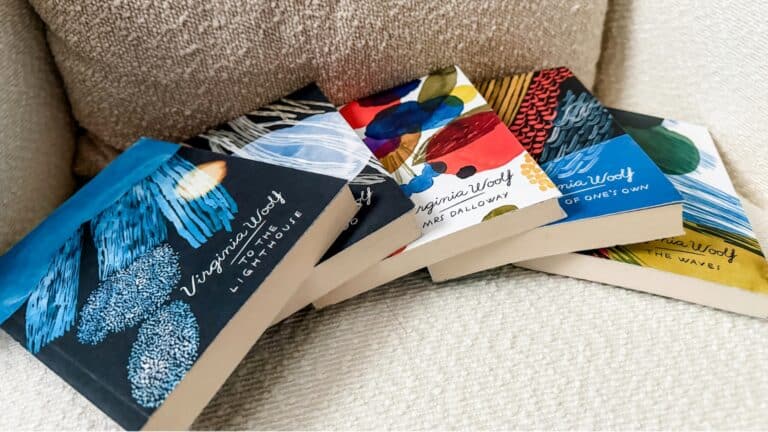
Woolf’s career includes novels, essays, short fiction, diaries, reviews, criticism, and biographical experiments. I am deliberately not ranking those works here, because this page has a different job. What matters for an author hub is seeing how the books contribute to the larger arc of Woolf’s writing. If you’d like them in matching editions, my guide to the Vintage Classics Woolf Series covers the full collector set.
The Voyage Out (1915) and Night and Day (1919)
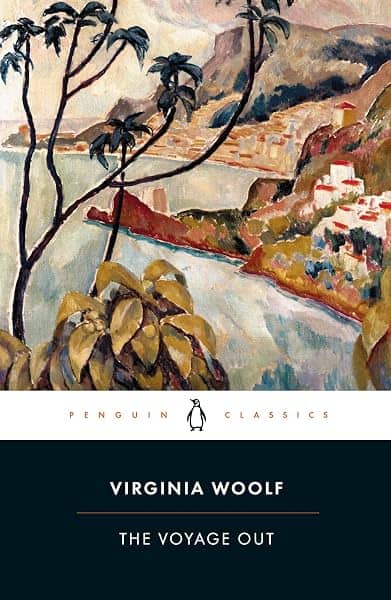
The Voyage Out was Woolf’s first novel. It follows Rachel Vinrace on a journey to South America and already contains concerns that would remain important throughout Woolf’s work, including women’s social roles, education, identity, marriage, and the tension between individual possibility and social expectation. I find it most interesting as the beginning of a literary evolution. The Woolf of Mrs Dalloway is not fully present yet, but she is coming. Find The Voyage Out here.
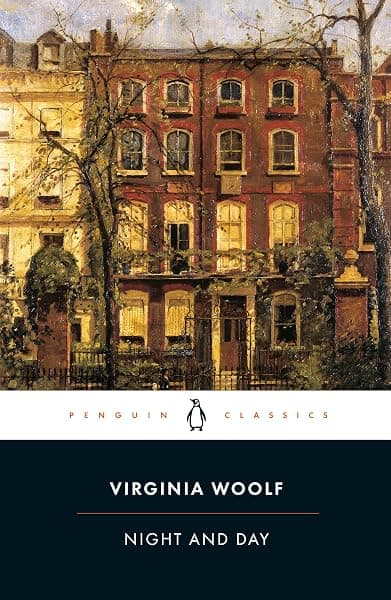
Night and Day is more conventional in form than the novels that would make Woolf famous, but it explores questions about love, marriage, work, women’s independence, and competing ways of organizing a meaningful life. Reading it alongside Woolf’s later experimentation reveals just how deliberately she moved away from conventional narrative structures. Shop Night and Day here.
Jacob’s Room (1922)
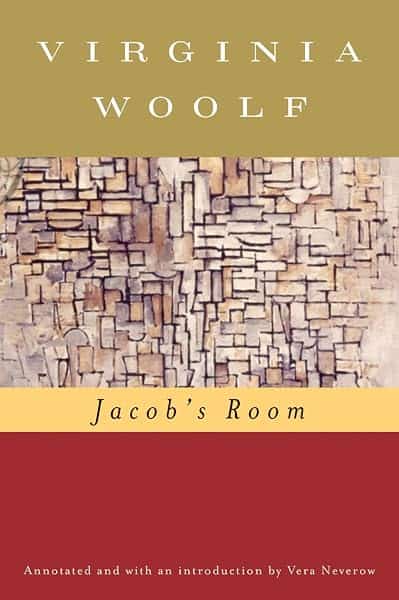
Jacob’s Room marks a major shift. Rather than giving us a traditional, stable portrait of Jacob Flanders, Woolf constructs him through fragments, impressions, absences, and the perspectives of other people. It is a novel about a person who remains partly unknowable, and that uncertainty becomes part of the meaning rather than a problem the novel needs to solve. Grab Jacob’s Room here.
Mrs Dalloway (1925)
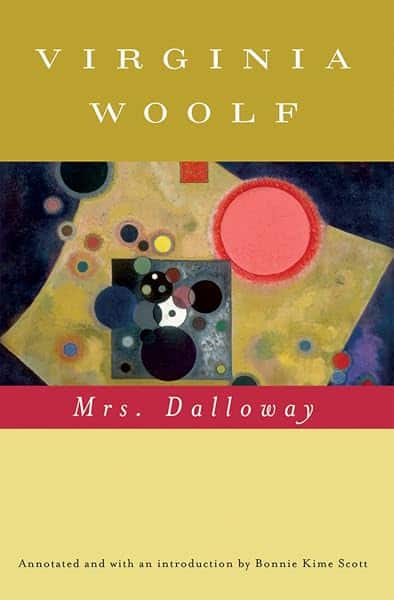
Mrs Dalloway remains one of Woolf’s defining novels. It takes place across a single day in London as Clarissa Dalloway prepares for a party, while the parallel story of Septimus Warren Smith explores war trauma and psychological suffering. What I love about it is the compression. Woolf fits an entire life into a day without making the day stop feeling ordinary. Memory, mortality, love, marriage, war, regret, and identity all exist underneath flower buying and party preparations. That is Woolf at her most recognizable to me. Grab Mrs Dalloway here.
To the Lighthouse (1927)
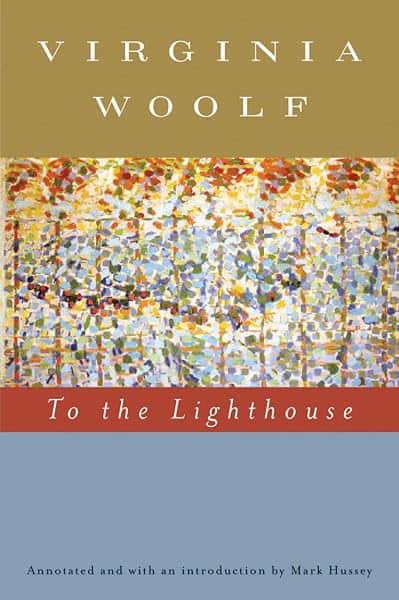
To the Lighthouse examines the Ramsay family and their guests across two visits to a summer home separated by years of enormous change. Family, art, marriage, grief, memory, gender, and time all move through the novel. The older I get, the more I notice its treatment of impermanence. People spend the early part of the book assuming there will be more time. Then Woolf reminds us that time never made that promise. Shop To the Lighthouse here.
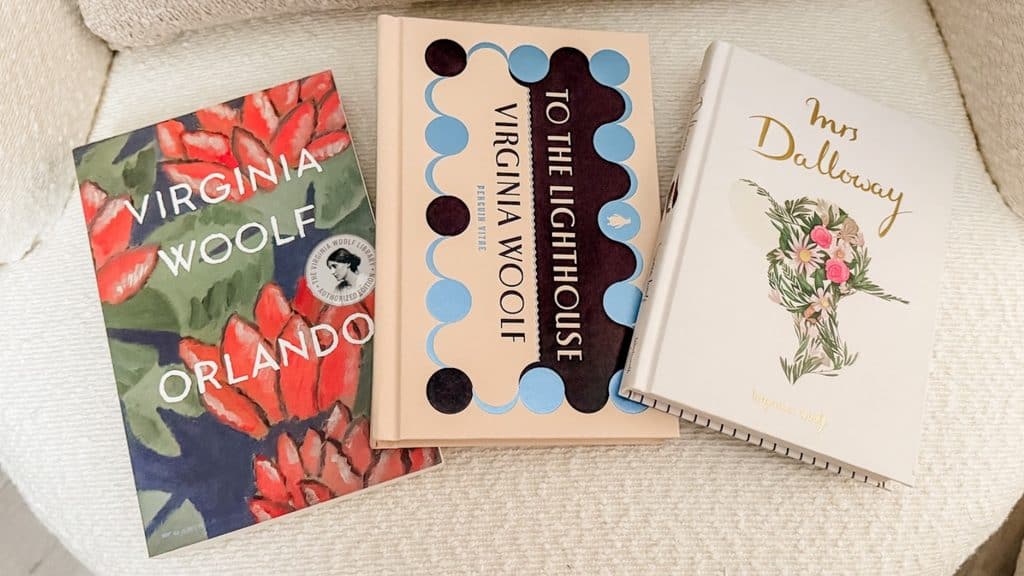
Orlando (1928)
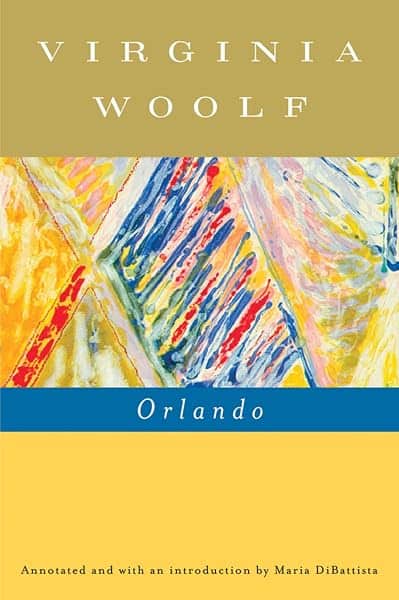
Orlando shows Woolf at her most playful. The protagonist lives across centuries and changes sex from male to female while retaining a continuous sense of identity. The novel becomes biography, satire, love letter, literary history, gender experiment, and historical joke all at once. It is one of my favorite reminders that “important modernist writer” does not have to mean “incapable of having fun.” Woolf could be mischievous. Find Orlando here.
A Room of One’s Own (1929)
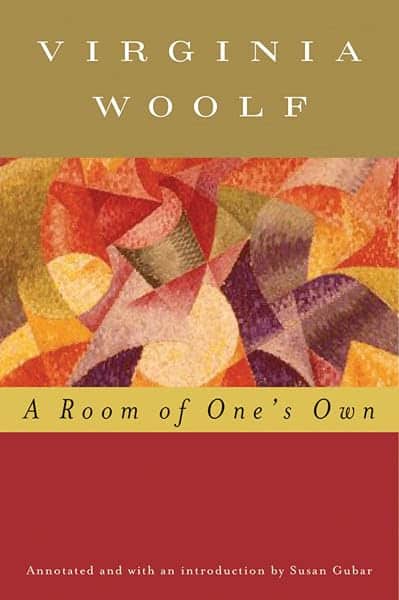
A Room of One’s Own grew from lectures Woolf gave on women and fiction. Its famous argument about women needing money and private space to write remains only the beginning of what Woolf is examining. She asks who receives education, privacy, financial independence, literary authority, and a tradition of recognized predecessors. What I appreciate more every time I return to it is how practical Woolf’s feminism can be. Creativity needs ideas. It also needs time to pay attention to them. Grab A Room of One’s Own here.
The Waves (1931)
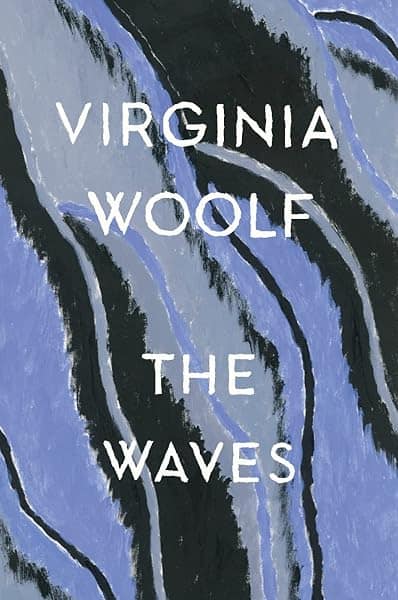
The Waves pushes Woolf’s experiments with consciousness even further. Six voices move from childhood into adulthood through lyrical monologues, while recurring descriptions of the sea and changing light create another rhythm around them. The book is difficult to summarize, because conventional plot is not really the point. Identity itself becomes something fluid, relational, and constantly changing. Find The Waves here.
Flush (1933) and The Years (1937)
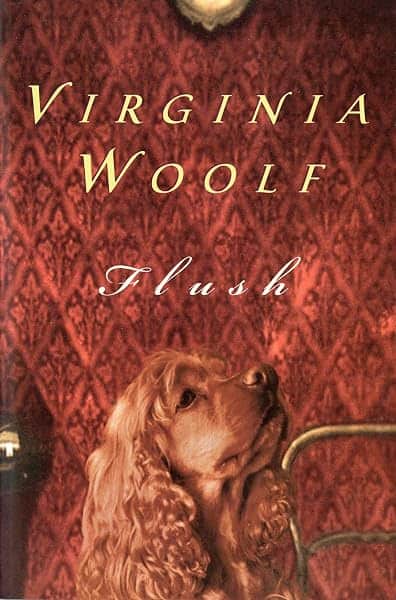
Flush is Woolf’s imaginative biography of Elizabeth Barrett Browning’s dog. Yes, this exists, and I remain delighted by it. Through Flush’s perspective, Woolf plays with biography, class, sensory perception, confinement, and human social conventions. It is another example of how much wider Woolf’s range was than the phrase “stream-of-consciousness novelist” suggests. Shop Flush here.
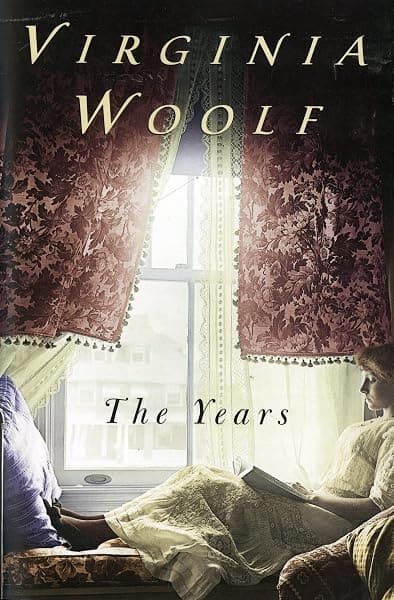
The Years follows generations of the Pargiter family across decades of social change. Its wider historical scale allows Woolf to explore family, gender, memory, domestic life, and a society changing around its characters. The novel reminds me that Woolf could expand outward as well as inward. Grab The Years here.
Three Guineas (1938) and Between the Acts (1941)
Three Guineas examines education, professions, patriarchy, political power, and war. It continues some of the questions Woolf raised in A Room of One’s Own but places them more explicitly alongside institutions and political structures, demonstrating how difficult it is to separate Woolf’s ideas about women’s independence from her ideas about power itself. Find Three Guineas here.
Between the Acts was published in 1941, the year Woolf died. Set around a village pageant on the eve of World War II, it examines English history, performance, community, fragmentation, and the uncertain relationship between past and present. Knowing where it appears in Woolf’s life gives the novel additional historical weight, but it is worth reading as more than a final work. It continues her lifelong interest in how individuals experience themselves inside larger historical structures. Shop Between the Acts here.
Virginia Woolf as an Essayist
It is easy to focus so heavily on the novels that Woolf the essayist becomes secondary, and I think that would be a mistake. Her essays reveal an agile, opinionated, curious reader who could move from literary criticism to women’s economic independence to illness, reading, biography, war, and the experience of ordinary life. Collections such as The Common Reader show how seriously Woolf thought about what reading itself means. That side of her matters to me because it reminds us that Woolf was not only experimenting with fiction. She was also thinking constantly about literature as a reader, and some of her most enduring ideas about art emerge because she understood both sides of that relationship.
Virginia Woolf and Feminism
Virginia Woolf has become one of the major literary figures associated with feminist thought, especially because of A Room of One’s Own and Three Guineas. Her feminism often begins with material questions. Who has money? Who receives education? Who has privacy? Who has professional opportunities? Who controls property? Who has enough time to create? I find that framework remarkably durable. It refuses to pretend inequality disappears merely because talent theoretically exists everywhere. Opportunity has infrastructure, and Woolf understood that.
One of Woolf’s most important ideas is that talent needs conditions in which it can develop. That sounds obvious until you begin looking historically at who actually received those conditions. A person can possess imagination and still lack education. A writer can possess talent and still lack time. A woman can possess extraordinary intellectual ability and still be expected to devote nearly every waking hour to other people’s needs. Woolf keeps pulling creativity out of the romantic clouds and putting it back into rooms, institutions, libraries, incomes, and daily schedules. That is one reason she still feels useful rather than merely historically important.
Virginia Woolf and Gender
Gender appears throughout Woolf’s work in different forms. In A Room of One’s Own, it shapes access to education, money, and literary authority. In Orlando, gender becomes deliberately fluid as Woolf exposes how differently society treats the same person depending on whether that person is perceived as male or female. In To the Lighthouse, gender expectations shape marriage, artistic ambition, emotional labor, and ideas about domestic life. Woolf does not approach gender in exactly the same way across every work, and that is part of what makes studying her rewarding. Her books create a conversation with one another rather than simply repeating one argument.
Virginia Woolf, Vita Sackville-West, and Vanessa Bell
Writer Vita Sackville-West became one of Woolf’s important personal and creative relationships. Their relationship has received enormous biographical attention, particularly because Vita inspired aspects of Orlando. I think the literary connection is especially interesting. Woolf did not simply write a realistic portrait of Vita. She transformed elements of Vita’s identity, family history, sexuality, and relationship to inheritance into one of the strangest fictional biographies in English literature. That is what writers do. Life enters. Art changes it.
Woolf’s sister, the artist Vanessa Bell, was another central figure in her life and in the Bloomsbury circle. Their creative lives developed alongside one another through different forms: Virginia through writing, Vanessa through visual art. Vanessa also designed covers and contributed visually to Hogarth Press publications. I love thinking about those two artistic worlds existing so closely together. Woolf’s prose is deeply visual in its own way, full of color, light, rooms, movement, faces, objects, and shifting perceptions, and the relationship between literary and visual art feels very at home in Bloomsbury.
Recurring Themes in Virginia Woolf’s Writing
Consciousness and the inner life. Woolf continually asks what it feels like to be inside one person’s mind while living among other people whose minds remain partly inaccessible. That gap creates both intimacy and loneliness. We know ourselves from the inside. We know everyone else through fragments. Woolf builds entire novels out of the distance between those two experiences.
Time, mortality, memory, and identity. Clocks, aging, memory, death, childhood, and the movement between past and present recur throughout Woolf’s work. She rarely treats time as a simple chronological line. People live inside several times at once. Her characters frequently become who they are through remembering who they were, which means identity never feels entirely fixed. Clarissa Dalloway carries Bourton into London. Lily Briscoe carries Mrs Ramsay into her later artistic vision. Orlando carries centuries. Woolf repeatedly suggests that the self is layered rather than singular.
Gender and social expectation. Women in Woolf’s books are often negotiating the expectations placed upon them as wives, mothers, artists, daughters, professionals, and intellectuals. But Woolf does not reduce every female character to a political symbol. They contradict themselves. That matters. A feminist character does not need to behave perfectly to make a feminist novel interesting.
Art and creativity. Artists, writers, thinkers, and acts of creation appear throughout Woolf’s work. Lily Briscoe paints. Orlando writes. A Room of One’s Own examines the conditions required to create. Woolf continually returns to the question of whether art can give form to experiences that time would otherwise erase.
Connection and isolation. Woolf’s characters want connection while remaining fundamentally separate consciousnesses. That tension may be the most human thing in her work. We can love someone enormously and still misunderstand them. We can sit at the same dinner table while experiencing completely different evenings. Woolf never solves that problem. She notices it.
What Made Virginia Woolf’s Writing Revolutionary?
Woolf changed what fiction could treat as an event. That may be the simplest way I can explain it. A conventional novel might treat a marriage, death, journey, or revelation as the major event. Woolf could make someone remembering a kiss feel equally consequential. She made consciousness narratively important. She made time flexible. She allowed perspectives to blur. She trusted readers to follow emotional connections without explaining every transition. And she treated women’s interior experiences as worthy of the same literary seriousness traditionally granted to more public forms of action. That combination helped reshape twentieth-century fiction.
Woolf was innovative, but she was never disconnected from literary history. She read deeply. She wrote criticism. She thought about Shakespeare, Jane Austen, George Eliot, the Brontës, and generations of writers before her. That makes her experimentation more interesting. She did not reject literary tradition because she did not know it. She knew it well enough to argue with it. I think that is often what the strongest literary innovation looks like. You learn the room. Then you move the furniture.
Virginia Woolf’s Death
Virginia Woolf died on March 28, 1941, at age fifty-nine. She died by suicide during a period of severe psychological distress, while Britain was also living through World War II. Her death has sometimes become disproportionately central to popular accounts of her life. I understand why biography addresses it, but I resist allowing the ending to swallow the work. Woolf’s life contained decades of writing, publishing, friendship, humor, criticism, love, intellectual experimentation, arguments, reading, printing, and creative ambition. Her final days matter. They are not the whole story.
Virginia Woolf’s Literary Legacy
Virginia Woolf’s influence reaches far beyond writers explicitly labeled modernist. Her experiments with consciousness helped change the possibilities available to later fiction. Her feminist essays remain central to conversations about women, literature, education, creative work, and economic independence. Her diaries and letters have expanded scholars’ understanding of literary life, modernism, publishing, and the Bloomsbury circle. Her work continues to inspire novels, films, essays, criticism, adaptations, biographies, visual art, and endless reinterpretation. But literary legacy is not only about being referenced by later artists. It is also about changing readers, and that is where Woolf’s legacy becomes personal for me.
How Virginia Woolf Changed the Way I Read
Woolf made me less impatient with quiet books. That sounds like a small thing. It wasn’t. She taught me to stop assuming that a novel without a constantly accelerating plot had somehow forgotten to do its job. Sometimes the movement is happening somewhere else. A character’s understanding shifts. A memory changes the meaning of the present. Someone notices something they were previously unable to see. A relationship looks different without anyone saying so aloud. Those movements can be as dramatic as anything happening externally. Once I understood that, an entire category of literature opened further for me.
Why Virginia Woolf Still Feels Contemporary
Woolf’s social world is unmistakably historical. Her questions often are not. How much of yourself do other people actually know? How does memory change the present? What happens when social expectations conflict with private identity? Who gets enough time and money to create? How do gender expectations shape opportunity? Can art preserve something that life cannot? How do people remain connected while living inside fundamentally separate minds? Those questions have not gone anywhere. We simply encounter them in different clothes, which is one reason Woolf remains so readable as more than a historical artifact.
Reading Woolf Without Turning Her Into Homework
I think there is a danger with writers like Woolf. We respect them so much that we accidentally remove all pleasure from reading them. Suddenly every flower needs a footnote, every clock requires a theory, and every cup of tea is under investigation. The books can support serious analysis, obviously, and I spend plenty of time doing exactly that. But Woolf was writing about lived experience. I think we lose something if we become so focused on proving we understand modernism that we stop responding to the people inside the books. Notice what moves you. Notice what annoys you. Notice the sentence that suddenly feels more true than you expected. Then dig deeper. That order has always served me better.
Why Virginia Woolf Matters to Classic Literature
Virginia Woolf matters because she helped expand what the novel could represent. She showed that private consciousness could carry enormous narrative weight. She challenged inherited assumptions about gender, authorship, literary authority, biography, and realism. She helped create and publish experimental work. She wrote criticism that continues to shape how readers think about literature. And she left behind books that still invite disagreement rather than simply admiration. I value that last part especially. The classics I care about most are not museum objects. They keep generating conversation, and Woolf does that remarkably well.
Frequently Asked Questions About Virginia Woolf
Who was Virginia Woolf?
Virginia Woolf was an English novelist, essayist, critic, and publisher born in London in 1882. She became one of the major figures of literary modernism and is known for works including Mrs Dalloway, To the Lighthouse, Orlando, The Waves, and A Room of One’s Own.
What is Virginia Woolf most famous for?
Woolf is especially famous for her innovative treatment of consciousness, memory, time, and interior experience. She is also known for feminist essays examining women, literature, education, money, and creative freedom.
What was Virginia Woolf’s writing style?
Woolf’s style frequently uses fluid shifts between consciousnesses, interior thought, memory, sensory perception, and external narration. Her work is closely associated with stream-of-consciousness techniques and literary modernism.
Was Virginia Woolf part of the Bloomsbury Group?
Yes. Woolf was one of the central figures associated with the Bloomsbury Group, an influential circle of writers, artists, critics, economists, and intellectuals active in early twentieth-century Britain.
What was the Hogarth Press?
The Hogarth Press was the publishing house Virginia and Leonard Woolf founded in 1917. It published Woolf’s work as well as important writing by other modern authors and thinkers, and gave the Woolfs a significant role in modern literary publishing.
What are Virginia Woolf’s major books?
Her major works include The Voyage Out, Jacob’s Room, Mrs Dalloway, To the Lighthouse, Orlando, A Room of One’s Own, The Waves, Flush, The Years, Three Guineas, and Between the Acts.
Was Virginia Woolf a feminist writer?
Yes. Woolf’s essays, especially A Room of One’s Own and Three Guineas, became foundational works in feminist literary thought. She examined how money, education, institutional power, gender expectations, and access to creative freedom shaped women’s lives and writing.
When was Virginia Woolf born, and when did she die?
Virginia Woolf was born Adeline Virginia Stephen on January 25, 1882, in London. She died on March 28, 1941, at age fifty-nine.
Final Thoughts
The more Virginia Woolf I read, the less interested I become in describing her simply as a difficult modernist writer. That description is technically convenient and emotionally useless. What keeps me returning is the way Woolf pays attention. She notices how a thought changes before we finish thinking it. She notices how memory can make the past feel more immediate than the room we are standing in. She notices that people can love one another deeply and still fail to understand each other. She notices the work women do quietly, the freedom money can buy, the strange relationship between art and mortality, and the fact that time keeps moving while we are busy assuming there will be more of it.
That is why her experimentation matters. The unusual structure is never the most interesting thing by itself. It matters because Woolf needed different forms to represent experiences conventional forms kept flattening. I also think that is why her work becomes more meaningful rather than less as I return to it. When I first encountered Woolf, I noticed the technique. Now I notice what the technique makes possible. I notice Clarissa carrying old versions of herself through one London day. I notice Lily Briscoe trying to create something that can survive a moment she cannot preserve. I notice Orlando changing continuously without becoming less authentically Orlando. I notice Woolf asking why some writers received rooms, money, universities, and centuries of literary tradition while others were expected to create without any of them.
Those questions make her more than an author I admire historically. They make her a writer who changed my reading habits. Woolf taught me that a quiet novel may be moving very quickly beneath the surface, that ordinary life is never actually ordinary from the inside, and that a book does not need to shout for something enormous to be happening. That is the legacy I care about most.
If Virginia Woolf is already part of your reading life, I would love to know what you associate with her most strongly, Bookish Besties. Is it her treatment of consciousness and time, her feminist writing, a particular novel, or the way her work changed how you think about what fiction can do?