7 Books Like 1984 That Will Keep You Up Thinking
Looking for books like 1984? These 7 unsettling dystopian novels explore censorship, surveillance, power, rebellion, and the cost of losing freedom.
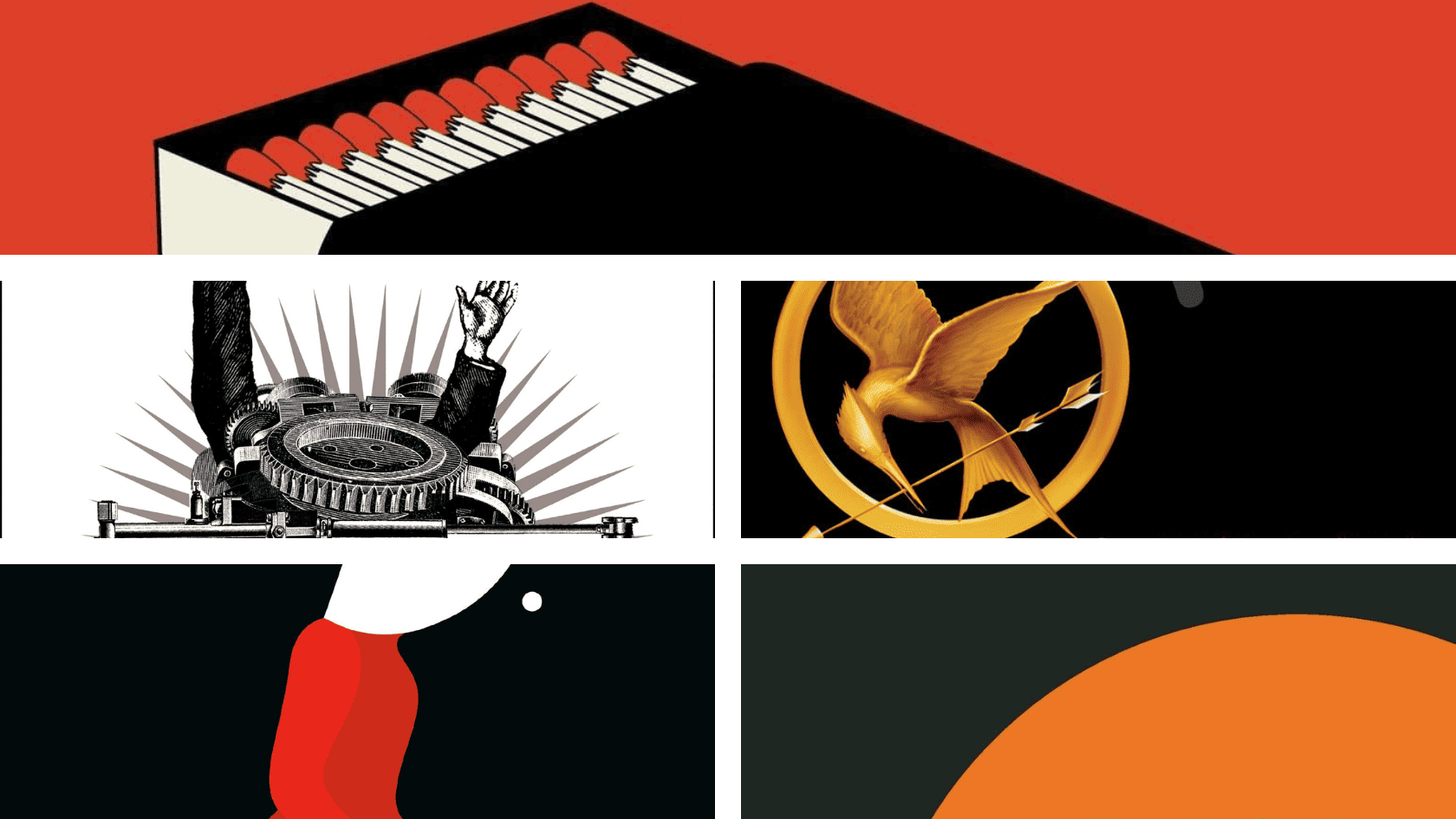
7 Chilling Dystopian Books to Read After 1984
Hi Bookish Besties, There are certain books I finish and immediately start looking for something that will give me the same feeling and 1984 is absolutely one of them. George Orwell’s world is disturbing because it isn’t frightening in a monsters-under-the-bed kind of way. It’s frightening because the people in power control what citizens see, what they know, what they remember, and eventually even what they believe. That stayed with me, and it’s one of the reasons I’ve continued reaching for dystopian fiction ever since. So if you’ve finished 1984 and you’re searching for books like 1984, I’d start with Brave New World if you want another classic vision of social control, Fahrenheit 451 if censorship was the part that fascinated you most, or We if you want to read the earlier dystopian novel that helped shape the genre Orwell was writing in. The seven books below each take something I find fascinating about 1984; surveillance, propaganda, censorship, conformity, state power, rebellion, or the loss of individual freedomand approach it from a completely different direction.
Why 1984 Still Gets Under My Skin
What makes 1984 by George Orwell so unsettling to me isn’t simply that Winston Smith lives under an authoritarian government. It’s how completely the Party reaches into ordinary life. There’s no real privacy, language itself is being restricted, history can be rewritten, and people learn to distrust their own memories. Even seemingly meaningless thoughts can become dangerous, and that’s what makes the book feel so claustrophobic. What gets me is that Winston isn’t only trying to rebel against a government, he’s trying to hold onto the idea that an objective reality exists at all. Then once you finish the book, it’s hard not to start noticing similar questions in other dystopian novels too.
What to Read After 1984 Based on What You Loved Most
- If the surveillance and state control fascinated you most, I’d read We by Yevgeny Zamyatin next.
- If you were drawn to the manipulation of information and censorship, go straight to Fahrenheit 451.
- If the idea of a population being kept compliant interested you, try Brave New World.
- If you want to explore control over women and reproduction, pick The Handmaid’s Tale.
- If you want a faster, more action-driven story about rebellion against an oppressive state, The Hunger Games is an excellent shift in pace.
7 Books Like 1984 for Readers Who Want More Dystopian Fiction
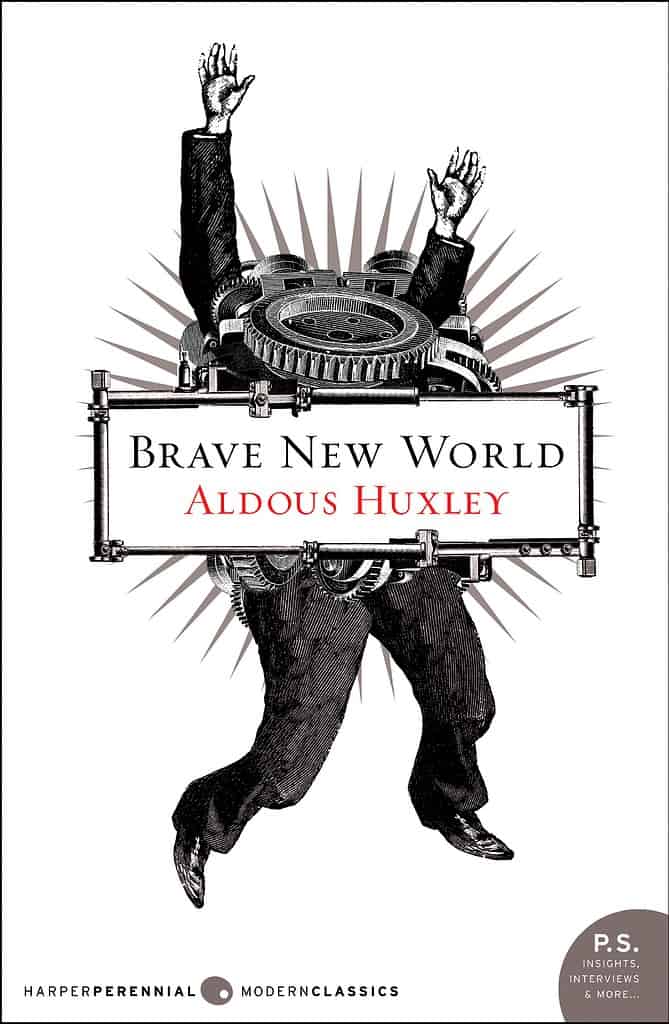
Brave New World by Aldous Huxley
If 1984 shows us a society controlled through fear, Brave New World asks what happens when control becomes comfortable. That difference is exactly why I think these two books make such a fascinating pair. Huxley imagines a future where people are conditioned from birth into predetermined social roles and kept satisfied through pleasure, consumption, distraction, and a drug called soma. The population isn’t constantly fighting against the system because most people have been trained not to want anything outside it. That idea makes this book especially unsettling to me. Orwell asks what happens when freedom is violently taken away. Huxley makes me think about what happens when people become comfortable enough that they stop reaching for it. Read this after 1984 if: you want another foundational dystopian classic exploring conformity, social engineering, and the price of stability.
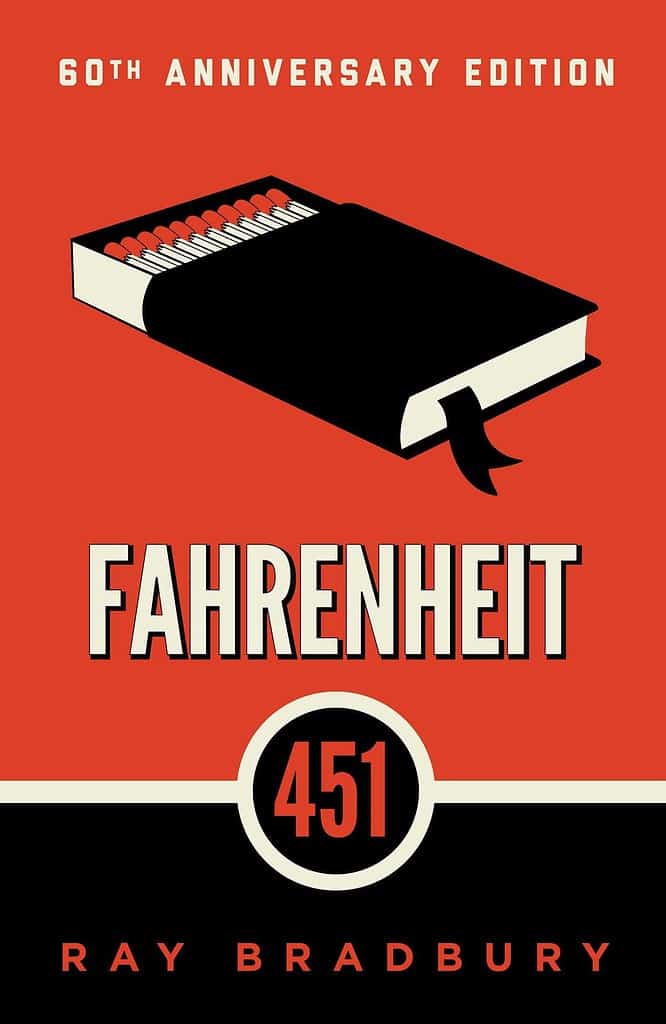
Fahrenheit 451 by Ray Bradbury
This one will always be personal for me because Fahrenheit 451 was one of the books my husband recommended I read, and I’m so glad he did. Guy Montag is a fireman in a society where firemen don’t put out fires; they burn books. Reading is dangerous because books expose people to complicated ideas, uncomfortable emotions, and different ways of thinking. What struck me most when I read it was that Bradbury’s world isn’t only about censorship coming from above. It’s also about distraction and the gradual abandonment of difficult thought, and that’s what makes it such a good companion to 1984. Both books understand that controlling what people can know is one of the most powerful ways to control what they can imagine. But Bradbury gives the idea a completely different emotional texture. So read this after 1984 if: censorship, intellectual freedom, and the destruction of books were the themes that grabbed you most.

The Handmaid’s Tale by Margaret Atwood
The Handmaid’s Tale gives us another society built on extreme control, but Margaret Atwood focuses that control very specifically on women’s bodies, identities, and choices. Offred lives in the Republic of Gilead, where women have been stripped of their former freedoms and assigned tightly regulated social roles. Her memories of life before Gilead are part of what makes the novel so painful because we see how quickly something once considered normal can disappear. That’s one of the strongest connections I feel between this book and 1984. Both show systems that don’t merely enforce rules. They try to reshape reality itself until the system’s worldview becomes the only acceptable one. Also, in both books, memory becomes its own quiet form of resistance. Read this after 1984 if: you want another deeply unsettling novel about authoritarian control, individual freedom, and the ways political systems reach into private life.
YOU CAN GET A COPY OF THE HANDMAID’S TALE ON AMAZON OR BOOKSHOP

The Hunger Games by Suzanne Collins
I know The Hunger Games is faster and more action-driven than most of the classics on this list, but thematically, it absolutely belongs here. Panem is built around inequality, fear, propaganda, surveillance, and spectacle. The Capitol doesn’t merely punish the districts; it turns that punishment into entertainment and forces everyone to watch. That media element is what makes the book especially interesting next to 1984. Katniss gradually becomes a symbol whose image is manipulated by competing political forces, which raises one of my favorite questions in the series: what happens when rebellion itself becomes something other people package and control? It’s incredibly readable, emotionally intense, and a great option if you want to stay within dystopian fiction but change the pacing completely. Read this after 1984 if: you want rebellion, propaganda, inequality, and state violence wrapped inside a genuine page-turner.
YOU CAN GET A COPY OF THE HUNGER GAMES ON AMAZON OR BOOKSHOP

A Clockwork Orange by Anthony Burgess
A Clockwork Orange is probably the most challenging recommendation on this list, and I mean that in more than one way. Alex is violent, disturbing, and extremely difficult to sympathize with. Then the state attempts to remove his ability to choose violence through psychological conditioning, and suddenly the question gets complicated. If someone is only capable of being “good” because the government has removed the ability to choose otherwise, is that morality? That tension between control and free will is what connects Burgess’s novel so strongly to 1984 for me. It’s also famous for its invented slang, so expect the first chapters to require some adjustment. But once the language begins to click, it becomes part of the novel’s whole strange, disorienting experience. Read this after 1984 if: you want a darker philosophical dystopia about state power, morality, punishment, and whether freedom includes the freedom to make terrible choices.
YOU CAN GET A COPY OF A CLOCKWORK ORANGE ON AMAZON OR BOOKSHOP

Parable of the Talents by Octavia E. Butler
Octavia E. Butler takes dystopia somewhere frighteningly intimate. Parable of the Talents continues Lauren Olamina’s story as she tries to build a community around Earthseed while living through a deeply fractured America marked by violence, political extremism, and religious authoritarianism. What I find so powerful about Butler is that her dystopian world doesn’t feel neat, so there isn’t one single machine controlling everything. Instead, institutions are collapsing, communities are vulnerable, political rhetoric becomes dangerous, and people are trying to figure out how to survive while still building something better. That makes this feel very different from 1984 while still exploring many of the same questions about power, belief, fear, and resistance. One note: I strongly recommend reading Parable of the Sower first. Parable of the Talents is its sequel, and Lauren’s journey carries much more emotional weight when you’ve followed her from the beginning. Read this after 1984 if: you want a dystopian story about political extremism, faith, community, resistance, and rebuilding rather than simply surviving.
You can get a copy of Parable of the Talents by Octavia E. Butler on Amazon or Bookshop.

We by Yevgeny Zamyatin
If you love 1984, I consider We almost required reading. Not because it recreates Orwell’s novel, but because it lets you move backward in the history of dystopian fiction and see many ideas that would later become central to the genre. The citizens of OneState live in an intensely regulated society where individuality has been sacrificed for collective order. So people are identified by numbers, daily life follows rigid systems, and constant observation is treated as normal. Then D-503 begins experiencing something dangerous: individual desire. I find We fascinating because you can feel the DNA of later dystopian novels running through it;especially questions about surveillance, conformity, mathematics, rationality, and the unpredictable messiness of being human. It’s stranger than 1984, and the prose can feel more abstract, but that’s also what makes it worth reading. Read this after 1984 if: you want to understand the literary lineage behind Orwell’s dystopia and see an earlier version of many ideas that now feel inseparable from dystopian fiction.
You can get a copy of We by Yevgeny Zamyatin on Amazon or Bookshop.
How These Books Compare to 1984
One thing I love about reading dystopian fiction together is seeing how differently writers imagine the same basic danger.

- In 1984, control comes largely through fear, surveillance, propaganda, and violence.
- In Brave New World, it comes through conditioning and pleasure.
- In Fahrenheit 451, control thrives through censorship and distraction.
- The Handmaid’s Tale explores gendered authoritarianism and religious control.
- The Hunger Games uses spectacle and inequality.
- A Clockwork Orange questions whether forced goodness is compatible with freedom.
- Butler examines what happens when political extremism and social collapse collide.
- We takes us back to a society where total order requires the destruction of individuality.
Reading them together made me realize that dystopian fiction isn’t really trying to predict one particular future. It’s asking us to pay attention to the different ways people can surrender, or lose, the ability to think and choose for themselves.
Which Book Like 1984 Should You Read First?
If you’ve never read much dystopian fiction beyond 1984, I would probably choose Fahrenheit 451 next. It’s short, readable, and shares Orwell’s deep concern with information, independent thought, and what happens when a society stops valuing books and ideas. After that, I’d move to Brave New World because the contrast is so fascinating. Orwell imagines people being controlled through pain. Huxley imagines people being controlled partly through pleasure. Putting those two visions beside each other gives you so much to think about. Now if you really want to understand where this strand of dystopian literature came from, finish with We.
Why I Keep Coming Back to Dystopian Books
I realize saying “I love dystopian fiction” can sound slightly alarming when you consider what actually happens in these books. I don’t read them because I enjoy watching fictional societies collapse, I read them because they exaggerate questions we already wrestle with.
- Who controls information?
- What happens when people stop questioning authority?
- How much freedom are we willing to trade for safety, convenience, stability, or comfort?
- Who gets to decide what is true?
- What happens when language itself becomes political?
- And at what point does an ordinary person decide they can no longer go along with the system around them?
Want To Save This Post?
The best dystopian books don’t give me neat answers, they make me uncomfortable enough to keep thinking. That’s exactly what 1984 did for me, and it’s what I’m looking for when I recommend another book beside it.
Final Thoughts
The thing I love about books like 1984 is that none of the best ones simply copy Orwell. They take the questions that made his novel so unsettling and push them somewhere new. Some imagine control through fear, others through entertainment, religion, censorship, social conditioning, technology, or even comfort. Then somehow they all circle back to the same uncomfortable question: How much freedom can disappear before people realize what they’ve lost? If you’re choosing your next book, I’d start with Fahrenheit 451, partly because it’s such a natural companion to Orwell and partly because it will always have that personal connection for me as one of the books my husband put into my hands. Then I’d keep going. Tell me in the comments: which dystopian novel has unsettled you the most, and what book would you add for someone who just finished 1984?